Quick answer: Mango kheer is a traditional Indian rice pudding made by slow-cooking basmati rice in whole milk until creamy, then folding in sweet ripe mango puree, saffron, and cardamom. You make it because it turns one perfectly ripe Alphonso mango into a dessert that feeds eight people, costs under ten dollars, and tastes like an Indian summer in Texas.
History and Origin
Kheer is one of the oldest recorded desserts in Indian cuisine. References to it appear in Ayurvedic texts and temple offerings from over two thousand years ago, where rice, milk, and sugar were considered sacred foods. In South India we call it payasam, in Bengal it becomes payesh, and in the north it stays kheer. My grandmother in Guntur made a plain rice kheer every Sunday, but once a year when the mangoes came in from the orchards, she would spoon fresh Banginapalli pulp into cooled kheer and the whole kitchen would go quiet.
Mango kheer as a named dish is a fairly recent invention, born from the intersection of household creativity and mango abundance. Traditional cooks worried that hot milk would split when it met acidic fruit, so the trick was always to add mango at the very end, after the kheer had cooled. That single rule is what separates a silky mango kheer from a curdled mess. Families in Hyderabad, Mumbai, and Ahmedabad have been making versions of this dessert for at least a century, and it has traveled with the Indian diaspora to every corner of Texas. At Swadeshi Mangoes we deliver the fruit that makes this recipe possible across Austin, Dallas, Houston, and San Antonio from late April through July.
Ingredients
- 1/2 cup (100 g) basmati rice, rinsed and soaked 20 minutes
- 6 cups (1.4 L) whole milk
- 1/2 cup (100 g) granulated sugar, adjusted to mango sweetness
- 1 1/2 cups (360 ml) fresh Alphonso or Kesar mango puree (about 3 medium mangoes)
- 1/2 teaspoon green cardamom powder
- 1 generous pinch saffron threads, bloomed in 2 tablespoons warm milk
- 2 tablespoons ghee
- 1/4 cup (30 g) slivered almonds
- 2 tablespoons chopped pistachios
- 1 tablespoon golden raisins (optional)
- 1/4 teaspoon rose water (optional, for a Hyderabadi touch)
- Pinch of sea salt to balance sweetness
Method
- Toast the nuts (3 minutes). Heat ghee in a heavy-bottomed saucepan over medium-low heat. Add almonds, pistachios, and raisins. Stir until the almonds turn pale gold and the raisins puff up. Remove with a slotted spoon and set aside.
- Start the rice (5 minutes). Drain the soaked basmati. In the same ghee, add the rice and stir for two minutes until every grain glistens. This step prevents stickiness.
- Slow-simmer the milk (40 to 50 minutes). Pour in the whole milk. Bring to a gentle boil, then reduce to the lowest simmer your stove can manage. Stir every five minutes with a wooden spoon, scraping the bottom and sides so nothing caramelizes. You want the milk to reduce by roughly one-third and the rice to break down into creamy threads.
- Sweeten and flavor (5 minutes). Once the kheer coats the back of a spoon, add sugar, cardamom, saffron milk, and a pinch of salt. Stir until the sugar dissolves. Taste and adjust.
- Cool completely (60 minutes minimum). Transfer to a wide bowl and let the kheer cool to room temperature, then refrigerate until cold. This is the step most home cooks rush and regret.
- Fold in the mango (2 minutes). When the kheer is cold, gently fold in the mango puree and rose water. Never add mango to warm kheer or the milk will split.
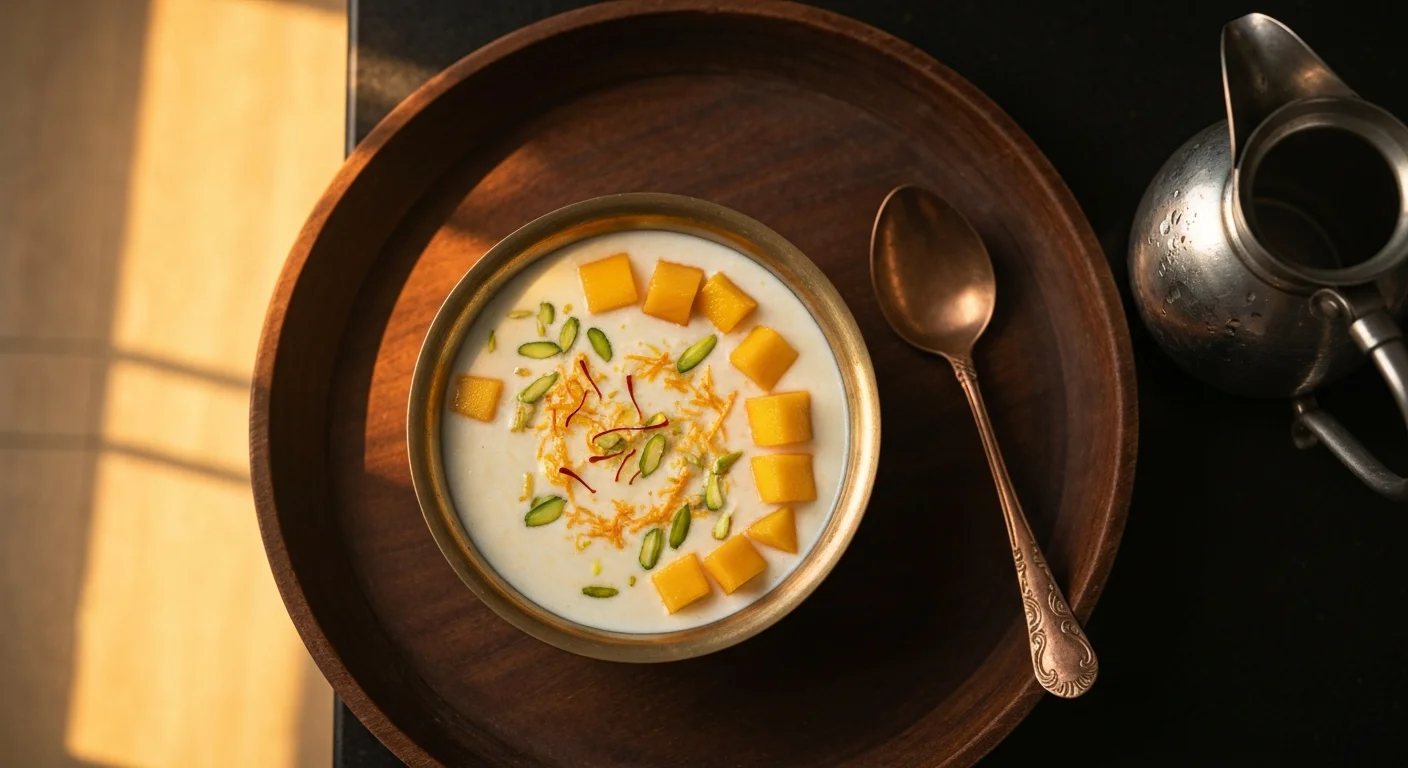
- Garnish and serve. Top with the toasted nuts and a few threads of saffron. Serve in small bowls or matkas.
Variety Recommendations
For mango kheer I strongly recommend Alphonso or Kesar. Alphonso delivers the classic saffron-orange color and a perfume that stands up to cardamom and milk. Kesar, grown in Gujarat, is slightly less intense but has a deeper sweetness that pairs beautifully with ghee-toasted nuts. Banginapalli is my second choice because it brings a mild tang that keeps the kheer from tasting one-note. Avoid fibrous varieties like Totapuri for this dish because you want a silky puree, not threads in your spoon. If your mangoes are still firm, check our mango ripening guide before starting.
Tips From My Kitchen
Use the heaviest pan you own. A thin saucepan will scorch the milk in the last ten minutes and the whole batch will carry a burnt taste no amount of sugar can hide. A well-seasoned cast iron Dutch oven or a triple-ply stainless pot is ideal.
Stir with purpose, not panic. Every five minutes, scrape the bottom in a figure-eight motion. Constant stirring breaks the rice grains too early and makes the texture gluey.
Let the mango be the star. Do not add vanilla, mango extract, or food coloring. Good Texas-delivered Alphonso has all the flavor you need. The color of your kheer will tell you whether the fruit was ripe enough.
Never boil after adding mango. Even gentle reheating will cause the puree to curdle against the milk proteins. If you want to serve mango kheer warm, warm the plain kheer first and fold in cold mango at the table.
Serving Suggestions
Serve mango kheer very cold in small clay matkas or glass tumblers, especially when the Austin thermometer climbs past 95 degrees. For a Texas dinner party I set it out after a spicy main course of biryani or pepper chicken, where it doubles as dessert and palate cooler. At Diwali and Eid gatherings in the Dallas suburbs, I have seen cooks layer mango kheer in parfait glasses with crushed pistachio brittle for a modern twist. A thin pour of coconut cream over the top turns this into a tropical variation that works well at Houston summer cookouts. Serve alongside a light after-dinner tea like Darjeeling first flush or an iced jasmine green to highlight the cardamom and saffron without competing for attention. For children, I often spoon mango kheer into small popsicle molds and freeze for a dessert they consider their very own. Texas summer guests especially love this chilled version served in small clay cups or kulhads, which keeps the kheer at temperature longer on warm patios. The traditional pairing with a small piece of crisp puri or sliced banana on the side adds a textural element that many South Indian families enjoy at the end of a festive meal.
Storage
Plain mango kheer keeps in an airtight container in the refrigerator for up to three days. The texture actually improves on day two as the rice fully absorbs the sweetened milk. Do not freeze mango kheer because dairy-based puddings separate when thawed. If you need to make it ahead, prepare the plain kheer up to four days in advance and fold in fresh mango puree on the day of serving. Reheat only the plain base, gently and with a splash of milk to loosen it.
Dietary Notes
This recipe is naturally gluten-free. For a vegan version, substitute full-fat coconut milk or a mix of oat cream and cashew milk for the whole milk, replace ghee with coconut oil, and use jaggery instead of sugar. The texture will be slightly lighter but the flavor holds up beautifully, especially with Kesar mangoes. For a lower-sugar version, reduce sugar to three tablespoons and rely on the mango itself for sweetness.
FAQ
Can I use canned mango pulp for mango kheer?
You can, but the dish will taste flat compared to fresh fruit. Canned Alphonso pulp contains preservatives and added sugar that mute the signature floral aroma. If fresh is unavailable, use half the sugar called for in the recipe and add a squeeze of lime to wake up the flavor. Our Texas-delivered fresh mangoes give noticeably better results every time.
Why did my mango kheer curdle?
Curdling happens when acidic mango puree meets hot milk. Always cool the kheer to at least room temperature, ideally fridge-cold, before folding in mango. A second cause is overripe mango that has started to ferment slightly. Use mangoes that smell sweet but not alcoholic, and your kheer will stay silky every time.
Which mango is best for kheer in Texas?
Alphonso from our Ratnagiri growers is the gold standard because its flesh is fiberless and intensely aromatic. Kesar is a close second and holds up better in warm Texas kitchens because it is slightly less delicate. Both varieties are available through Swadeshi Mangoes across Austin, Dallas, Houston, and San Antonio during mango season.
Can I make mango kheer in an Instant Pot?
Yes. Use the porridge setting for 15 minutes with natural release. Add sugar and cardamom after pressure releases, cool completely, then fold in mango. The texture is almost identical to stovetop, though I still prefer the control of a slow simmer for a truly silky finish.
How far in advance can I make mango kheer?
Make the plain rice kheer up to four days ahead. Stir in fresh mango puree no more than six hours before serving. For a party, pour individual portions into glasses, cover tightly, and refrigerate. Add the nut garnish at the last minute so the almonds stay crisp.
Recipe Card
Mango Kheer
Prep time: 25 minutes
Cook time: 55 minutes
Cooling time: 60 minutes
Total time: 2 hours 20 minutes
Servings: 8
Cuisine: Indian
Course: Dessert
Diet: Vegetarian, gluten-free (vegan adaptable)
Calories per serving: approximately 285
For more mango recipes see our recipe blog, or order fresh mangoes for delivery across Texas. Learn about the science of milk and fruit pairings at USDA FoodData Central.