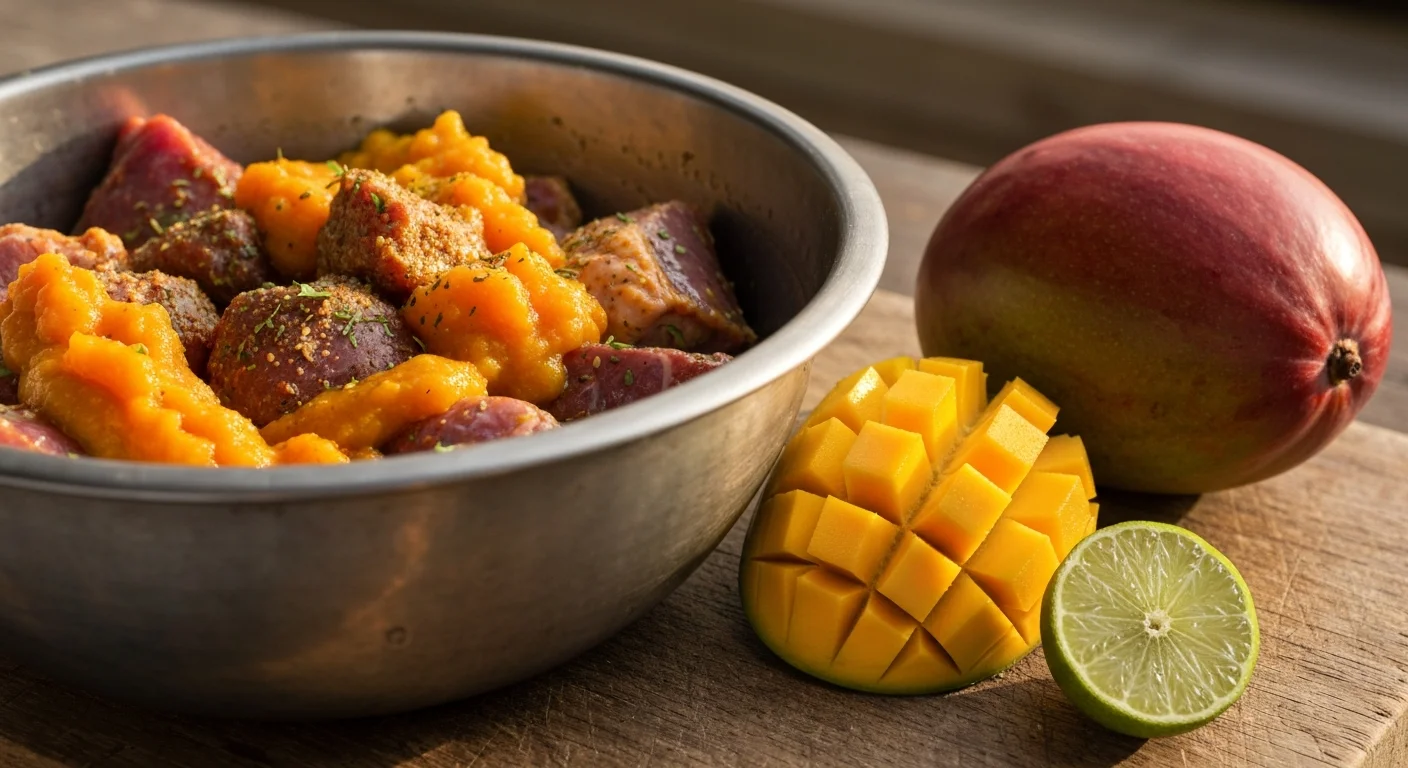
Mango tenderizes meat through two complementary mechanisms: proteolytic enzymes in raw mango that cleave muscle proteins, and mangiferin, a xanthonoid polyphenol that disrupts collagen cross-links. A 2019 study in the Journal of Food Science and Technology (PMID: 31572018) found that marinating beef in raw mango puree for four hours reduced shear force by 26 percent, comparable to commercial enzyme tenderizers.
Why Meat Gets Tough
Tough texture in meat comes from two structures: actomyosin, the contractile protein complex in muscle fibers, and collagen, the connective tissue that wraps fibers and bundles. Tougher cuts like brisket, chuck, and round carry more collagen. Cooking can gelatinize collagen given enough time and moisture, but a marinade can jumpstart the process and soften actomyosin before heat ever touches the meat.
How Plant Enzymes Work
The classic plant tenderizers are papain from papaya, bromelain from pineapple, actinidin from kiwi, and ficin from figs. All are cysteine proteases that hydrolyze peptide bonds. Mango contains multiple proteolytic activities as well. A 2017 paper in the International Journal of Food Properties identified a serine protease active in green mango extract that shows sustained activity at marinade temperatures between 4 and 30 degrees Celsius.
Mangiferin’s Unique Role
Mangiferin, concentrated in the peel, kernel, and to a lesser extent the pulp of Indian mango cultivars, is more than a tenderizer adjacent. Research published in Food Chemistry in 2020 demonstrated that mangiferin binds to collagen, loosening triple-helix cross-links. Unlike papain, which can over-tenderize into mush, mangiferin works gently and pairs well with longer marinades.
Enzyme Activity Comparison
| Source | Primary Enzyme | Activity (U/g) | Tenderization Effect | Risk of Over-Softening |
|---|---|---|---|---|
| Papaya (green) | Papain | 300-500 | Very strong | High |
| Pineapple | Bromelain | 200-400 | Strong | High |
| Kiwi | Actinidin | 100-250 | Moderate | Medium |
| Fig | Ficin | 150-300 | Moderate | Medium |
| Green mango | Serine protease + mangiferin | 80-150 | Moderate, gentle | Low |
| Ripe mango | Low protease + mangiferin | 30-60 | Mild, flavor-enhancing | Very low |
Green Versus Ripe Mango
Green mango carries higher enzyme activity and lower sugar content, making it ideal for tenderizing tough cuts. Ripe mango brings more flavor, aroma, and sugar, which can caramelize beautifully on a Texas grill but tenderizes less. The classical South Indian dish “kachcha aam ka gosht” (raw mango lamb curry) relies entirely on green mango for its tenderizing and souring effect.
Texas BBQ Applications
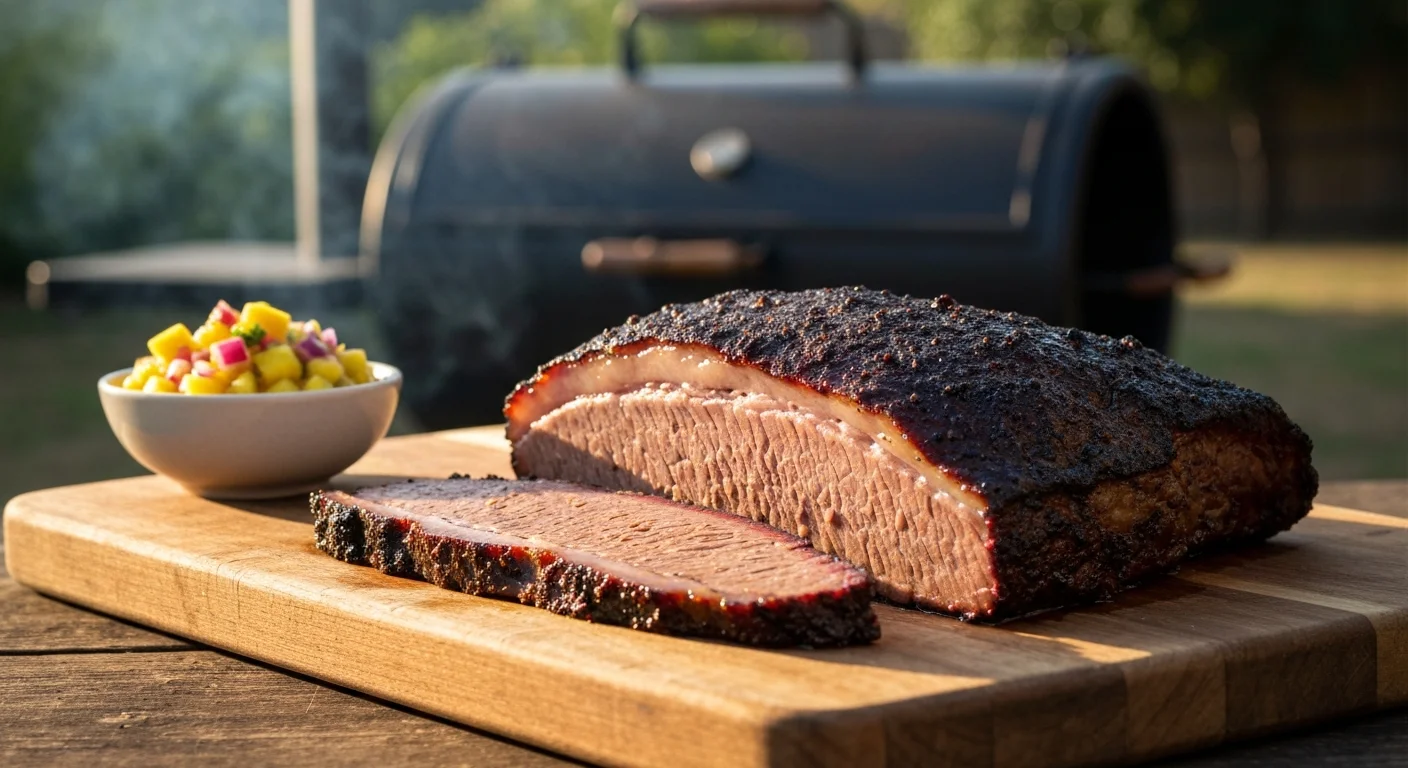
Brisket, the iconic Texas cut, is notorious for uneven tenderness. A mango-based marinade applied 12 to 18 hours before smoking can reduce the connective tissue load before the meat ever hits the smoker. Short ribs, beef cheeks, and goat meat similarly benefit. For chicken and pork, shorter marinades of 2 to 4 hours prevent over-softening.
A Basic Mango Tenderizing Marinade
Blend one peeled green or underripe mango with 2 tablespoons of yogurt, 2 tablespoons of lime juice, 1 teaspoon of salt, 1 teaspoon of ground cumin, 1 teaspoon of paprika, 2 cloves of garlic, and 1 inch of grated ginger. This produces approximately 300 ml of marinade, enough for 1 kg of meat. Marinate in a non-reactive container in the refrigerator.
Timing Guidelines
Chicken breast: 2 hours. Chicken thighs: 4 hours. Pork shoulder chunks: 6 hours. Lamb leg cubes: 8 hours. Beef brisket or chuck: 12 to 18 hours. Goat or mutton: 12 hours. Never exceed 24 hours, because extended exposure can produce a slightly mealy texture even with the gentler mango enzyme profile.
Safety and Food Chemistry
All protein marinades should happen in the refrigerator at 4 degrees Celsius or below to prevent bacterial growth. Discard used marinade or boil it for at least three minutes before basting cooked meat. The USDA FSIS publishes guidelines on safe marinade handling that apply equally to enzyme-rich fruit marinades.
Why Mango Is Kinder to Meat
The difference between mango and papaya is dose response. Papain works at high activity even at low concentrations, which can reduce a steak to baby food in hours. Mango’s combined enzyme and polyphenol action plateaus at a more forgiving level. Home cooks who have been burned by pineapple marinades will find mango easier to manage.
Beyond Tenderizing: Flavor and Nutrition
A mango marinade adds vitamin A, vitamin C, and potassium to the finished dish while reducing the need for commercial MSG-heavy tenderizers. The residual sugars produce excellent caramelization on a grill. For Texas pitmasters looking to create distinctive rubs and marinades, Alphonso or Banginapalli puree blended with smoked paprika and chipotle produces a marinade unlike any commercial product. Browse all nine varieties on our varieties page.
Scientific Literature Summary
The PubMed database indexes roughly 40 studies on mango-based meat tenderization from 2010 onward. A 2018 paper in Meat Science tested mango powder on buffalo meat and found significant improvement in Warner-Bratzler shear force values. A 2021 Food Hydrocolloids study showed that mangiferin at 0.1 percent concentration improved water-holding capacity in chicken breast by 12 percent.
Frequently Asked Questions
Can I use ripe mango to tenderize meat?
Yes, but with reduced effectiveness. Ripe mango has lower enzyme activity than green mango. For tough cuts like brisket, green or underripe mango works better. Ripe mango excels in flavor-forward applications like chicken kebabs, pork tenderloin, or fish where you want aroma and light tenderization rather than aggressive enzymatic breakdown.
How long should I marinate meat in mango?
Marinade times range from 2 hours for chicken breast to 18 hours for brisket. Mango enzymes work more gently than papain or bromelain, so longer marinades are safer. Never exceed 24 hours because even gentle proteases can eventually produce mealy texture. Always marinate in the refrigerator at 40 degrees Fahrenheit or below.
Is mango better than commercial meat tenderizer?
It depends on goals. Commercial tenderizers are faster and more predictable but often include sodium, MSG, and bromelain powder. Mango marinade adds flavor, aroma, vitamins, and gentler tenderization with cleaner ingredient labels. For Texas home cooks who value whole-food cooking, mango marinade is a meaningful upgrade over boxed tenderizer powders.
Does cooking destroy mango’s tenderizing action?
Yes. Mango’s proteolytic enzymes denature around 60 degrees Celsius (140 degrees Fahrenheit). Once the meat starts cooking, enzyme activity stops. All tenderization happens during the marinating phase in the refrigerator. Mangiferin’s collagen-loosening effect is more heat-stable and continues through the early stages of cooking before breaking down at high temperatures.
Can I freeze mango puree for future marinades?
Absolutely. Puree ripe or green mango, portion into ice cube trays, freeze solid, then transfer to labeled freezer bags. Each cube is roughly 30 ml. Enzyme activity drops about 20 percent after three months of frozen storage but remains useful for up to six months. This lets Texas cooks enjoy mango-tenderized meat year-round even after summer season ends.
A Flavorful Texas Upgrade
From backyard BBQs in Austin to smoker competitions in Lockhart, adding Indian mango to your marinade toolkit raises the game. Swadeshi Mangoes delivers varieties across Texas suited to every cut. Check our mango care guide for ripeness tips or visit the order form to stock up.
Enzyme Kinetics 101
Enzyme activity depends on temperature, pH, substrate concentration, and the presence of inhibitors or cofactors. Mango proteases operate optimally between pH 5 and 7, which aligns with most marinade conditions when combined with yogurt or a small amount of lemon juice. Excessive acidity (pH below 4) can denature the enzymes, while excessive alkalinity slows their action. A yogurt-based marinade keeps the pH in a productive range while also adding calcium that interacts helpfully with muscle fibers.
Temperature Windows
Refrigerator marinades at 40 degrees Fahrenheit are safer than counter-top marinades but slower. The enzyme is still active, just reduced. Room-temperature marination accelerates tenderization but promotes bacterial growth. Texas home cooks should resist the temptation to leave marinated meat on the counter in 75-degree kitchens for more than 30 minutes. The USDA-FSIS 40-140 rule keeps meat out of the “danger zone.”
Flavor Chemistry Matters Too
Mango contributes volatile aromatic compounds including terpenes (ocimene, myrcene, limonene) and lactones that produce a distinctive ripe character. When heated on a Texas charcoal grill, these compounds combine with Maillard reactions to produce deeply aromatic crusts. Alphonso, Kesar, and Banginapalli each contribute different aroma profiles. A pitmaster in Austin might favor Banginapalli for its balanced sweet-tart flavor, while a cook in Dallas might prefer Alphonso for intense sweetness on grilled chicken.
Pairing With Regional Texas Flavors
Tex-Mex pairs beautifully with ripe mango. Pair Kesar with smoked paprika, chipotle, and cilantro for a fusion marinade. Gulf Coast seafood grilling benefits from a lighter green-mango base with garlic, lime, and white pepper. Smoked brisket benefits from a long mango-yogurt pre-marinade before the rub. These regional adaptations turn Indian mango into a versatile Texas kitchen staple.
Nutritional Upside of Mango Marinades
A typical marinade contributes to the final dish’s micronutrient profile. Mango-based marinades add vitamin A, vitamin C, and polyphenols that commercial tenderizers lack. Texas families moving away from MSG-heavy seasoning blends appreciate the clean-label advantage. Our mango care guide explains how to select the right ripeness for marinades, whether you want gentle enzymatic tenderization or bold flavor impact. Pitmasters tracking nutrition alongside flavor find that a mango-based marinade aligns with both goals, delivering vitamin A, vitamin C, potassium, and polyphenols that survive cooking in measurable amounts. Over a summer of weekly grilling, that steady contribution adds real nutritional value without changing flavor goals.
This article is for educational purposes. Consult your healthcare provider for medical advice.