Tag: freezing

  • What to Do With Too Many Mangoes: 12 Preservation Methods

    What to Do With Too Many Mangoes: 12 Preservation Methods

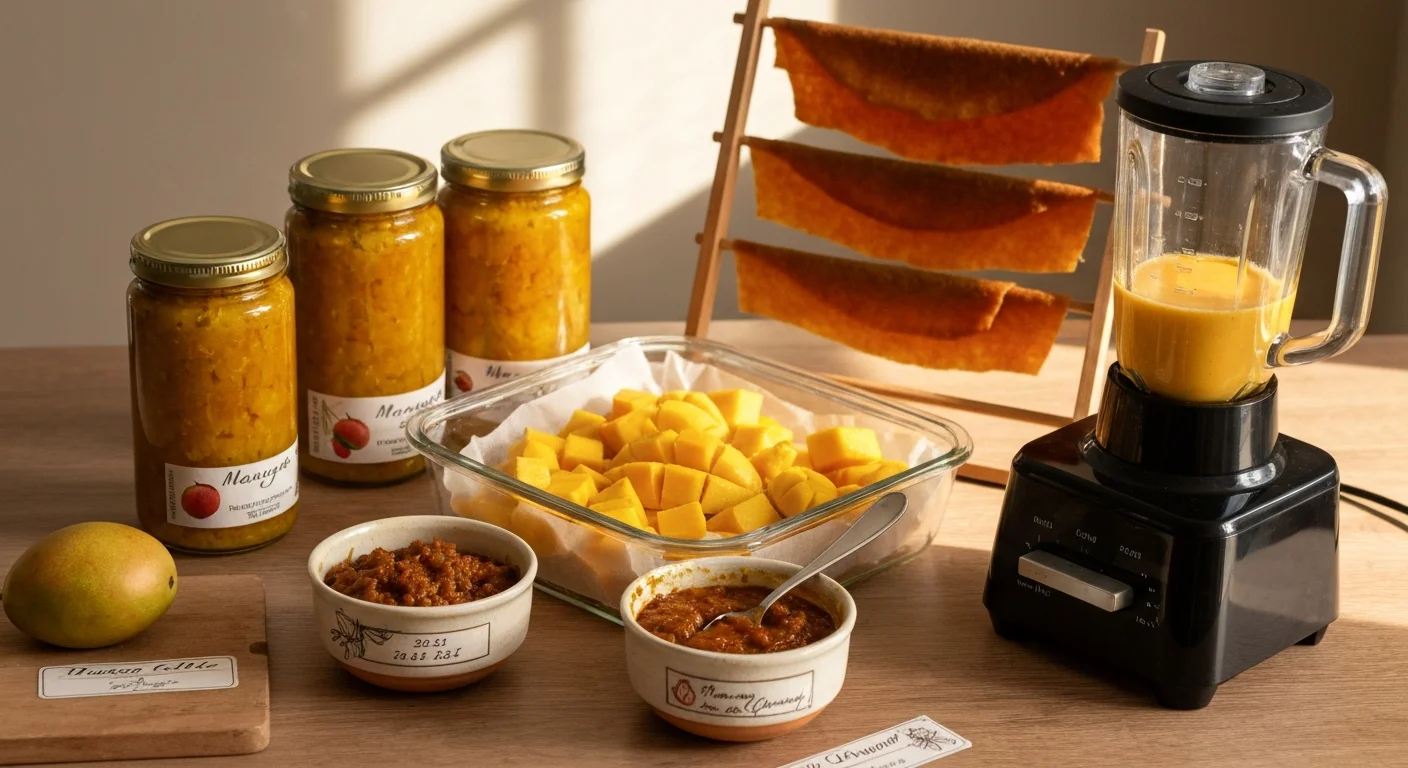
    Direct answer: When Texas mango season delivers more fruit than you can eat, preserve the surplus using freezing (whole cubes, puree, or sliced), drying (mango leather, dehydrated slices), fermenting (pickle and chutney), cooking (jam, murabba, gojju), and blending (lassi and sorbet bases). Most Indian mango varieties freeze beautifully for 10-12 months, and properly jarred pickles keep for 12-18 months at Texas pantry temperature. Do not let a single mango go to waste. A ripe Alphonso that softens past peak today can become a jar of chutney that flavors rice dishes into next February.

    Every Texas mango season we get the same panicked call. Customer picks up a 6kg box on Saturday, eats like royalty for four days, and wakes up Thursday to find eight mangoes all ripening at once. With temperatures pushing 90°F in Austin, Houston, and San Antonio, the window to act is short. This guide gives you 12 proven methods to capture that flavor before it is lost.

    Method 1: Freeze Diced Cubes

    Freezing is the simplest and most versatile preservation method.

    1. Peel ripe mangoes and dice the flesh into half-inch cubes.
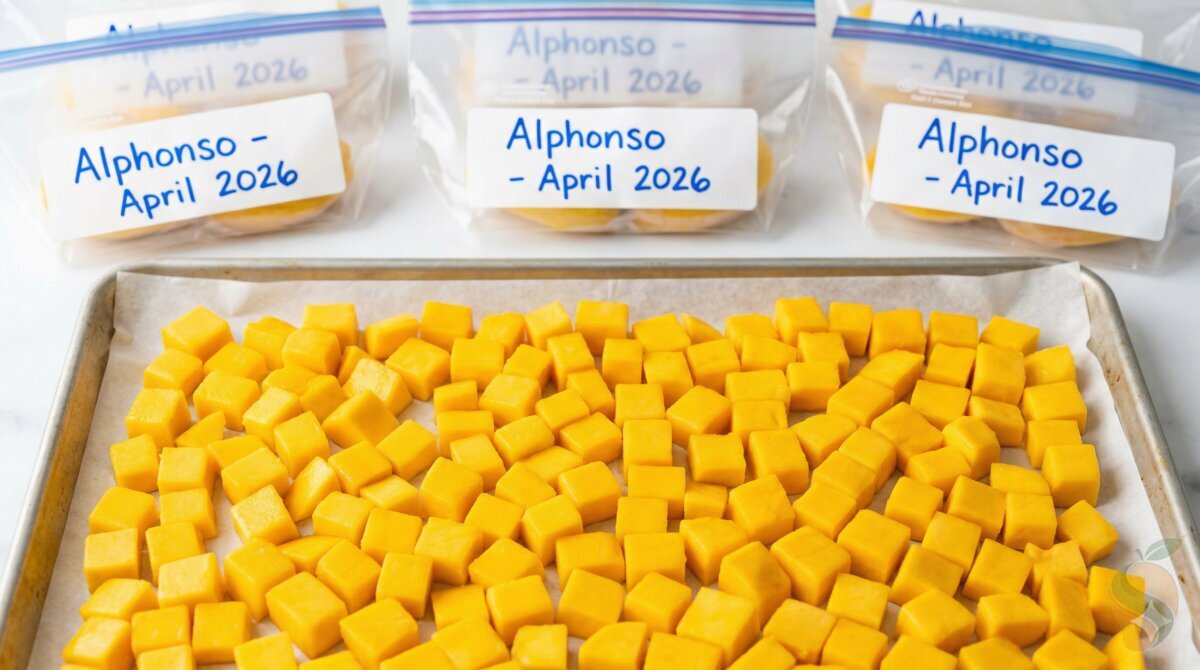
    2. Spread the cubes in a single layer on a parchment-lined baking sheet.
    3. Freeze for 2 hours until the cubes are firm.
    4. Transfer to labeled freezer bags, press out air, and freeze flat.
    5. Use within 10-12 months for best flavor.

    Method 2: Mango Puree for Smoothies and Lassi

    Puree ripe mango flesh in a blender with a squeeze of lime to prevent browning. Pour into silicone ice cube trays or small freezer containers. Each cube pops into a morning smoothie or a lassi without thawing. Tip: label the date and variety, because Alphonso puree and Kesar puree make very different lassi.

    Method 3: Mango Leather (Fruit Roll-Ups)

    Mango leather is a Texas pantry favorite, especially for parents packing school lunches.

    1. Puree 4-6 ripe mangoes with 2 tablespoons of lime juice.
    2. Spread the puree 1/8 inch thick on a parchment-lined baking sheet.
    3. Dry in an oven at 170°F with the door cracked for 6-8 hours, or in a dehydrator at 135°F for 8-10 hours.
    4. Peel off, cut into strips, roll in parchment, and store in airtight jars.
    5. Keeps 2-3 months at Texas pantry temperature.

    Method 4: Aam Ka Achaar (Mango Pickle)

    Traditional Indian mango pickle uses unripe or barely ripe mangoes. If you have a mix of hard and soft fruit, use the hard ones here. Mustard oil, fenugreek, fennel, nigella, and chili combine into a pickle that ages beautifully for a year. Use clean glass jars and always use a dry spoon.

    Method 5: Mango Chutney

    Cook ripe mango flesh with jaggery or brown sugar, ginger, vinegar, chili, and a pinch of salt. Simmer until thickened. Texas home cooks love this as a condiment for samosas, cheese boards, and grilled chicken. Jarred chutney holds 6-8 months refrigerated.

    Method 6: Mango Murabba

    Murabba is a sweet preserve made by cooking mango chunks in sugar syrup with cardamom and saffron. It pairs with parathas or yogurt and keeps for 8-10 months in a clean jar at room temperature.

    Method 7: Mango Jam

    Cook 4 cups mango puree with 2 cups sugar and 2 tablespoons lemon juice over medium heat until it thickens to a slow drip from a spoon. Ladle into sterilized jars. Process in a boiling water bath for 10 minutes for shelf-stable jam, or refrigerate for up to 3 weeks.

    Method 8: Dehydrated Mango Slices

    Slice peeled ripe mangoes into quarter-inch slices. Dehydrate at 135°F for 10-14 hours until leathery but pliable. Store in airtight jars with an oxygen absorber for 6-8 months of shelf life.

    Method 9: Mango Lassi Base Concentrate

    Blend 4 cups ripe mango puree with 2 cups full-fat yogurt and 1/2 cup sugar. Freeze in pint containers. To serve, thaw overnight, stir in milk and a pinch of cardamom, and you have instant lassi. Great for Texas summer parties.

    Method 10: Mango Sorbet Base

    Mix 3 cups mango puree with 1 cup simple syrup and 2 tablespoons lime juice. Churn in an ice cream maker or freeze in a shallow pan, scraping with a fork every 30 minutes for a granita texture.

    Method 11: Mango Gojju (South Indian Curry Base)

    Cook ripe or barely ripe mango with tamarind, jaggery, sambar powder, and tempered mustard seeds. Freeze in meal-size portions. Reheat and serve over rice. This is a Vamsi family favorite that captures Andhra flavors year-round.

    Method 12: Mango-Infused Vinegar or Syrup

    Steep mango peels and trimmings in white vinegar for 2 weeks, then strain. Or simmer peels with sugar and water for a mango simple syrup that flavors cocktails, tea, and soda. Nothing goes to waste.

    Quick-Reference Preservation Table

    MethodPrep timeShelf lifeBest Texas use
    Frozen cubes15 min10-12 monthsSmoothies, lassi
    Puree cubes20 min12 monthsBaking, sorbet
    Mango leather8-10 hrs dry2-3 monthsLunchbox snacks
    Pickle (achaar)30 min + cure12-18 monthsRice, paratha
    Chutney45 min6-8 months fridgeCheese, grilling
    Murabba1 hr8-10 monthsBreakfast paratha
    Jam40 min12 months sealedToast, thumbprints
    Dehydrated slices12 hrs6-8 monthsSnacking, trail mix
    Lassi base10 min6 months frozenParties
    Sorbet base15 min4 months frozenSummer desserts
    Gojju45 min6 months frozenAndhra rice meals
    Mango vinegar2 weeks steep12 monthsSalad dressings

    Food Safety Notes for Texas Kitchens

    When canning or preserving, follow the FDA guidelines on produce safety. Always use sterilized jars, process high-acid foods like mango jam in a boiling water bath, and refrigerate anything that is not properly sealed. Texas heat accelerates spoilage, so do not leave preserved items on the counter overnight.

    Common Mistake: Freezing Whole Mangoes

    Do not freeze mangoes whole in the skin. The skin damages and the flesh separates from the seed, making thawing messy and texture poor. Always peel and dice or puree before freezing. The five extra minutes of prep saves hours of frustration later.

    Labeling and Organization

    Label every preserved batch with the variety, date, and method. A freezer full of unmarked containers turns into a mystery in October. We recommend masking tape and a Sharpie. Track your inventory so you rotate older batches first.

    A Sample Preservation Weekend Plan

    Here is how a typical Texas customer processes a 6kg surplus on a Saturday morning. Start with coffee and a cleared counter. Sort mangoes into three piles: rock hard for pickle, yielding-ripe for chutney and jam, and overripe-soft for puree and leather. Spend the first hour peeling and dicing the ripest fruit and starting a batch of puree cubes. In the second hour, start a pot of chutney simmering while you spread mango leather puree on parchment and slide it into a 170°F oven. In the third hour, assemble pickle masala and pack jars. By lunch, your freezer, pantry, and fridge all have neatly labeled batches and you have not wasted a single mango.

    Equipment That Makes Preservation Easier in Texas

    • Good peeler: A sharp Y-peeler halves the prep time for large volumes.
    • Mango splitter: The three-blade tool that cuts around the seed saves flesh on every fruit.
    • Silicone ice cube trays: Best for portioned puree.
    • Vacuum sealer: Extends freezer life from 10 months to 18 months.
    • Dehydrator: Worth the investment if you process more than one box per season.
    • Canning starter kit: Boiling water bath canner, jar rack, and funnel for shelf-stable jams and chutneys.

    Gift Jars for Texas Friends and Neighbors

    Preserved mango also makes thoughtful gifts. A small jar of Devgad Alphonso chutney or a ribbon-wrapped roll of Kesar leather delights Texas neighbors who have never tasted Indian mango. Include a handwritten tag with the variety name and a serving suggestion. We have customers in Austin and Houston who run a small gift circle every August distributing preserved jars from the spring harvest. It is a beautiful way to share the abundance.

    Frequently Asked Questions

    How long do frozen mangoes actually last?

    Properly frozen mango cubes or puree maintain peak quality for 10-12 months in a standard home freezer at 0°F. They remain safe to eat indefinitely if kept frozen, but flavor and texture decline after a year. Texas chest freezers with stable temperatures extend quality compared to refrigerator freezers that cycle warmer.

    Can I preserve unripe mangoes?

    Yes. Unripe mangoes are ideal for traditional Indian pickle (aam ka achaar), raw mango chutney (pachadi), and aamras-style green mango drink (aam panna). The tartness holds up better under acid and spice than fully ripe fruit. Use the hardest mangoes in your box for these recipes.

    Do I need a pressure canner for mango jam?

    No. Mango jam is a high-acid preserve, so a boiling water bath canner is sufficient. Process filled jars in boiling water for 10 minutes to create a shelf-stable seal. Pressure canning is only required for low-acid foods like meats and most vegetables.

    Why did my mango pickle develop white film?

    A white film is usually kahm yeast, which is harmless but indicates your pickle was exposed to air or moisture. Skim the film, add a fresh layer of oil on top, and keep the jar sealed. Always use a dry spoon and store pickle at consistent Texas room temperature below 80°F.

    Can I preserve mangoes without sugar?

    Yes. Freezing, dehydrating, and pickling (with salt and oil) require no added sugar. Mango leather can be made with just fruit puree and lime juice. Sugar-free preserves have shorter shelf lives, so freeze or refrigerate rather than shelf-storing.

    Ready to stock up for preserving? Visit our order form to reserve a larger box, and see our care guide for ripening timing. For more recipe inspiration, browse our full blog and our Texas storage guide.
  • How to Freeze Mangoes for Year-Round Enjoyment

    How to Freeze Mangoes for Year-Round Enjoyment

    The season lasts 2-3 months. Your mango cravings last 12. The solution is simple: freeze them during season and enjoy mango smoothies, desserts, and lassi all year round.

    If you have ever experienced the particular sadness of opening your freezer in October and finding nothing but ice cubes and forgotten peas, this guide is for you. With the right technique, you can freeze Indian mangoes during their April-through-July peak and enjoy them through December, January, and beyond. The key word is “right technique” — because there is a wrong way to freeze mangoes, and most people discover it the hard way with a bag of flavorless, watery mush.

    We have been helping families across Texas stock their freezers during Swadeshi mango season, and the customers who freeze extra boxes are the ones who thank us the most come autumn. Here is everything we have learned about doing it properly.


    The Right Way to Freeze Mangoes

    Frozen correctly, Indian mangoes retain 90% of their flavor and nutrition for up to 8 months. Frozen incorrectly, they turn into watery, flavorless ice cubes. Here is the right way:

    Step 1: Choose Ripe Mangoes

    Only freeze fully ripe mangoes. Unripe mangoes will not develop more sweetness in the freezer — they will just be sour ice chunks. The mango should be fragrant, slightly soft, and at peak eating ripeness.

    How do you know when a mango is at the perfect stage for freezing? It should smell intensely of mango at the stem end — that fragrance is the clearest indicator of full ripeness. When you press gently, it should yield slightly, like a ripe avocado, but not feel mushy. The skin color is less reliable since it varies by variety: Alphonso turns golden yellow, Kesar stays partly green even when ripe, and Banganapalli becomes a uniform bright yellow. Trust your nose and touch over your eyes.

    If you received your Swadeshi delivery and the mangoes are not quite ripe yet, let them ripen at room temperature for 1-3 days before freezing. Our complete guide on how to store and ripen Indian mangoes covers the best techniques for each variety. Check our ripening and care guide for detailed instructions on bringing each variety to peak ripeness. Do not rush this step — freezing a mango one day too early will lock in that unripe flavor permanently.

    Step 2: Peel and Cut

    Peel the mango and cut the flesh into cubes (about 1-inch). Alternatively, scoop the pulp with a spoon if you plan to use it for smoothies or aam ras. Both methods work.

    A few notes on cutting for freezing specifically. Cubes should be roughly uniform in size — this ensures they freeze at the same rate and thaw evenly later. If some pieces are thick and some are paper-thin, the thin ones will develop freezer burn before the thick ones are properly frozen. For Alphonso and Kesar, which have very soft, fiber-free flesh, you may find it easier to score the mango halves into a grid pattern and then scoop the cubes out with a spoon. For firmer varieties like Totapuri or Banganapalli, a sharp knife works best.

    One important tip: work quickly once you start cutting. Mango flesh oxidizes when exposed to air, which can affect the color (though not the flavor). If you are processing multiple boxes, cut and tray-freeze in batches rather than peeling everything at once and letting it sit.

    Step 3: Flash Freeze First

    This is the critical step most people skip. Spread the mango pieces on a parchment-lined baking sheet in a single layer, not touching. Freeze for 2-3 hours until solid.

    If you skip this and dump everything into a bag, you will get one solid mango brick that you have to thaw entirely to use. Flash freezing keeps the pieces separate so you can grab exactly what you need.

    Here is why flash freezing works at a basic level: when mango pieces freeze slowly in a clump, large ice crystals form inside the fruit cells and rupture the cell walls. When you thaw that clump, the water leaks out and you are left with mushy, watery mango. Flash freezing each piece individually causes small ice crystals to form, which preserves the cell structure. The result is mango that thaws with most of its original texture and juiciness intact.

    If your freezer is small and you cannot fit a full baking sheet, use plates or cutting boards — anything that gives you a flat surface with pieces in a single layer. Stack multiple layers with parchment paper between them if needed. Just make sure no pieces are touching.

    Step 4: Pack and Store

    Transfer frozen pieces into zip-lock freezer bags. Squeeze out as much air as possible — air causes freezer burn. Label each bag with the variety and date.

    Portion tip: Pack in 1-cup portions. One cup is exactly what you need for one smoothie or one serving of aam ras.

    Labeling is more important than you think. By August, you will have multiple bags in your freezer and will not remember which variety is which. Alphonso chunks look similar to Kesar chunks once they are frozen. Write the variety name, the date frozen, and the number of cups on each bag with a permanent marker. Some of our customers use different colored bags for different varieties, which is a clever system.

    Vacuum Sealing: The Upgrade That Doubles Shelf Life

    If you are serious about freezing mangoes — and by “serious” I mean processing 4 or more boxes per season — invest in a vacuum sealer. A basic FoodSaver unit costs $40-60 and pays for itself in the first season by dramatically extending how long your frozen mangoes taste fresh.

    Vacuum-sealed mango chunks last up to 12 months in the freezer compared to 6-8 months in zip-lock bags. The difference is air. Even with careful squeezing, zip-lock bags retain some air, and that air causes freezer burn over time. Freezer burn does not make the mango unsafe to eat, but it destroys flavor and texture — the very things you are trying to preserve.

    When vacuum sealing, make sure the mango pieces are fully frozen before sealing. If you try to vacuum seal fresh or semi-frozen chunks, the machine will crush them and pull juice into the seal, which can prevent a proper closure. Flash freeze first, then vacuum seal the frozen pieces. The bags will be rock-solid and stackable, making them much easier to organize in your freezer than floppy zip-lock bags.

    What to Do with Frozen Mangoes

    • Smoothies and smoothie bowls: Use directly from frozen. No thawing needed.
    • Ice cream: Blend frozen chunks until creamy. Two ingredients, zero effort. See our guide to making mango ice cream without a machine.
    • Aam ras: Thaw at room temperature for 20 minutes, then blend with a splash of milk and cardamom.
    • Lassi: Blend frozen chunks with yogurt. The frozen mango replaces ice cubes.
    • Baking: Thaw and use in mango cake, mango muffins, or mango cheesecake.
    • Baby food: Thaw and mash. Perfect portion-controlled baby meals.

    A few more ideas that our customers have shared with us over the years: frozen mango chunks dropped into a glass of sparkling water make a beautiful, naturally flavored drink for dinner parties. Mango puree cubes stirred into oatmeal on a cold January morning transform a boring breakfast into something worth waking up for. And mango chunks tossed into a weekend pancake batter create golden pockets of sweetness that kids (and adults) go crazy for.

    The point is this: frozen Indian mangoes are not a compromise. They are a pantry staple that opens up possibilities you would never have if you only ate fresh mangoes during the 2-3 month season.

    Freezing Mango Pulp

    If you prefer pulp over chunks, blend fresh ripe mangoes into a smooth puree and pour into ice cube trays. Once frozen, pop the cubes into a freezer bag. Each cube is approximately 2 tablespoons — perfect for adding to yogurt, oatmeal, or cocktails.

    Pulp cubes are especially useful for recipes where you need a precise amount of mango flavor without chunks. Two cubes stirred into a cup of warm chai creates an instant mango chai that tastes like something from a specialty tea shop. Four cubes blended with yogurt and cardamom gives you a single-serving mango lassi in under a minute. Six cubes are enough for a small batch of mango popsicles for the kids.

    For the absolute best pulp, use Alphonso — its naturally thick, fiber-free flesh blends into a smooth puree without straining. Kesar is the second-best choice for pulp, with a slightly thinner consistency but an incredible aroma that perfumes whatever you add it to. Varieties with more fiber, like Totapuri, are better frozen as chunks than as pulp.

    If you have silicone ice cube trays, use those instead of hard plastic — the frozen cubes pop out much more easily. You can also use silicone muffin molds for larger portions (roughly half a cup each), which are better for recipes that need more mango per serving.

    How Long Does Frozen Mango Last?

    • Freezer bags with air removed: 6-8 months
    • Vacuum sealed: Up to 12 months
    • After 8 months: Still safe to eat but flavor and texture degrade

    To put this in practical terms: if you freeze mangoes from your April delivery, zip-lock bags will carry you through October-November. Vacuum-sealed bags will last through the following March, right up until the new season starts. That means you can literally have Indian mangoes 12 months a year if you plan your freezing properly.

    Common Freezing Mistakes to Avoid

    We have heard from enough customers over the years to compile a list of the most common mistakes. Avoid these and your frozen mangoes will taste significantly better:

    • Freezing unripe mangoes: The freezer is not a ripening chamber. If a mango is not sweet and fragrant before freezing, it will not be sweet and fragrant after. Always ripen fully first.
    • Skipping flash freeze: You will regret it the first time you try to pry individual chunks out of a frozen mango brick with a butter knife. Flash freeze on a tray first. Always.
    • Using regular storage bags: Zip-lock freezer bags are thicker than regular zip-lock bags and resist freezer burn much better. The 50-cent difference per bag is worth it.
    • Overfilling bags: Leave some room in each bag. Mango expands slightly as it freezes, and overfull bags are hard to stack and seal properly.
    • Forgetting to label: All frozen mango looks the same after a month. Label every bag with variety, date, and portion size.
    • Thawing and refreezing: Never refreeze mango that has been thawed. Each freeze-thaw cycle breaks down more cell walls, and by the second refreeze the texture is unrecoverable. Only thaw what you plan to use.

    The Math

    If you order 4 extra boxes during season (about $200-$240) and freeze them properly, you have 8 months of mango smoothies, ice cream, and desserts. That works out to less than $1 per serving. Try finding that deal at Whole Foods in November.

    Let us break it down more specifically. Four boxes of Alphonso at $50-$60 each gives you roughly 24-48 mangoes (6-12 per box × 4 boxes, size-dependent). Each mango yields about 1 to 1.5 cups of chunks. That is 24-48 cups of frozen mango. If each smoothie or dessert serving uses 1 cup, you have somewhere between 24 and 48 servings. At about $220 total, that is $4.50-9 per serving for genuine Indian mango — in November, when the only mango available at the store is a sad, mealy Tommy Atkins that traveled 2,000 miles by truck.

    Many of our repeat customers order their “eating boxes” and their “freezing boxes” separately. They will order 2 boxes per week for fresh eating and then place a larger order of 4-6 boxes during peak season specifically for the freezer. If you want to do this, watch for our peak season announcements on the blog and in the WhatsApp groups — that is when variety selection is widest and supply is most reliable.

    Order extra boxes this season and stock your freezer.

    Stock Up During Texas Mango Season

    Swadeshi delivers fresh Indian mangoes weekly from April through July across Austin, Dallas, Houston, and San Antonio. Order extra boxes during peak season and follow this guide to enjoy mangoes through December. See our ice cream recipes for the best use of frozen mangoes.

    Frequently Asked Questions

    How long do frozen mangoes last?

    In zip-lock bags with air removed: 6-8 months. Vacuum sealed: up to 12 months. After 8 months, still safe but flavor and texture degrade. Label every bag with the date so you use the oldest ones first.

    Can you freeze whole mangoes?

    Not recommended. Whole frozen mangoes are difficult to peel and the texture breaks down unevenly. Always peel, cube, and flash freeze on a tray before bagging.

    Which mango variety freezes best?

    Alphonso freezes exceptionally well because its dense, fiber-free flesh holds up to the freeze-thaw process. Kesar retains its aroma beautifully. Banganapalli works great for chunks due to its firm texture. Check all varieties to plan your freezing order.

    Do I need a vacuum sealer?

    Not required, but recommended if you plan to freeze more than 2 boxes. Vacuum-sealed mango lasts up to 12 months versus 6-8 months in zip-lock bags. A basic vacuum sealer costs $40-60 and pays for itself in preserved mango quality over one season.

Chat on WhatsApp