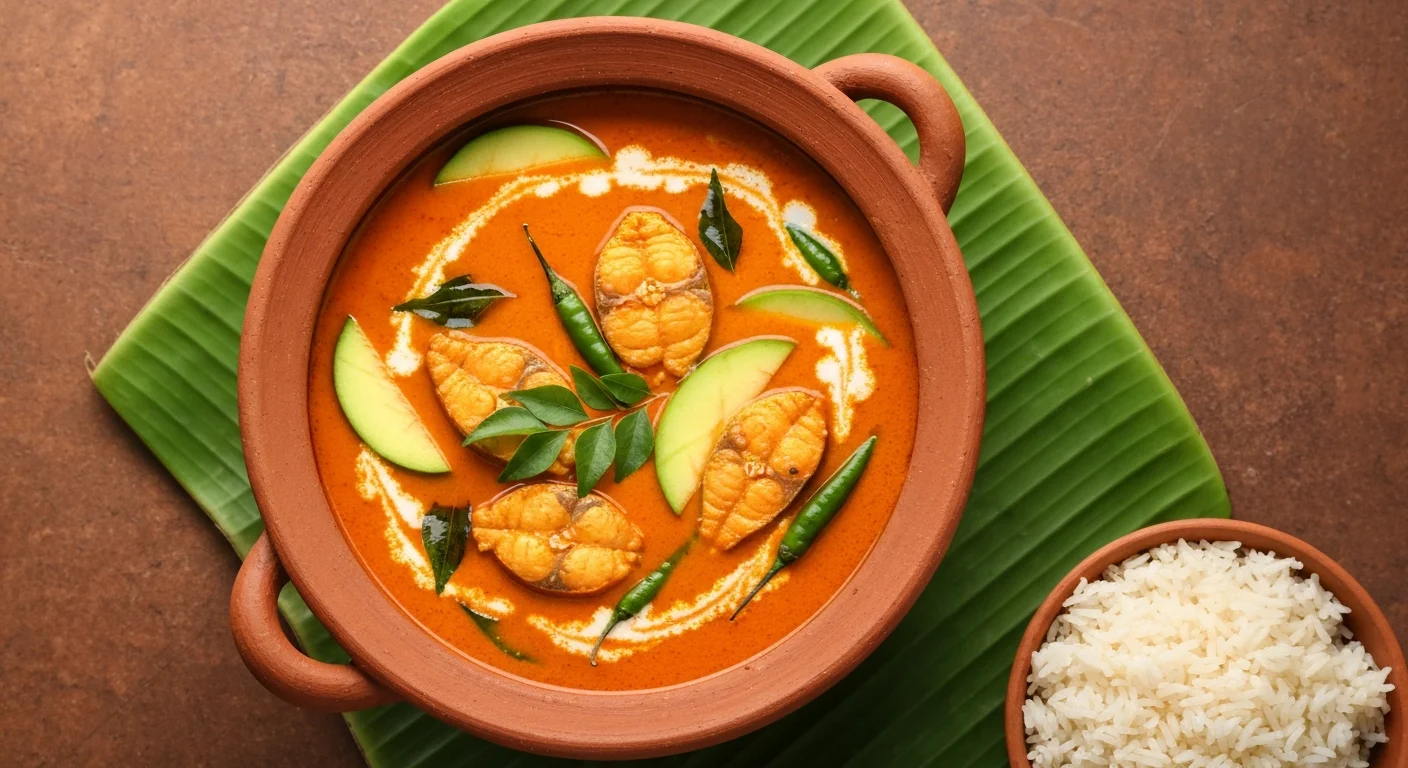
Quick answer: Goan mango fish curry is a bright, tangy coastal Indian dish made by simmering firm white fish in a coconut-based gravy punched up with green mango, red chili, and kokum. You make it because it turns a one-pound fillet of Texas Gulf snapper into a restaurant-quality dinner in under 40 minutes, and because the sweet-sour balance works perfectly with Texas summer tomatoes and fresh herbs.
History and Origin
Goa sits on India’s western coast, where Portuguese colonization from 1510 to 1961 left a deep mark on the cuisine. Vinegar, chili, and slow-cooked meats arrived with the Portuguese, but the foundation of Goan food remained Konkani: coconut, curry leaves, kokum, and rice. Mango fish curry belongs to a family of coastal Indian dishes that use raw or half-ripe mango as a souring agent when tamarind or lime is unavailable. The technique spread from Goa down through Mangalore and Kerala, with each coastal community developing its own variation.
My husband grew up eating this curry every summer when the first green mangoes arrived in his grandmother’s kitchen in Panjim. She used pomfret or kingfish caught that morning and a hand-ground coconut masala that she refused to let anyone else touch. When we moved to Texas, we struggled to find pomfret, but Gulf snapper, redfish, and even tilapia all work beautifully. The dish has become our family’s go-to summer dinner in Austin, and I have taught the recipe to dozens of Texas neighbors who had never cooked Indian food at home. At Swadeshi Mangoes we deliver raw green mangoes on request during the summer season across Texas.
Ingredients
- 1 1/2 pounds (680 g) firm white fish fillets (snapper, grouper, redfish, or tilapia), cut into 2-inch pieces
- 1 large green (raw) mango, peeled and sliced into thin half-moons (about 1 1/2 cups or 225 g)
- 1 can (14 oz / 400 ml) full-fat coconut milk
- 1/2 cup (50 g) fresh grated coconut (or unsweetened desiccated, rehydrated)
- 1 medium yellow onion, finely chopped
- 3 cloves garlic, minced
- 1-inch piece ginger, grated
- 2 green chilies, slit lengthwise
- 2 dried Kashmiri red chilies (for color, not heat)
- 3 to 4 pieces kokum (or 1 tablespoon tamarind paste as substitute)
- 1 teaspoon ground coriander
- 1/2 teaspoon ground cumin
- 1/2 teaspoon ground turmeric
- 1/4 teaspoon ground black pepper
- 1 sprig fresh curry leaves (about 10 leaves)
- 2 tablespoons coconut oil
- 1 teaspoon mustard seeds
- Salt to taste
- 1 cup (240 ml) warm water
- Fresh cilantro for garnish
Method
- Marinate the fish (15 minutes). Toss fish pieces with 1/4 teaspoon turmeric, 1/2 teaspoon salt, and a squeeze of lime. Set aside while you build the curry base.
- Make the coconut masala (5 minutes). In a small blender, combine fresh grated coconut, 1 dried Kashmiri chili, 1 clove garlic, 1/2 teaspoon coriander, 1/4 teaspoon cumin, and 1/4 cup water. Blend to a smooth paste. Set aside.
- Temper the oil (2 minutes). Heat coconut oil in a wide pan over medium heat. Add mustard seeds and let them pop. Add curry leaves, the second dried chili, and slit green chilies. Stir for 20 seconds.
- Saute aromatics (5 minutes). Add chopped onion and cook until soft and translucent, about 4 minutes. Add garlic and ginger, stir for 1 minute more.
- Build the base (3 minutes). Add remaining ground coriander, cumin, turmeric, and black pepper. Stir for 30 seconds to bloom the spices. Pour in the coconut masala paste and cook 2 minutes.
- Add liquids and mango (5 minutes). Pour in coconut milk and warm water. Add kokum pieces and green mango slices. Bring to a gentle simmer. Taste and add salt.
- Simmer the curry (8 to 10 minutes). Let the curry bubble gently so the mango softens but keeps its shape and the gravy thickens slightly. The kokum will turn the gravy a soft pink-orange.
- Cook the fish (7 to 9 minutes). Gently slide fish pieces into the curry. Spoon gravy over the top. Cover and simmer on low heat until fish is opaque and flakes easily, about 7 to 9 minutes. Do not stir aggressively or the fish will break.
- Finish and serve (2 minutes). Turn off heat, scatter cilantro on top, and rest the curry covered for 5 minutes before serving. This lets flavors meld.
Variety Recommendations
This curry calls for raw, unripe mango, which is a different beast from the ripe fruit most of our Texas customers order. That said, the best cooking mangoes for this dish are firm Totapuri picked early, or firm Banginapalli. Both varieties have enough body to hold their shape through simmering. Avoid using Alphonso or Kesar unripe because they are too delicate for savory cooking. Contact us through the order form to request raw cooking mangoes during peak season.
Tips
Do not skip the kokum. It is the defining sour-fruity note of Goan curries, and no substitute truly replaces it. That said, tamarind paste works in a pinch. Indian grocery stores in Houston, Dallas, and Austin stock kokum reliably.
Use the right fish. Gulf coast redfish, snapper, grouper, and drum all work beautifully. Avoid salmon and tuna because they overpower the delicate coconut base.
Do not overcook the fish. Once it flakes, it is done. Indian fish curries often suffer from rubbery fish because cooks let the pot simmer too long.
Rest the curry. Five minutes off the heat with a lid on transforms the flavor. The mango releases its last perfume and the gravy thickens.
Serve with plain rice only. Basmati, sona masoori, or Texas-grown jasmine all work. Avoid flavored rice because it competes with the curry.
Serving Suggestions
In Goa, this curry is always served with steamed red or white rice and a side of sauteed okra or raw onion rings with lime. For a full Texas coastal feast, I plate it with basmati rice, a cucumber-tomato kachumber salad, and fresh papadums. At Houston dinner parties I pair it with a chilled Alsatian Riesling or a dry rose from the Texas Hill Country; both handle the heat and echo the mango. For a San Antonio taco-night fusion, shred the fish and fold into warm corn tortillas with pickled onion.
Storage
Mango fish curry keeps in the refrigerator for up to two days, though the fish texture softens slightly on day two. Reheat gently on the stovetop with a splash of water or coconut milk to loosen the sauce. Do not microwave because the fish toughens. This curry does not freeze well because coconut milk and fish both suffer in texture when thawed. If you need to make ahead, prepare the curry base without fish up to two days in advance and poach fresh fish in the reheated base on serving day.
Dietary Notes
This curry is naturally gluten-free, dairy-free, and can be made pescatarian. For a vegan version, replace fish with firm tofu, king oyster mushrooms, or jackfruit and reduce cooking time. The gravy itself is already vegan. For a low-fat variation, use light coconut milk, though the curry loses some of its silky body. This dish is naturally low-carb if served over cauliflower rice instead of basmati.
FAQ
What fish is best for Goan mango fish curry?
In Goa, pomfret and kingfish are classic. In Texas, Gulf coast redfish, snapper, grouper, or drum are ideal because they are firm enough to hold together in curry. Tilapia and cod work as budget-friendly alternatives. Avoid salmon and tuna because their strong flavors fight the delicate coconut base.
Can I use ripe mango instead of green?
Ripe mango makes a completely different dish, often called mamidikaya pulusu or sweet mango curry. For authentic Goan flavor, use raw green mango for its tart bite. If you only have ripe fruit, add it in the last 3 minutes so it does not dissolve, and add extra lime juice to compensate for missing tartness.
What is kokum and where can I find it in Texas?
Kokum is a sun-dried coastal fruit with a tart, fruity flavor used all across the Konkan coast. Indian grocery stores in Houston (Patel Brothers, Fiesta) and Dallas (India Bazaar) stock it reliably. Tamarind paste is the best substitute if you cannot find kokum, though it lacks kokum’s characteristic floral note.
How spicy is this curry?
As written, this curry is mild to medium. Kashmiri chilies are used for color, not heat. The two green chilies add gentle warmth. For more heat, add an extra serrano or a pinch of cayenne. For less, remove seeds from green chilies or skip them entirely. The coconut milk tames any heat nicely.
Can I make this curry ahead of time?
Partially. Make the curry base up to two days ahead and refrigerate. On serving day, reheat the base, add fresh fish and mango, and simmer until fish is just cooked. This gives you restaurant-quality results with weeknight timing and works perfectly for Texas Sunday meal prep.
Recipe Card
Goan Mango Fish Curry
Prep time: 20 minutes
Cook time: 25 minutes
Total time: 45 minutes
Servings: 4
Cuisine: Indian (Goan)
Course: Main
Diet: Gluten-free, dairy-free, pescatarian (vegan adaptable)
Calories per serving: approximately 340
More mango ideas on our recipe blog, or order mangoes delivered across Texas. Fish nutrition information at USDA FoodData Central.