Tag: imam-pasand

  • Himayath (Imam Pasand) Mango: The Royal Variety Explained

    Himayath (Imam Pasand) Mango: The Royal Variety Explained

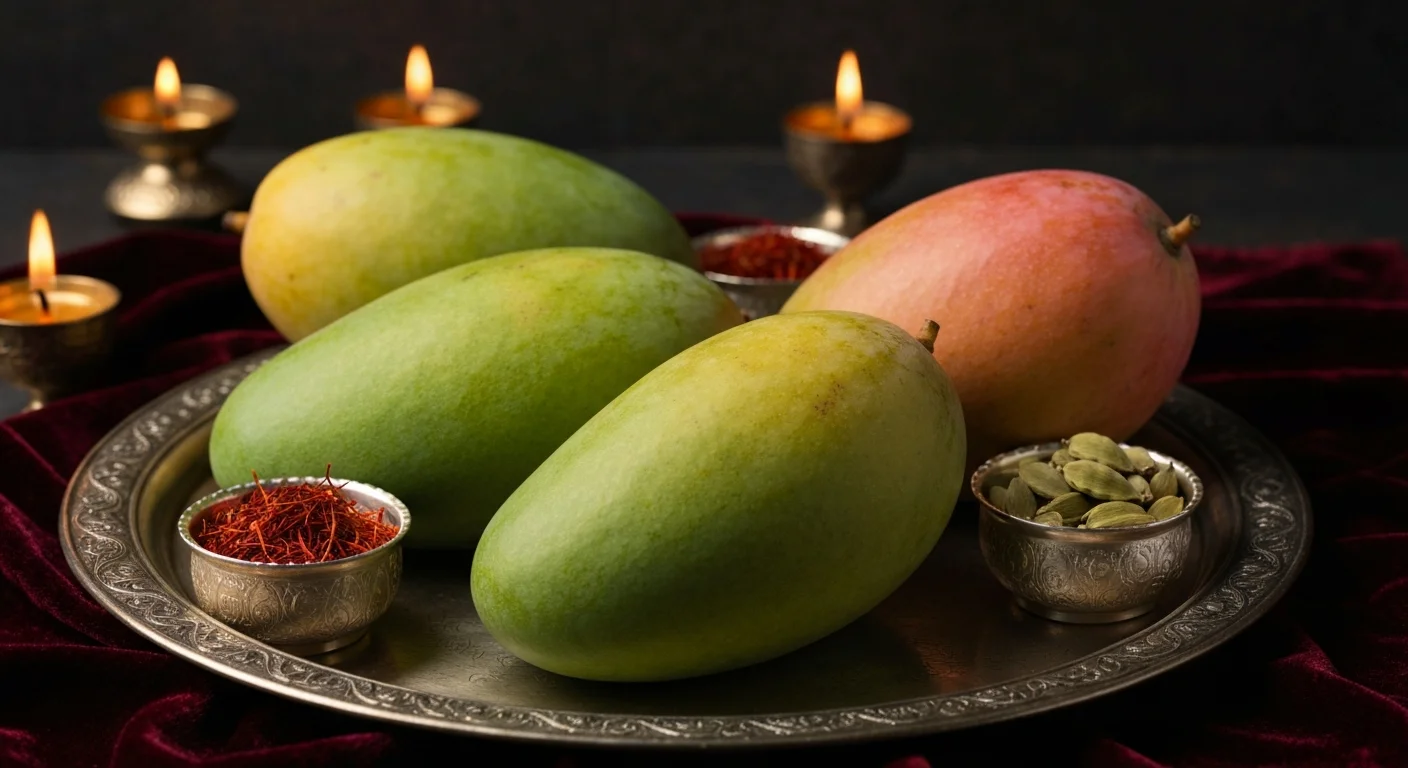
    Himayath, also spelled Himayat and widely known as Imam Pasand, is a large, elongated Indian mango native to the Deccan plateau around Hyderabad. The name Imam Pasand translates literally to "the Imam’s favorite," referencing its historical status as the preferred mango of Nizami and Mughal nobility. Each fruit weighs 400-600 grams, has almost no fiber, and carries a complex flavor that combines honey, mild cardamom, and a faint resinous note no other variety reproduces. At Swadeshi Mangoes we ship Himayath from Telangana and Andhra Pradesh to Texas customers each June, and it consistently ranks as the single most expensive and most requested variety in our lineup.

    The History Behind the Name Imam Pasand

    The Himayath variety has been cultivated in the Deccan for at least 300 years, with the earliest written references appearing in late 17th-century Qutb Shahi garden records from Golconda. The variety was called Himayath, a Persian-Urdu word meaning "protection" or "patronage," under the later Asaf Jahi dynasty that ruled Hyderabad from 1724 to 1948. Court records from the Salar Jung archives describe the fruit being reserved for the Nizam’s personal table and distributed as gifts during Ramadan.

    Somewhere in the 19th century the variety picked up its second name, Imam Pasand, after an unnamed imam who is said to have praised the fruit so publicly that the title stuck. Today both names are used interchangeably across Telangana, Andhra Pradesh, and Tamil Nadu, with Imam Pasand being more common in Chennai and Bangalore markets and Himayath being the preferred name in Hyderabad.

    Why It Was Royal Fruit

    Three qualities made Himayath royal. First, the fruit is large and visually striking, with a distinctive elongated shape that photographs and paints well. Second, the pulp is almost fiberless, which mattered when fruit was eaten with silver spoons at court rather than cut on a cutting board. Third, the aroma is strong enough to perfume an entire room, so a single fruit placed in a silver bowl functioned as both dessert and room scent. In a pre-refrigeration era, that combination was a luxury only the wealthy could source reliably.

    Where Himayath Grows Today

    Himayath is grown in a belt running from Mahbubnagar and Rangareddy districts of Telangana, through Chittoor in Andhra Pradesh, down to Krishnagiri in Tamil Nadu. The commercial center is still the area around Hyderabad, and the best fruit consistently comes from orchards in the Mahbubnagar-Jadcherla region at elevations of 400-500 meters. The Deccan’s combination of deep red soils, hot summers (reaching 43 C in May), and cool dry winters produces the chemical signatures that distinguish Himayath from every other variety.

    The harvest runs from early June to mid-July, making it one of the later-season Indian mangoes. That timing is part of why it costs more: by June, the peak-season Alphonso and Banginapalli supply has dropped, and Himayath fills a premium late-season slot.

    What Himayath Tastes Like

    If Alphonso is the bright, floral soprano of Indian mangoes, Himayath is the baritone. The flavor is deeper, rounder, and more layered. Customers describe three distinct notes: an opening of pure honey, a mid-palate hint of cardamom and saffron, and a long finish with a faint pine-resin lift that lingers for 20-30 seconds after swallowing. Brix readings at peak ripeness run 19-21 degrees, slightly lower than Chinna Rasalu or Alphonso, but the perception of sweetness is amplified by the aromatic complexity.

    The texture is the other reason people pay a premium. A ripe Himayath cuts with almost no resistance, and the pulp has no visible fiber strings even under close inspection. When scooped with a spoon, it holds a loose custard shape. This is the variety that converts mango skeptics, including people who grew up thinking mangoes were stringy Tommy Atkins from the supermarket.

    A Texas Customer Story

    A Houston customer bought his first box of Himayath from us in 2024 after 22 years of only eating Mexican Ataulfo mangoes. He sent an email three days later that read simply: "I did not know fruit could do this. My wife and I sat in the kitchen and did not talk for ten minutes. Please put me on the list for next year." We did, and he has ordered every season since. That email is pinned above the desk where Vamsi, our founder, reviews the pre-order list each April.

    Himayath Nutrition and Health Profile

    Himayath is nutritionally dense, particularly for vitamin A and polyphenols. A 2021 study published in the Journal of Food Composition and Analysis analyzed 14 Indian mango cultivars and found Imam Pasand had the third-highest total phenolic content, behind only Dasheri and Langra. The full nutrient profile per 200-gram serving, cross-referenced with USDA FoodData Central:

    NutrientPer 200g fruit% Daily Value
    Calories128 kcal6.4%
    Total sugars28 g
    Vitamin C72 mg80%
    Vitamin A (RAE)112 mcg12%
    Fiber3.2 g11%
    Folate86 mcg22%
    Polyphenols148 mg GAEHigh

    The National Mango Board and multiple PubMed-indexed studies have linked mango polyphenols, particularly mangiferin, to favorable effects on inflammatory markers and lipid profiles. Himayath, because of its higher polyphenol density, sits on the upper end of that range.

    How to Identify Authentic Himayath

    Counterfeit Himayath is a real problem in Indian markets, where other large green-yellow varieties are sometimes sold under the Imam Pasand name at inflated prices. Authentic Himayath has five visual and tactile markers:

    Visual and Tactile Checks

    The shape is elongated and slightly asymmetric, not round. The skin remains predominantly green even when fully ripe, with only a light yellow blush near the stem. A faint pink tinge on the shoulder is common but not required. The stem end is deeply inset, almost like a small cup. When ripe, the fruit gives slightly under thumb pressure near the tip but remains firm at the shoulder. And the aroma at the stem end is unmistakable, a mix of honey and resin that you can smell from half a meter away.

    How to Ripen Himayath in Texas

    Himayath ripens more slowly than Alphonso or Kesar. In a Texas kitchen at 78-82 F, expect 6-8 days from mature-green to peak ripeness. We ship it at roughly 80% maturity, which gives you time to stagger your ripening across the box rather than having all six fruit peak on the same day.

    Store on the counter in a paper bag if you want to accelerate, or spread on an open tray if you want slower, more even ripening. Never refrigerate green. Once fully ripe, the fruit holds in the fridge for 3-4 days without significant flavor loss, though we recommend eating fresh. Full storage details are in our mango care guide.

    Serving Ideas Beyond Eating Fresh

    Himayath is too good to cook aggressively, but it shines in preparations that highlight rather than overpower the fruit. Three recommendations from our Texas customers:

    First, Himayath lassi made with full-fat yogurt, a pinch of green cardamom, and a single strand of saffron. The cardamom and saffron match the fruit’s natural aromatic profile. Second, a simple Himayath and fresh burrata salad with cracked pepper and a drizzle of cold-pressed olive oil. Third, a Hyderabadi-style mango chutney using slightly underripe Himayath with jaggery, red chili, and mustard seeds, served alongside biryani.

    Himayath vs. Other Premium Indian Mangoes

    VarietyAvg. WeightHarvestShelf LifeTexas Price Tier
    Himayath400-600 gJun-Jul5-7 days ripePremium
    Alphonso200-300 gApr-Jun7-10 days ripePremium
    Kesar250-350 gMay-Jul8-10 days ripeMid
    Banginapalli350-500 gMay-Jun10-14 days ripeMid
    Chinna Rasalu150-200 gMay-Jun6-8 days ripeMid-Premium

    Frequently Asked Questions

    Why is Himayath so expensive?

    Himayath costs more because of limited cultivation area, a short late-season harvest window, lower yield per tree compared to commercial varieties, and high demand from premium markets in India and the Gulf. In Texas, air-freight costs and the delicate handling required to preserve fruit quality also raise the retail price relative to shipped-varietals like Banginapalli.

    Is Himayath the same as Imam Pasand?

    Yes. Himayath and Imam Pasand refer to the same mango cultivar. Himayath is more common in Hyderabad and Telangana, while Imam Pasand is the preferred name in Tamil Nadu, Chennai, and Bangalore. The fruit, tree, and flavor profile are identical regardless of which name appears on the box.

    When can I order Himayath in Texas?

    Himayath pre-orders open in early May at Swadeshi Mangoes, and shipments begin arriving in Texas in mid-June. The season runs approximately six weeks, ending in late July. Quantities are limited each year based on orchard availability, and Himayath typically sells out before any other variety in our catalog.

    How do I know when Himayath is ripe?

    A ripe Himayath gives slightly under thumb pressure at the tip while remaining firm at the shoulder. The aroma at the stem end becomes strong and honey-like. Skin color changes are subtle since the fruit stays mostly green even when ripe. When in doubt, smell first, squeeze second. Our mango care guide has photo examples.

    Can Himayath be shipped outside of Texas?

    Currently Swadeshi Mangoes delivers Himayath only within Texas, through our pickup agent network in Austin, Dallas, Houston, and San Antonio. Out-of-state delivery is not available at this time because of the fruit’s short shelf life and the need for agent-managed handoff at the right ripeness stage.

    Reserve Your Himayath for the 2026 Season

    Himayath is the one variety we tell customers to pre-order before April, because it sells out every single year. If you grew up in Hyderabad, if you have heard your parents talk about "the Imam’s mango," or if you simply want to taste the fruit that fed Deccan royalty for three centuries, head to our order form now. Browse all nine Indian mango varieties we carry, or read more variety deep-dives on the Swadeshi Mangoes blog.

    For more on Deccan mango cultivation, see the APEDA mango export documentation, the National Mango Board variety library, and the PubMed index on mango polyphenol research.
  • How to Read a Mango Box Label: Grades, Origins, and What They Mean

    How to Read a Mango Box Label: Grades, Origins, and What They Mean

    Your mango box has arrived and there is text printed on the side. A grade, a region name, a weight, maybe a certificate number. Most people ignore it. But this information tells you exactly what you are getting — and whether it is worth the price. Once you know how to read a mango box label, you will never look at a box the same way again. It is the difference between buying blindly and buying with confidence.


    The Origin Label

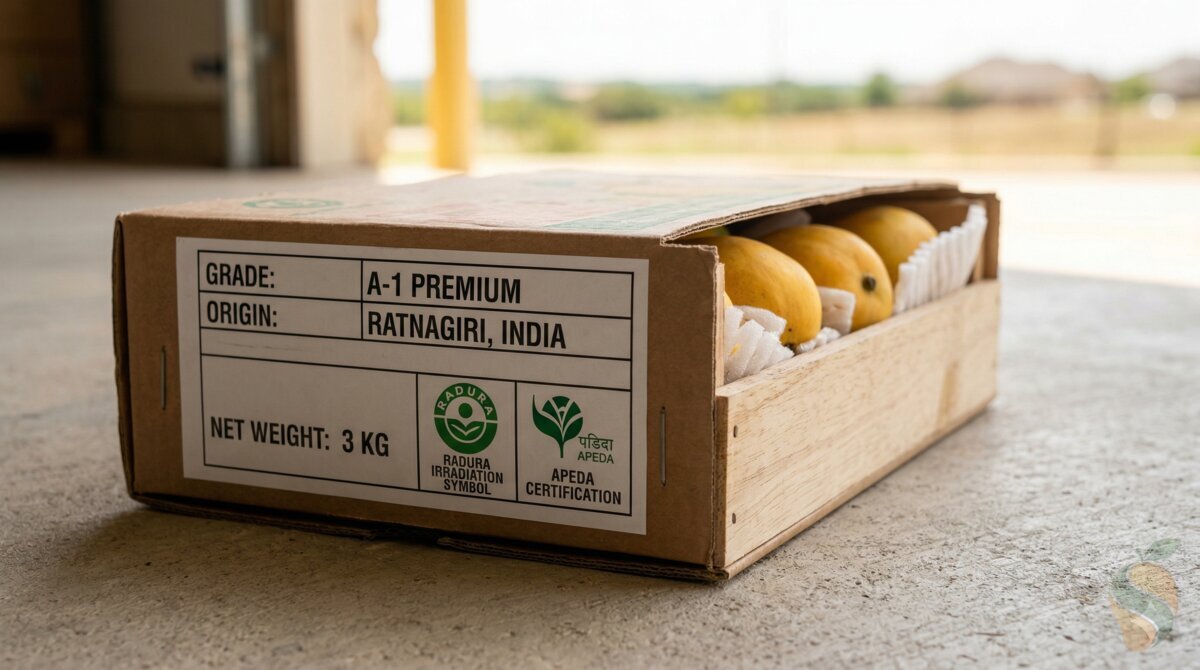
    The most important piece of information on the box. For Alphonso, look for:

    • “Ratnagiri” or “Devgad” — These are the two premium Alphonso-growing regions in Maharashtra. Alphonso from here has a GI (Geographical Indication) tag, similar to Champagne from France. This is the real deal.
    • “Valsad” or “Gujarat”Kesar mangoes from this region are the authentic ones. Junagadh and Gir are the premium sub-regions.
    • “Krishnagiri” or “Salem” — South Indian varieties like Banganapalli and Imam Pasand come from these Tamil Nadu/Andhra Pradesh regions.

    If the box does not mention a specific region, it is a yellow flag. Premium exporters always label the origin because it adds value.

    Here is why origin matters so much: Indian mangoes are not commodities. An Alphonso from Ratnagiri and an Alphonso from somewhere else in Maharashtra are the same cultivar but different products. Ratnagiri has specific laterite soil, coastal humidity, and temperature patterns that produce the distinctive Alphonso flavor profile — the saffron-colored flesh, the creamy texture, the complex aroma. Alphonso grown outside this belt is still Alphonso, but it often lacks the depth that makes Ratnagiri fruit special.

    The same principle applies across all premium varieties. Kesar from Gir Junagadh versus Kesar from elsewhere in Gujarat. Banganapalli from its home district in Andhra Pradesh versus Banganapalli grown in other states. The label tells you whether you are getting the original or a regional copy. Both are real mangoes. One is the benchmark.

    The Grade

    Indian mango exporters use a grading system based on size and quality:

    • Grade A / Premium / Super: Largest, most uniform mangoes. No blemishes, consistent size. These are the most expensive.
    • Grade B / Regular: Slightly smaller or with minor cosmetic imperfections. Taste is identical to Grade A — the difference is purely visual.
    • Commercial grade: Mix of sizes, may have sap marks or small spots. Good for making pulp, pickle, or smoothies.

    If you are eating fresh, Grade A gives the best presentation. If you are making recipes, save money and go with Grade B.

    There is an important distinction that most consumers miss: grading is done at the export facility based on visual inspection and sizing. It does not reflect sweetness, ripeness, or flavor. A Grade B Alphonso that is perfectly ripe will taste better than a Grade A Alphonso that is slightly underripe. The grade tells you about appearance and uniformity, not about eating quality. So if you see a Grade B box at a lower price and you are planning to eat the mangoes at home rather than present them as a gift, you are getting the same flavor for less money.

    Some exporters use their own naming conventions — “Premium,” “Super Premium,” “Royal,” “King” — instead of standard A/B grades. These are marketing terms that roughly correspond to the standard system but are not standardized across the industry. When in doubt, look at the count (number of mangoes per box) rather than the grade name. Fewer mangoes per box means larger individual mangoes, which generally indicates a higher grade.

    The Count

    Many boxes display a count — the number of mangoes inside. This number is more informative than most people realize.

    For Alphonso in a standard 3 kg box:

    • 6-8 count: Large mangoes. Premium grade. Each mango weighs 375-500 grams.
    • 9-12 count: Medium mangoes. Standard grade. Each mango weighs 250-333 grams.
    • 12-15 count: Smaller mangoes. Often labeled regular or commercial. Each mango weighs 200-250 grams.

    Lower count means larger mangoes and usually a higher price. But here is the practical truth: a 12-count box of medium Alphonso often provides a better eating experience than a 6-count box of jumbo Alphonso. Medium-sized mangoes tend to ripen more evenly and have a higher flesh-to-seed ratio than very large ones. The seed does not grow proportionally with the flesh, so a medium mango gives you roughly the same amount of seed and more evenly distributed flesh.

    The Weight

    Boxes are typically labeled in kilograms:

    • 3 kg box: Standard size. Contains 6-9 mangoes depending on variety and grade.
    • 5 kg box: Larger box. 10-15 mangoes. Better value per mango.

    The count varies because mango size varies. A 3 kg box of large Grade A Alphonso might have 6 mangoes. The same weight in smaller Grade B might have 9.

    Weight labels refer to net weight — the weight of the mangoes themselves, not including the box, padding, or wrapping. Some exporters pack slightly over the labeled weight to account for moisture loss during transit. If you weigh your box at home and it comes in slightly under the labeled weight, that is normal — the mangoes lose a small amount of moisture during the 5-7 day journey from India to your doorstep.

    Also pay attention to what the weight label says about the box format. Some exporters label by “dozen” (12 mangoes regardless of weight) while others label by weight (3 kg regardless of count). These two systems produce very different value propositions. A dozen small Alphonso might weigh 2.5 kg. A 3 kg box might contain only 7 large ones. Always check both the weight and the count to understand what you are actually getting.

    The Irradiation Mark

    Look for the green Radura symbol — a circle with a plant inside it. This confirms the mangoes underwent USDA-required irradiation treatment. All legally imported Indian mangoes must have this symbol. If it is missing, question the source.

    The Radura symbol is not optional for Indian mangoes sold in the United States. It is a federal requirement under FDA regulations. If someone is selling you Indian mangoes without this symbol, one of two things is happening: either the mangoes were not legally imported (which means they bypassed USDA phytosanitary requirements), or the labeling is incomplete (which means the seller is not following FDA rules). Either way, it is a red flag.

    The irradiation process itself is straightforward. Mangoes are exposed to a controlled dose of ionizing radiation at a USDA-approved facility, which eliminates fruit fly larvae that could pose an agricultural risk to US farms. The treatment does not make the fruit radioactive, does not leave residues, and has been approved as safe by the FDA, WHO, and FAO. It may cause a slight reduction in Vitamin C content — on the order of 5-10% — but does not meaningfully affect flavor or texture for most consumers.

    Phytosanitary Certificate Number

    The box may have a certificate number referencing the APEDA (Agricultural and Processed Food Products Export Development Authority) approval. This means the shipment passed Indian export inspection.

    APEDA certification is India’s side of the import equation. It confirms that the mangoes were grown, processed, and packed according to export standards. The phytosanitary certificate verifies that the shipment was inspected for pests and diseases before leaving India. Having this number on the box means the mangoes went through a legitimate export channel with proper documentation at both ends.

    For consumers, the phytosanitary certificate number is less important than the origin label or grade. But it is a marker of legitimacy. An exporter who puts the certificate number on the box is one who went through proper channels and has nothing to hide. It is a small detail that signals professionalism.

    Date Codes

    Some exporters stamp a harvest or pack date. If you can find it, this tells you how fresh the mangoes are. Ideally, the pack date should be no more than 5-7 days before you receive them.

    Date codes on mango boxes are not standardized. Some exporters use the packing date, some use the ship date, and some use the irradiation treatment date. The most useful date to know is the packing date, which tells you when the mangoes were packed into the box at the export facility. From that date, add 2-3 days for irradiation and customs clearance, plus 1-2 days for domestic shipping, and you have a rough idea of the mango’s total journey time.

    If you find a date code and the mangoes in your box are still quite firm, do not panic. Mangoes are harvested mature-green and ripen after packing. A mango that was packed 5 days ago and is still firm simply means it was packed at an earlier maturity stage and needs a few more days at room temperature. Refer to our ripening guide for instructions on bringing them to perfect ripeness.

    Red Flags to Watch For

    Not all mango boxes are created equal. Here are warning signs that something might be off:

    • No origin region listed: Premium mangoes always state where they are from. A box that just says “Indian Alphonso” without naming Ratnagiri or Devgad may contain Alphonso from a less premium region.
    • No Radura symbol: As mentioned above, this is legally required. Its absence raises questions about import legitimacy.
    • Suspiciously low price: If Alphonso is being sold at half the going rate, the mangoes are either lower grade than claimed, from a non-premium region, or not actually Alphonso. Genuine Ratnagiri Alphonso has a floor price driven by real farming and export costs.
    • Damaged or wet box: The box should be dry and intact. Moisture damage suggests the mangoes were stored improperly or one or more mangoes inside have overripened and leaked. Open carefully and inspect each mango individually.
    • Artificial uniformity: If every single mango in a box looks absolutely identical in size, color, and shape, some exporters achieve this by mixing mangoes from different batches. This is not harmful but means your box may include mangoes at different ripeness stages.

    How to Compare Boxes When Shopping

    If you are buying Indian mangoes from a store or vendor and have multiple boxes to choose from, here is what to look at in order of importance:

    1. Origin: Specific region named on the box.
    2. Pack date: More recent is better.
    3. Grade and count: Match to your intended use (eating fresh vs. recipes).
    4. Box condition: Dry, intact, no crushed corners.
    5. Smell: Gently smell the box near the air holes. You should detect a faint, sweet mango aroma. No smell could mean the mangoes are very green. A fermented or sour smell means at least one mango inside has overripened.

    When you order from a trusted source, you do not have to do this detective work — the selection is done for you. But knowing how to read the label makes you a more informed consumer, and it helps you appreciate the care that goes into getting a box of mangoes from a farm in India to your hands in Texas.

    What Swadeshi Boxes Look Like

    Every Swadeshi Mangoes box comes with clearly labeled variety, origin, grade, and weight. We source from verified farms and can tell you exactly which orchard your mangoes came from. Ask your pickup agent — they know the details.

    We believe in full transparency because we believe informed customers are loyal customers. When you know that your Alphonso came from a specific farm in Ratnagiri, that it was packed on a specific date, and that it was air-shipped through a USDA-approved facility, you can trust what you are eating. That trust is what brings families back season after season.

    Order your next box and read the label like a pro. Visit our FAQ page for more questions about mango sourcing, grading, and delivery.

    Swadeshi Mangoes: Full Transparency

    Every Swadeshi box is labeled with variety, origin, grade, and weight. We source from verified farms and deliver to Austin, Dallas, Houston, and San Antonio. Ask your pickup agent about the origin of your specific batch. Browse all available varieties or head to the order page to place your order for the season.

    Frequently Asked Questions

    What does the Radura symbol on a mango box mean?

    The green Radura symbol (circle with a plant inside) indicates the mangoes underwent USDA-required irradiation treatment. All legally imported Indian mangoes must display this symbol. It confirms the fruit is safe and compliant with US import regulations.

    What mango grades are available?

    Grade A (Premium/Super) are the largest, most uniform mangoes with no blemishes. Grade B (Regular) are slightly smaller with minor cosmetic imperfections but identical taste. Commercial grade includes mixed sizes suitable for recipes and pulp. Swadeshi delivers Grade A export-quality mangoes.

    Does the origin region on the box really matter?

    Yes. Alphonso from Ratnagiri has a GI tag for a reason — the specific soil and climate produce a distinct flavor profile. Alphonso grown in other regions of India tastes different. The same applies to Kesar from Junagadh and Banganapalli from Andhra Pradesh. Origin is the single most important quality indicator on the box.

    What does the count on a mango box mean?

    The count indicates how many mangoes are inside. A lower count means larger individual mangoes (higher grade). A 3 kg box with 6 mangoes has larger fruit than a 3 kg box with 12 mangoes. Both weigh the same, but the size and presentation differ.

Chat on WhatsApp