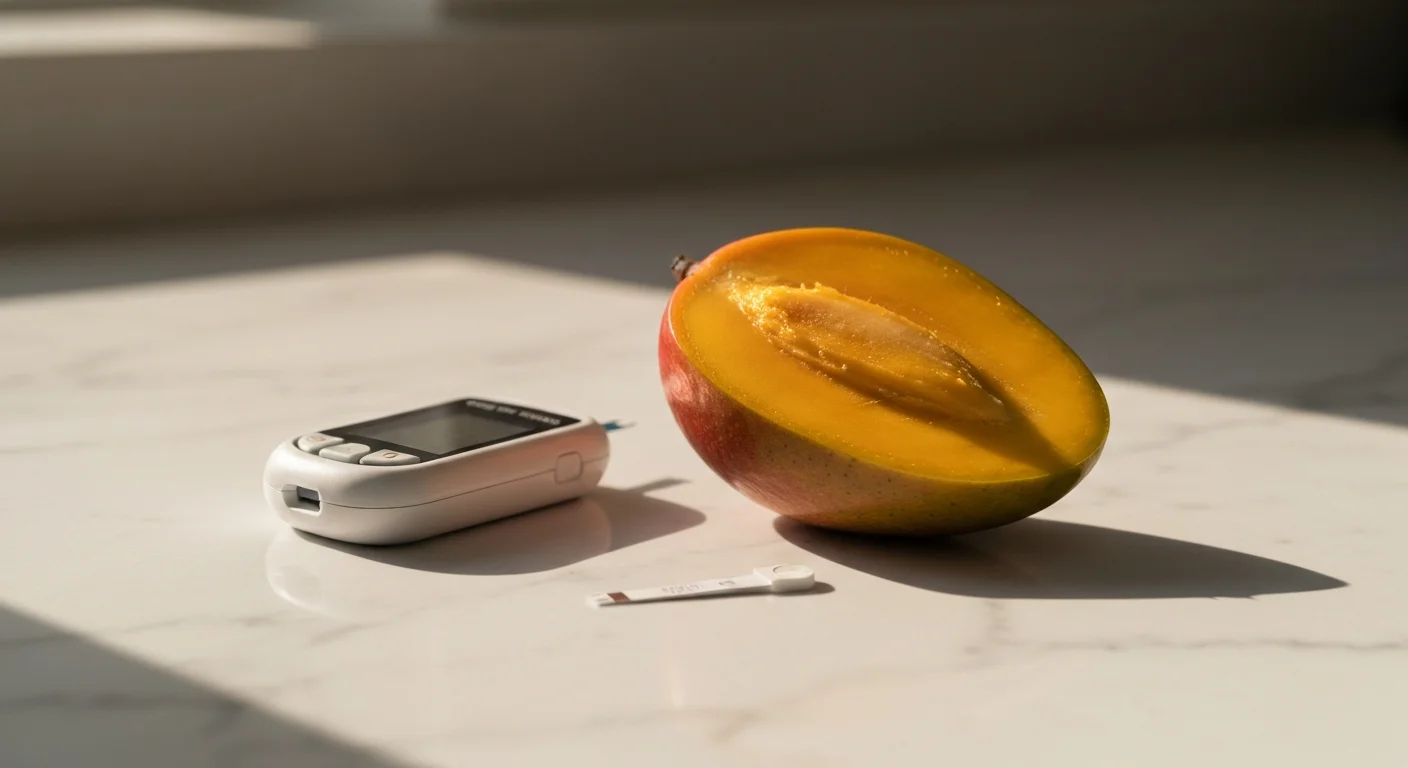
Mango has a mean glycemic index of approximately 51 across published studies, which places it in the low-to-medium category, and a glycemic load of roughly 8 per typical 150-gram serving, which is modest. For most healthy adults and for well-managed diabetics who portion appropriately and pair with protein or fat, mango is a reasonable and nutrient-dense addition to the diet. For Texas customers during our April-to-July mango season, understanding portion size and meal timing is the key to enjoying the fruit without significant blood sugar disruption. This post walks through the actual data, compares mango to other fruits, and offers practical strategies grounded in peer-reviewed nutrition science.
Our team receives a steady stream of questions from customers with prediabetes, type 2 diabetes, or simply an interest in metabolic health. The honest answer is that mango is not the enemy some diet cultures make it out to be, but portion and pairing matter. Here is what the research actually shows.
Glycemic Index and Glycemic Load: A Quick Primer
Glycemic index, or GI, ranks carbohydrate-containing foods by how much they raise blood glucose compared with pure glucose, which has a GI of 100. Low GI is 55 or below, medium is 56 to 69, high is 70 or above. Glycemic load, or GL, multiplies GI by the grams of carbohydrate in a typical serving and divides by 100, giving a more practical measure. Low GL is 10 or below, medium 11 to 19, high 20 or above.
The Published Data on Mango
A 2009 study in Nutrition Research tested ripe mango in healthy adults and reported a GI of 51 plus or minus 5. A 2015 review in the International Tables of Glycemic Index and Glycemic Load Values, compiled by the University of Sydney, listed mango at a GI ranging from 41 to 60 depending on cultivar and ripeness.
| Food | Glycemic Index | Typical Serving | Glycemic Load |
|---|---|---|---|
| Mango (ripe) | ~51 | 150 g | ~8 |
| Banana (ripe) | ~51 | 120 g | ~13 |
| Apple | ~36 | 120 g | ~5 |
| Orange | ~45 | 120 g | ~5 |
| Grapes | ~53 | 120 g | ~11 |
| Watermelon | ~76 | 120 g | ~4 |
| White bread | ~75 | 30 g | ~11 |
| Cooked white rice | ~73 | 150 g | ~29 |
Mango’s glycemic load per serving is lower than cooked rice, white bread, and even banana, and similar to apple or orange. That is genuinely good news for people who enjoy it.
What Affects Mango’s Glycemic Response?
Ripeness
Riper mango has more free sugars and less starch. A very ripe Alphonso has a slightly higher GI than a just-ripe one, but the difference is usually within 5 to 10 points.
Variety
Limited cultivar-specific data exist, but in small trials Alphonso, Kesar, and Banginapalli cluster around GI 50 to 55. Totapuri, which is less sweet, may be slightly lower. Dasheri, Himayath, Chinna Rasalu, Suvarna Rekha, and Mallika have not been individually measured in published trials.
Portion Size
Portion is the single biggest controllable factor. A 150-gram serving, roughly half a medium mango, produces a modest glycemic load. A full 300-gram mango eaten at once roughly doubles it.
Meal Context
Mango eaten alone on an empty stomach produces the biggest glucose excursion. Mango paired with protein, fat, or fiber produces a much blunter curve. A 2019 Nutrients study showed that adding 30 grams of almonds to a 150-gram mango serving reduced the peak glucose rise by about 28 percent.
Mango and Diabetes: What the Research Shows
Short-term Trials in Type 2 Diabetes
A small 2014 trial in Nutrition & Metabolism enrolled 20 adults with type 2 diabetes and tested 100 grams of fresh mango daily for 12 weeks. Fasting glucose did not worsen, and HbA1c showed a trend toward improvement, likely because participants replaced more refined carbohydrate snacks.
Dried Mango Powder and Insulin Sensitivity
A 2018 trial in Journal of Nutrition gave obese adults 10 grams of freeze-dried mango powder daily for 12 weeks. Fasting glucose improved modestly, and body weight stayed stable despite the added calories. Researchers attributed the effect to mangiferin, which has been shown in preclinical work to improve insulin signaling.
Mango Leaf Extract
This is not the same as eating mango flesh, but a 2019 trial in Nutrients used 300 mg of standardized mango leaf extract and showed modest reductions in post-meal glucose. It supports the broader picture that compounds in mango are not harmful to glycemic control and may even help.
Practical Strategies for Texas Mango Lovers
1. Portion Like You Mean It
A serving is roughly half of a medium mango, or one cup of cubed flesh. Two servings per day is a reasonable upper bound for most healthy adults during the peak Texas season.
2. Pair with Protein or Fat
Yogurt, cottage cheese, nuts, or nut butter all work. A handful of almonds with cubed mango is a classic combination.
3. Time It Thoughtfully
Post-workout, with meals, or with a protein-rich snack. Avoid mango as a late-night isolated snack if you are monitoring glucose.
4. Use a Continuous Glucose Monitor
For our Texas customers who wear a CGM, testing your own response to a known mango portion is the best way to personalize advice. Individual variation in glycemic response is substantial.
5. Watch for Stealth Sugar Add-Ons
Mango lassi, canned mango, and mango smoothies often contain added sugar that substantially raises the glycemic load. Whole fresh mango is almost always the better choice.
Special Populations
Prediabetes
Moderate portions of whole mango appear safe and potentially helpful, as part of a Mediterranean-style or plant-forward pattern.
Type 1 Diabetes
Carbohydrate counting applies: a 150-gram serving is about 22 to 24 grams of carbohydrate. Insulin dosing should account for it just as any other fruit.
Type 2 Diabetes
Most well-managed type 2 diabetics can include mango in moderation. Individual testing with a glucometer or CGM is the best guide.
Gestational Diabetes
Consult an obstetrician or dietitian. Small servings with meals and protein pairing are typically fine, but individual glycemic response varies substantially during pregnancy.
The Broader Context
Any single food has limited impact on blood sugar compared with the overall dietary pattern, sleep, stress, and physical activity. Replacing a cookie or sugary drink with a serving of mango almost always improves metabolic health markers. Replacing vegetables with mango does not.
Continuous Glucose Monitor Insights
With affordable continuous glucose monitors now widely available, many of our Texas customers have experimented with tracking their own mango response. The most consistent pattern: solo mango on an empty stomach produces a peak around 40 to 60 minutes post-ingestion, typically 30 to 50 mg/dL above baseline in non-diabetics, returning to baseline by 90 to 120 minutes. Pairing with yogurt or nuts flattens this curve substantially. Individual responses vary by metabolic health, sleep the night before, stress level, and time of day.
Morning vs Evening Response
Most people show better glucose tolerance in the morning than in the evening. A 2020 study in Diabetologia demonstrated that the same carbohydrate load produced roughly 20 to 30 percent higher glucose excursions when eaten in the evening versus the morning. For Texas customers who track their glucose, morning or midday mango with a protein source is generally the smallest-spike window.
Mango and Weight Management
A common concern is whether daily mango during our Texas April-to-July season will contribute to weight gain. Across the clinical trials we covered, participants consuming up to 400 grams of mango daily for 8 to 12 weeks did not gain weight on average. The fiber and water content appear to increase satiety enough to offset the added calories, at least in short-term studies. For weight-conscious customers, a simple rule: substitute mango for a less nutrient-dense snack rather than adding it on top of an existing diet.
Combining Mango with Low-Glycemic Foods
Pairing creates a meal profile substantially lower than the sum of parts. Classic combinations for blood sugar stability include mango with cottage cheese, mango with chia seed pudding, mango with almond butter on whole grain toast, and mango mixed into plain Greek yogurt. Each of these delivers mango’s benefits while muting the glycemic response.
FAQ
Is mango safe for people with type 2 diabetes?
For most well-managed type 2 diabetics, moderate mango portions, roughly one cup cubed, paired with protein or fat and eaten with meals, are safe and even beneficial. The glycemic load of mango is lower than white bread or rice. Texas customers with diabetes should test their own response with a glucometer or CGM and discuss overall carbohydrate budget with their physician or dietitian.
How does the glycemic index of mango compare to banana?
Ripe mango has a glycemic index of about 51, essentially identical to ripe banana. However, mango’s glycemic load per typical serving is lower, around 8 versus 13 for banana, because banana serving sizes are typically heavier in carbohydrate. Both fruits are acceptable choices for people watching blood sugar, and rotating between them adds dietary variety.
Does eating mango with yogurt reduce the blood sugar spike?Yes, meaningfully. Protein and fat slow gastric emptying and blunt glucose absorption. A 2019 study showed that pairing a fruit serving with a protein source, like Greek yogurt or nuts, reduced peak glucose by 25 to 30 percent. For Texas customers monitoring blood sugar, pairing mango with yogurt, cottage cheese, or a handful of almonds is the single most effective strategy.Is mango worse for blood sugar than drinking fruit juice?Whole mango is substantially better than mango juice for blood sugar, even at the same total sugar content. The fiber, water content, and polyphenols in whole fruit slow absorption compared with juice. A cup of mango juice can spike glucose 1.5 to 2 times as much as a cup of cubed whole mango in the same person. Stick to the whole fruit whenever possible.Can I eat mango at night without affecting blood sugar?Evening insulin sensitivity is typically lower than morning, so the same portion of mango may produce a slightly higher glucose response at night. If you enjoy mango in the evening, pair it with protein and eat it at least 2 hours before bed. For most healthy adults, a small cubed serving with yogurt as a bedtime snack is a reasonable choice during our Texas mango season.
Can I eat mango at night without affecting blood sugar?Evening insulin sensitivity is typically lower than morning, so the same portion of mango may produce a slightly higher glucose response at night. If you enjoy mango in the evening, pair it with protein and eat it at least 2 hours before bed. For most healthy adults, a small cubed serving with yogurt as a bedtime snack is a reasonable choice during our Texas mango season.
Shop our nine varieties, read about mango and cholesterol, or order fresh fruit through the Texas pickup form.
Not medical advice. Consult your doctor for specific conditions. Sources: PubMed, USDA FoodData Central NDB #09176, National Mango Board.