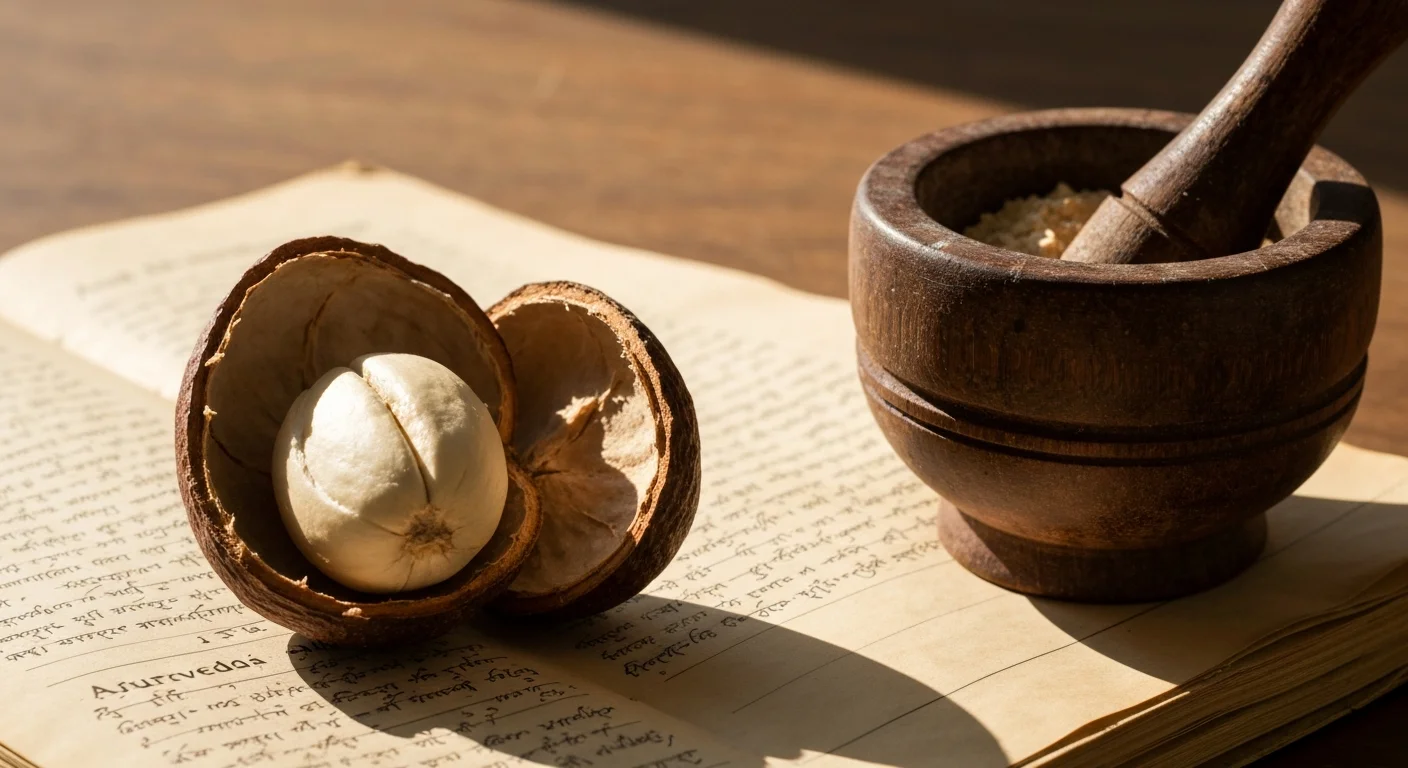
The kernel inside a mango seed, called Amra Majja in Sanskrit, is astringent, cool, and binding. Classical Ayurvedic texts including the Charaka Samhita and Bhavaprakasha describe mango kernel as a treatment for diarrhea, bleeding disorders, and excessive menstruation. Modern research confirms the kernel is rich in mangiferin, fat-soluble antioxidants, and tannins that validate several traditional applications.
What Is Inside a Mango Seed
Crack open a mango stone and you find a flat, cream-colored kernel. On a dry weight basis, the kernel contains roughly 8 to 12 percent protein, 8 to 15 percent fat, and 55 to 70 percent carbohydrate, along with significant levels of polyphenols, phytosterols, and tocopherols. A 2018 review in Food and Bioprocess Technology (DOI 10.1007/s11947-018-2076-7) catalogued more than 25 bioactive compounds in mango kernel, making it one of the most phytochemically dense seed tissues in the fruit world.
Why Ayurveda Noticed the Kernel
Historic South Asian physicians noticed that when diarrhea swept through villages, communities that dried and powdered mango kernels had better outcomes. Observational medicine slowly compiled kernel preparations into the materia medica. The Bhavaprakasha Nighantu, a 16th-century Ayurvedic text, lists “Amra Beeja” (mango seed) as a primary remedy for diarrhea, bleeding piles, and excessive menstruation.
Classical References
The Charaka Samhita (Chikitsasthana 19) discusses Amra Majja in the context of Grahani Roga, a broad category of digestive disorders including chronic diarrhea and malabsorption. Acharya Charaka recommends a decoction of powdered mango kernel with buttermilk. The Sushruta Samhita (Sutrasthana 46) cites Amra Majja for Raktapitta, bleeding disorders, and for reducing Pitta-driven inflammation.
Bhavaprakasha Detail
Bhavaprakasha categorizes Amra Beeja under Amlavarga with the following properties: Rasa Kashaya (astringent), Virya Sheeta (cooling), Vipaka Katu (pungent post-digestive effect). The kernel is described as Grahi (absorbent), Rakta-stambhaka (hemostatic), and Krimighna (antimicrobial). Modern research on mangiferin’s antimicrobial activity supports this last claim.
Modern Research Snapshot
A 2019 paper in the Journal of Ethnopharmacology (PMID: 31128154) tested mango kernel extract for antidiarrheal activity in animal models and found significant reduction in stool frequency, mediated by tannins and mangiferin. A 2020 Food Chemistry study demonstrated strong antioxidant activity in kernel extracts, with ORAC values exceeding those of grape seed extract at equivalent concentrations.
Mangiferin Concentration
Mangiferin concentrations in mango kernel run 2 to 8 times higher than in the pulp. This is why kernel-based preparations carry stronger pharmacological effects than pulp alone. Indian cultivars such as Alphonso and Banginapalli tend to have particularly high kernel mangiferin content.
Traditional Preparations
Amra Beeja Churna (Kernel Powder)
Fresh kernels are separated from the seed coat, sun-dried for 7 to 10 days, then ground into fine powder. The powder is stored in airtight glass jars. A typical adult dose for diarrhea is 1 to 3 grams of powder mixed with buttermilk or warm water, taken two to three times daily for a maximum of five days.
Kernel Decoction
One teaspoon of powder simmered in 200 ml water until reduced to 100 ml. Strained and consumed warm. Used in classical texts for Grahani Roga (irritable bowel-like conditions) and Raktapitta (bleeding disorders). Always prepare fresh and discard within 8 hours.
Hair Oil
Kernel is macerated in coconut or sesame oil and gently heated for several hours. The resulting oil is applied to scalp and hair. Traditional claims include reduced hair fall, darker color, and dandruff relief. A 2017 International Journal of Trichology paper noted that mango kernel fatty acid profile includes oleic acid, stearic acid, and palmitic acid, which support scalp barrier function.
Nutrient and Bioactive Profile
| Component (per 100 g dry kernel) | Amount | Key Function |
|---|---|---|
| Protein | 8-12 g | Building blocks |
| Fat (mostly oleic, stearic) | 8-15 g | Scalp barrier, energy |
| Carbohydrate | 55-70 g | Energy |
| Mangiferin | 1,200-3,500 mg | Antioxidant, antidiarrheal |
| Tannins | 500-1,200 mg | Astringent, hemostatic |
| Tocopherols (vitamin E) | 40-100 mg | Lipid antioxidant |
| Phytosterols | 200-400 mg | Cholesterol modulator |
Safety First
Kernel preparations should not exceed five consecutive days without professional supervision. Excessive use can cause constipation due to the high tannin load. Pregnant women should consult an Ayurvedic physician before using kernel preparations. Children under twelve should use only under guidance. The NIH National Center for Complementary and Integrative Health cautions consumers to source herbal products carefully and coordinate with conventional care.
Drug Interactions
Because mangiferin modulates glucose metabolism and platelet function, kernel preparations may interact with antidiabetic medications and blood thinners. Monitor fasting blood glucose and INR when starting any concentrated mango kernel supplement.
Modern Uses Beyond Ayurveda
Food scientists repurpose mango seed kernel as a flour alternative in gluten-free baking. A 2021 paper in LWT Food Science and Technology demonstrated that partial substitution of wheat flour with mango kernel flour improved antioxidant capacity of bread by over 40 percent. Cosmetic formulators include mango kernel butter in soaps, lip balms, and hair conditioners for its stable fatty acid profile.
Texas Practical Use
Texans buying whole Indian mangoes from Swadeshi Mangoes can save the seeds, dry the kernels, and build a small home stock. Dried kernel powder stored in a cool, dark place retains potency for 12 months. A 10-pound box of mangoes yields roughly 200 grams of dry kernel, enough for many traditional applications. Explore varieties on our varieties page.
Frequently Asked Questions
Can I eat raw mango kernel?
Raw mango kernel is very astringent and difficult to digest. Traditional preparations always involve drying and grinding, sometimes roasting. Raw kernel chewed in small amounts is not acutely toxic but is unpleasant and may cause stomach upset. Stick to dried powder in tested Ayurvedic preparations rather than consuming raw kernel directly.
Is mango kernel safe for children?
Traditional texts permit very small doses (250 to 500 mg) of kernel powder for pediatric diarrhea under supervision. For Texas parents, oral rehydration solutions and pediatric care remain first-line for childhood diarrhea. Consider kernel preparations only under the guidance of a qualified Ayurvedic practitioner and never as a substitute for medical care when dehydration is a concern.
Does mango kernel help hair fall?
Traditional claims are supported by the kernel’s fatty acid and antioxidant profile. A 2017 review in International Journal of Trichology identified oleic and stearic acids as supportive of scalp barrier health. Controlled human trials on mango kernel oil specifically are limited. As a complement to standard hair care it is low risk and may provide modest benefit.
How do I store dried mango kernel powder?
Store dried powder in airtight glass jars in a cool, dark cupboard. Avoid humidity and direct sunlight. Properly stored powder retains potency for 12 months. If the powder develops off odors, clumping, or visible mold, discard and prepare a fresh batch. Label with preparation date and variety for traceability.
Can mango kernel lower blood sugar?
Animal and cell studies of mangiferin show reductions in fasting blood glucose and improvements in insulin sensitivity. Small human trials on mango extract supplements suggest modest benefit. Kernel preparations are not a diabetes treatment, but for people already eating whole-food diets they may offer supplementary support. Diabetics should monitor blood glucose and coordinate with their endocrinologist.
A Whole-Fruit Philosophy
Across Texas, the modern household often discards what older generations preserved. Saving mango kernels honors an Ayurvedic tradition and adds a functional-food layer to your pantry. Start with a single box from our order form and explore more health-focused articles on our blog.
Kernel Extract in Modern Cosmetics Across Texas
Texas dermatology clinics and boutique beauty brands in Austin, Houston, and Dallas increasingly use mango kernel butter in moisturizers and hair treatments. The fatty acid profile, rich in oleic and stearic acids, forms an occlusive layer that slows transepidermal water loss in the arid West Texas climate. A 2018 International Journal of Cosmetic Science paper documented mango kernel butter’s comparable performance to shea butter in skin barrier restoration, at generally lower cost.
DIY Hair Masks
A simple mask: warm one tablespoon of mango kernel oil with one tablespoon of coconut oil, add a few drops of rosemary essential oil, apply to scalp, and leave for 30 minutes before shampooing. Used weekly, this mask complements standard dandruff shampoo and may reduce scalp dryness. Texas humidity varies widely between East and West Texas, so adjust frequency based on your regional climate.
Antimicrobial Potential
A 2020 Pharmacognosy Research paper found mango kernel extract showed inhibitory activity against Staphylococcus aureus, Escherichia coli, and Candida albicans. The traditional use of kernel powder for skin eruptions and boils, as described in Bhavaprakasha, aligns with these findings. Texas households can use kernel-infused oil as a simple first step for minor skin irritation, reserving medical care for serious infections.
Oral Health Tradition
Some South Indian families still use mango kernel powder as a tooth cleaner, relying on its astringent tannin content. Modern dentistry does not replace powder as a primary hygiene tool, but occasional use for gum sensitivity has supportive tradition. Texas families can explore this as cultural heritage rather than a dental protocol, and should continue regular brushing with fluoride toothpaste recommended by the American Dental Association.
Environmental Sustainability
Mango seeds are typically discarded as waste. Processing plants generate thousands of tons annually. Reclaiming kernel for medicinal, cosmetic, and food uses reduces waste and unlocks economic value. Texas consumers who save kernels at home and craft preparations participate in a small-scale sustainability movement. Commercial Texas food-science programs at Texas A&M and Texas Tech have explored mango byproduct valorization in recent research.
Sourcing From Swadeshi Mangoes
Every box of Indian mango delivered across Texas by Swadeshi Mangoes carries seeds that can be saved. A single Texas family consuming two boxes across the season can produce enough dried kernel powder for a full year of occasional use. From Houston to Dallas to Austin and Plano, Texas households can build a seasonal tradition around the whole-fruit philosophy. Visit our order form to start the cycle.
This article is for educational purposes. Consult your healthcare provider or a qualified Ayurvedic practitioner for medical advice.