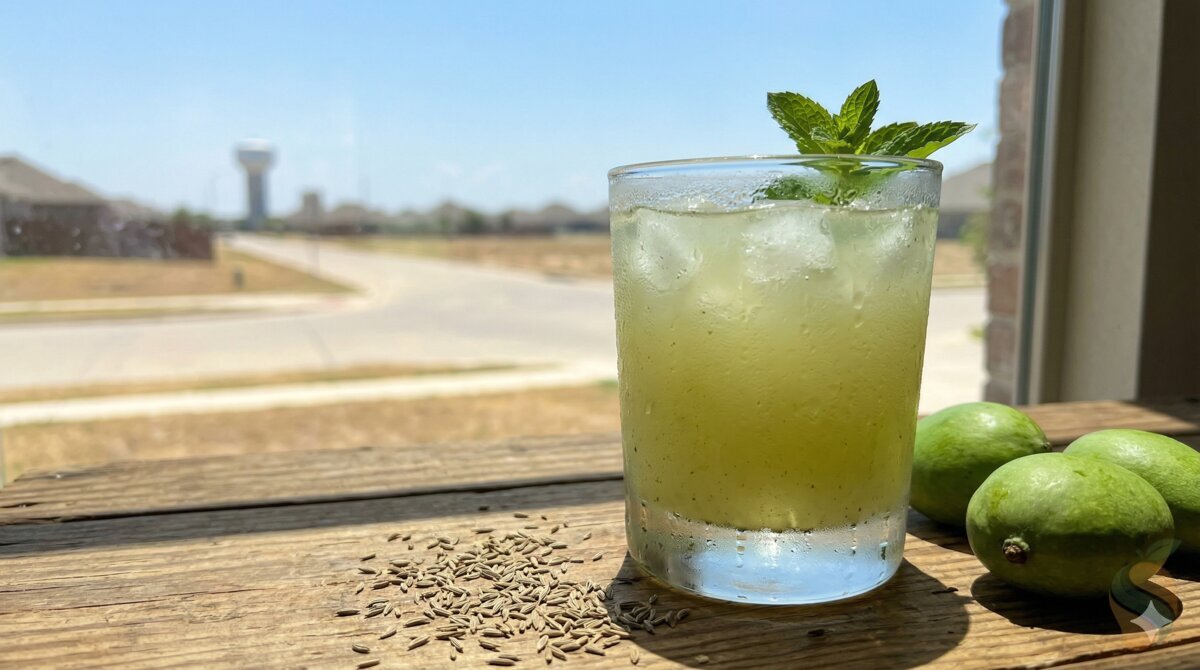
Before Gatorade, before Liquid IV, before every electrolyte brand on Instagram — India had aam panna. A raw mango drink that has been keeping people alive through 115-degree Indian summers for centuries. Texas summers run to 105 degrees. You need this.
This is not a trendy wellness drink repackaged with a Sanskrit name. Aam panna is a working-class survival drink that grandmothers in Rajasthan, Gujarat, and Uttar Pradesh have been making every summer since before anyone thought to put electrolytes in a neon-colored bottle. The fact that it tastes incredible is almost beside the point — it was designed to keep people standing in brutal heat.
What Is Aam Panna?
Aam panna is a cooked raw mango drink spiced with cumin, mint, and black salt. It is tart, sweet, salty, and refreshing in a way that no commercial sports drink can match. In India, it is given to people suffering from heat exhaustion as a natural remedy.
The raw mango provides Vitamin C, the salt replaces sodium lost through sweat, the cumin aids digestion, and the mint cools the body. It is a complete rehydration package disguised as a delicious drink.
In Ayurvedic tradition, aam panna is classified as a cooling drink that balances pitta — the body’s heat energy. Whether or not you follow Ayurveda, the practical effect is undeniable: a glass of aam panna after outdoor work brings your body temperature down and restores energy faster than water alone. The combination of sodium, potassium, Vitamin C, and organic acids creates a rehydration profile that modern sports science would call well-designed — India just figured it out a few hundred years earlier.
The name itself tells you what it is: “aam” means mango, “panna” comes from “panha” in Marathi, meaning drink. In different parts of India, it goes by different names — aam ka panna in Hindi, kairichi panha in Marathi, manga paanakam in Telugu. The recipe varies slightly by region, but the core idea is the same everywhere: cook raw mango, spice it, salt it, dilute it, drink it in the heat.
Choosing the Right Mango for Aam Panna
This is critical: aam panna must be made with raw, unripe mangoes. Do not use ripe mangoes. The tartness of raw mango is what makes aam panna work — it provides the sourness, the Vitamin C content, and the specific flavor that defines the drink.
Totapuri is the traditional and best choice for aam panna. It is large, firm, and has the right level of tartness even when slightly mature. The flesh cooks down into a smooth, pale-green pulp that makes a beautiful concentrate. If you cannot find Totapuri, any firm unripe Indian mango will work.
Some people use raw Alphonso or Kesar that are not yet ripe. These produce a slightly more aromatic aam panna, but the flavor profile is different from the classic version. The trade-off is worth experimenting with — raw Alphonso gives the drink a floral note that Totapuri does not have.
Avoid using store-bought Mexican or South American mango varieties for aam panna. They lack the tartness and aromatic complexity of Indian varieties, and the result tastes flat. This is one recipe where the variety of mango genuinely matters. Check our varieties page to see which raw mangoes are available this season.
Classic Aam Panna Recipe
Ingredients:
- 2 large raw (unripe) mangoes — Totapuri works best
- 1 cup sugar or jaggery (adjust to taste)
- 1 tsp roasted cumin powder
- Half tsp black salt (kala namak)
- Regular salt to taste
- 10-12 fresh mint leaves
- Half tsp black pepper (optional)
- Cold water and ice
Method:
- Cook the mangoes: Pressure cook raw mangoes with 1 cup water for 2 whistles. Or boil in a pot for 20-25 minutes until the skin splits and the flesh is soft. You can also roast them directly over a gas flame until the skin chars and the flesh inside becomes soft — this is the traditional method and adds a subtle smoky flavor that elevates the drink.
- Extract the pulp: Let them cool, then peel and squeeze out all the pulp. Discard the seed and skin. You want every bit of flesh — scrape the seed clean.
- Make the concentrate: Blend the pulp with sugar, cumin powder, black salt, regular salt, mint leaves, and black pepper until smooth. Taste and adjust — the concentrate should be intensely flavored because it will be diluted with water.
- Serve: Add 2-3 tablespoons of concentrate to a glass of cold water. Stir, add ice, garnish with mint.
The concentrate stores in the refrigerator for up to 2 weeks. Make a big batch and you have instant aam panna all month.
Jaggery vs. sugar: Traditional recipes use jaggery (unrefined cane sugar), which adds a deeper, more complex sweetness with notes of caramel. Jaggery also contains trace minerals like iron and potassium, making the drink marginally more nutritious. White sugar works fine and produces a cleaner, brighter flavor. Try both and decide which you prefer. If using jaggery, dissolve it in warm water first to remove any grit.
Why It Works Better Than Sports Drinks
| Nutrient | Aam Panna (1 glass) | Gatorade (1 glass) |
|---|---|---|
| Vitamin C | ~40mg | 0mg |
| Sodium | Natural (black salt) | Synthetic |
| Sugar | Natural (jaggery option) | High fructose corn syrup |
| Artificial color | None | Yellow 5, Red 40 |
| Probiotics | If made with jaggery | None |
The comparison goes deeper than this table. Aam panna contains organic acids — citric acid and malic acid — from the raw mango that help the body absorb minerals more efficiently. Black salt (kala namak) provides sodium along with trace amounts of sulfur compounds that aid digestion. And the roasted cumin acts as a carminative, preventing the bloating that can happen when you drink large volumes of liquid quickly after exercise.
Commercial sports drinks were engineered in a lab to replace electrolytes. Aam panna was engineered by centuries of trial and error by people who worked outdoors in 115-degree heat without air conditioning. Both approaches work. One tastes like artificial lime. The other tastes like something you actually want to drink.
Variations
- Spicy aam panna: Add a green chili to the blend. The heat plus the tartness is incredible on a hot day. This is common in Rajasthan, where they like everything with a kick.
- Aam panna soda: Mix the concentrate with sparkling water instead of still water. Instant artisan soda. Serve in a tall glass with a sprig of mint and it looks like something from a craft cocktail bar.
- Aam panna popsicles: Pour the diluted drink into popsicle molds. Kids love these, and they are a far healthier frozen treat than anything in the grocery store freezer aisle.
- Aam panna cocktail: For adults — mix the concentrate with vodka or white rum, sparkling water, and a squeeze of lime. It is the best summer cocktail you have never tried.
- Aam panna with fennel: Replace the cumin with fennel seed powder for a slightly sweeter, more anise-like flavor. This variation is popular in parts of Maharashtra.
Tips for the Best Aam Panna
After making aam panna dozens of times over the years, here are the details that make the difference between good and exceptional:
Roast the cumin fresh. Pre-ground cumin powder from a jar works, but freshly roasted cumin seeds ground in a mortar make a noticeable difference. Dry-roast whole cumin seeds in a pan for 2 minutes until fragrant, then crush. The aroma is incomparable.
Do not skip the black salt. Regular table salt alone will not give you the same flavor. Black salt has a sulfurous, slightly egg-like quality that sounds unappealing but is essential to the drink’s character. It is what makes aam panna taste like aam panna rather than a generic mango drink. You can find black salt at any Indian grocery store in Texas.
Let the concentrate rest overnight. Freshly made concentrate is good, but concentrate that has sat in the refrigerator overnight is better. The flavors meld and the cumin integrates more fully. Think of it like a curry that tastes better the next day.
Adjust sweetness to the mango. Some raw mangoes are more tart than others. Taste the pulp before adding sugar and adjust accordingly. The drink should be primarily tart with sweetness as a supporting note — not the other way around. If you make it too sweet, you lose the whole point.
How to Store and Batch-Prep for the Season
Serious aam panna drinkers make a season’s worth of concentrate at once. Here is how:
- Order a box of raw Totapuri mangoes early in the season when they are at peak tartness.
- Cook all the mangoes at once — pressure cooking is fastest for large batches.
- Make a large batch of concentrate, portion into glass jars or freezer-safe containers.
- Refrigerated concentrate keeps for 2 weeks. Frozen concentrate keeps for 3-4 months.
- To serve from frozen, thaw a jar in the refrigerator overnight. Stir well before diluting.
One box of Totapuri (approximately 3 kg) yields enough concentrate for roughly 30-40 glasses of aam panna. That is an entire summer of rehydration from a single box of mangoes.
Perfect for Texas Summers
Keep a jar of aam panna concentrate in your fridge from April through August. After mowing the lawn, after a kid’s soccer game, after any outdoor activity — a glass of aam panna will rehydrate you faster and taste better than anything in a plastic bottle.
Texas and India share more climate DNA than most people realize. The brutal, sustained heat. The humidity that makes 95 degrees feel like 110. The way the sun sits on top of you from May through September like it has a personal grudge. Aam panna was designed for exactly this kind of climate. It is not a coincidence that the drink feels perfectly suited to a Texas summer — the conditions it was invented for are remarkably similar.
If you have kids who play outdoor sports in the Texas heat, aam panna concentrate in their water bottle is a genuine upgrade over commercial sports drinks. It tastes better, has no artificial ingredients, and provides Vitamin C that supports recovery. More parents in our delivery area have started doing this, and the feedback has been overwhelmingly positive.
Order raw Totapuri mangoes for your aam panna batch. Check our FAQ page for questions about ordering raw mangoes.
Beat the Texas Heat
Texas summers regularly hit 100 degrees and above. Aam panna is the perfect antidote. Order raw Totapuri mangoes from Swadeshi for your batch — we deliver to Austin, Dallas, Houston, and San Antonio. Explore all our mango varieties and visit our blog for more traditional mango drink recipes and ideas.
Frequently Asked Questions
What is aam panna?
Aam panna is a traditional Indian drink made from cooked raw mango, spiced with cumin, mint, and black salt. It is a natural electrolyte drink that has been used for centuries to prevent heat exhaustion.
Which mango variety is best for aam panna?
Raw (unripe) Totapuri is the traditional choice — firm and tart. Any unripe Indian mango works. Do not use ripe mangoes — aam panna requires the sourness of raw mango.
How long does aam panna concentrate last?
Refrigerated concentrate keeps for up to 2 weeks. Frozen concentrate keeps for 3-4 months. Store in glass jars or freezer-safe containers and thaw in the refrigerator overnight before use.
Can I use jaggery instead of sugar?
Yes, and many traditional recipes prefer it. Jaggery adds a deeper, more complex sweetness along with trace minerals like iron and potassium. Dissolve jaggery in warm water first to remove any grit before blending into the concentrate.