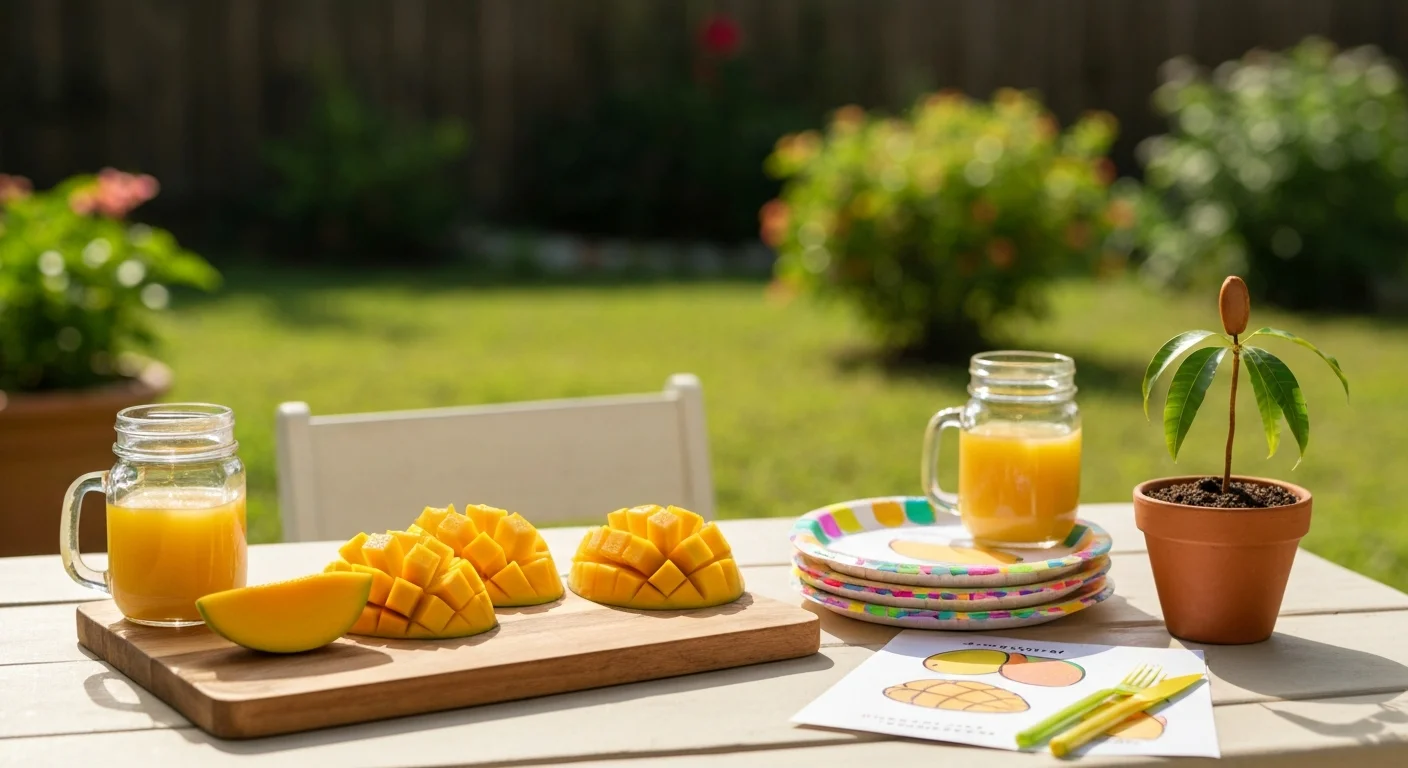
Let me say something that might get me uninvited from a few dinner parties: Mango lassi is a restaurant invention.
Yes, it is delicious. Yes, it is everywhere — from Indian restaurants in Houston to hipster cafes in Austin. But if you ask your grandmother what she actually made with mangoes in the summer, she will not say “lassi.” She will name something far more interesting.
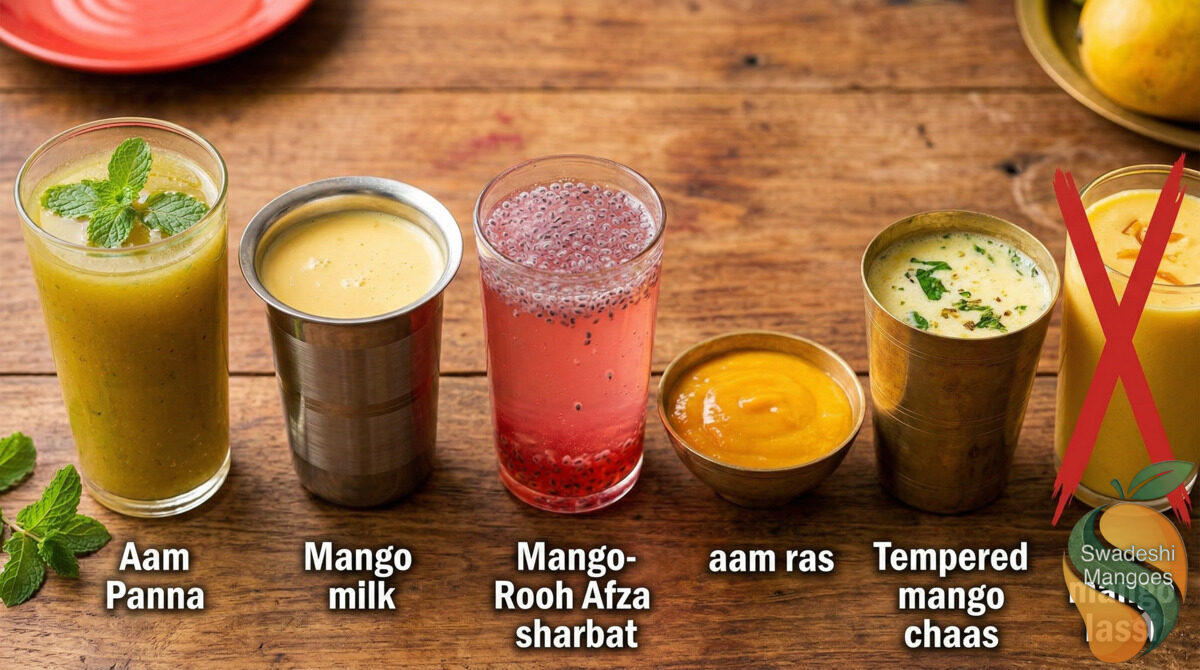
Here are 5 mango drinks that existed long before mango lassi became the default Indian mango drink in America — and each one is better suited to a Texas summer.
Wait — Is Mango Lassi Really Not Traditional?
Let me be precise: lassi is traditional. Absolutely. It is a centuries-old Punjabi yogurt drink. Plain lassi, salt lassi, sweet lassi — all real, all ancient.
But the mango version? It became popular in Indian restaurants catering to Western audiences in the 1980s and 1990s. It was the safe, sweet, approachable thing to put on the menu next to butter chicken and naan. It worked. It became iconic.
But in most Indian homes — in Gujarat, Maharashtra, Andhra Pradesh, Tamil Nadu, UP — when a box of mangoes arrived, nobody said, “Let’s blend these with yogurt.” They had other plans. Here are five of them.
1. Aam Panna — The Original Electrolyte Drink
Where it comes from: North India, especially Rajasthan, UP, and Gujarat
Best variety: Totapuri (raw/green) or any unripe mango
Before Gatorade, before coconut water, before electrolyte packets — there was aam panna. It is made from boiled raw mango pulp mixed with roasted cumin, black salt, mint, and sugar. It is tangy, salty, sweet, and cold. It was the traditional remedy for heat stroke and dehydration during Indian summers.
In a Texas summer that regularly hits 100°F, aam panna makes more sense than any sports drink.
Quick Recipe:
- Boil 2 raw green mangoes until soft. Scoop out pulp.
- Blend with 1/2 cup sugar (or jaggery), 1 tsp roasted cumin, black salt to taste, and a handful of fresh mint.
- Dilute with cold water. Serve over ice.
Ayurvedic tradition classifies aam panna as a cooling agent that balances pitta dosha — the metabolic energy associated with heat. Modern nutrition confirms raw mango is rich in pectin, vitamin C, and organic acids that aid rehydration (K.T. Achaya, “Indian Food: A Historical Companion,” Oxford University Press, 1994).
2. Aam Ka Doodh — Mango Milk (The Real One)
Where it comes from: Everywhere in India, especially homes with kids
Best variety: Alphonso or Banginapalli
This is what most Indian grandmothers actually made. Not lassi. Just mango pulp mixed into cold milk with a spoon of sugar. That is it. No yogurt, no blender, no cardamom garnish.
You squeeze the mango pulp into a steel glass, add cold milk, stir with a spoon, and hand it to the child. The child drinks it, gets a milk-mango mustache, and asks for another one.
It is the most unglamorous, most honest, most real mango drink in India. And it is better than every mango lassi you have ever had.
Quick Recipe:
- Pulp from 1 ripe mango
- 1 glass cold milk
- Sugar to taste (Alphonso may not need any)
- Stir. Done.
3. Mango Sharbat with Rooh Afza
Where it comes from: Muslim households across North India, especially during Ramadan
Best variety: Any ripe mango
This one is a hidden gem. Rooh Afza — the rose-flavored syrup that is a staple in Indian and Pakistani homes — mixed with mango pulp, cold water, and ice. The floral sweetness of Rooh Afza meets the fruity intensity of mango, and the result is something that tastes like summer distilled into a glass.
During Ramadan, this is served at iftar to break the fast. The combination of sugar, electrolytes from the fruit, and hydration makes it ideal for replenishment.
Quick Recipe:
- 2 tablespoons Rooh Afza syrup
- Pulp from 1 ripe mango
- 1 glass cold water
- Ice cubes
- A few basil seeds (sabja) soaked in water — optional but traditional
4. Mango Majjiga / Mango Chaas — The South Indian Way
Where it comes from: Andhra Pradesh, Telangana, Karnataka
Best variety: Banginapalli (ripe)
In South India, the yogurt drink of choice is not lassi — it is majjiga (Telugu) or chaas (Hindi). It is thinner than lassi, more like spiced buttermilk. The mango version blends ripe mango pulp into thin buttermilk with a tempering of curry leaves, green chili, and ginger.
It sounds unusual. It tastes extraordinary. The sweetness of mango with the tang of buttermilk and the heat of green chili is a combination that works on every level.
Quick Recipe:
- 1 cup thin buttermilk (yogurt + water, whisked smooth)
- Pulp from half a ripe Banginapalli
- Pinch of salt
- Optional tempering: heat 1 tsp oil, add mustard seeds, curry leaves, and a slit green chili. Pour over the drink.
5. Aam Ras — Not a Drink, Not a Dessert, Something Better
Where it comes from: Gujarat and Maharashtra
Best variety: Alphonso only
This one defies categorization. Aam ras is pure Alphonso pulp — sometimes with a touch of cardamom and saffron, sometimes with nothing at all — served in a bowl alongside hot fried puris. You dip the puri into the aam ras. You eat. You close your eyes.
Is it a drink? You can drink it from a glass. Is it a side dish? You eat it with bread. Is it a dessert? It is sweet enough. It is all three and none of them. It is aam ras, and it exists in its own category.
In Gujarati and Maharashtrian homes, the first aam ras-puri meal of the season is an event. It marks the official start of summer. It is celebrated the way Texans celebrate the first bluebonnets.
Quick Recipe:
- 4 ripe Alphonso mangoes, pureed
- 2 tablespoons sugar (taste first — you may not need it)
- Pinch of cardamom powder
- Few saffron strands soaked in warm milk
- Chill 1 hour. Serve with hot puris.
So Should You Stop Drinking Mango Lassi?
Absolutely not. Mango lassi is great. Keep drinking it. But next time you have a box of Indian mangoes, try one of these five instead. You might discover what your grandmother knew all along: the best mango drinks are the ones nobody put on a restaurant menu.
References
- Achaya, K.T. Indian Food: A Historical Companion. Oxford University Press, 1994.
- Sahni, Julie. Classic Indian Cooking. William Morrow, 1980.
- Koranne-Khandekar, Saee. Pangat: A Feast. Hachette India, 2018.
Related Reading
Get the mangoes. Try all five.
Browse varieties • Refer a friend, earn $5

Swadeshi Mangoes
Swadeshi Mangoes is a community-driven Indian mango pickup network operated by Swadeshi Central TX LLC, headquartered in Round Rock, Texas. We bring authentic, USDA-inspected Indian mangoes — Alphonso, Banginapalli, Kesar, and more — to families through local pickup in multiple US cities, every season since 2025.