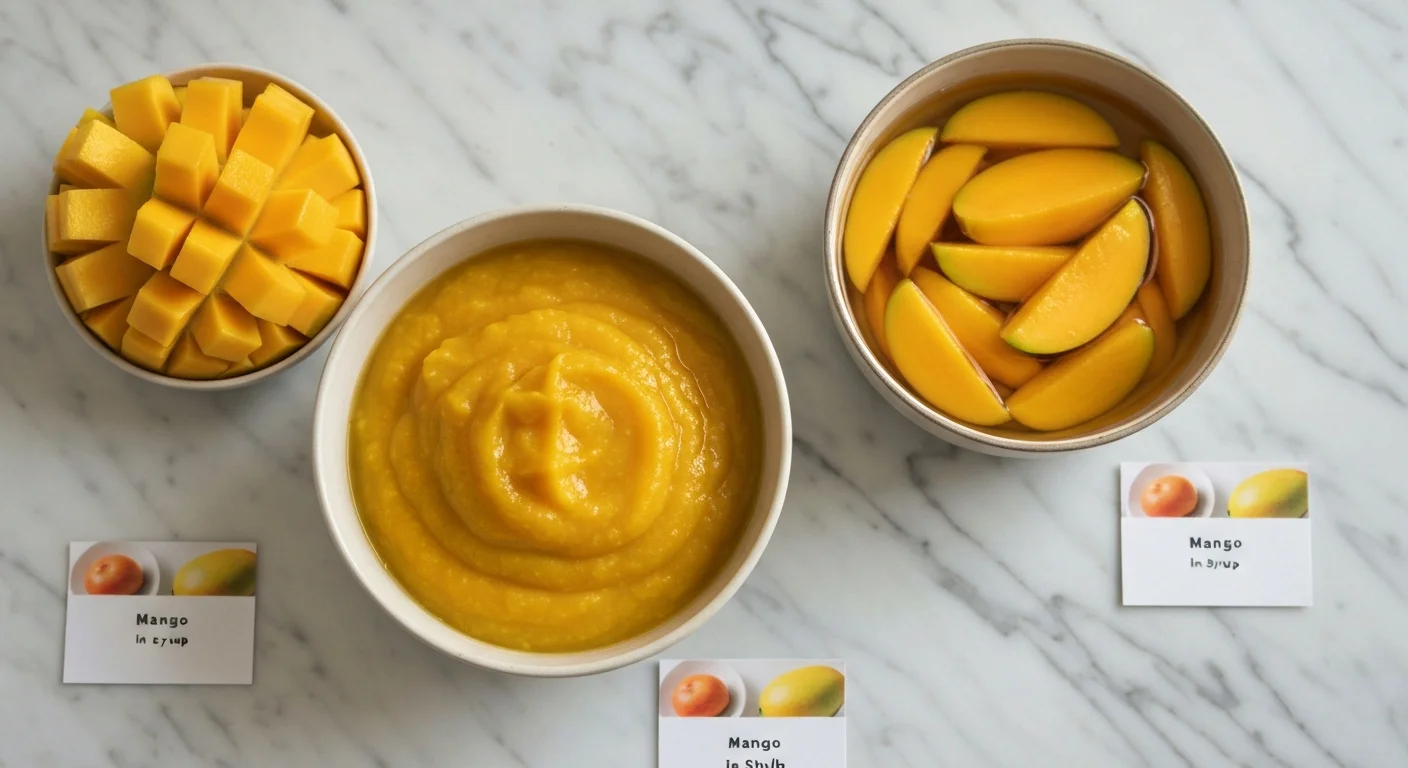
Use fresh mangoes for eating, slicing, and salsas; frozen pulp for smoothies and lassi; canned pulp for baking, ice cream bases, and year-round cooking when fresh is unavailable. Fresh delivers peak flavor and texture but costs 3-5x more per pound and is seasonal in Texas (April-August for Indian varieties). Frozen pulp preserves 85-90% of fresh flavor at about 40% of the cost. Canned pulp is shelf-stable and consistent but contains added sugar and loses aromatic volatiles. Each has a clear best use, and choosing wrong wastes money or compromises the dish.
The Three Forms: A Quick Primer
Fresh mango is the whole fruit, usually picked mature-green and ripened during transit or on your counter. Frozen pulp is fresh mango puree flash-frozen, typically in 1-pound bags or tubs. Canned pulp is pasteurized, often sweetened, and shelf-stable for 18-24 months. Each Texas grocery aisle carries all three in varying quality.
Flavor Comparison
Fresh ripe Alphonso or Kesar from our Texas delivery delivers aromatic volatile compounds (notably myrcene, alpha-pinene, and ester notes) that neither frozen nor canned can fully preserve. One customer in Austin described biting into a fresh Alphonso as “completely different from any frozen mango smoothie.” She was right; the aromatic top-note loss in freezing is real, though minor.
- Fresh: 100% flavor reference point, peak aromatics, best texture.
- Frozen: 85-90% flavor, some aromatic loss, slight texture softening after thawing.
- Canned: 70-80% flavor, heat processing mutes aroma, added sugar alters sweetness balance, often blends multiple varieties.
Cost Per Pound in Texas
Pricing reflects supply chain, seasonality, and processing. These are typical Houston and Dallas retail figures:
| Form | Price/lb | Yield (usable fruit) | Effective Cost |
|---|---|---|---|
| Fresh Alphonso (premium) | $8-12 | 60% | $13-20 |
| Fresh Ataulfo (domestic) | $2-4 | 60% | $3-7 |
| Frozen pulp (Alphonso-labeled) | $4-6 | 100% | $4-6 |
| Canned pulp (sweetened) | $3-4 | 100% | $3-4 |
Nutrition at a Glance
Per 100g edible portion (approximate, based on USDA data and product labels):
- Fresh: 60 kcal, 14g sugar, 36mg vitamin C, 54mcg vitamin A.
- Frozen pulp (unsweetened): 62 kcal, 14g sugar, 30mg vitamin C (some loss in processing).
- Canned pulp (sweetened): 100-130 kcal, 22-28g sugar (added), 15-20mg vitamin C.
The FDA requires added sugars to appear on the Nutrition Facts label; always check the canned can for this.
Which Form for Which Recipe
Eating Out of Hand
Fresh only. No frozen or canned substitute works.
Mango Lassi
Frozen pulp is the sweet spot. Alphonso-labeled frozen pulp from an Indian grocer in Dallas or Houston costs less than fresh and blends more smoothly. Use 1 cup pulp + 1 cup yogurt + 2 tablespoons sugar + 1 pinch cardamom per two servings.
Mango Salsa
Fresh only. Frozen pulp lacks the firm texture needed for dicing.
Mango Ice Cream or Kulfi
Canned pulp works well because heat processing pairs with the cream base. Frozen also works. Reduce added sugar in your recipe if using canned.
Mango Cake or Muffins
Canned or frozen. Baking heat destroys fresh aromatics anyway, so paying for fresh is wasted here.
Smoothies
Frozen pulp is ideal. It doubles as ice, cooling the smoothie without diluting it.
Chutney and Pickles
Fresh green (unripe) mangoes are required. No substitute.
Step-by-Step: Using Frozen Pulp Correctly
- Thaw in the refrigerator overnight, or use straight from freezer for smoothies.
- Stir well after thawing; pulp separates naturally.
- Taste before adding sugar. Indian-brand frozen pulps vary in sweetness by 2-3 tablespoons per pound.
- Use within 5 days of thawing.
- Refreeze only if the pulp never fully thawed.
Step-by-Step: Using Canned Pulp Correctly
- Check the label for added sugar; adjust recipe sweetness accordingly.
- Stir the can contents before measuring.
- Refrigerate leftovers in a glass container (not the opened can) for up to 5 days.
- Freeze leftovers in silicone trays for 3 months.
- Reduce acid (lime juice) in recipes; canned pulp is already less tart than fresh.
Texas Seasonality: When to Use Each
- April-August: fresh Indian varieties (Alphonso, Kesar, Chaunsa) flood the Texas market. Order through our delivery service. Use fresh.
- September-November: fresh Mexican Ataulfo still available but Indian fresh tapers off. Shift to frozen for smoothies.
- December-March: rely on frozen and canned. This is when canned pulp in Texas pantries earns its keep.
Common Myths and Mistakes
- Myth: Canned is always worse than fresh. For baking and ice cream, canned often performs equally or better due to consistency.
- Myth: Frozen pulp has more pesticides. No evidence supports this. FDA and USDA monitor both fresh and processed fruit.
- Mistake: Substituting canned for fresh in salsa. The texture will not hold.
- Mistake: Overheating frozen pulp. High heat destroys the aromatic compounds that survive freezing.
- Mistake: Using sweetened canned in recipes that already call for sugar. Always check the can label and adjust.
Storage Rules
- Fresh ripe mango: refrigerate up to 5 days, unripe counter 3-5 days.
- Frozen pulp: freezer 9-12 months, fridge after thaw 5 days.
- Canned pulp: pantry 18-24 months unopened, fridge 5-7 days opened.
For fresh-specific handling, see mango care.
FAQ
Q: Is canned mango pulp as healthy as fresh?
Nutritionally similar in fiber and some minerals, but canned pulp often contains added sugar and loses some heat-sensitive vitamins (vitamin C drops 20-30%). Read labels; unsweetened canned varieties exist and are closer to fresh in nutrition. The FDA requires added sugar disclosure on labels.
Q: Can I make lassi from canned pulp?
Yes, but reduce added sugar. A typical Indian canned Alphonso pulp already contains 20-25% added sugar. Mix 1 cup canned pulp + 1 cup yogurt with no extra sugar, then taste and adjust. For superior flavor, use frozen pulp or fresh when seasonally available in Texas.
Q: Recipe conversion: how do fresh, frozen, and canned equate?
One medium fresh mango (about 275g whole, 170g edible) equals about 3/4 cup chopped flesh, 2/3 cup puree, 2/3 cup thawed frozen pulp, or 1/2 cup canned pulp. Canned is more concentrated and usually sweetened, so reduce recipe sugar by 1-2 tablespoons per cup swapped. Keep these ratios in a note on your fridge for Texas kitchen flexibility year-round across Austin, Houston, Dallas, San Antonio, and beyond.
Q: Which form freezes the best for Texas hurricane prep?
Already-frozen commercial pulp stays stable longest. If freezing fresh yourself, peel, cube, and freeze in single layers before bagging. Label with date. Use within 9 months for best flavor. Texas Gulf Coast families should rotate stock every hurricane season.
Q: Does frozen mango lose nutrients compared to fresh?
Freezing preserves most nutrients; vitamin C drops 5-15% during blanching and storage. Minerals, fiber, and carotenoids are largely preserved. For the 9-month timeframe most consumers use, frozen pulp is nutritionally comparable to fresh.
Q: Why does canned pulp taste different from fresh Alphonso?
Heat processing during canning denatures the aromatic esters that define fresh Alphonso flavor. Canned pulp often blends multiple varieties, including Totapuri for body, which dilutes the single-variety character. It is a different product best judged on its own merits, not as a fresh substitute. See our variety guide for fresh flavor profiles.
Reading Labels Like a Pro
Commercial mango pulp labels vary wildly in accuracy. A can labeled “Alphonso” may contain 50% Alphonso and 50% Totapuri to cut costs. Look for these signals of quality: single-variety callout (“100% Alphonso”), no added sugar on the Nutrition Facts label, short ingredient list (mango, citric acid), and origin specification (Maharashtra, Gujarat). Texas Indian grocery chains like Patel Brothers and India Bazaar in Houston, Dallas, Austin, and San Antonio carry several brands side by side; comparing labels in-store pays off. Deep Foods, Swad, and Rani are common brands with reasonable transparency. For frozen pulp, look for “flash frozen” or “IQF” (individually quick frozen) on the package; this indicates better texture preservation than block freezing.
Real Texas Use Cases from Customer Feedback
Here is an annual rotation we often recommend. Spring and early summer, order fresh Indian varieties through our Texas delivery, one 12-count box weekly during peak season covers eating plus smoothies. Late summer and fall, shift to one 12-count plus 2 pounds of frozen pulp weekly. Winter, rely on frozen and canned only. Total annual spend for a mango-loving Texas family runs $400-800 depending on varieties; works out to $1-2 per mango-equivalent and is comparable to a craft coffee habit for most households. A Plano customer uses 2 cans of sweetened Alphonso pulp every Diwali for her mango kulfi tradition; she finds canned delivers the consistency her recipe demands. Make your own pulp by blending fresh Alphonso and freezing in silicone ice cube trays; stock lasts 6-9 months. A San Antonio customer buys frozen pulp in 5-pound tubs from an Indian grocer and portions into daily smoothie bags for the week. A Houston customer alternates fresh Alphonso from our Texas delivery for spring and summer, then shifts to frozen Kesar pulp for fall and winter smoothies. Each use case is valid; the right form depends on your recipe and calendar. Review our mango care guide for fresh storage tips and the varieties page for what is in season.
A Quick Side-by-Side Recipe: Mango Lassi Three Ways
To make the differences concrete, here is the same mango lassi recipe made three ways. Fresh version: 1 ripe Alphonso mango (peeled, cubed, about 1 cup flesh), 1 cup whole milk yogurt, 2 tablespoons sugar, 1/4 teaspoon cardamom, blend with 4 ice cubes. Frozen pulp version: 3/4 cup thawed frozen Alphonso pulp, 1 cup yogurt, 2 tablespoons sugar, 1/4 teaspoon cardamom, blend with 4 ice cubes. Canned pulp version: 1/2 cup sweetened canned Alphonso pulp, 1 cup yogurt, 0 tablespoons sugar (the pulp is already sweet), 1/4 teaspoon cardamom, blend with 4 ice cubes. Taste the three side by side and you will understand the trade-offs in a way no blog post can fully capture. Most Texas families find that during peak mango season April through July, fresh is clearly worth the price; in the off-season September through March, frozen pulp earns its keep; canned has a narrow but legitimate niche in baking and quick-fix lassi.
Shopping Tips at Texas Grocery Chains
For fresh, look at Indian and international grocers first. Patel Brothers in Houston, Dallas, and Austin; India Bazaar in Irving and Arlington; MT Supermarket for Ataulfo in multiple Houston and Austin locations. H-E-B carries Ataulfo year-round and occasionally Alphonso during peak season. Whole Foods stocks organic Ataulfo and Kent. For frozen pulp, Indian grocers reliably carry Deep, Swad, and Rani brands; some H-E-B locations in Houston and Plano carry Alphonso frozen pulp in the international freezer section. For canned, every Indian grocer in Texas stocks 3-5 brands; comparison-shop by price per ounce since can sizes vary. Our Texas direct delivery is the simplest path to premium fresh Indian varieties during April-August.