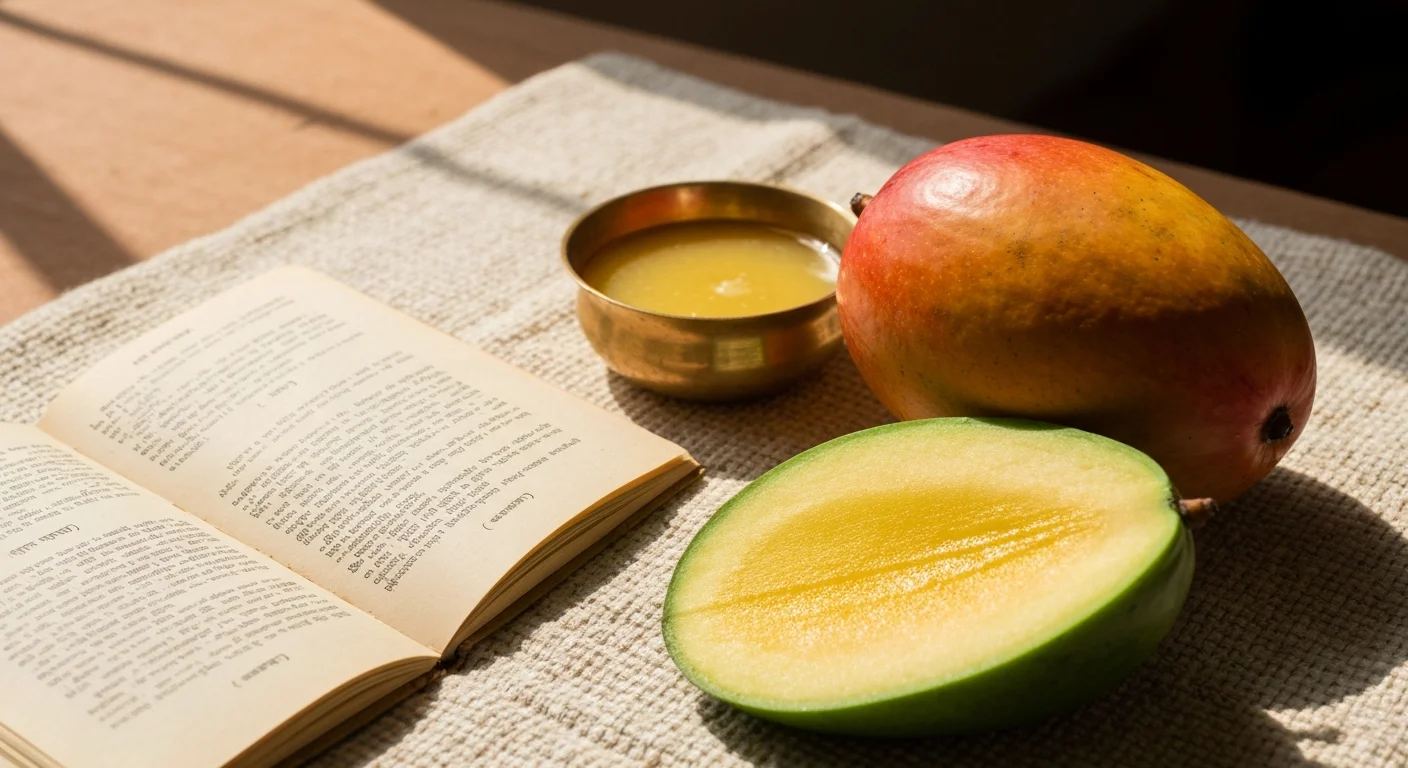
Ayurveda classifies ripe mango (Pakva Amra) as sweet, cooling post-digestion, nourishing to all seven tissues (Saptadhatu), and especially balancing for Vata. Raw mango (Aama Amra) is sour, heating, and aggravates Pitta but stimulates digestive fire (Agni) in cold conditions. The Charaka Samhita and Sushruta Samhita both describe mango as among the finest fruits (Phalottama) for strength, complexion, and reproductive health when used appropriately.
The Classical Foundation
The Charaka Samhita (Sutrasthana 27), compiled around 400-200 BCE, lists mango (Amra) under Phalavarga, the fruit group. Acharya Charaka describes ripe mango as “Vrishya” (aphrodisiac), “Balya” (strength-promoting), and “Varnya” (complexion-enhancing). The Sushruta Samhita (Sutrasthana 46) echoes these properties and adds that mango is “Hridya,” meaning it nourishes the heart tissue and pleases the mind. Both texts distinguish sharply between the ripe and unripe forms.
Rasa, Virya, and Vipaka
Every Ayurvedic food is analyzed through three lenses: Rasa (taste), Virya (potency), and Vipaka (post-digestive effect). Ripe mango has a predominantly Madhura (sweet) Rasa with a secondary Kashaya (astringent) note, Sheeta (cooling) Virya, and Madhura Vipaka. Raw mango is Amla (sour), Ushna (heating) Virya, and Amla Vipaka. This classification explains why the same fruit behaves so differently at different ripeness stages.
Dosha-Specific Guidance
Vata Dosha
Vata, governed by air and ether, manifests as dryness, coldness, and irregularity. Ripe mango is nearly ideal for Vata types. Its sweet taste, unctuous (Snigdha) quality, and heavy (Guru) nature directly counter Vata’s light and dry properties. Ayurvedic physicians often recommend ripe mango with ghee or warm milk for underweight Vata individuals. A 2018 review in the Journal of Ayurveda and Integrative Medicine examined traditional Vata-pacifying regimens that centered on seasonal sweet fruits.
Pitta Dosha
Pitta governs digestion, metabolism, and body heat. Ripe mango is generally Pitta-neutral or mildly pacifying because of its cooling post-digestive effect, while raw mango sharply aggravates Pitta. In the peak Texas summer, when ambient temperatures push Pitta out of balance, classical texts recommend drinking mango with a pinch of cardamom and rose water. Avoid unripe mango chutney and excessive sour pickles during Pitta-prone times.
Kapha Dosha
Kapha, built of water and earth, tends toward heaviness, sluggishness, and congestion. Ripe mango is heavy and sweet, two qualities that can aggravate Kapha when consumed in excess. Traditional practice suggests Kapha types limit ripe mango to small portions, ideally eaten in the late morning with warming spices like black pepper, ginger, or turmeric. Raw mango in small amounts can actually stimulate Kapha digestion.
Seasonal Wisdom: Rtucharya
Ayurveda prescribes seasonal routines called Rtucharya. Mango’s natural season aligns with Grishma (summer) and early Varsha (monsoon). In Texas, that corresponds roughly to April through early July. The classical texts instruct consuming mango “within its proper season” because out-of-season fruit loses its therapeutic Virya. This principle favors fresh, locally delivered Indian mango over frozen or long-stored imports.
Compatibility Table
| Dosha | Ripe Mango | Raw Mango | Ideal Pairings | Avoid With |
|---|---|---|---|---|
| Vata | Very beneficial | Use moderately | Ghee, warm milk, cardamom | Cold yogurt |
| Pitta | Mildly beneficial | Aggravating | Rose water, fennel, coconut | Chili, salt, vinegar |
| Kapha | Use in moderation | Mildly beneficial | Black pepper, ginger, honey | Dairy, cold drinks |
Traditional Preparations
Mamsodaka-Amra Rasa
Classical physicians prescribed mango pulp with warm milk for convalescence after fever or surgery. Sushruta described this combination as deeply nourishing to Rasa Dhatu (plasma tissue). Modern Ayurvedic hospitals affiliated with Banaras Hindu University continue variations of this preparation in post-operative care.
Panha (Raw Mango Cooler)
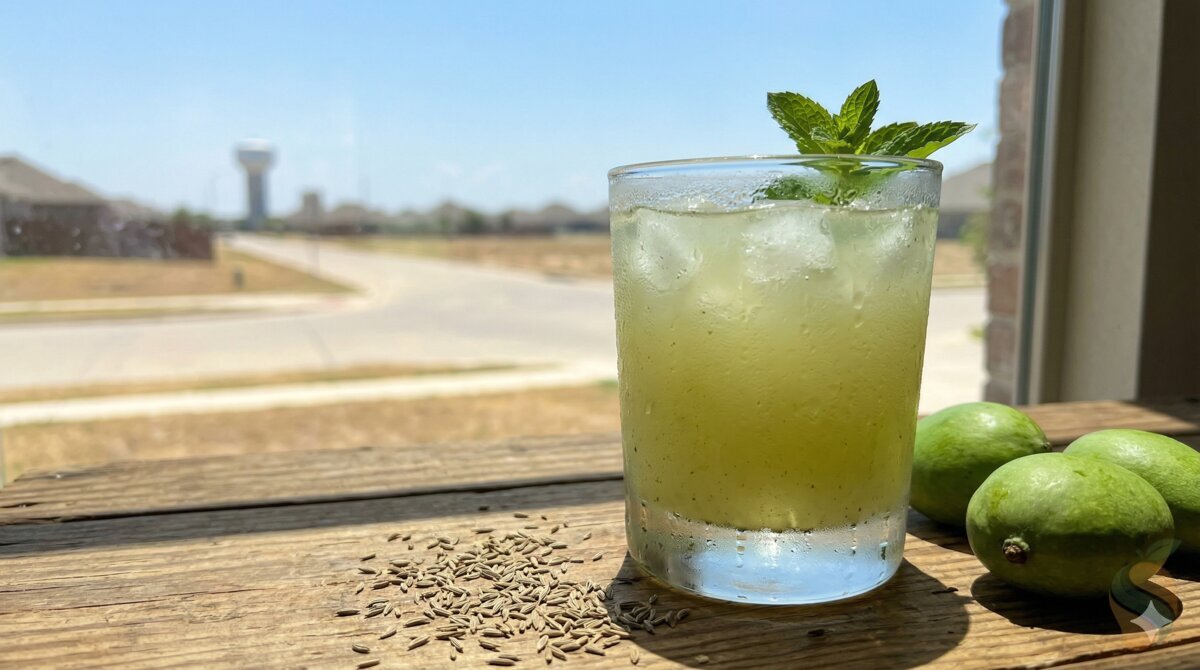
During peak Grishma, raw mango is boiled, mashed, and mixed with jaggery, roasted cumin, and black salt to create Panha. Despite raw mango’s heating potency, the final drink is considered Pitta-balancing because jaggery and cumin modify its effect. Texas households adopt this recipe every May.
Amrakhand
Strained yogurt blended with ripe mango pulp, cardamom, and saffron creates Amrakhand, a dessert that Ayurvedic texts describe as Vata-Pitta pacifying when eaten in moderate portions at lunch.
Modern Research Supporting Classical Claims
A 2020 paper in the Journal of Ethnopharmacology (PMID: 32335290) reviewed pharmacological evidence for mango and concluded that the fruit’s traditional reputation as a Rasayana (rejuvenative) is supported by documented antioxidant, immunomodulatory, and hepatoprotective actions. The PubMed database lists more than 200 studies on Mangifera indica published in the last decade, many validating classical indications.
Texas Application
Indian mango arrives in Texas from mid-April through July, matching the Ayurvedic Grishma window. Swadeshi Mangoes offers nine varieties, including the classically prized Alphonso and Kesar. For Pitta-prone Texans facing brutal summer heat, ripe Alphonso consumed in the late afternoon with a pinch of cardamom is a textbook Rtucharya practice. Browse varieties on our varieties page and learn storage on our mango care guide.
Frequently Asked Questions
Is mango good for all doshas?
Ripe mango is excellent for Vata, neutral to beneficial for Pitta, and acceptable in small amounts for Kapha. Raw mango is opposite in profile: heating and sour, it aggravates Pitta but can help Kapha digestion. Choose ripeness and portion according to your constitution. Ayurvedic practitioners assess dosha balance seasonally before making specific recommendations.
Can I eat mango with milk according to Ayurveda?
Yes, traditional texts permit ripe mango with warm milk and consider it Rasayana. This pairing appears in the Charaka Samhita as nourishing to all tissues. Avoid combining with cold milk, yogurt, or buttermilk, which Ayurveda considers incompatible (Viruddha Ahara). A small amount of cardamom or saffron further improves digestibility of the mango-milk combination.
Why does Ayurveda prefer seasonal mango?
The concept of Rtucharya holds that foods are most therapeutic when eaten in their natural season. Mango ripens naturally during Grishma (summer), when the body craves cooling, sweet, heavy foods. Off-season cold-stored mango loses potency, develops incompatibility issues, and can burden digestion. Texas Indian mango from April through July aligns perfectly with classical guidance.
How much mango does Ayurveda recommend per day?
Classical texts emphasize Matra (appropriate quantity) over fixed grams. Practical modern guidance from Ayurvedic universities suggests one medium ripe mango per day for Vata types, a half to one mango for Pitta, and no more than half a mango for Kapha. Always eat mango as a standalone food or with compatible pairings, not at the end of a heavy meal.
Is raw mango medicinal in Ayurveda?
Yes. Raw mango (Aama Amra) is used to stimulate Agni, relieve nausea in pregnancy, and support liver function. Preparations like Panha and Aam ka Achar (mango pickle) deliver raw mango with balancing spices. Excessive raw mango can aggravate Pitta and cause heat symptoms. Use in moderation, especially during peak summer in Texas.
Bringing Classical Wisdom Home
Whether you live in Houston or Dallas, choosing the right variety at the right ripeness can turn a simple fruit into a seasonal therapy. Swadeshi Mangoes honors the Ayurvedic principle of fresh, seasonal, authentic fruit across Texas. Explore more wellness articles on our blog or order your preferred variety on the order form.
Modern Ayurvedic Institutions and Research
Traditional knowledge continues to be studied in academic settings. The Institute of Medical Sciences at Banaras Hindu University has published multiple papers investigating Amra (mango) within classical frameworks. The Central Council for Research in Ayurvedic Sciences (CCRAS) funds trials that translate dosha-specific concepts into measurable parameters. A 2021 study at BHU examined Pitta-pacifying fruit combinations and confirmed that ripe mango with cardamom reduced subjective heat symptoms in a hot-climate cohort, a finding directly relevant to Texas summer residents.
NIMHANS Collaboration
The National Institute of Mental Health and Neurosciences (NIMHANS) in Bangalore has explored Ayurvedic nutrition’s effects on mood and cognition. While mango is not a direct focus, diet patterns rich in ripe seasonal fruit correlate with better subjective well-being in reviewed cohorts. The classical designation of ripe mango as Medhya (supporting cognition) overlaps with modern antioxidant research linking polyphenols to neural protection.
Dravya Guna: The Pharmacology of Mango
Dravya Guna is the branch of Ayurveda that examines pharmacological properties of substances. For Amra, the relevant Gunas include Guru (heavy), Snigdha (unctuous), Madhura (sweet), Sheeta (cooling), Balya (strength-giving), Vrishya (reproductive tonic), Varnya (complexion-enhancing), Hridya (cardiac-supportive), Rasayana (rejuvenative), and Tridoshahara (balancing all three doshas when used correctly). Classical texts warn that excess mango can cause Kaphakara (Kapha-aggravating) effects, justifying seasonal moderation.
Agni Consideration
Agni (digestive fire) determines whether mango will nourish or create ama (toxins). In people with weak Agni, heavy ripe mango can linger and ferment, producing gas and heaviness. Ayurveda recommends eating mango as a standalone snack rather than at the end of a large meal. The practice of sipping a small amount of ginger-infused warm water after eating mango is a practical adaptation many Texas Ayurveda followers use.
Application in Texas Daily Life
Texas summer is a Grishma and early Varsha equivalent. For heat-affected Austin or Dallas residents, afternoon consumption of ripe mango with rose water, fennel, or coconut cools subjective and measurable body heat. The tradition of “aam panna” from green mango functions as a homemade oral rehydration solution for construction workers and outdoor laborers across Texas cities, and several Houston Ayurveda clinics still teach the recipe to patients heading into summer.
Children and Elders
Ayurveda regards ripe mango as especially suitable for children and elders because it is nourishing without requiring strong Agni. A soft spoonful of Alphonso for a toddler or a small bowl for a grandparent carries deep classical support. Our mango care guide explains how to recognize peak ripeness for gentle eating.
This article is for educational purposes. Consult your healthcare provider or a qualified Ayurvedic practitioner for medical advice.