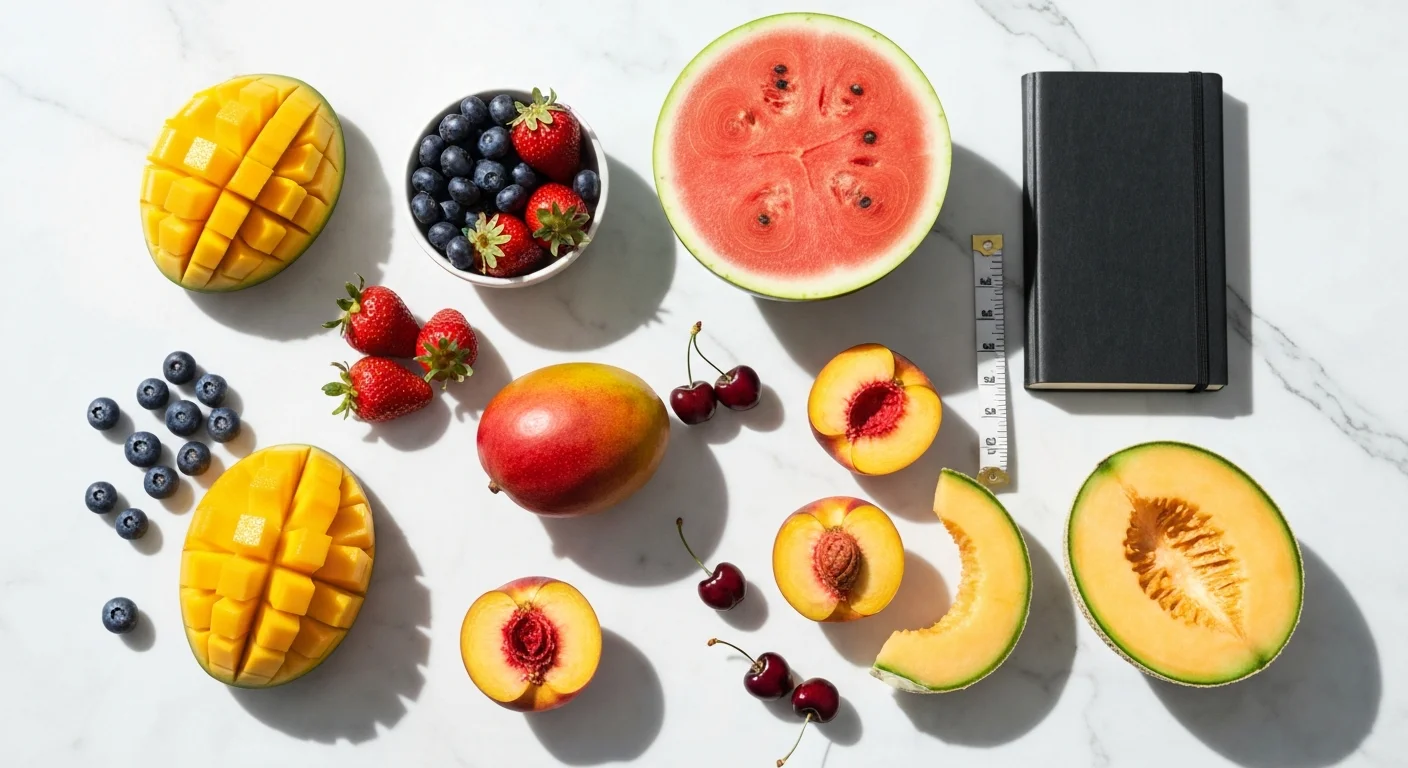
Mango ranks at or near the top across vitamin A, vitamin C, folate, and polyphenol density compared to other summer fruits. Per 100 g, mango delivers 21 percent DV vitamin C, 11 percent DV vitamin A, and roughly 1,690 mg gallic acid equivalents in polyphenols, outperforming watermelon, peach, strawberry, and cantaloupe on combined micronutrient density while matching them on hydration.
Why Head-to-Head Matters
Texas summers push the body hard. A Houston afternoon with 95 percent humidity or a Lubbock afternoon at 105 degrees Fahrenheit drives fluid losses of 1 to 2 liters per hour of outdoor activity. Summer fruits replace water, electrolytes, and phytochemicals that blunt heat-driven oxidative stress. But not all summer fruits are nutritionally equal, and the right mix supports performance, immunity, and mood across the hot months.
Ground Rules for Comparison
All nutrient values are drawn from USDA FoodData Central, normalized to 100 g edible portion. Polyphenol values use the Phenol-Explorer database where available. Indian mango (cultivar-specific polyphenol data from the National Mango Board) is used where different from generic FDC entries.
The Big Table
| Fruit (100 g) | Calories | Vitamin C (%DV) | Vitamin A (%DV) | Folate (%DV) | Potassium (mg) | Fiber (g) | Water (%) |
|---|---|---|---|---|---|---|---|
| Mango (raw, NDB 09176) | 60 | 41 | 11 | 11 | 168 | 1.6 | 83 |
| Watermelon | 30 | 9 | 3 | 1 | 112 | 0.4 | 92 |
| Peach | 39 | 7 | 3 | 1 | 190 | 1.5 | 89 |
| Strawberry | 32 | 65 | 0 | 6 | 153 | 2.0 | 91 |
| Blueberry | 57 | 16 | 1 | 2 | 77 | 2.4 | 84 |
| Cantaloupe | 34 | 40 | 68 | 5 | 267 | 0.9 | 90 |
| Cherry | 63 | 8 | 1 | 1 | 222 | 2.1 | 82 |
Category Winners
Vitamin C
Strawberry takes the top slot for sheer vitamin C density at 65 percent DV per 100 g. Mango holds second at 41 percent DV, tied with cantaloupe. Both mango and strawberry deliver more than a full day’s vitamin C in a single cup, making them top picks for immune support during the summer cold season.
Vitamin A
Cantaloupe wins on vitamin A thanks to its orange flesh. Mango, especially Indian varieties with deep orange pulp, ranks second. A 2019 Food Chemistry paper measured Alphonso beta-carotene at 3,800 micrograms per 100 g, considerably higher than the generic USDA figure, because the FDC entry represents a blend of cultivars.
Polyphenols
Blueberry is famously polyphenol-rich, scoring roughly 560 mg per 100 g in anthocyanins alone. Indian mango, often overlooked, scores approximately 1,690 mg per 100 g in total polyphenols when measured by Folin-Ciocalteu on Alphonso pulp. That includes mangiferin, gallic acid, quercetin, and a family of xanthones. On total polyphenol density, mango often edges out blueberry when Indian cultivars are tested directly.
Potassium
Cantaloupe leads at 267 mg per 100 g, followed by cherry and peach. Mango’s 168 mg is mid-pack but still meaningful for heat-driven electrolyte replacement.
Fiber
Blueberry and cherry tie for top fiber density. Mango’s 1.6 g per 100 g is moderate but arrives with a higher total volume per serving since a typical mango serving is 165 g.
Beyond Numbers: Functional Fit
Nutrition tables miss the functional context. Watermelon’s lycopene is heat-stable and supports skin protection during Texas sun exposure. Strawberry’s ellagic acid has been linked in a 2020 Journal of Functional Foods study to improved endothelial function. Mango’s mangiferin is an AMPK activator studied for metabolic health. A smart summer fruit strategy includes rotation rather than reliance on one champion.
Glycemic Load Snapshot
Glycemic loads per typical serving: watermelon 5, peach 5, cherry 6, mango 8, strawberry 3, blueberry 5, cantaloupe 4. All fruits remain in the low-GL category except when juiced or dried.
Texas Seasonality
In Texas, Indian mango arrives April through July. Local peaches peak June through early August. Watermelon saturates markets May through September. Strawberries are best January through April in the Gulf region. Blueberries peak late April through June in East Texas. This timing creates a natural handoff: mango carries the first half of the heat months, with watermelon and peaches filling in through late summer.
Sourcing Matters
Imported fruit loses polyphenol density during cold storage and transport. A 2021 Food Chemistry study found a 20 to 30 percent drop in total polyphenols in fruit held in cold storage for more than 21 days. Swadeshi Mangoes ships direct-ripened Indian mango across Texas to minimize this loss. Explore the lineup on our varieties page.
A Balanced Texas Summer Fruit Plate
An ideal summer plate for a Texas adult: one cup mango, one cup watermelon, a half cup blueberries or cherries, and a handful of strawberries. Total: about 280 calories, 6 g fiber, 100 percent DV vitamin C, 40 percent DV vitamin A, and 800 mg potassium. That outperforms any single-fruit approach and matches the USDA Dietary Guidelines fruit recommendation while boosting antioxidant variety.
Frequently Asked Questions
Is mango the healthiest summer fruit?
Mango is among the top three summer fruits for combined vitamin A, vitamin C, and polyphenol density, especially when Indian varieties are chosen. Calling any single fruit the “healthiest” ignores the benefit of variety. Rotating mango with blueberry, strawberry, and watermelon provides a broader phytochemical spectrum than relying on one champion across the season.
Which fruit has more antioxidants, mango or blueberry?
Blueberry is famous for anthocyanins, which are powerful antioxidants. Indian mango delivers a different antioxidant profile dominated by mangiferin, gallic acid, and quercetin. Total polyphenol measurements on Alphonso pulp often exceed blueberry on a per-gram basis. Both are valuable, and the smartest approach is to include both weekly rather than choose between them.
Does mango have more sugar than watermelon?
Yes by concentration. Mango contains about 14 g sugar per 100 g, watermelon about 6 g per 100 g. Watermelon contains more water per serving, which dilutes its sugar. For weight management, both are acceptable because the total glycemic load remains low. Portion size matters more than the specific fruit when watching carbohydrate intake.
Which summer fruit is best for hydration in Texas heat?
Watermelon and cantaloupe lead at 90 to 92 percent water content. Mango at 83 percent is still strongly hydrating. The best hydration strategy combines fruit with adequate plain water. Fruit electrolytes like potassium and magnesium support fluid retention, and the American Journal of Clinical Nutrition Beverage Hydration Index places fruit above plain water in short-term hydration performance.
Can I eat multiple summer fruits daily?
Yes. The USDA recommends two cups of fruit per day, and spreading that across two or three different fruits improves micronutrient diversity. Texans who combine mango, watermelon, and berries routinely meet vitamin C, potassium, and fiber targets without supplements. Watch total sugar for those with diabetes and pair fruit with protein or healthy fat to stabilize blood sugar.
Texas Takeaway
Across the state from El Paso to Houston, summer fruit is abundant and affordable. Building a weekly rotation that centers Indian mango during April through July then transitions to local peaches, watermelon, and berries produces the strongest nutritional return. Visit our order form to start mango season off right, or browse the blog for more science-based comparisons.
Oxidative Stress and Fruit Variety
Texas summer sun accelerates reactive oxygen species production in skin and blood vessels. Each fruit provides a different antioxidant spectrum. Lycopene from watermelon shines in skin protection. Anthocyanins from blueberries and cherries protect brain capillaries. Mangiferin from mango crosses into multiple tissues and appears in urine within hours of consumption, evidence of systemic bioavailability. Combining fruits rather than rotating them one at a time improves total antioxidant network coverage.
Satiety and Snacking Success
Research on the Satiety Index ranks whole fruit above many processed snacks. Mango ranks well because of its combination of fiber, water, and natural sweetness that satisfies sugar cravings without added sugar. Texas office workers who swap a mid-afternoon cookie for a cup of mango cubes often report reduced evening cravings and more stable energy through the back half of the workday.
Cost-Per-Nutrient Considerations
Texas grocery prices fluctuate with season. Imported blueberries can hit five dollars per pint in winter, while peak-season Texas watermelon drops below one dollar per pound. Indian mango from Swadeshi Mangoes, when ordered during peak April through July, often delivers strong cost-per-nutrient value because of high polyphenol density. Combining local Texas peaches with delivered Indian mango optimizes both budget and nutrition.
Glycemic Stacking
For diabetes-aware eaters, combining lower-glycemic berries with moderate-glycemic mango produces a balanced dessert plate. A half cup of blueberries with a half cup of mango cubes keeps total glycemic load under 7 while providing diverse polyphenol coverage. Pair with a handful of walnuts for omega-3 fats that slow glucose absorption further.
Practical Weekly Rotation
A Texas family might structure the summer fruit rotation as follows: Monday berries, Tuesday mango, Wednesday peach, Thursday watermelon, Friday mango, Saturday cantaloupe, Sunday mixed plate. This secures all the top antioxidants across the week and gives children exposure to multiple flavors and textures. Visit our varieties page to select Indian mango cultivars to anchor the plan. For many Texas households, this kind of weekly rotation replaces packaged snacks and boosts total fruit servings well above the national average, a meaningful shift that compounds across a long summer. The cost savings on processed snack foods often offset the premium of direct-shipped Indian mango.
This article is for educational purposes. Consult your healthcare provider for medical advice.