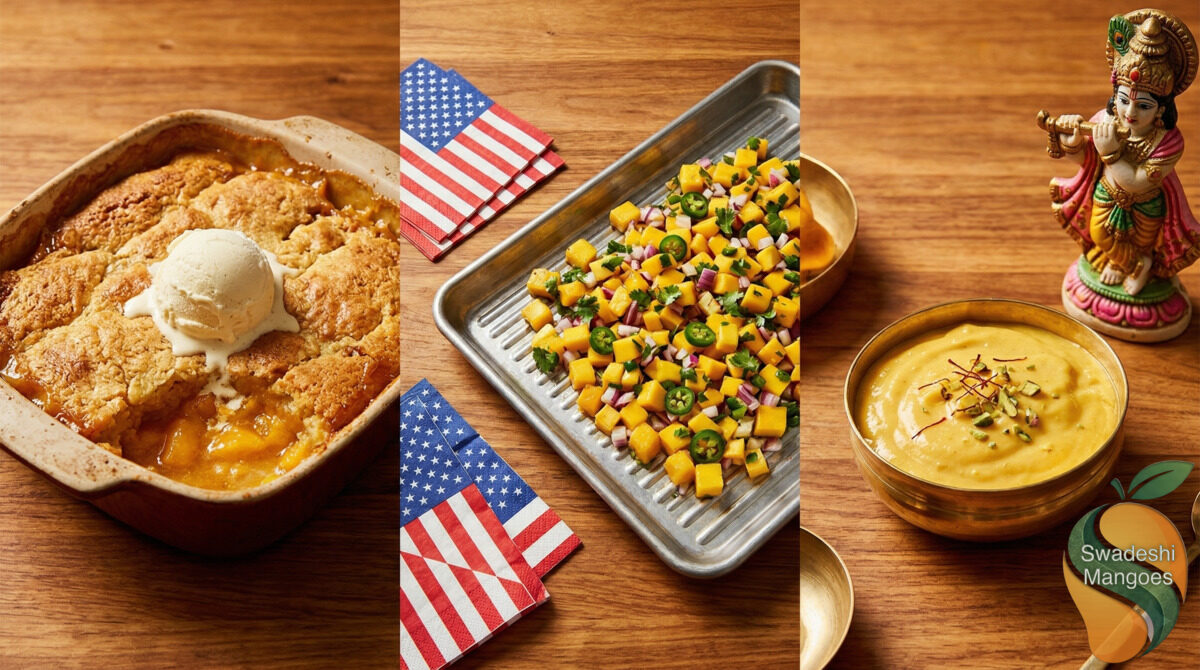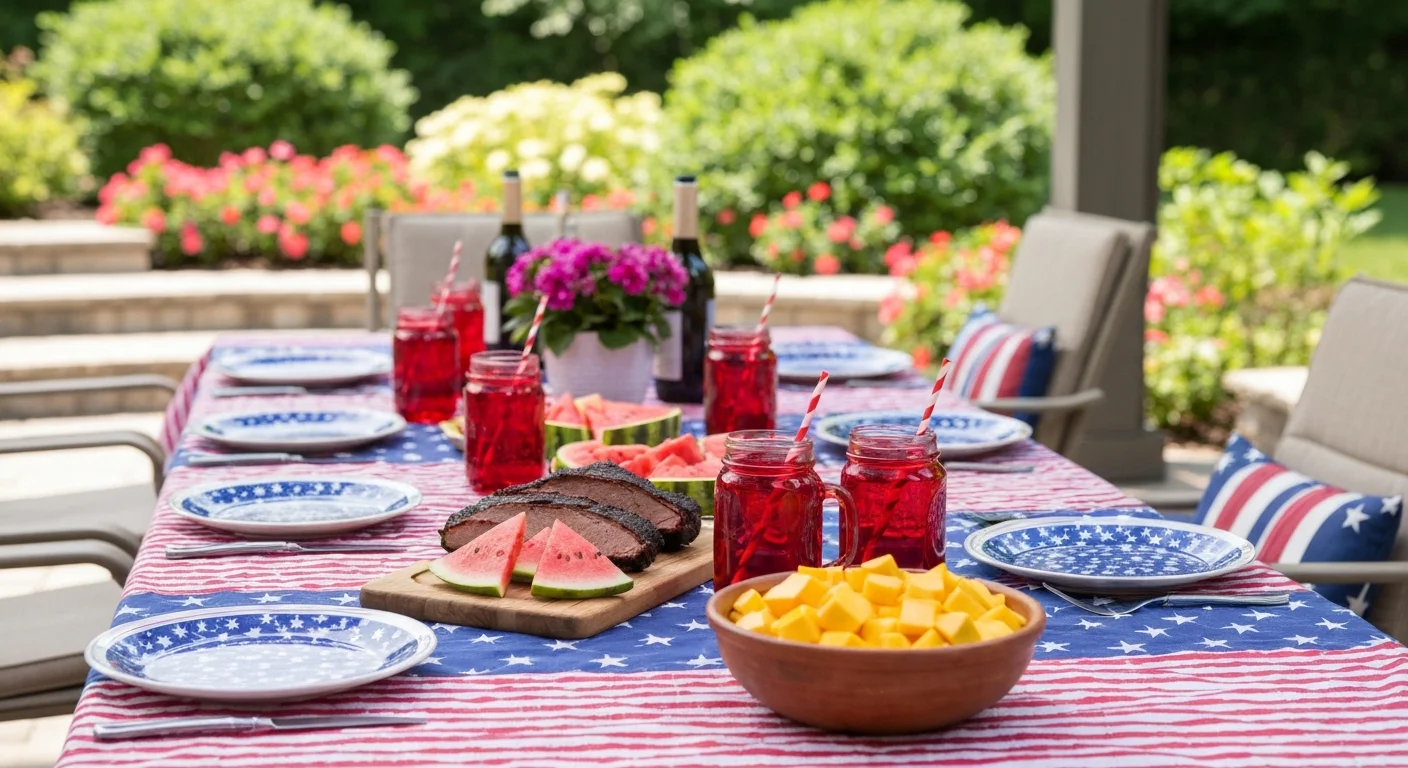
Indian mangoes can be a thoughtful addition to Texas Juneteenth cookouts when brought with respect for the holiday’s history and the host’s traditions. Alphonso and Kesar pair with smoked brisket and red drink, while a simple mango fruit salad complements watermelon, the classic Juneteenth fruit. Always follow the host’s lead and never replace core traditional dishes.
I am Vamsi, and I was invited to my first Juneteenth cookout in 2023 by my Austin neighbor Keisha, whose family has celebrated the holiday in Texas for three generations. I brought a tray of Alphonso slices with a small hand-written note asking if it was appropriate, and she welcomed it. Since then, I have learned a lot about how Indian mangoes can respectfully join a Juneteenth table. This guide collects that learning.
Understanding Juneteenth
Juneteenth marks June 19, 1865, the day Union troops arrived in Galveston, Texas, and announced that enslaved African Americans were free, more than two years after the Emancipation Proclamation. It is the oldest known celebration commemorating the end of slavery in the United States. It became a federal holiday in 2021, but for Texas Black communities, it has been a deeply meaningful gathering for over 150 years.
Why It Matters
Juneteenth is not a generic summer cookout. It is a celebration of freedom, community, and Black resilience. The food, the color red, the red drinks, the specific dishes all carry meaning. Arriving with understanding is a form of respect.
Texas Origins
Because Juneteenth began in Galveston, Texas carries the holiday’s original geography. From Austin to Dallas to Houston to San Antonio, Juneteenth cookouts have been a fixture of Black Texas communities for generations. If you are invited, you are being welcomed into a tradition.
When Indian Mangoes Belong at a Juneteenth Table
Indian mangoes fit naturally at Juneteenth cookouts in three situations: when the host welcomes contributions, when the mangoes supplement rather than replace traditional dishes, and when the color and flavor align with the red theme of the day.
Ask First
Always text the host 48 hours in advance: What can I bring, and would you welcome a bowl of Indian mango? This simple question avoids overstepping and lets the host guide the contribution.
Supplement, Do Not Replace
Traditional Juneteenth dishes often include smoked brisket, hot links, collards, red beans and rice, cornbread, potato salad, red velvet cake, watermelon, strawberry soda, and red Kool-Aid. Indian mangoes should sit beside these, not in place of them.
Dish Ideas That Work
These are the dishes I have brought or seen brought to Texas Juneteenth cookouts over three years, with positive response from hosts.
Alphonso and Watermelon Salad
Watermelon is a traditional Juneteenth fruit. Pairing it with diced Alphonso creates a visual and flavor complement. Red watermelon cubes, orange Alphonso cubes, a squeeze of lime, a pinch of salt, a tiny sprinkle of Tajin. Serve in a shallow bowl.
Kesar Red Drink Addition
Red drink is central to Juneteenth. It can be strawberry soda, hibiscus tea, or red Kool-Aid. A pitcher of hibiscus tea with a scoop of Kesar puree on top as a floating garnish adds a layer without changing the core drink.
Mango Hot Sauce for Hot Links
A small jar of diced Alphonso with chile flakes, vinegar, and salt, set beside the hot links, offers guests an optional condiment. Never replace the traditional hot sauce the host brings.
Mango Fruit Plate
A simple platter of sliced Alphonso, Kesar, and Banginapalli, labeled, set on the dessert table alongside watermelon and strawberries. This lets guests try Indian varieties without pressure.
Pairing with Juneteenth Staples
| Juneteenth Dish | Mango Pairing | How to Serve |
|---|---|---|
| Smoked brisket | Alphonso salsa | Small bowl on the side |
| Hot links | Alphonso-chile condiment | Jar beside sausage tray |
| Collard greens | Diced Banginapalli on top | Optional garnish |
| Red beans and rice | None, keep classic | Skip the mango |
| Cornbread | Kesar butter | Softened butter plus Kesar puree |
| Potato salad | None, keep classic | Skip the mango |
| Red velvet cake | None, keep classic | Skip the mango |
| Watermelon | Alphonso salad | Combined fruit bowl |
| Red Kool-Aid / hibiscus | Kesar puree float | Pitcher garnish |
| Strawberry soda | None | Keep classic |
What Not to Do
A few boundaries I have learned from Austin and Dallas hosts.
Do Not Bring Unsolicited Large Quantities
A case of mangoes with a bow on top is too much and puts the host in a position of having to manage fruit they did not plan for. Bring one tray or one bowl.
Do Not Rebrand the Holiday
Juneteenth is not a multicultural fusion event. It is a Black American holiday with Texas roots. Bringing Indian mangoes is a contribution, not a fusion statement. Avoid framing your dish as a cultural mashup.
Do Not Replace the Red Drink
Red drink is central. Your mango lassi, however good, is not a substitute. Bring the lassi as a side option only after asking.
Texas Heat Logistics
June 19 in Texas runs 90 to 97F across Austin, Round Rock, Cedar Park, Pflugerville, Dallas, Frisco, Plano, Houston, Sugar Land, Katy, and San Antonio. Cut fruit sitting on a table for three hours in 95F heat is a food safety issue. Keep mango in a bowl nested in ice, refresh every hour, and move indoors if the host has AC running.
Humidity
Houston and Sugar Land carry 70 to 85 percent humidity in June. Fruit softens faster. Prep smaller batches and replenish from the fridge.
Ordering Ahead
Order at least 2 weeks ahead through our order form. Pickup through our Texas agent network covers every major metro. Choose Alphonso and Kesar for Juneteenth, both of which peak in June. See our full varieties page for more options and the mango care guide for ripening timing.
A Story from Austin
In 2024 I attended a Juneteenth cookout at Keisha’s sister’s home in East Austin. I brought a small bowl of Alphonso and watermelon salad. Her uncle, a retired postal worker named Joseph, tried it, closed his eyes for a long moment, and said it reminded him of the fruit stands in Galveston when he was a kid. We talked for an hour about mango, Texas history, and family. That is the point of a respectful contribution. It builds connection, not spectacle.
FAQ
Is it appropriate to bring Indian mangoes to a Texas Juneteenth cookout?
Yes, when you ask the host first, contribute modestly, and do not replace traditional dishes. Juneteenth welcomes community, and a thoughtful fruit contribution that pairs with watermelon and red drink can fit naturally. The key is following the host’s lead, arriving with understanding of the holiday’s meaning, and letting traditional foods anchor the table.
Which Indian mango variety works best with Juneteenth red foods?
Alphonso and Kesar work best. Their orange flesh complements red watermelon, red Kool-Aid, and red velvet cake visually and flavor-wise. Both varieties peak in June, which aligns perfectly with Juneteenth timing. Order two weeks ahead through our Austin or Dallas pickup agents to ensure availability for June 19.
Can I bring mango lassi to a Juneteenth cookout in Texas?
Only after checking with the host. Red drink, whether hibiscus, strawberry soda, or red Kool-Aid, is central to Juneteenth and should not be replaced. Mango lassi can sit beside the red drink as an optional side if the host welcomes it. Never present it as the main beverage.
How do I keep mango fresh at a Texas Juneteenth cookout in 95F weather?
Nest the serving bowl in a larger bowl of ice and refresh every hour. Keep the main supply in a cooler or indoor fridge, bringing out small portions as guests eat. The USDA two-hour rule for cut fruit becomes a one-hour rule at ambient temperatures above 90F, which is typical for June 19 across Texas.
Are mango desserts appropriate for Juneteenth?
Mango sorbet or a small mango fruit salad is appropriate as a supplementary dessert. Do not bring it in place of red velvet cake, peach cobbler, or banana pudding, which are traditional. If the host is doing potluck desserts, a mango panna cotta or fruit salad contribution is welcome. If desserts are already covered, bring fruit instead.
Community Across Cultures in Texas
Texas has always been a state of overlapping cultures: Tejano, German, Czech, Vietnamese, Nigerian, Gujarati, Punjabi, and Ethiopian communities all share the same suburbs in places like Plano, Sugar Land, and Cedar Park. Juneteenth, as a Black American holiday, remains central to Black community identity while also offering moments of thoughtful cross-cultural exchange when handled respectfully. Bringing an Indian mango dish to a Juneteenth cookout is one small thread in that larger Texas fabric, and it works only when the contribution flows from relationship, not tokenism.
Building Real Relationships First
The best way to know whether your contribution is welcome is to already be in relationship with the host. If you have known your neighbor for years, the invitation carries weight. If you were invited by a mutual friend and have never met the host, bring less and listen more. This is not a holiday for stepping into the spotlight.
Juneteenth Colors and Presentation
The Juneteenth flag carries red, white, and blue, with a star and an arc. The food table often mirrors these colors: red drink, white potato salad, red velvet cake. Indian mango presentations that echo these colors fit naturally. An Alphonso and watermelon salad is orange, red, and green, close enough to the theme. A Kesar puree floated on hibiscus tea keeps the red dominant. Skip Tupperware-style plastic presentations. Use ceramic or glass bowls and hand-torn labels if you want to signal care.
After the Cookout
If you were welcomed, follow up. A text the next day saying thank you for including me, the brisket was incredible, the potato salad was the best I ever had means more than any contribution you brought. Relationships are the real point of Juneteenth. The mango was just the excuse to show up with care. Over time, as you attend year after year, your contributions can evolve based on what the host welcomes.
Closing
Juneteenth is a Texas holiday with deep history and deep community. Indian mangoes can be a thoughtful addition when brought with respect, modesty, and communication with the host. For ordering, visit our order form. For more recipe context, read the blog. For Juneteenth history, the National Museum of African American History and Culture is an authoritative resource, and Texas Monthly has covered the holiday’s Texas roots for decades.