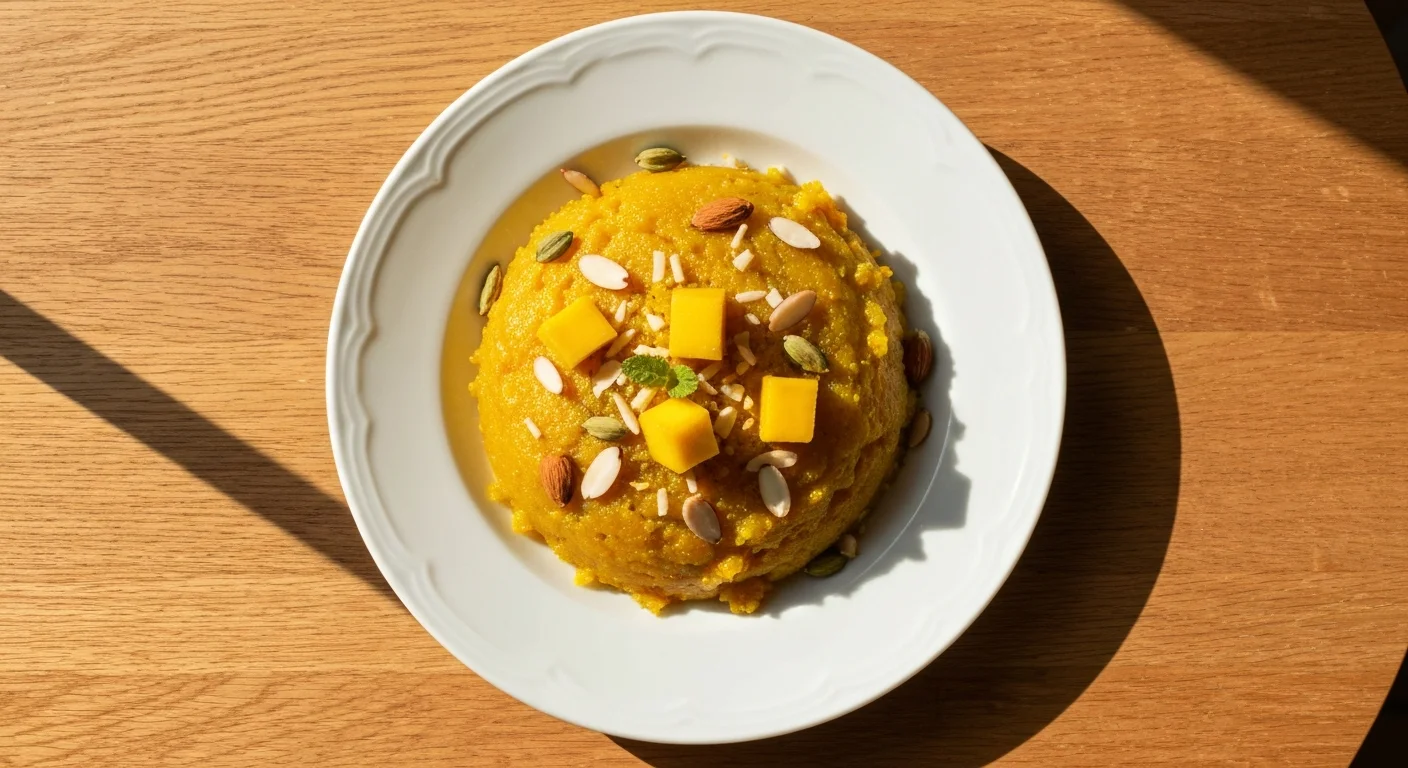
Quick answer: Mavinakayi chitranna is a Karnataka-style mango rice made by tossing steamed rice with a tempering of mustard seeds, curry leaves, peanuts, chana dal, and grated raw green mango. It takes 30 minutes, is vegan and gluten-free, and is one of the most portable and satisfying lunches you can pack for Texas summer commutes, road trips, or outdoor picnics in Austin, Houston, Dallas, and San Antonio. Tart, savory, and built from pantry staples plus one raw Totapuri mango.
History and Origin
Chitranna refers to a family of South Indian rice dishes flavored with one dominant ingredient: lemon for nimbe chitranna, tamarind for puliyogare, and raw mango for mavinakayi chitranna. The Karnataka version is the most celebrated of the mango variations, and every Kannada household has its own family adjustment to the tempering ratio. My Bangalore friend Priya grew up eating mavinakayi chitranna for school tiffin through every single summer, and she swears her mother used slightly more jaggery in the tempering to balance the sourness of Bangalore’s local mallika-variety raw mango.
Chitranna belongs to a larger tradition of South Indian seasoned rices designed to be eaten at room temperature, making them ideal for long summer days, temple prasadam, and travel. Before refrigeration, seasoned rices could sit out safely for hours because the tempering, mustard oil, and acidity acted as natural preservatives. That same characteristic makes mavinakayi chitranna an absolutely perfect lunchbox food for Texas summers, where afternoon temperatures in Houston and San Antonio can make other packed lunches go sour by noon. Our customers across Texas request raw Totapuri specifically to make mavinakayi chitranna for their kids’ summer camps, road trips to the coast, and outdoor weekend picnics in the Hill Country.
Ingredients
This makes enough for 4 servings or one large family lunchbox set.
For the rice:
- 1 cup raw sona masoori or basmati rice (200 g)
- 2 cups water (475 ml)
- 1/2 teaspoon salt
For the mango mixture:
- 1 cup grated raw green mango (about 1 medium Totapuri, 200 g)
- 1/2 teaspoon turmeric powder
- 1 teaspoon salt, more to taste
- 2 tablespoons fresh grated coconut (optional but traditional)
For the tempering (oggarane):
- 3 tablespoons coconut oil or neutral oil
- 1 teaspoon black mustard seeds
- 1 teaspoon urad dal (split black gram)
- 1 tablespoon chana dal (split Bengal gram)
- 2 tablespoons raw peanuts
- 2 dried red chiles, broken
- 2 green chiles, slit
- 15 fresh curry leaves
- 1/4 teaspoon hing (asafoetida)
- 1/4 teaspoon jaggery or brown sugar (Karnataka-style)
Garnish:
- 2 tablespoons chopped fresh cilantro
- 1 tablespoon fresh grated coconut
- 1 tablespoon toasted peanuts, crushed
Prep time: 10 minutes. Cook time: 20 minutes. Serves: 4. Dietary: vegan, gluten-free, nut optional.
Method
- Cook the rice (15 minutes). Rinse rice in 3 changes of water. In a saucepan or rice cooker, combine rice with 2 cups water and 1/2 teaspoon salt. Cook until fluffy and dry, roughly 15 minutes on stovetop or one full cycle in a rice cooker. You want separated grains, not sticky rice. Spread cooked rice on a wide plate to cool. This is critical.
- Prep the mango (3 minutes). Peel the raw mango and grate it on the medium side of a box grater. Do not use a microplane (too fine, turns mushy) or julienne (too thick). You want short flakes. Squeeze out any excess liquid lightly with your hand.
- Make the tempering (5 minutes). Heat oil in a wide skillet over medium heat. Add peanuts and fry 90 seconds until pale golden. Add mustard seeds, wait for pop, about 30 seconds. Add urad dal and chana dal. Fry 60 seconds until dals turn golden. Add dried red chiles, green chiles, curry leaves, and hing. Fry 30 seconds until curry leaves crisp up.
- Add the mango (3 minutes). Add grated raw mango, turmeric, and salt to the tempering pan. Stir and cook over medium heat for 2 to 3 minutes until mango softens slightly and loses its raw smell. Stir in jaggery and grated coconut. Taste for salt.
- Combine with rice (2 minutes). Add cooled cooked rice to the pan. Using a gentle folding motion with two wooden spoons, toss rice with the mango mixture until every grain is coated yellow. Do not mash the rice.
- Rest and serve (5 minutes). Cover off heat for 5 minutes to let flavors marry. Garnish with cilantro, extra grated coconut, and crushed peanuts. Serve warm or at room temperature.
Variety Recommendations
Chitranna lives on raw mango sourness.
Best: Raw Totapuri. Karnataka households traditionally use the parrot-beak Totapuri because it grates beautifully, has the right tartness, and holds texture through the tempering. Our first-season raw Totapuri shipments sell out fast each spring to Texas customers making chitranna. Pre-order here.
Second best: Raw Banginapalli. Less fiber, milder tartness. If using Banginapalli, add 1 teaspoon of lemon juice at the end to boost the sour note.
Emergency option: Frozen raw mango shreds. Available in some Indian grocers in Houston and Dallas. Thaw and drain before using.
Avoid: Alphonso, Kesar, Chinna Rasalu, Himayath, Dasheri, Mallika, Suvarna Rekha. All are ripe varieties and their sweetness clashes with the savory tempering. Save ripe mangoes for shrikhand.
Tips
- Cool the rice before mixing. Hot rice turns into paste the second it meets mango acid. Cool it for at least 10 minutes. Day-old rice works even better.
- Grate, do not chop. Grated mango distributes flavor evenly through the rice. Chopped mango creates sour pockets.
- Fry dals to golden, not brown. Burnt dals turn bitter and ruin the dish.
- Coconut oil is traditional. If you have access to cold-pressed coconut oil, it adds a signature Karnataka aroma. Neutral oil works fine as a substitute.
- Mistake to avoid: skipping the jaggery. A tiny pinch of jaggery rounds out the sourness without making the rice sweet. Do not leave it out.
Serving Suggestions
Classic Karnataka lunch: a mound of mavinakayi chitranna, a small bowl of cold yogurt, a papad, and a spoon of mango pickle. That is the full meal, and it is perfect in our Texas summer humidity. I pack this for my kids’ summer camp lunchboxes across Austin, and it holds up beautifully in an insulated bag until noon. It also travels brilliantly on road trips to Galveston, the Hill Country, or up to Dallas. For a modern Texas twist, serve chitranna alongside a quick cucumber-tomato salad, a few grilled chicken tikka skewers, and a tall glass of mango ambli or buttermilk. At potluck dinners in Houston and San Antonio, mavinakayi chitranna travels safely in a covered steel tiffin and is welcomed by everyone from toddlers to grandparents.
Storage
Mango rice keeps at room temperature for up to 4 hours (which is why it is so good for lunchboxes). Refrigerated in an airtight glass container, it lasts 2 days. To refresh, warm gently in the microwave covered with a damp paper towel for 60 seconds, or eat at room temperature after 20 minutes out of the fridge. Do not freeze, as the rice texture degrades. Check USDA FoodData Central for rice and mango nutrition facts.
FAQ
Can I use leftover rice for chitranna? Absolutely, and many Karnataka home cooks prefer it. Day-old refrigerated rice has drier separated grains that absorb the tempering better than fresh-cooked rice. This is a classic leftover-rice rescue dish. Let refrigerated rice come to room temperature before mixing, or gently warm it.
How long does mango rice keep? Up to 4 hours safely at room temperature, 2 days refrigerated in an airtight container. Because chitranna is designed for room-temperature eating, it is one of the safest rice dishes to pack for Texas lunchboxes. Do not freeze. Reheat gently or enjoy cool.
Is mango rice spicy? Moderately, about 4 out of 10. Two dried red chiles and 2 slit green chiles give a balanced background heat. For a milder version, use 1 of each. For a spicier kick typical of Mysore households, add a pinch of red chili powder to the tempering.
Can I make chitranna without peanuts for nut allergies? Yes. Simply omit the peanuts and double the chana dal for crunch. The flavor is slightly less rich but remains authentic. Many South Indian temple-style chitranna recipes are naturally peanut-free.
What rice works best for mavinakayi chitranna? Sona masoori is the traditional Karnataka choice because its grains separate beautifully. Basmati rice is an excellent second. Avoid sticky short-grain rices like jasmine or sushi rice, which clump and make gummy chitranna that fights back against the tempering. Brown sona masoori or brown basmati also works for a heartier version.
Recipe Card
Mavinakayi Chitranna (Karnataka Mango Rice)
Prep: 10 minutes. Cook: 20 minutes. Serves: 4. Diet: Vegan, gluten-free.
Ingredients: 1 cup rice, 2 cups water, 1 cup grated raw mango, 1/2 tsp turmeric, 1 tsp salt, 2 tbsp coconut. Tempering: 3 tbsp oil, 1 tsp mustard seeds, 1 tsp urad dal, 1 tbsp chana dal, 2 tbsp peanuts, 2 dried red chiles, 2 green chiles, 15 curry leaves, 1/4 tsp hing, 1/4 tsp jaggery.
Steps: Cook rice until fluffy, spread to cool. Heat oil, fry peanuts, pop mustard seeds, fry dals and curry leaves. Add mango, turmeric, salt, jaggery, coconut. Cook 2-3 min. Fold in cooled rice. Rest 5 min. Garnish and serve.
Browse more South Indian mango recipes or order raw Totapuri for fresh Texas delivery.