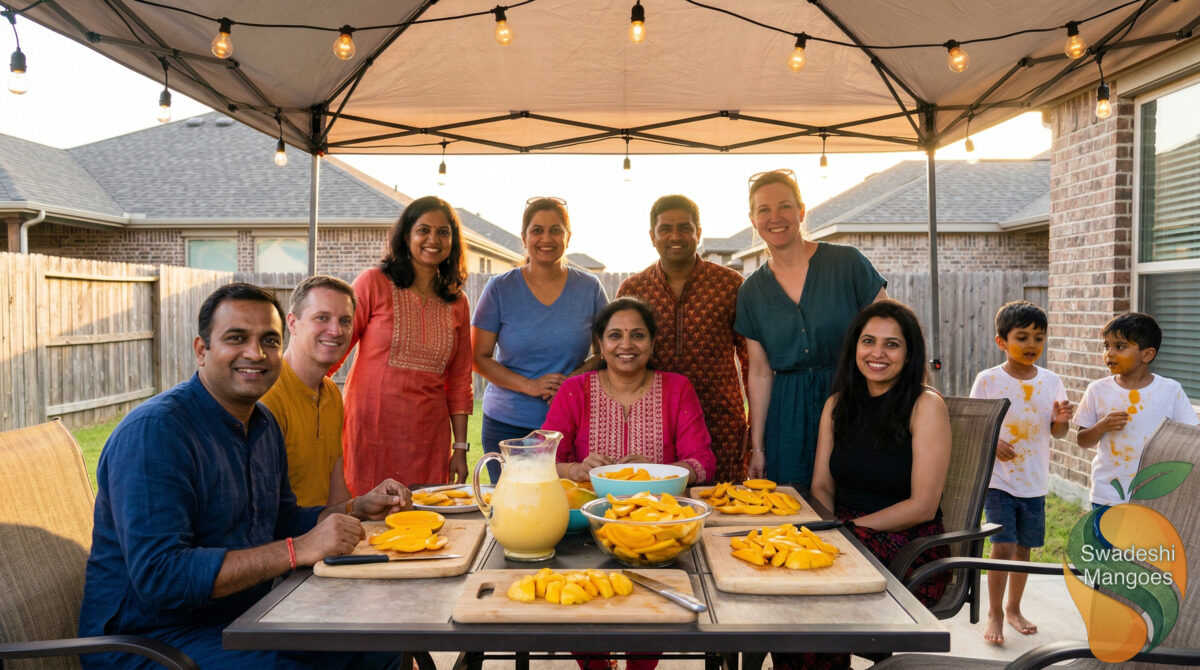
In Indian households, mango season is not a solo activity. It is communal. You buy a full crate, invite people over, and eat until everyone is sticky and happy. In Texas, this tradition deserves its own name: the Mango Cutting Party.
Here is your complete guide to hosting one — whether your backyard is in Plano, Sugar Land, Cedar Park, or Cibolo.
What Is a Mango Cutting Party?
Simple: you get a group of friends and family together, open multiple boxes of Indian mangoes, and eat them together. Some people cut them fancy. Some people just squeeze and suck. Kids run around with mango-stained shirts. It is the best kind of mess.
Think of it as the Indian equivalent of a Texas crawfish boil — except it is sweet, does not require bibs (though you might want them), and the cleanup is easier.
Planning Checklist
How Many Mangoes Per Person?
| Audience | Mangoes Per Person | Notes |
|---|---|---|
| Adults (Indian, mango-experienced) | 3–4 | They will eat more than you think |
| Adults (first-timers) | 2 | Plus extras for trying different varieties |
| Kids (under 12) | 1–2 | They will eat half and wear the other half |
Rule of thumb: For 10 guests, order 3–4 boxes. Mix varieties — at least two, ideally three — so people can compare.
Best Variety Combinations
- The Classic: Alphonso + Banginapalli — the king vs. the crowd-pleaser
- The Tasting Flight: Alphonso + Kesar + Banginapalli — three textures, three sweetness levels
- The Adventurous: Add Chinna Rasalu or Himayath for a surprise round
Setting Up for Texas Heat
Texas summers and mango parties are meant for each other — but 98°F heat means your fruit will overripen fast if you do not plan:
- Shade is essential. Set up under a covered patio, pop-up canopy, or large patio umbrella. Direct Texas sun will turn ripe mangoes to mush in an hour.
- Ice bath for the extras. Keep uncut mangoes in a large cooler or tub with ice. Pull them out as needed. Cold mango is actually delicious in the heat.
- Cutting station: Set up a table with 3–4 cutting boards, sharp knives, and a large bowl for peels and seeds. Cover the table with a plastic tablecloth for easy cleanup.
- Wet towels: Have a stack of damp kitchen towels nearby. Hands will be sticky. This is part of the experience.
- Newspaper tradition: For the authentic touch, spread newspaper on a picnic table and let people eat over it. It is how it is done in India and it makes cleanup effortless.
What to Serve Alongside
Drinks
- Mango lassi — blend extra mango pulp with yogurt (pre-make a big pitcher)
- Aam panna — raw mango cooler, perfect for heat (Totapuri works great)
- Lemonade or agua fresca — for guests who want something lighter
- Mango margaritas — for the adults (puree mango + tequila + lime + ice)
Snacks
- Chaat: Bhel puri, sev puri, or fruit chaat with diced mango mixed in
- Tortilla chips + mango salsa — for the Tex-Mex crossover
- Puris — if you want to go full aam ras-puri (and you should)
Dessert
- Mango kulfi or mango popsicles (make the night before)
- Aamrakhand in small cups — rich, cold, and crowd-stopping
How to Introduce Non-Indian Friends to Indian Mangoes
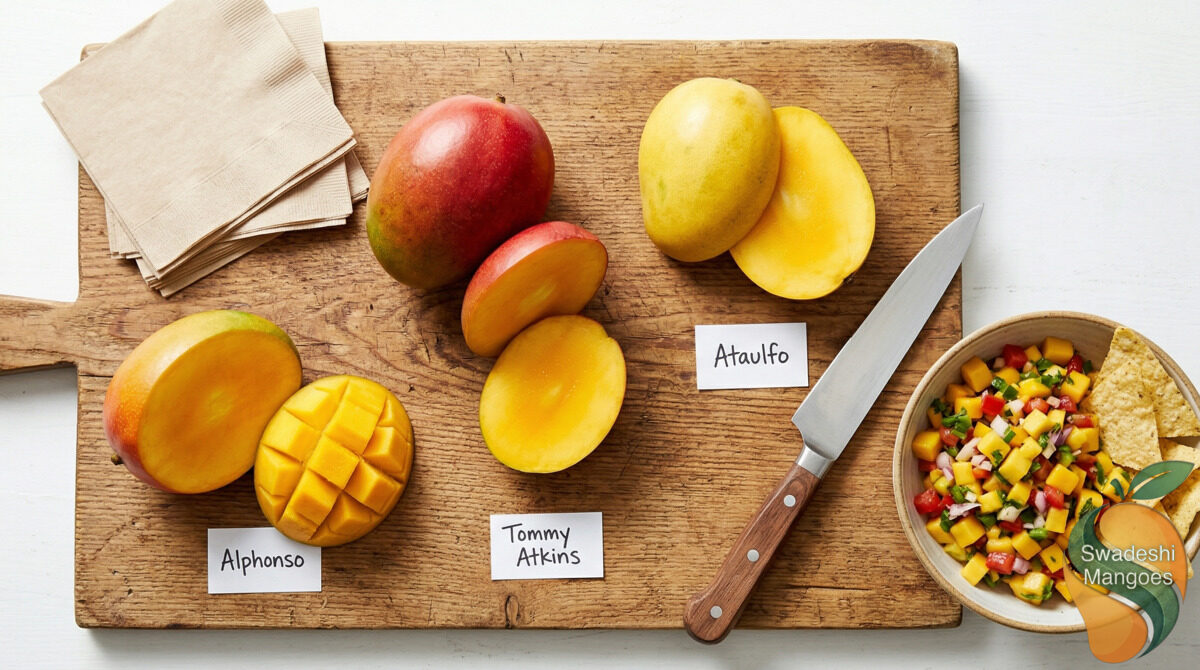
This is the best part. Most Americans have only ever eaten Tommy Atkins mangoes. Their minds are about to be blown. Here is how to set it up:
- “Forget everything you know about mangoes.” Say this first. Set the expectation that this is a different fruit.
- Start with Banginapalli. It is sweet, mild, and fiberless. Nobody dislikes Banginapalli. It is the gateway mango.
- Then try Alphonso. The aroma alone will make them understand. Let them smell it before tasting.
- Explain the varieties. “This one is from Ratnagiri in Maharashtra. This one is from Kurnool in Andhra Pradesh. Different regions, different flavors.” People love origin stories.
- Give them a take-home mango. One mango. They will be back next season ordering their own box.
Making It a Neighborhood Event
The best mango cutting parties are the ones where your Indian and non-Indian neighbors sit together, mango juice on their chins, debating which variety is best. Here is how to make that happen:
- Invite broadly. Post in your neighborhood Facebook group or HOA chat: “Indian mango tasting party this Saturday — all welcome.”
- Print small cards for each variety with the name, region of origin, and flavor description. People love learning.
- Do a blind tasting. Number the varieties 1-3. Let people taste and vote. Announce the winner. It is surprisingly fun.
- Take photos. Share them. Tag @SwadeshiMangoes. We love seeing our mangoes at your parties.
Quick Party Budget
| Item | For 10 Guests | For 20 Guests |
|---|---|---|
| Mango boxes (mixed varieties) | 3–4 boxes | 6–8 boxes |
| Lassi ingredients | $10 | $15 |
| Chips + salsa ingredients | $10 | $15 |
| Newspaper / tablecloth | Free | Free |
| Wet towels | $5 | $5 |
Pro tip: Split the cost with friends. Each family brings one box and everyone shares. This is exactly how group ordering through Swadeshi Mangoes works — community pricing keeps it affordable.
Frequently Asked Questions
When is the best time to host a mango party?
May through June is peak mango season when the most varieties are available. Host in the evening (after 6 PM) to avoid the worst Texas heat. The golden hour light also makes for great mango photos.
Can I host a mango cutting party indoors?
Absolutely. Spread newspaper or a plastic tablecloth on your kitchen island or dining table. The mess is manageable indoors — just have towels ready.
How do I make sure my mangoes are ripe for party day?
Order your mangoes 3–4 days before the party. Ripen at room temperature. On party day, chill them in the fridge for 2 hours before serving. Cold mango in Texas heat is perfection. See our Mango Care Guide for detailed ripening tips.
Order the mangoes. Invite the neighbors. Start a tradition.
Mix varieties for the best tasting • See all varieties • Refer a friend, earn $5