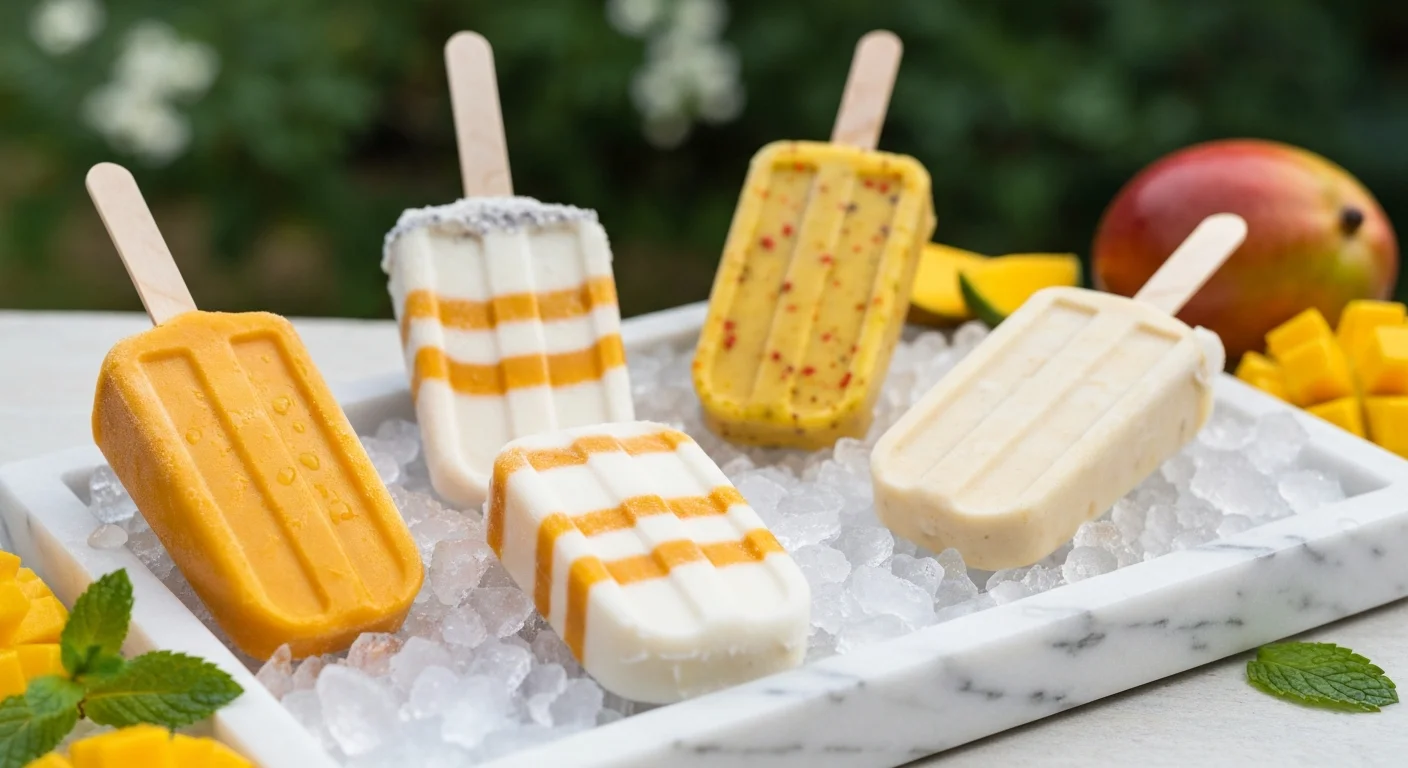
Quick answer: These are four simple mango popsicle recipes for kids, made with ripe Alphonso or Kesar mango puree, whole-milk yogurt, coconut milk, and a hint of lime, with no added sugar at all. You make them because they cool kids down during 100-degree Texas summers in Austin, Houston, and Dallas without the sugar crash of store-bought popsicles, and because one batch of puree feeds a backyard of neighborhood kids for a week.
History and Origin
Popsicles in their modern form were invented by accident in 1905 by 11-year-old Frank Epperson in California, who left a cup of flavored soda water with a stick in it on his porch overnight. Fruit ice pops, however, have existed across cultures for centuries. In India, fruit-based kulfis and ice candies have been served to kids from street carts since at least the Mughal era. The modern healthy-popsicle movement began in the early 2000s when parents started questioning the sugar content of commercial frozen treats and looking for real-fruit alternatives.
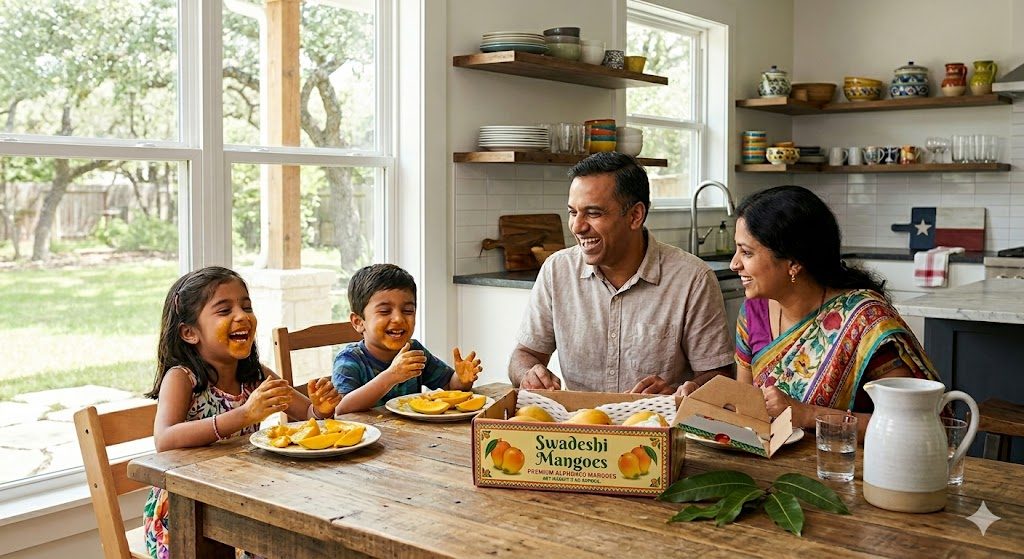
When my daughter was three and we moved to Texas, I watched her melt on our first July afternoon in Austin and knew that commercial popsicles loaded with corn syrup were not going to be part of her childhood. I started making mango popsicles from leftover Alphonso puree, and soon the neighborhood kids were showing up at our door asking for the orange ones. Over time I developed four reliable flavors that work for different ages and palates. At Swadeshi Mangoes we deliver the ripe Alphonso and Kesar that make these possible across Austin, Dallas, Houston, and San Antonio every summer.
Ingredients
Flavor 1: Classic Mango-Yogurt (makes 8 popsicles)
- 2 cups (480 ml) ripe Alphonso mango puree
- 1 cup (240 ml) whole-milk yogurt
- 1 teaspoon vanilla extract
- Pinch of salt
Flavor 2: Tropical Mango-Coconut (makes 8 popsicles)
- 1 1/2 cups (360 ml) ripe Kesar mango puree
- 1 cup (240 ml) full-fat coconut milk
- 1/2 cup (120 ml) unsweetened coconut water
- 1 teaspoon lime zest
- Pinch of salt
Flavor 3: Mango-Chili-Lime (makes 8 popsicles, for older kids)
- 2 cups (480 ml) ripe Banginapalli mango puree
- 1/2 cup (120 ml) fresh orange juice
- 2 tablespoons fresh lime juice
- 1/4 teaspoon Kashmiri chili powder (mild)
- Pinch of salt
Flavor 4: Mango Lassi Pops (makes 8 popsicles)
- 1 1/2 cups (360 ml) ripe Alphonso mango puree
- 1 1/2 cups (360 ml) whole-milk yogurt
- 1/4 teaspoon ground cardamom
- 1 teaspoon rose water (optional)
- Pinch of salt
Equipment:
- Popsicle molds with wooden sticks (about 3 fluid ounces each)
- Blender
- Small funnel (optional, helps with filling)
Method
- Prep the molds (2 minutes). Rinse popsicle molds with cold water and line sticks upright. For layered flavors, set aside a second bowl.
- Blend the chosen flavor (3 minutes). Combine all ingredients for one flavor in a blender. Blend on high for 30 seconds until completely smooth and aerated.
- Taste and adjust (1 minute). Taste. If mango is too tart, add a tablespoon of honey for kids over 12 months. If too sweet, add an extra squeeze of lime.
- Fill the molds (5 minutes). Pour the mixture into molds, leaving 1/4 inch at the top for expansion. Tap the molds gently on the counter to release air bubbles.
- Insert sticks (2 minutes). Cover with the mold lid and insert sticks straight down. If using cups, freeze 1 hour first until slushy, then insert sticks upright.
- Freeze solid (6 to 8 hours). Place molds on a flat shelf in the freezer where they will not tilt. Freeze overnight for best results.
- Unmold (1 minute). Run molds under warm (not hot) water for 10 seconds. Gently pull the sticks straight up. Serve immediately.
Variety Recommendations
Each flavor works with a different mango. For the classic mango-yogurt and mango lassi pops, Alphonso is unbeatable because its aromatic intensity shines even when frozen. For mango-coconut, Kesar pairs perfectly with coconut’s natural sweetness. For mango-chili-lime, Banginapalli works best because its slight natural tartness balances the chili. For a milder kid-friendly version, try Chinna Rasalu. Check our ripening guide for timing.
Tips
Do not skip the pinch of salt. A tiny amount of salt in any frozen fruit dessert dramatically sharpens flavor without making anything taste salty. Kids will notice the difference.
Freeze molds upright on a flat shelf. A tilted freezer shelf means uneven pops and messy release.
Use whole-milk yogurt and full-fat coconut milk. Low-fat versions freeze harder and taste icier; the fat is what keeps these pops creamy.
Warm-water unmold trick. Run molds under cold tap water first, then a quick warm rinse. Hot water melts the outside too fast and makes pops drip.
Skip added sugar entirely. Ripe Alphonso, Kesar, and Banginapalli are sweeter than any candy aisle product. If your mangoes are tart, they are not ripe enough; wait another day or two.
Label by age. Keep the mango-chili-lime pops in a separate container and introduce chili gradually to kids. Most Texas kids love the kick by age 5.
Serving Suggestions
Serve mango popsicles straight from the freezer on hot Texas afternoons, ideally in the shade of a porch or by a kiddie pool. For birthday parties in Austin, I freeze them in smaller 2-ounce molds and serve in cups with extra mango cubes. For Houston outdoor cookouts, pack them in a cooler with dry ice for portability. Parents love the mango lassi pops for grown-up after-dinner treats, and the mango-chili-lime version fits right in at a Dallas taco night or a San Antonio Fiesta-inspired dessert spread.
Storage
Unmold the popsicles after 24 hours and transfer to a freezer bag or airtight container with parchment between layers. They keep for up to two months in a home freezer. Beyond that, the mango flavor starts to fade and ice crystals form on the surface. If kids eat them at different rates, individually wrap in parchment paper so they do not stick together. Avoid refreezing if thawed; the texture becomes icy and unpleasant.
Dietary Notes
Three of these flavors (tropical mango-coconut, mango-chili-lime) are naturally dairy-free and vegan. The classic mango-yogurt and mango lassi pops use dairy yogurt, which can be substituted with full-fat coconut yogurt or cashew yogurt for a vegan version. All four flavors are naturally gluten-free. None contain added sugar, making them appropriate for children over 12 months old. For infants under 12 months, avoid honey entirely and use only pureed mango.
FAQ
Are these mango popsicles safe for toddlers?
The classic mango-yogurt and mango-coconut flavors are excellent for toddlers over 12 months. The mango-chili-lime version is better for kids 4 and up. Cut popsicles in half for small children to avoid choking and always supervise popsicle eating. Use shorter silicone molds sold specifically for toddlers for easier grip.
Why are my popsicles too hard?
Frozen fruit puree without fat or air freezes very hard. Adding whole-milk yogurt, coconut milk, or a tablespoon of honey softens the texture. The classic mango-yogurt version in this recipe has the softest texture. If your pops are rock-solid, next time add an extra 1/4 cup of whole milk or full-fat coconut milk to the base.
Can I use frozen mango chunks instead of fresh?
Yes, thaw frozen chunks and blend as normal. The flavor will be slightly duller than with our fresh Texas-delivered mangoes, but still miles better than any store-bought mango popsicle. For best results use frozen Indian Alphonso pulp from Indian grocery stores, which tends to be flavor-forward and unsweetened.
How do I prevent popsicle molds from leaking?
Fill molds only 85 percent full because liquid expands when frozen. Use silicone or high-quality plastic molds with tight-fitting lids, not vintage metal molds which often leak. If using disposable cups, cover each with foil, poke a small hole, and insert the stick through the foil to hold it upright while freezing.
Can I sell these mango popsicles at a farmers market?
You can, but Texas cottage food laws have specific rules about frozen products that vary by county. Check with your local health department before selling. For home use and backyard parties across Austin, Dallas, and Houston, no permits are needed. Many of my friends gift batches of these pops to teachers and neighbors every June across Austin and San Antonio. For backyard commercial use at a private event, package in food-safe parchment sleeves and serve directly from a chest cooler to maintain temperature. Label each flavor clearly for allergy-conscious families; the dairy-free coconut and chili-lime versions are perennial favorites at neighborhood block parties where dietary needs vary across families. I also make smaller two-ounce mini pops in silicone molds for toddlers, which freeze faster and fit tiny hands without making a mess on the Houston porch. For a themed summer birthday in Dallas or San Antonio, color-code the wooden sticks by flavor so kids can find their preferred variety in one glance at the cooler.
Recipe Card
Four Mango Popsicle Flavors for Kids
Prep time: 10 minutes per flavor
Freeze time: 6 to 8 hours
Total time: about 8 hours
Servings: 8 popsicles per flavor (32 total)
Cuisine: American, Indian fusion
Course: Frozen treat
Diet: Vegetarian, gluten-free, no added sugar, vegan adaptable
Calories per popsicle: 65 to 110 depending on flavor
For more kid-friendly mango ideas see our recipe blog, or order ripe mangoes delivered across Texas. For nutrition facts on dairy, coconut, and mango, see USDA FoodData Central.