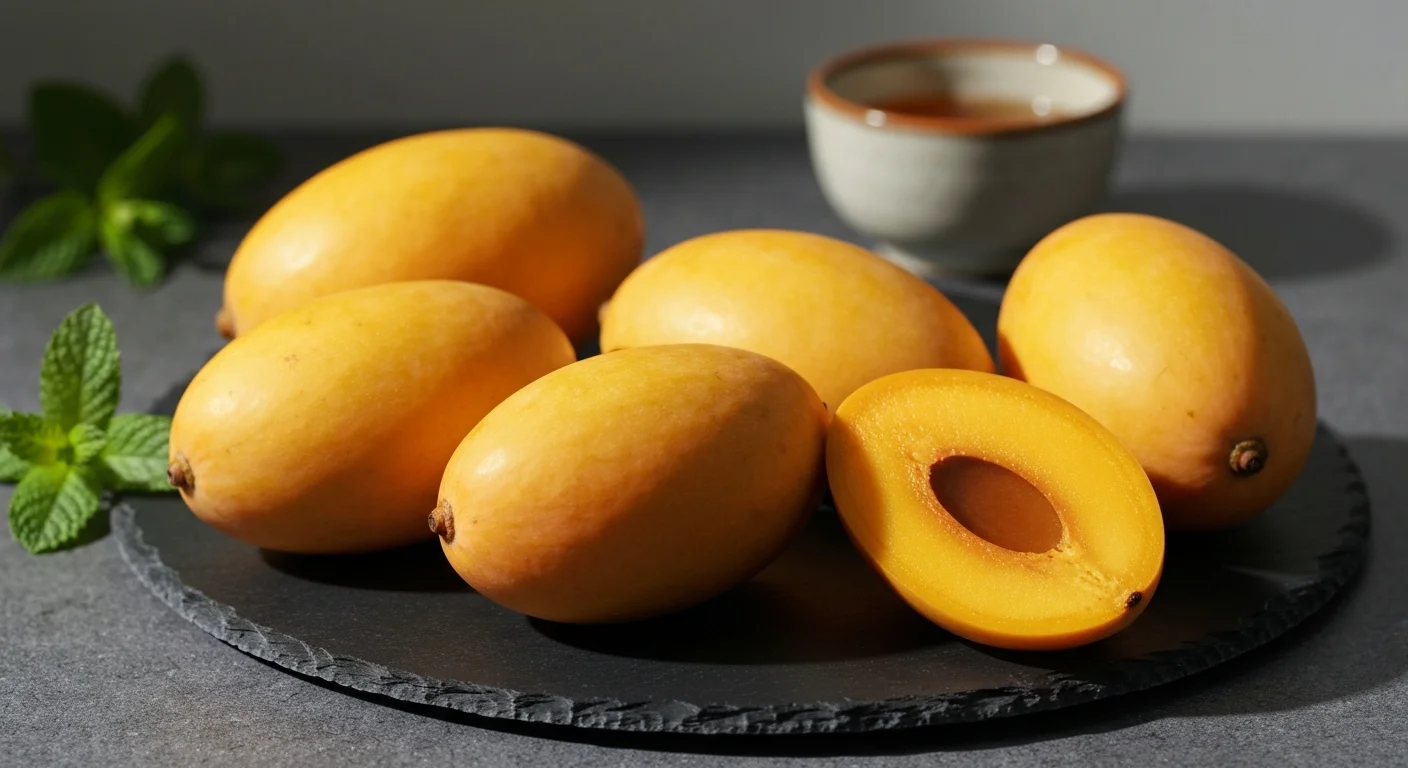
Mallika is an Indian hybrid mango developed in 1971 by Dr. B.S. Sundararaj at the Indian Institute of Horticultural Research (IIHR) in Bangalore by crossing Neelum and Dasheri. The goal was to combine Dasheri’s floral sweetness with Neelum’s late-season shelf life, and the result revolutionized Indian mango shipping. Each Mallika weighs 300-500 grams, has deep saffron-orange fiberless flesh, reaches 20-22 Brix at peak ripeness, and holds on the counter for 7-10 days without losing flavor. At Swadeshi Mangoes we ship Mallika from Karnataka and Tamil Nadu to Texas customers each June and July, and it has become our top pick for customers who live far from a pickup agent or want to extend the eating window.
The Science Behind the Hybrid
In the 1960s the Indian government recognized a practical problem. India’s best-flavored mangoes, varieties like Alphonso, Dasheri, and Banginapalli, all had short shelf lives of 7-14 days from ripening. This limited export potential and caused massive post-harvest losses during peak season, when fruit arrived at markets faster than it could be sold. The IIHR in Bangalore was tasked with breeding hybrids that kept the flavor of premium varieties but extended their shelf life.
Dr. B.S. Sundararaj and his team began a systematic hybridization program in the late 1950s. They selected Neelum, a late-season Tamil Nadu variety with an exceptionally long shelf life but only moderate flavor, as the maternal parent. They selected Dasheri, the floral fiberless classic from Malihabad, as the paternal parent. After more than a decade of evaluation across thousands of seedlings, Mallika was released in 1971 as the standout cross that successfully inherited Dasheri’s flavor profile and Neelum’s shelf stability.
Why It Took Ten Years
Mango breeding is slow. Each generation requires a seedling tree to mature to flowering, which takes 5-7 years. Hybrids do not breed true from seed, so each candidate cross must be grafted onto rootstock, evaluated for multiple fruiting seasons, and compared across different growing regions. The fact that Mallika was released within a single breeding program, rather than through decades of iteration, is a testament to both Sundararaj’s selection method and some amount of good luck. Mallika is now grown commercially across Karnataka, Tamil Nadu, Andhra Pradesh, and Florida.
What Mallika Tastes Like
Mallika inherited the deep saffron-orange flesh color of Dasheri and the slow-ripening, firm-fleshed character of Neelum. The flavor is sweet and honeyed with subtle floral notes, no bitterness, and a moderate citric lift. Brix at peak ripeness is 20-22 degrees, which places it alongside Alphonso and Suvarna Rekha in terms of sugar concentration. Texture is medium-firm, slightly denser than Alphonso but cleanly fiberless.
The distinguishing feature is aromatic profile. Mallika smells less intensely floral than pure Dasheri, more restrained and slightly honeyed. Some Texas customers describe it as a "rounder" or "warmer" flavor compared to the bright top notes of Alphonso. Because of the moderate aromatic intensity, Mallika is a versatile variety for cooking, baking, and eating fresh, without the risk of overpowering other ingredients.
The Shipping Revolution
Mallika’s practical contribution to the mango industry is its shelf life. A fully ripe Mallika holds at room temperature for 7-10 days without significant flavor degradation. Refrigerated, it holds 5-7 additional days. This compares to 3-5 days for ripe Alphonso and 5-7 days for ripe Banginapalli. For shipping from India to Texas, those extra days matter. Mallika can be air-freighted, cleared through customs, distributed to our 30-plus pickup agents, and held for customer pickup with a wider timing window than any other variety in our catalog.
Nutrition and Health Profile
A 250-gram Mallika, based on cross-referenced data from the USDA FoodData Central database and the ICAR IIHR nutritional analysis:
| Nutrient | Per 250g fruit | % Daily Value |
|---|---|---|
| Calories | 148 kcal | 7.4% |
| Total sugars | 31 g | — |
| Vitamin C | 84 mg | 93% |
| Vitamin A (RAE) | 128 mcg | 14% |
| Beta-carotene | 5,400 mcg | High |
| Fiber | 3.8 g | 14% |
| Potassium | 390 mg | 8% |
| Mangiferin | Moderate-high | Inherited from Dasheri |
According to the National Mango Board, the deep orange flesh of Mallika indicates high carotenoid content, and a 2020 study in the Journal of Agricultural and Food Chemistry identified Mallika as one of the higher beta-carotene mangoes grown commercially in India. The longer shelf life also means lower post-harvest losses, which has practical nutritional implications: a higher percentage of cultivated fruit reaches consumers in good condition.
How to Recognize Ripe Mallika
Mallika has a distinct elongated-oval shape, similar to Dasheri but slightly plumper and more symmetrical. Unripe fruit is deep green with light lenticel spotting. As it ripens, the skin shifts to yellow-gold with occasional light pink blush at the shoulder. Unlike Alphonso or Suvarna Rekha, Mallika does not develop dramatic color contrast; the ripe fruit is mostly uniform yellow.
The Three-Point Ripeness Check
First, the color should be at least 70% yellow-gold, with green only at the very stem end. Second, the fruit should give gently under thumb pressure along the lower half, while still feeling slightly firm at the shoulder. Third, the aroma at the stem end should be sweet and honeyed, not sharp or fermented. If all three checks pass, the fruit is ready.
How We Source Mallika for Texas
Our primary Mallika sources are two orchards near Kolar in Karnataka and one near Krishnagiri in Tamil Nadu. Harvest runs mid-June through late July. The fruit is picked at 75% maturity, graded and packed in six-kilogram ventilated boxes, and air-freighted to Dallas-Fort Worth. Because of Mallika’s longer shelf life, we have slightly more flexibility in timing Texas distribution. Customers often receive Mallika at 60-70% ripeness, giving 3-5 days of counter ripening before the optimal eating window.
A Customer Story from San Antonio
A San Antonio customer, a working couple with young children, told us they had stopped ordering premium mangoes because the family could not eat a whole box before the fruit turned. Their Alphonso and Chinna Rasalu boxes were peaking in 3-4 days, faster than their busy schedule allowed. We suggested Mallika. They tried a six-pack the next week, and the last fruit in the box was still at peak flavor nine days after pickup. They have been twice-a-month Mallika customers ever since, and they now order Mallika specifically because the shelf life fits their household rhythm.
Best Ways to Eat Mallika
Mallika’s firm flesh and moderate aromatic profile make it particularly versatile. For fresh eating, it cuts into clean cheek slices without breaking down, so it is an excellent slicing mango for fruit platters and breakfast bowls. For smoothies and lassi, the deep orange color carries through without the need for additional coloring. For baking, Mallika is the best variety in our catalog. Its firm flesh holds shape when baked into tarts, cobblers, and galettes without turning mushy, and its moderate aromatic profile pairs well with butter, cream, and vanilla.
One recipe that has become a favorite among our Texas customers is a simple Mallika galette: roughly chopped ripe Mallika tossed with a squeeze of lime, a tablespoon of raw sugar, and a pinch of cardamom, folded into a rustic butter crust and baked at 400 F for 35-40 minutes. The firm flesh holds its texture beautifully.
Mallika vs. Its Parents and Other Varieties
| Variety | Type | Shelf Life (ripe) | Flavor Intensity | Best Use |
|---|---|---|---|---|
| Mallika | Hybrid (Neelum x Dasheri) | 7-10 days | Medium-high, balanced | Fresh, baking, shipping |
| Alphonso | Pure cultivar | 3-5 days | Very high, floral | Fresh, desserts |
| Kesar | Pure cultivar | 8-10 days | High, aromatic | Lassi, smoothies |
| Neelum (parent) | Pure cultivar | 14-18 days | Medium, mild | Fresh, storage |
| Himayath | Pure cultivar | 5-7 days | High, complex | Fresh, gifting |
Frequently Asked Questions
What does Mallika mean?
Mallika is a Sanskrit-derived word meaning jasmine flower, selected by IIHR Bangalore researchers for the variety because of its floral aroma inherited from the Dasheri parent. The name was chosen to evoke both the flower association and the flavor association, continuing an Indian tradition of naming fruit cultivars after aromatic plants.
Is Mallika a GMO mango?
No. Mallika is a conventional hybrid produced through controlled cross-pollination, not genetic modification. Hybridization involves transferring pollen from one parent tree to the flowers of another, collecting the resulting seeds, growing them to fruiting, and selecting the best offspring. This is the same breeding method used for most commercial apples, citrus, and stone fruits.
When is Mallika available in Texas?
Mallika harvest in Karnataka and Tamil Nadu runs mid-June through late July. Swadeshi Mangoes receives weekly shipments during this window and delivers across Austin, Dallas, Houston, and San Antonio through our pickup agent network. Pre-orders open in May, and the variety typically remains available into early August.
Why does Mallika last longer than Alphonso?
Mallika inherited its extended shelf life from its Neelum parent. Neelum is genetically predisposed to slower ethylene production and firmer cell walls, which delays the post-harvest softening that limits Alphonso’s shelf life. Mallika retains these storage genes while also carrying Dasheri’s flavor compounds, giving it the combination of both traits.
Can I ship Mallika to family in another state?
Swadeshi Mangoes currently delivers within Texas only, but Mallika’s extended shelf life makes it the best candidate in our catalog for customer-arranged forwarding. Several Texas customers have picked up Mallika boxes and sent them via overnight courier to family in California or New Jersey with good results. Contact us through the order form for details.
Try the Hybrid That Changed Indian Mango Shipping
Mallika is the variety we recommend for first-time Indian mango customers who want flavor, value, and a forgiving shelf life. It is also the variety that busy Texas families return to year after year because a box of Mallika fits around real life. Head to our order form to reserve yours, browse the full mango variety list, or read more guides on the Swadeshi Mangoes blog. For ripening and storage tips see our mango care guide.
Additional resources: the ICAR-Indian Institute of Horticultural Research original release documentation, National Mango Board hybrid cultivar notes, and APEDA export guidelines for Indian hybrid mangoes.