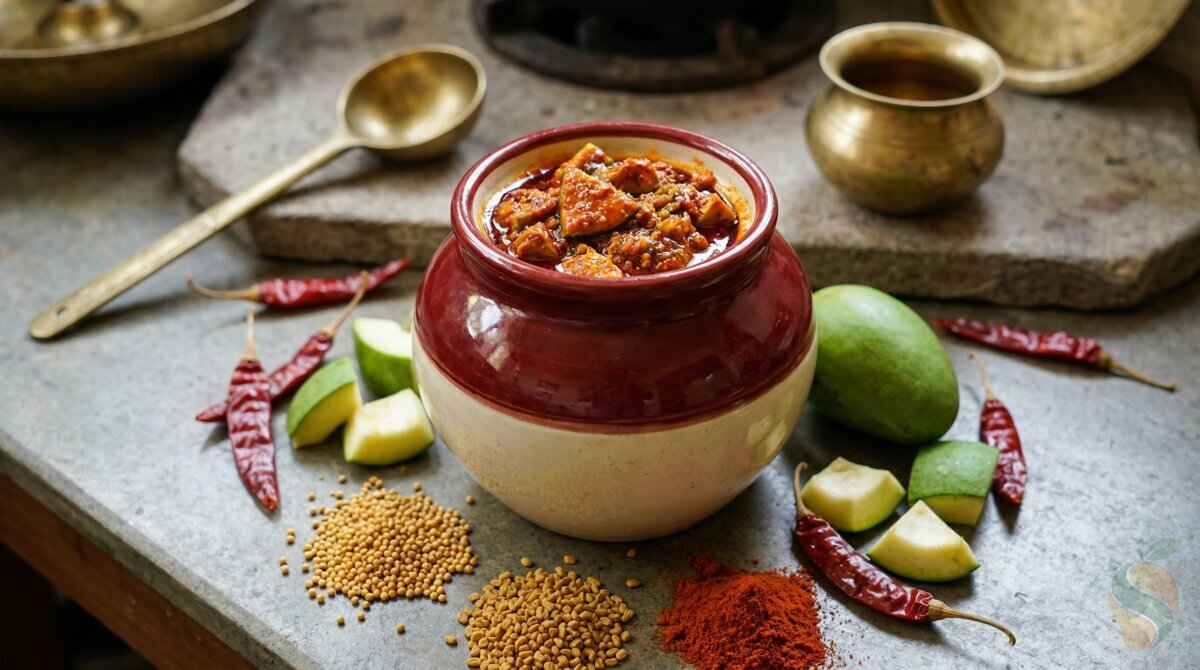
In Indian homes, mango season is also pickle season. A good mango pickle — achaar — made in April will still be sitting on your dining table in December, getting better with age. This is the one recipe that lasts long after the mangoes are gone.
If you grew up in an Indian household, the smell of mustard oil and red chili powder mixed with raw mango is the smell of spring. Every family has their own recipe, passed down through generations, adjusted slightly each year but never written down. Whether you are making achaar for the first time or refining a family recipe, this guide covers the essentials — the two most popular regional styles, the techniques that matter, and the mistakes to avoid.
Which Mango for Pickle?
You need raw, unripe mangoes. Not the sweet ones you eat fresh. The ideal pickle mango is:
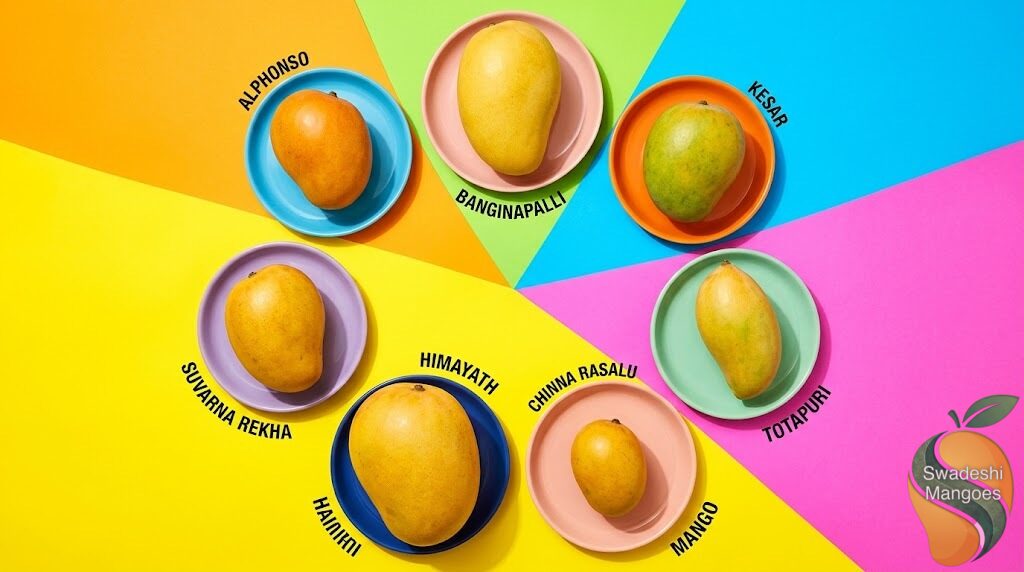
- Totapuri: The classic pickle mango. Firm, tart, holds its shape after months in oil.
- Raw Banganapalli: Works well if you catch them before they start ripening.
- Any unripe Indian mango: Even an Alphonso that never ripened can become excellent pickle.
Ask your Swadeshi pickup agent for raw mangoes if you want to make pickle. We can set aside unripe ones from the shipment.
The most important quality is tartness and firmness. Totapuri is the champion because it has an elongated shape with a thin seed and thick, firm flesh that holds its crunch even after months in oil and spices. Avoid mangoes that have already started to soften. If you ordered a box and a couple of mangoes refused to ripen — stayed hard and tart — do not throw them away. They are perfect for achaar.
Essential Equipment and Preparation
The number one reason homemade pickle fails is moisture contamination. Every utensil that touches the pickle must be completely dry. Wash your cutting board, knife, mixing bowl, and spoons, then dry them thoroughly. Many experienced pickle-makers sun-dry their jars and tools for an hour before use.
Use a wide-mouthed glass or ceramic jar. Never use metal — the acid in raw mangoes reacts with metal and can cause off-flavors. Your hands must be dry too. Water is the enemy; oil is the protector.
Classic Andhra Avakaya (Red Chili Mango Pickle)
This is the pickle that Andhra Pradesh built its reputation on.
Ingredients:
- 1 kg raw mango, cut into small pieces (keep the skin on)
- 200g red chili powder (Guntur or Kashmiri blend)
- 100g mustard powder (freshly ground is best)
- 50g fenugreek powder
- 200ml sesame oil (gingelly oil)
- Salt to taste (generous — salt is the preservative)
- 1 tsp turmeric powder
Method:
- Wash and completely dry the mangoes. Any water will spoil the pickle.
- Cut into bite-sized pieces. Remove the inner seed but keep the outer shell if tender.
- Mix mango pieces with salt and turmeric. Let sit for 2 hours.
- In a dry bowl, mix chili powder, mustard powder, and fenugreek powder.
- Heat sesame oil until it smokes, then let it cool completely.
- Mix everything together — mangoes, spice mix, and cooled oil.
- Transfer to a clean, dry glass or ceramic jar. Press down to remove air pockets.
- Let it sit at room temperature for 5-7 days, stirring once daily with a dry spoon.
After a week, the flavors will meld and the pickle is ready. It improves over the next month.
The ratio of chili powder to mango defines the heat level. This recipe produces a medium-hot pickle by Andhra standards. For a milder version, reduce chili powder to 150g and increase mustard powder to 125g — mustard adds pungency without heat.
Salt quantity matters more than you think. Under-salting is the most common mistake — salt is not just for flavor, it is the primary preservative. A good rule: the pickle should taste saltier than you think it should when freshly made. It mellows as the pickle matures. Sesame oil is non-negotiable for authentic avakaya — heat it to smoking point and cool completely before mixing.
Gujarati Sweet Mango Pickle (Chundo)
For those who prefer sweet over spicy.
Ingredients:
- 500g raw mango, grated
- 400g sugar
- 1 tsp red chili powder
- 1/2 tsp cumin powder
- A pinch of saffron (optional)
- Salt to taste
Method:
- Mix grated mango with sugar and salt. Cover and leave overnight.
- Next morning, the sugar will have drawn out the mango juice. Cook on low heat for 20-25 minutes, stirring frequently.
- Add chili powder, cumin, and saffron. Cook until the mixture thickens and turns glossy.
- Cool and transfer to a jar.
Chundo is the perfect gateway pickle for people who think they do not like achaar. Serve it with parathas, spread it on toast, or eat it straight from the jar. The sugar preserves the tartness of the raw mango rather than masking it, creating a flavor that is simultaneously tangy, sweet, and gently spiced. A properly made batch lasts 8-12 months at room temperature.
North Indian Style (Mustard Oil Pickle)
No pickle guide is complete without the North Indian version, which uses mustard oil instead of sesame oil.
Ingredients:
- 1 kg raw mango, cut into pieces with skin
- 150g mustard oil
- 3 tbsp mustard seeds, coarsely ground
- 100g red chili powder
- 2 tbsp fennel seeds, coarsely ground
- 1 tbsp nigella seeds (kalonji)
- 1 tsp fenugreek seeds
- Salt to taste
- 1 tsp turmeric
Method:
- Wash and thoroughly dry mango pieces. Mix with salt and turmeric, set aside for 3-4 hours.
- Dry roast fenugreek seeds and grind coarsely. Mix all ground spices together.
- Heat mustard oil until it smokes, let it cool to room temperature.
- Drain any liquid from the mangoes. Combine mango, spice mixture, and cooled oil.
- Transfer to a clean glass jar. Ensure oil covers the top layer completely.
- Place the jar in direct sunlight for 3-5 days, bringing it indoors at night.
The sun-curing step is what distinguishes North Indian pickle. In Texas, our sunny spring climate works beautifully for this — place the jar on a sunny windowsill during April and May.
Common Mistakes and How to Avoid Them
- Pickle turns moldy within a week: Water contamination. Every surface and tool must be bone dry.
- Mango pieces turn soft and mushy: Mangoes were too ripe, or there is too little salt.
- Pickle tastes bitter: Too much fenugreek, or the fenugreek was old and stale.
- Oil smells rancid: The oil was not heated to smoking point before use.
- Not enough oil in the jar: Oil must cover the pickle completely. Top up with heated-and-cooled oil if needed.
Storage and Shelf Life
- Always use a dry spoon — water is the enemy of pickle.
- Keep the oil layer on top — it acts as a seal against bacteria.
- Glass or ceramic jars only. Metal reacts with the acid in raw mangoes.
- Properly made pickle lasts 6-12 months at room temperature.
- Refrigeration extends life but changes the texture slightly.
One batch of achaar from this season will carry the taste of Indian mangoes into the winter months — long after the fresh fruit is gone.
Serving Suggestions Beyond Rice and Dal
Mango pickle’s uses go far beyond traditional Indian meals:
- Grilled cheese sandwich: A spoonful of mango pickle inside a grilled cheese cuts through the richness beautifully.
- Burger topping: Replace regular pickles with a smear of chundo — it pairs especially well with lamb burgers.
- Scrambled eggs: Mix a teaspoon of pickle into your eggs while cooking for bursts of spice.
- Charcuterie board: A small bowl of chundo alongside cheeses and crackers is a conversation starter.
Do not limit pickle to Indian food. A great condiment works across cuisines.
Order raw mangoes for your pickle batch this season.
Order Raw Mangoes in Texas
Need raw Totapuri for pickle? Swadeshi Mangoes delivers across Austin, Dallas, Houston, and San Antonio. Request unripe mangoes in your order notes. See our full recipe collection for more ideas, or browse our complete variety guide.
Frequently Asked Questions
Which Indian mango variety is best for pickle?
Totapuri is the classic pickle mango — firm, tart, and holds its shape for months in oil. Raw Banganapalli also works well. Request raw mangoes when you place your order.
How long does homemade mango pickle last?
Properly made Indian mango pickle lasts 6-12 months at room temperature. Always use a dry spoon and keep the oil layer on top as a seal.
Can I make mango pickle in Texas?
Absolutely. Texas weather is ideal for pickle-making — the warm, sunny spring days are perfect for the sun-curing step in North Indian recipes. Check our FAQ page for more questions.