Tag: ripening

  • How to Freeze Mangoes for Year-Round Enjoyment

    How to Freeze Mangoes for Year-Round Enjoyment

    The season lasts 2-3 months. Your mango cravings last 12. The solution is simple: freeze them during season and enjoy mango smoothies, desserts, and lassi all year round.

    If you have ever experienced the particular sadness of opening your freezer in October and finding nothing but ice cubes and forgotten peas, this guide is for you. With the right technique, you can freeze Indian mangoes during their April-through-July peak and enjoy them through December, January, and beyond. The key word is “right technique” — because there is a wrong way to freeze mangoes, and most people discover it the hard way with a bag of flavorless, watery mush.

    We have been helping families across Texas stock their freezers during Swadeshi mango season, and the customers who freeze extra boxes are the ones who thank us the most come autumn. Here is everything we have learned about doing it properly.


    The Right Way to Freeze Mangoes

    Frozen correctly, Indian mangoes retain 90% of their flavor and nutrition for up to 8 months. Frozen incorrectly, they turn into watery, flavorless ice cubes. Here is the right way:

    Step 1: Choose Ripe Mangoes

    Only freeze fully ripe mangoes. Unripe mangoes will not develop more sweetness in the freezer — they will just be sour ice chunks. The mango should be fragrant, slightly soft, and at peak eating ripeness.

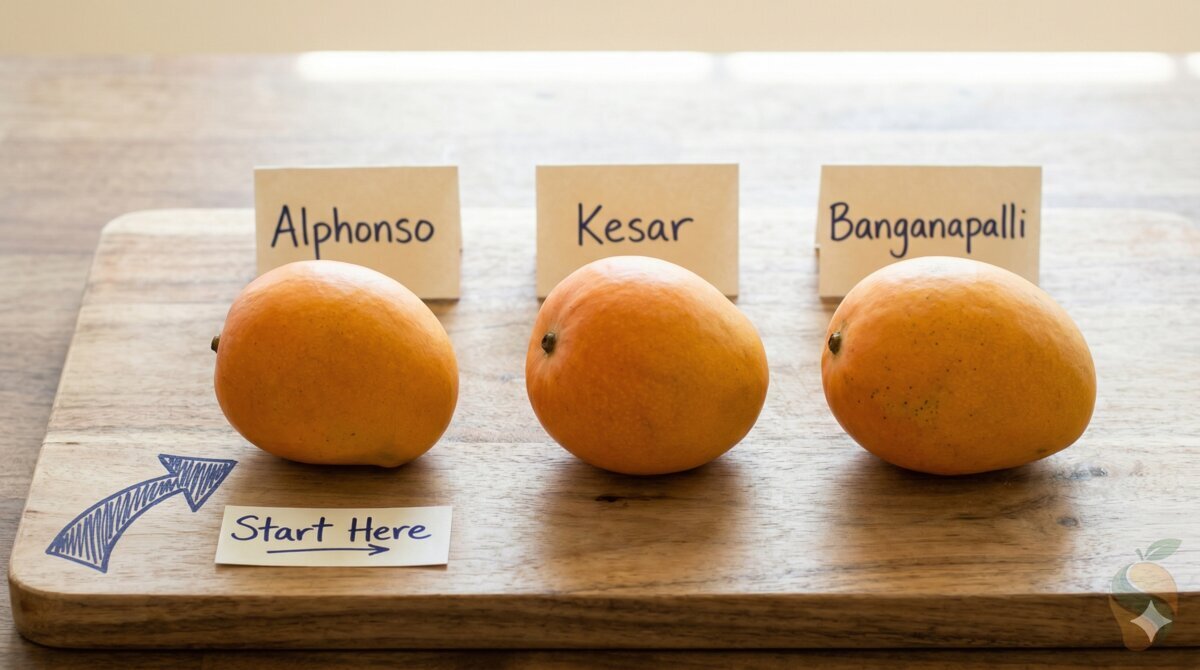
    How do you know when a mango is at the perfect stage for freezing? It should smell intensely of mango at the stem end — that fragrance is the clearest indicator of full ripeness. When you press gently, it should yield slightly, like a ripe avocado, but not feel mushy. The skin color is less reliable since it varies by variety: Alphonso turns golden yellow, Kesar stays partly green even when ripe, and Banganapalli becomes a uniform bright yellow. Trust your nose and touch over your eyes.

    If you received your Swadeshi delivery and the mangoes are not quite ripe yet, let them ripen at room temperature for 1-3 days before freezing. Our complete guide on how to store and ripen Indian mangoes covers the best techniques for each variety. Check our ripening and care guide for detailed instructions on bringing each variety to peak ripeness. Do not rush this step — freezing a mango one day too early will lock in that unripe flavor permanently.

    Step 2: Peel and Cut

    Peel the mango and cut the flesh into cubes (about 1-inch). Alternatively, scoop the pulp with a spoon if you plan to use it for smoothies or aam ras. Both methods work.

    A few notes on cutting for freezing specifically. Cubes should be roughly uniform in size — this ensures they freeze at the same rate and thaw evenly later. If some pieces are thick and some are paper-thin, the thin ones will develop freezer burn before the thick ones are properly frozen. For Alphonso and Kesar, which have very soft, fiber-free flesh, you may find it easier to score the mango halves into a grid pattern and then scoop the cubes out with a spoon. For firmer varieties like Totapuri or Banganapalli, a sharp knife works best.

    One important tip: work quickly once you start cutting. Mango flesh oxidizes when exposed to air, which can affect the color (though not the flavor). If you are processing multiple boxes, cut and tray-freeze in batches rather than peeling everything at once and letting it sit.

    Step 3: Flash Freeze First

    This is the critical step most people skip. Spread the mango pieces on a parchment-lined baking sheet in a single layer, not touching. Freeze for 2-3 hours until solid.

    If you skip this and dump everything into a bag, you will get one solid mango brick that you have to thaw entirely to use. Flash freezing keeps the pieces separate so you can grab exactly what you need.

    Here is why flash freezing works at a basic level: when mango pieces freeze slowly in a clump, large ice crystals form inside the fruit cells and rupture the cell walls. When you thaw that clump, the water leaks out and you are left with mushy, watery mango. Flash freezing each piece individually causes small ice crystals to form, which preserves the cell structure. The result is mango that thaws with most of its original texture and juiciness intact.

    If your freezer is small and you cannot fit a full baking sheet, use plates or cutting boards — anything that gives you a flat surface with pieces in a single layer. Stack multiple layers with parchment paper between them if needed. Just make sure no pieces are touching.

    Step 4: Pack and Store

    Transfer frozen pieces into zip-lock freezer bags. Squeeze out as much air as possible — air causes freezer burn. Label each bag with the variety and date.

    Portion tip: Pack in 1-cup portions. One cup is exactly what you need for one smoothie or one serving of aam ras.

    Labeling is more important than you think. By August, you will have multiple bags in your freezer and will not remember which variety is which. Alphonso chunks look similar to Kesar chunks once they are frozen. Write the variety name, the date frozen, and the number of cups on each bag with a permanent marker. Some of our customers use different colored bags for different varieties, which is a clever system.

    Vacuum Sealing: The Upgrade That Doubles Shelf Life

    If you are serious about freezing mangoes — and by “serious” I mean processing 4 or more boxes per season — invest in a vacuum sealer. A basic FoodSaver unit costs $40-60 and pays for itself in the first season by dramatically extending how long your frozen mangoes taste fresh.

    Vacuum-sealed mango chunks last up to 12 months in the freezer compared to 6-8 months in zip-lock bags. The difference is air. Even with careful squeezing, zip-lock bags retain some air, and that air causes freezer burn over time. Freezer burn does not make the mango unsafe to eat, but it destroys flavor and texture — the very things you are trying to preserve.

    When vacuum sealing, make sure the mango pieces are fully frozen before sealing. If you try to vacuum seal fresh or semi-frozen chunks, the machine will crush them and pull juice into the seal, which can prevent a proper closure. Flash freeze first, then vacuum seal the frozen pieces. The bags will be rock-solid and stackable, making them much easier to organize in your freezer than floppy zip-lock bags.

    What to Do with Frozen Mangoes

    • Smoothies and smoothie bowls: Use directly from frozen. No thawing needed.
    • Ice cream: Blend frozen chunks until creamy. Two ingredients, zero effort. See our guide to making mango ice cream without a machine.
    • Aam ras: Thaw at room temperature for 20 minutes, then blend with a splash of milk and cardamom.
    • Lassi: Blend frozen chunks with yogurt. The frozen mango replaces ice cubes.
    • Baking: Thaw and use in mango cake, mango muffins, or mango cheesecake.
    • Baby food: Thaw and mash. Perfect portion-controlled baby meals.

    A few more ideas that our customers have shared with us over the years: frozen mango chunks dropped into a glass of sparkling water make a beautiful, naturally flavored drink for dinner parties. Mango puree cubes stirred into oatmeal on a cold January morning transform a boring breakfast into something worth waking up for. And mango chunks tossed into a weekend pancake batter create golden pockets of sweetness that kids (and adults) go crazy for.

    The point is this: frozen Indian mangoes are not a compromise. They are a pantry staple that opens up possibilities you would never have if you only ate fresh mangoes during the 2-3 month season.

    Freezing Mango Pulp

    If you prefer pulp over chunks, blend fresh ripe mangoes into a smooth puree and pour into ice cube trays. Once frozen, pop the cubes into a freezer bag. Each cube is approximately 2 tablespoons — perfect for adding to yogurt, oatmeal, or cocktails.

    Pulp cubes are especially useful for recipes where you need a precise amount of mango flavor without chunks. Two cubes stirred into a cup of warm chai creates an instant mango chai that tastes like something from a specialty tea shop. Four cubes blended with yogurt and cardamom gives you a single-serving mango lassi in under a minute. Six cubes are enough for a small batch of mango popsicles for the kids.

    For the absolute best pulp, use Alphonso — its naturally thick, fiber-free flesh blends into a smooth puree without straining. Kesar is the second-best choice for pulp, with a slightly thinner consistency but an incredible aroma that perfumes whatever you add it to. Varieties with more fiber, like Totapuri, are better frozen as chunks than as pulp.

    If you have silicone ice cube trays, use those instead of hard plastic — the frozen cubes pop out much more easily. You can also use silicone muffin molds for larger portions (roughly half a cup each), which are better for recipes that need more mango per serving.

    How Long Does Frozen Mango Last?

    • Freezer bags with air removed: 6-8 months
    • Vacuum sealed: Up to 12 months
    • After 8 months: Still safe to eat but flavor and texture degrade

    To put this in practical terms: if you freeze mangoes from your April delivery, zip-lock bags will carry you through October-November. Vacuum-sealed bags will last through the following March, right up until the new season starts. That means you can literally have Indian mangoes 12 months a year if you plan your freezing properly.

    Common Freezing Mistakes to Avoid

    We have heard from enough customers over the years to compile a list of the most common mistakes. Avoid these and your frozen mangoes will taste significantly better:

    • Freezing unripe mangoes: The freezer is not a ripening chamber. If a mango is not sweet and fragrant before freezing, it will not be sweet and fragrant after. Always ripen fully first.
    • Skipping flash freeze: You will regret it the first time you try to pry individual chunks out of a frozen mango brick with a butter knife. Flash freeze on a tray first. Always.
    • Using regular storage bags: Zip-lock freezer bags are thicker than regular zip-lock bags and resist freezer burn much better. The 50-cent difference per bag is worth it.
    • Overfilling bags: Leave some room in each bag. Mango expands slightly as it freezes, and overfull bags are hard to stack and seal properly.
    • Forgetting to label: All frozen mango looks the same after a month. Label every bag with variety, date, and portion size.
    • Thawing and refreezing: Never refreeze mango that has been thawed. Each freeze-thaw cycle breaks down more cell walls, and by the second refreeze the texture is unrecoverable. Only thaw what you plan to use.

    The Math

    If you order 4 extra boxes during season (about $200-$240) and freeze them properly, you have 8 months of mango smoothies, ice cream, and desserts. That works out to less than $1 per serving. Try finding that deal at Whole Foods in November.

    Let us break it down more specifically. Four boxes of Alphonso at $50-$60 each gives you roughly 24-48 mangoes (6-12 per box × 4 boxes, size-dependent). Each mango yields about 1 to 1.5 cups of chunks. That is 24-48 cups of frozen mango. If each smoothie or dessert serving uses 1 cup, you have somewhere between 24 and 48 servings. At about $220 total, that is $4.50-9 per serving for genuine Indian mango — in November, when the only mango available at the store is a sad, mealy Tommy Atkins that traveled 2,000 miles by truck.

    Many of our repeat customers order their “eating boxes” and their “freezing boxes” separately. They will order 2 boxes per week for fresh eating and then place a larger order of 4-6 boxes during peak season specifically for the freezer. If you want to do this, watch for our peak season announcements on the blog and in the WhatsApp groups — that is when variety selection is widest and supply is most reliable.

    Order extra boxes this season and stock your freezer.

    Stock Up During Texas Mango Season

    Swadeshi delivers fresh Indian mangoes weekly from April through July across Austin, Dallas, Houston, and San Antonio. Order extra boxes during peak season and follow this guide to enjoy mangoes through December. See our ice cream recipes for the best use of frozen mangoes.

    Frequently Asked Questions

    How long do frozen mangoes last?

    In zip-lock bags with air removed: 6-8 months. Vacuum sealed: up to 12 months. After 8 months, still safe but flavor and texture degrade. Label every bag with the date so you use the oldest ones first.

    Can you freeze whole mangoes?

    Not recommended. Whole frozen mangoes are difficult to peel and the texture breaks down unevenly. Always peel, cube, and flash freeze on a tray before bagging.

    Which mango variety freezes best?

    Alphonso freezes exceptionally well because its dense, fiber-free flesh holds up to the freeze-thaw process. Kesar retains its aroma beautifully. Banganapalli works great for chunks due to its firm texture. Check all varieties to plan your freezing order.

    Do I need a vacuum sealer?

    Not required, but recommended if you plan to freeze more than 2 boxes. Vacuum-sealed mango lasts up to 12 months versus 6-8 months in zip-lock bags. A basic vacuum sealer costs $40-60 and pays for itself in preserved mango quality over one season.

  • The Complete Guide to Indian Mango Pickle (Achaar)

    The Complete Guide to Indian Mango Pickle (Achaar)

    In Indian homes, mango season is also pickle season. A good mango pickle — achaar — made in April will still be sitting on your dining table in December, getting better with age. This is the one recipe that lasts long after the mangoes are gone.

    If you grew up in an Indian household, the smell of mustard oil and red chili powder mixed with raw mango is the smell of spring. Every family has their own recipe, passed down through generations, adjusted slightly each year but never written down. Whether you are making achaar for the first time or refining a family recipe, this guide covers the essentials — the two most popular regional styles, the techniques that matter, and the mistakes to avoid.


    Which Mango for Pickle?

    You need raw, unripe mangoes. Not the sweet ones you eat fresh. The ideal pickle mango is:

    • Totapuri: The classic pickle mango. Firm, tart, holds its shape after months in oil.
    • Raw Banganapalli: Works well if you catch them before they start ripening.
    • Any unripe Indian mango: Even an Alphonso that never ripened can become excellent pickle.

    Ask your Swadeshi pickup agent for raw mangoes if you want to make pickle. We can set aside unripe ones from the shipment.

    The most important quality is tartness and firmness. Totapuri is the champion because it has an elongated shape with a thin seed and thick, firm flesh that holds its crunch even after months in oil and spices. Avoid mangoes that have already started to soften. If you ordered a box and a couple of mangoes refused to ripen — stayed hard and tart — do not throw them away. They are perfect for achaar.

    Essential Equipment and Preparation

    The number one reason homemade pickle fails is moisture contamination. Every utensil that touches the pickle must be completely dry. Wash your cutting board, knife, mixing bowl, and spoons, then dry them thoroughly. Many experienced pickle-makers sun-dry their jars and tools for an hour before use.

    Use a wide-mouthed glass or ceramic jar. Never use metal — the acid in raw mangoes reacts with metal and can cause off-flavors. Your hands must be dry too. Water is the enemy; oil is the protector.

    Classic Andhra Avakaya (Red Chili Mango Pickle)

    This is the pickle that Andhra Pradesh built its reputation on.

    Ingredients:

    • 1 kg raw mango, cut into small pieces (keep the skin on)
    • 200g red chili powder (Guntur or Kashmiri blend)
    • 100g mustard powder (freshly ground is best)
    • 50g fenugreek powder
    • 200ml sesame oil (gingelly oil)
    • Salt to taste (generous — salt is the preservative)
    • 1 tsp turmeric powder

    Method:

    1. Wash and completely dry the mangoes. Any water will spoil the pickle.
    2. Cut into bite-sized pieces. Remove the inner seed but keep the outer shell if tender.
    3. Mix mango pieces with salt and turmeric. Let sit for 2 hours.
    4. In a dry bowl, mix chili powder, mustard powder, and fenugreek powder.
    5. Heat sesame oil until it smokes, then let it cool completely.
    6. Mix everything together — mangoes, spice mix, and cooled oil.
    7. Transfer to a clean, dry glass or ceramic jar. Press down to remove air pockets.
    8. Let it sit at room temperature for 5-7 days, stirring once daily with a dry spoon.

    After a week, the flavors will meld and the pickle is ready. It improves over the next month.

    The ratio of chili powder to mango defines the heat level. This recipe produces a medium-hot pickle by Andhra standards. For a milder version, reduce chili powder to 150g and increase mustard powder to 125g — mustard adds pungency without heat.

    Salt quantity matters more than you think. Under-salting is the most common mistake — salt is not just for flavor, it is the primary preservative. A good rule: the pickle should taste saltier than you think it should when freshly made. It mellows as the pickle matures. Sesame oil is non-negotiable for authentic avakaya — heat it to smoking point and cool completely before mixing.

    Gujarati Sweet Mango Pickle (Chundo)

    For those who prefer sweet over spicy.

    Ingredients:

    • 500g raw mango, grated
    • 400g sugar
    • 1 tsp red chili powder
    • 1/2 tsp cumin powder
    • A pinch of saffron (optional)
    • Salt to taste

    Method:

    1. Mix grated mango with sugar and salt. Cover and leave overnight.
    2. Next morning, the sugar will have drawn out the mango juice. Cook on low heat for 20-25 minutes, stirring frequently.
    3. Add chili powder, cumin, and saffron. Cook until the mixture thickens and turns glossy.
    4. Cool and transfer to a jar.

    Chundo is the perfect gateway pickle for people who think they do not like achaar. Serve it with parathas, spread it on toast, or eat it straight from the jar. The sugar preserves the tartness of the raw mango rather than masking it, creating a flavor that is simultaneously tangy, sweet, and gently spiced. A properly made batch lasts 8-12 months at room temperature.

    North Indian Style (Mustard Oil Pickle)

    No pickle guide is complete without the North Indian version, which uses mustard oil instead of sesame oil.

    Ingredients:

    • 1 kg raw mango, cut into pieces with skin
    • 150g mustard oil
    • 3 tbsp mustard seeds, coarsely ground
    • 100g red chili powder
    • 2 tbsp fennel seeds, coarsely ground
    • 1 tbsp nigella seeds (kalonji)
    • 1 tsp fenugreek seeds
    • Salt to taste
    • 1 tsp turmeric

    Method:

    1. Wash and thoroughly dry mango pieces. Mix with salt and turmeric, set aside for 3-4 hours.
    2. Dry roast fenugreek seeds and grind coarsely. Mix all ground spices together.
    3. Heat mustard oil until it smokes, let it cool to room temperature.
    4. Drain any liquid from the mangoes. Combine mango, spice mixture, and cooled oil.
    5. Transfer to a clean glass jar. Ensure oil covers the top layer completely.
    6. Place the jar in direct sunlight for 3-5 days, bringing it indoors at night.

    The sun-curing step is what distinguishes North Indian pickle. In Texas, our sunny spring climate works beautifully for this — place the jar on a sunny windowsill during April and May.

    Common Mistakes and How to Avoid Them

    • Pickle turns moldy within a week: Water contamination. Every surface and tool must be bone dry.
    • Mango pieces turn soft and mushy: Mangoes were too ripe, or there is too little salt.
    • Pickle tastes bitter: Too much fenugreek, or the fenugreek was old and stale.
    • Oil smells rancid: The oil was not heated to smoking point before use.
    • Not enough oil in the jar: Oil must cover the pickle completely. Top up with heated-and-cooled oil if needed.

    Storage and Shelf Life

    • Always use a dry spoon — water is the enemy of pickle.
    • Keep the oil layer on top — it acts as a seal against bacteria.
    • Glass or ceramic jars only. Metal reacts with the acid in raw mangoes.
    • Properly made pickle lasts 6-12 months at room temperature.
    • Refrigeration extends life but changes the texture slightly.

    One batch of achaar from this season will carry the taste of Indian mangoes into the winter months — long after the fresh fruit is gone.

    Serving Suggestions Beyond Rice and Dal

    Mango pickle’s uses go far beyond traditional Indian meals:

    • Grilled cheese sandwich: A spoonful of mango pickle inside a grilled cheese cuts through the richness beautifully.
    • Burger topping: Replace regular pickles with a smear of chundo — it pairs especially well with lamb burgers.
    • Scrambled eggs: Mix a teaspoon of pickle into your eggs while cooking for bursts of spice.
    • Charcuterie board: A small bowl of chundo alongside cheeses and crackers is a conversation starter.

    Do not limit pickle to Indian food. A great condiment works across cuisines.

    Order raw mangoes for your pickle batch this season.

    Order Raw Mangoes in Texas

    Need raw Totapuri for pickle? Swadeshi Mangoes delivers across Austin, Dallas, Houston, and San Antonio. Request unripe mangoes in your order notes. See our full recipe collection for more ideas, or browse our complete variety guide.

    Frequently Asked Questions

    Which Indian mango variety is best for pickle?

    Totapuri is the classic pickle mango — firm, tart, and holds its shape for months in oil. Raw Banganapalli also works well. Request raw mangoes when you place your order.

    How long does homemade mango pickle last?

    Properly made Indian mango pickle lasts 6-12 months at room temperature. Always use a dry spoon and keep the oil layer on top as a seal.

    Can I make mango pickle in Texas?

    Absolutely. Texas weather is ideal for pickle-making — the warm, sunny spring days are perfect for the sun-curing step in North Indian recipes. Check our FAQ page for more questions.

Chat on WhatsApp