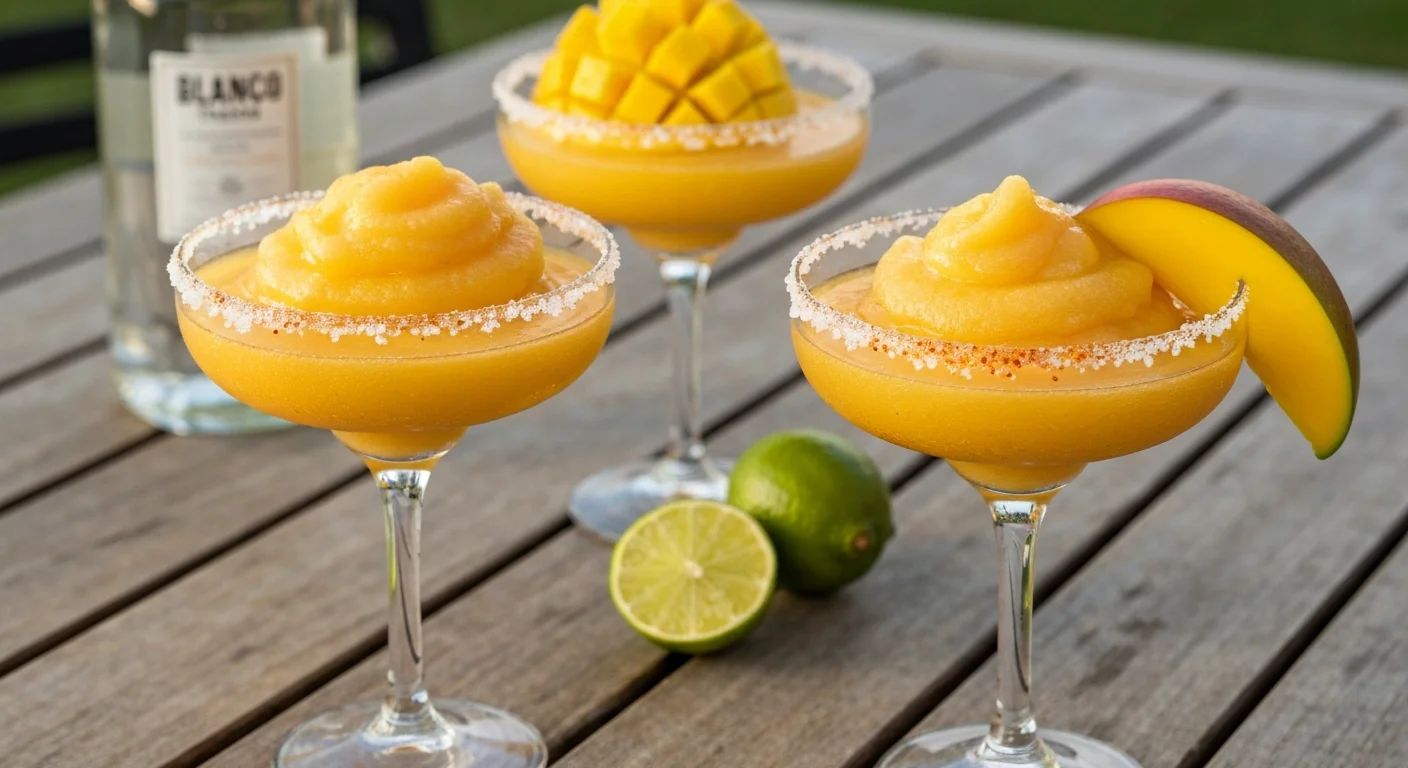
Quick answer: A mango margarita is a frozen Texas-style tequila cocktail made with ripe Alphonso or Kesar mango puree, blanco tequila, fresh lime juice, and a chili-cardamom salt rim. You make it because it pairs a classic Texas summer drink with the most fragrant fruit on the planet, and because one pitcher turns an Austin porch evening into a full celebration.
History and Origin
The margarita itself is contested Texas-Mexico territory. Some credit a Tijuana bartender in 1938, others insist it was born in Galveston or Juarez in the 1940s. What everyone agrees is that the margarita became a Texas icon the moment frozen blenders arrived in the 1950s, and today it is the state cocktail by popular vote if not by law. The fruit-infused versions followed: strawberry, peach, and eventually mango, which arrived in Indian restaurant bars in Houston and New Jersey in the late 1990s.
Mango margaritas in the Indian-American style take the base tradition and add cardamom, chili salt, and Alphonso puree, creating a drink that honors both cuisines. I first tasted one at a Sugar Land wedding almost fifteen years ago, and I have been tinkering with the recipe ever since. The version below uses fresh mango rather than the sugary bottled mix most bars rely on, and it lets the fruit actually taste like fruit. At Swadeshi Mangoes we deliver the Alphonso and Kesar needed for this cocktail across Austin, Dallas, Houston, and San Antonio every mango season.
Ingredients
For the cocktail (makes 4 servings):
- 2 cups (480 ml) fresh Alphonso or Kesar mango puree, chilled
- 6 fluid ounces (180 ml) blanco tequila, 100 percent agave
- 3 fluid ounces (90 ml) orange liqueur (Cointreau or triple sec)
- 3 fluid ounces (90 ml) fresh lime juice (about 3 limes)
- 1 fluid ounce (30 ml) cardamom simple syrup (recipe below)
- 3 cups (about 450 g) crushed ice
- Lime wedges and mango slivers, for garnish
For the cardamom simple syrup:
- 1/2 cup (100 g) sugar
- 1/2 cup (120 ml) water
- 6 green cardamom pods, lightly crushed
For the chili-cardamom salt rim:
- 2 tablespoons flaky sea salt
- 1 teaspoon Kashmiri red chili powder (or Tajin)
- 1/4 teaspoon ground cardamom
- 1/2 teaspoon lime zest
Method
- Make the cardamom syrup (10 minutes). Combine sugar, water, and crushed cardamom in a small saucepan. Bring to a simmer, stir until sugar dissolves, then turn off heat and steep 15 minutes. Strain and cool completely. This keeps two weeks in the fridge.
- Mix the rim (2 minutes). On a small plate, combine flaky salt, chili, cardamom, and lime zest. Rub with your fingertips to release oils. Rim the glasses now so they have time to set.
- Prep the glasses (3 minutes). Run a lime wedge around the rim of four coupe or margarita glasses. Press each glass into the chili-cardamom salt. Chill in the freezer for 10 minutes.
- Blend the margarita (2 minutes). In a blender, combine mango puree, tequila, orange liqueur, lime juice, cardamom syrup, and crushed ice. Blend on high for 30 seconds until smooth and slushy.
- Taste and adjust (1 minute). Taste the blend. If your mangoes are very sweet, add another half ounce of lime. If they are tart, add a quarter ounce more syrup. Trust the fruit.
- Pour and garnish (2 minutes). Pour into the chilled, rimmed glasses. Garnish each with a lime wedge and a thin mango sliver. Serve immediately while frozen.
Variety Recommendations
For mango margaritas I always reach for Alphonso first because its signature aroma cuts through tequila beautifully and holds up against lime acidity. Kesar is an excellent alternative with a deeper, almost honeyed sweetness that works especially well when you want a sweeter, dessert-leaning cocktail. Chinna Rasalu is a fun wild-card pick for Houston dinner parties because its juicy, tangy profile almost acts like a built-in sour mix. Skip Totapuri for this drink; its fibrous texture clogs blenders and its flavor gets lost under alcohol.
Tips
Freeze your mango puree. Instead of adding ice to the blender, freeze the puree in ice cube trays and blend those cubes with a splash of cold water. You get a thicker, more intensely mango-flavored slush and you do not water down the flavor.
Use blanco tequila only. Reposado and anejo have oak notes that clash with mango. If you want a smoky version, swap one ounce of tequila for mezcal; it pairs beautifully with Kesar.
Fresh lime is non-negotiable. Bottled lime juice tastes metallic and will dull the drink within minutes. Roll limes on the counter before juicing to maximize yield.
Rim before you pour. A wet rim outside the glass catches salt on the drinker’s hand, not the tongue. Rim only the outer edge and freeze the glass to set.
Texas heat lesson: this drink melts fast. Serve in pre-chilled glasses and do not over-pour. Half-fill and refill rather than one heroic glass that turns to soup in ten minutes on an Austin patio.
Serving Suggestions
Serve frozen mango margaritas alongside spicy snacks that balance the sweetness. Chaat, spicy Texas brisket sliders, or mango-habanero chicken wings all work beautifully. For a San Antonio backyard party, pair with ceviche and roasted corn elote. For a more elegant Dallas dinner, serve smaller pours in coupe glasses as a welcome cocktail before a mango-glazed chicken main course. The chili-cardamom rim also pairs surprisingly well with salted chocolate dessert courses. For a pool party in Austin, I often build a full mango margarita bar with three variations: the classic blended version, a spicy mezcal rendition, and a non-alcoholic virgin option for kids and designated drivers. Guests mix their own rims and the fruit stays the hero. This cocktail also works beautifully as a welcome drink before an Indian-Mexican fusion menu, setting the palate for complex dishes like chicken tikka tacos or coconut-cilantro guacamole served across Houston and San Antonio gatherings. For a more elegant sit-down pairing in Dallas, serve a single-pour margarita in a vintage coupe as a course between a light fish starter and a spiced lamb main; the mango brightness cleanses the palate without overwhelming the savory flow of the meal. For weddings and larger events across Texas, scale the recipe to batches of twenty and keep the cardamom syrup and rimming salt in separate labeled jars for easy restocking throughout the night.
Storage
Margaritas are best made fresh, but you can batch-prep the base (everything except ice) up to 24 hours ahead and store it in a sealed jar in the fridge. When guests arrive, blend with ice to order. Leftover mango puree freezes well in ice cube trays for up to two months and is perfect for next week’s smoothie or lassi. The cardamom syrup keeps two weeks refrigerated, and the chili-cardamom salt lasts indefinitely in an airtight jar.
Dietary Notes
This cocktail is naturally gluten-free and dairy-free. For a non-alcoholic virgin mango margarita, replace tequila and orange liqueur with a 3:1 mix of chilled kombucha and fresh orange juice. The chili-cardamom rim and cardamom syrup keep the drink complex and interesting even without alcohol. For lower-sugar, skip the simple syrup entirely and let the mango carry the sweetness; a ripe Alphonso rarely needs help.
FAQ
Can I make a mango margarita without a blender?
Yes. Shake the mango puree, tequila, orange liqueur, lime juice, and cardamom syrup in a cocktail shaker with plenty of ice for 15 seconds, then strain over fresh ice in a rocks glass. The drink will be smoother and more classic in style rather than frozen. Great for smaller gatherings or when your blender is tied up elsewhere.
Which tequila is best for mango margaritas?
Use a 100 percent agave blanco tequila. Brands like Espolon, Cimarron, or Lunazul give clean flavor without breaking the bank. Avoid mixto or gold tequilas with added caramel color because they mute the mango. If you want to elevate the drink, try a single-estate Highlands blanco for a fruity, floral boost.
How sweet should a mango margarita be?
A balanced mango margarita should taste slightly tart first, sweet second, with the mango aroma lingering last. If it tastes like candy, you either used canned puree or too much syrup. Fresh Alphonso or Kesar mango provides natural sweetness, and a squeeze of extra lime at the end sharpens everything.
Can kids drink a non-alcoholic version?
Absolutely. Replace tequila and orange liqueur with 6 ounces of sparkling water and 2 ounces of orange juice. Keep the mango, lime, cardamom syrup, and ice. Skip the chili salt or use plain sugar on the rim. Texas kids love this version at summer barbecues and birthday parties.
Can I batch this for a party?
Yes. Multiply the base recipe (minus ice) by your guest count, store in a pitcher in the fridge, and blend in batches with ice as guests arrive. Do not pre-blend with ice because the drink separates. For 12 people, I recommend two pitchers of base and blending fresh four-serving rounds every 20 minutes.
Recipe Card
Mango Margarita with Cardamom Syrup
Prep time: 15 minutes
Cook time: 10 minutes (for syrup)
Blend time: 2 minutes
Total time: 30 minutes
Servings: 4
Cuisine: Tex-Mex, Indian fusion
Course: Cocktail
Diet: Gluten-free, dairy-free, vegan
Calories per serving: approximately 245
Explore more summer recipes on our blog, or order fresh mangoes delivered across Texas. For alcohol and juice nutrition data see USDA FoodData Central.