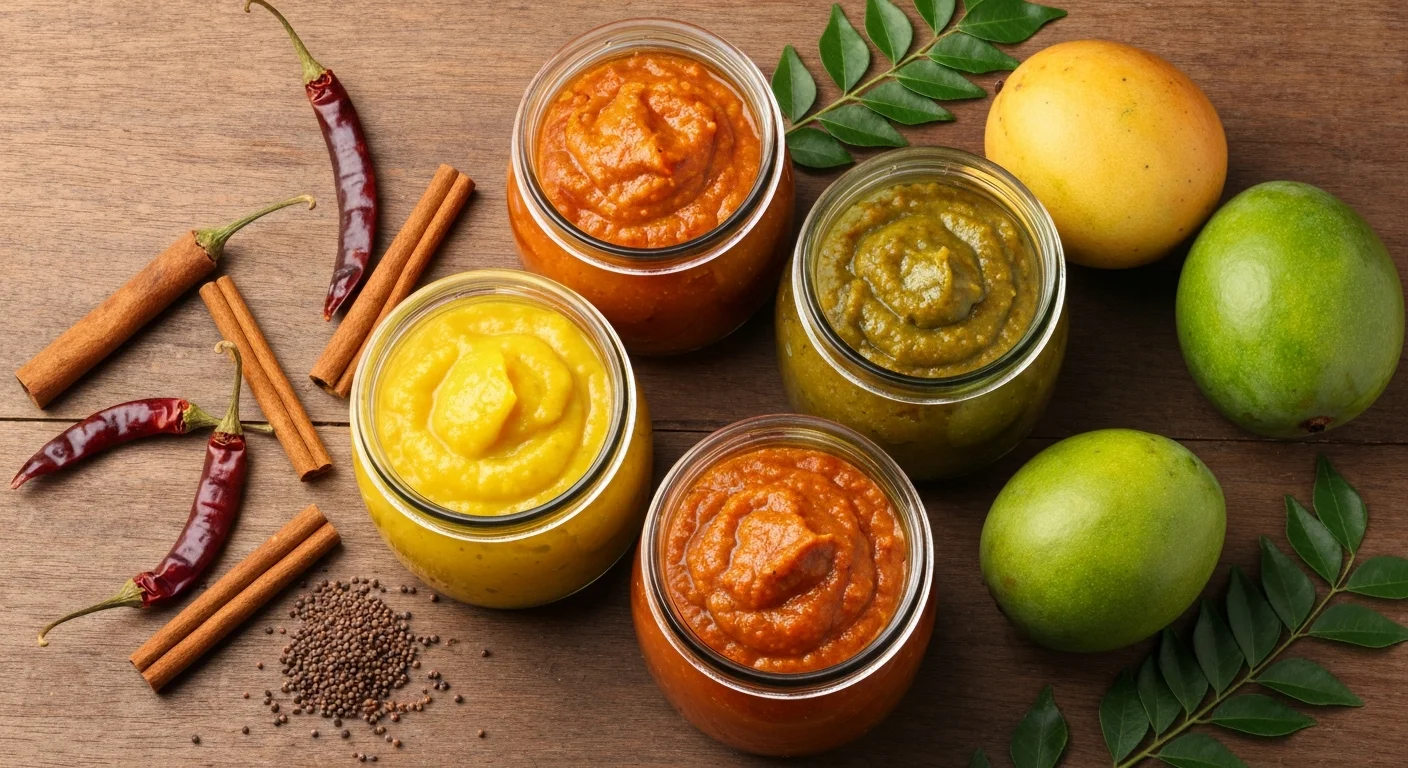
Quick answer: Indian mango chutney is a preserved mango condiment that varies dramatically by region. Bengali aam chutney is a sweet-sour thickened compote with panch phoron tempering. South Indian tokku is a spicy-tangy ground chutney with mustard oil and chiles. Gujarati chhundo is a grated sweet chutney sun-cooked with sugar and chili. All three take under an hour, keep for weeks, and transform a simple Texas weeknight curry, sandwich, or cheese board. This post gives you all three, calibrated for the Indian mangoes we ship across Texas.
History and Origin
Chutney itself is a word that traveled from Hindi into the English language during the colonial era, but the tradition of preserving seasonal fruit with spice and sugar is thousands of years old across India. Each region evolved its own mango chutney based on climate, spice trade routes, and mango varieties grown locally.
Bengali aam chutney, or aam er chatni, closes every formal Bengali meal. It is served at weddings after the main course and before the sweet. My Kolkata friends insist it tastes of home. South Indian tokku, sometimes called mamidikaya thokku in Telugu or manga thogayal in Tamil, is a storeroom staple that lasts months in the pantry thanks to mustard oil and salt. Gujarati chhundo is the queen of chutneys, traditionally sun-cooked on rooftops in Kathiawar over three to seven scorching afternoons until sugar and mango melt into thick golden jam. Immigrant Gujarati families in Houston and Dallas often still sun-cure chhundo on their sunny Texas porches in July, which is one of my favorite moments of cultural continuity to watch. When the Texas summer hits 100 degrees, our kitchens start looking a lot like Rajkot.
What makes regional Indian chutneys interesting is how each one reflects its home ecology. Bengal is humid and paddy-rich, so their mango chutney leans cool and sweet with warming cumin. South India is hot and coastal, so tokku uses preserving oil and aggressive spice. Gujarat has a dry coastal climate and a strong tradition of preserved foods, which is why chhundo evolved to be sun-cooked and shelf-stable. Across all three, the common thread is the Indian sense that a mango should never go to waste: when the tree drops more fruit than a family can eat fresh, the chutney pot comes out. In Texas, where our shipping window for raw green mangoes is tight and the varieties are seasonal, making a batch of chutney is how you preserve the season into September and October meals.
Ingredients
Bengali Aam Chutney (serves 8):
- 2 medium raw green mangoes, peeled and cubed (about 2 cups or 400 g)
- 1 cup jaggery, grated (or packed brown sugar, 200 g)
- 1/2 teaspoon turmeric
- 1 teaspoon salt
- 2 tablespoons mustard oil
- 1 teaspoon panch phoron (five-spice mix: fenugreek, nigella, cumin, fennel, mustard seeds)
- 2 dried red chiles
- 1/2 teaspoon roasted cumin powder
- 1 1/2 cups water
South Indian Mango Tokku (serves 10):
- 2 cups grated raw green mango (about 2 mangoes, 350 g)
- 1/2 cup sesame oil or mustard oil
- 1 tablespoon salt
- 2 tablespoons red chili powder (adjust to heat)
- 1 teaspoon turmeric
- 1 teaspoon fenugreek powder
- 2 teaspoons black mustard seeds
- 1/2 teaspoon hing
- 15 curry leaves
- 4 cloves garlic, minced (optional in Iyengar homes)
Gujarati Chhundo (serves 12):
- 2 cups grated raw green mango (about 2 mangoes, 350 g)
- 1 3/4 cups sugar (350 g)
- 1 teaspoon salt
- 1 teaspoon turmeric
- 2 teaspoons red chili powder
- 1 teaspoon roasted cumin powder
Prep time: 20 minutes each. Cook time: 20 to 30 minutes. Dietary: all three vegan and gluten-free.
Method
Bengali Aam Chutney (30 minutes total):
- Heat mustard oil in a kadhai until smoking, then reduce heat.
- Add panch phoron and dried chiles, let crackle 30 seconds.
- Add cubed mango and turmeric. Stir 2 minutes.
- Add water and salt. Simmer 15 minutes until mango softens.
- Stir in jaggery, cook 8 to 10 minutes until glossy and syrupy.
- Sprinkle roasted cumin, cool, jar.
South Indian Tokku (25 minutes total):
- Heat oil in a wide pan until just smoking.
- Add mustard seeds, wait for pop.
- Add hing, curry leaves, garlic. Fry 30 seconds.
- Add grated mango, salt, turmeric. Cook on medium, stirring, for 10 to 12 minutes until mango turns translucent.
- Add chili powder and fenugreek powder. Cook 3 more minutes.
- Cool completely before jarring.
Gujarati Chhundo (stovetop version, 40 minutes):
- Combine grated mango, sugar, salt, and turmeric in a wide steel pan. Let sit 30 minutes until sugar draws out mango juice.
- Cook on medium-low heat, stirring occasionally, for 25 to 30 minutes until syrup forms a thick one-string consistency.
- Off heat, stir in chili powder and roasted cumin.
- Cool, jar, and refrigerate.
Variety Recommendations
For Bengali aam chutney: raw Totapuri or raw Banginapalli. The firm flesh holds shape in syrup and the tartness balances the jaggery perfectly.
For South Indian tokku: raw Totapuri, unequivocally. The sharp sourness is the foundation of real tokku. Raw Banginapalli is a fine second.
For Gujarati chhundo: raw Rajapuri traditionally, but Totapuri is the closest match we ship across Texas. Any very firm, very sour green mango works. Order raw Totapuri in our pre-season window for chhundo making.
Avoid ripe mangoes like Alphonso, Kesar, Dasheri, Mallika, Chinna Rasalu, Himayath, and Suvarna Rekha. Ripe varieties lack the structural pectin and tartness that chutneys need. Save them for shrikhand and lassi.
Tips
- Use glass jars, not plastic. Hot chutney will leach chemicals from plastic. Sterilize jars by boiling 10 minutes before filling.
- Mustard oil heat-and-cool trick. Always heat mustard oil to smoking and let it cool slightly before proceeding. This removes the raw pungent taste.
- Sugar measurement matters. The sugar or jaggery acts as preservative. Reducing it shortens shelf life dramatically.
- Test chhundo consistency. Drop a little syrup on a cold plate. If it holds a soft line when you drag a spoon through, it is done.
- Mistake to avoid: tasting hot. All three chutneys taste more muted hot than cold. Adjust seasoning only after cooling.
Serving Suggestions
These three chutneys transform an entire week of Texas-Indian meals. Serve Bengali aam chutney with rice and dal as the meal closer, exactly as they do in Kolkata. Spread it on a grilled cheese sandwich for a shocking lunch upgrade. South Indian tokku pairs beautifully with curd rice, idli, dosa, and is my go-to sandwich spread with white cheddar and cucumber for Austin summer picnics. Gujarati chhundo is the classic companion to methi thepla, but also works wonders with khakhra, chapati, and, surprisingly, on a Texas cheese board with sharp cheddar or aged Manchego. My favorite midnight snack in Houston summers: chhundo with cream cheese on toasted sourdough. Try all three alongside a home-cooked chicken curry for a full Indian feast in San Antonio or Dallas. Other pairings our Texas customers have discovered: Bengali aam chutney spooned over grilled pork tenderloin, South Indian tokku swirled into a mayo for spicy deli sandwiches, and Gujarati chhundo as a glaze for baked ham at holiday dinners. All three transform beautifully when used as a condiment on your Texas BBQ plate, cutting through smoked brisket or ribs with that trademark Indian sweet-sour-spicy punch. Keep all three jars in your fridge door through summer and you will genuinely never be stuck for flavor.
Storage
Bengali aam chutney: 2 weeks refrigerated, 2 months frozen. South Indian tokku: 2 months refrigerated if oil layer is maintained on top, 6 months in the freezer. Gujarati chhundo: 3 months refrigerated if sugar ratio is correct and jar is clean. For all chutneys use a dry clean spoon every time you dip, never double-dip. See the USDA FoodData Central database for mango nutritional data.
FAQ
Can I use ripe mango for chutney? Only for sweet jam-style chutneys, not for tokku or chhundo. Ripe mango lacks the tartness and firm structure needed for long-shelf chutneys. If you have ripe Alphonso, make a quick sweet mango chutney with 1 teaspoon chili powder and keep it 5 days refrigerated. For the traditional regional chutneys in this post, use raw green mango.
How long does homemade mango chutney keep? Depending on style, 2 weeks to 6 months. Bengali aam chutney lasts 2 weeks refrigerated. South Indian tokku preserved with oil keeps 2 months in the fridge and 6 months frozen. Gujarati chhundo with its high sugar content keeps 3 months refrigerated. Always use a clean dry spoon to prevent spoilage.
Is mango chutney spicy? Bengali aam chutney is sweet-sour and mildly spicy, about 2 out of 10. South Indian tokku is the hottest at 7 out of 10 due to generous chili powder. Gujarati chhundo is sweet with mild heat, around 3 out of 10. Adjust chili powder in any recipe to match your Texas household heat tolerance.
What is panch phoron and where do I find it in Texas? Panch phoron is a Bengali five-spice blend of equal parts cumin, fennel, fenugreek, nigella, and mustard seeds. Any Indian grocery store in Austin, Dallas, Houston, or Fort Worth stocks it premixed. You can also combine the five whole spices yourself in 30 seconds.
Can I water-bath can mango chutney for long shelf storage? Yes, particularly Bengali aam chutney and Gujarati chhundo, which have enough sugar and acid for safe canning. Use sterile jars, leave 1/2 inch headspace, and process in a boiling water bath for 15 minutes. South Indian tokku is typically stored oil-topped in the refrigerator rather than canned.
Recipe Card
Three Regional Mango Chutneys
Bengali Aam Chutney: Temper panch phoron in mustard oil, cook raw mango with turmeric, salt, water, then finish with jaggery and roasted cumin. 30 min.
South Indian Tokku: Temper mustard seeds and curry leaves in oil, cook grated mango with salt and turmeric, finish with chili and fenugreek powder. 25 min.
Gujarati Chhundo: Macerate grated mango with sugar, salt, turmeric for 30 min, cook stovetop 25-30 min until one-string syrup, finish with chili and cumin. 40 min.
Explore our mango recipe archive or order raw Totapuri for authentic chutneys in Texas.