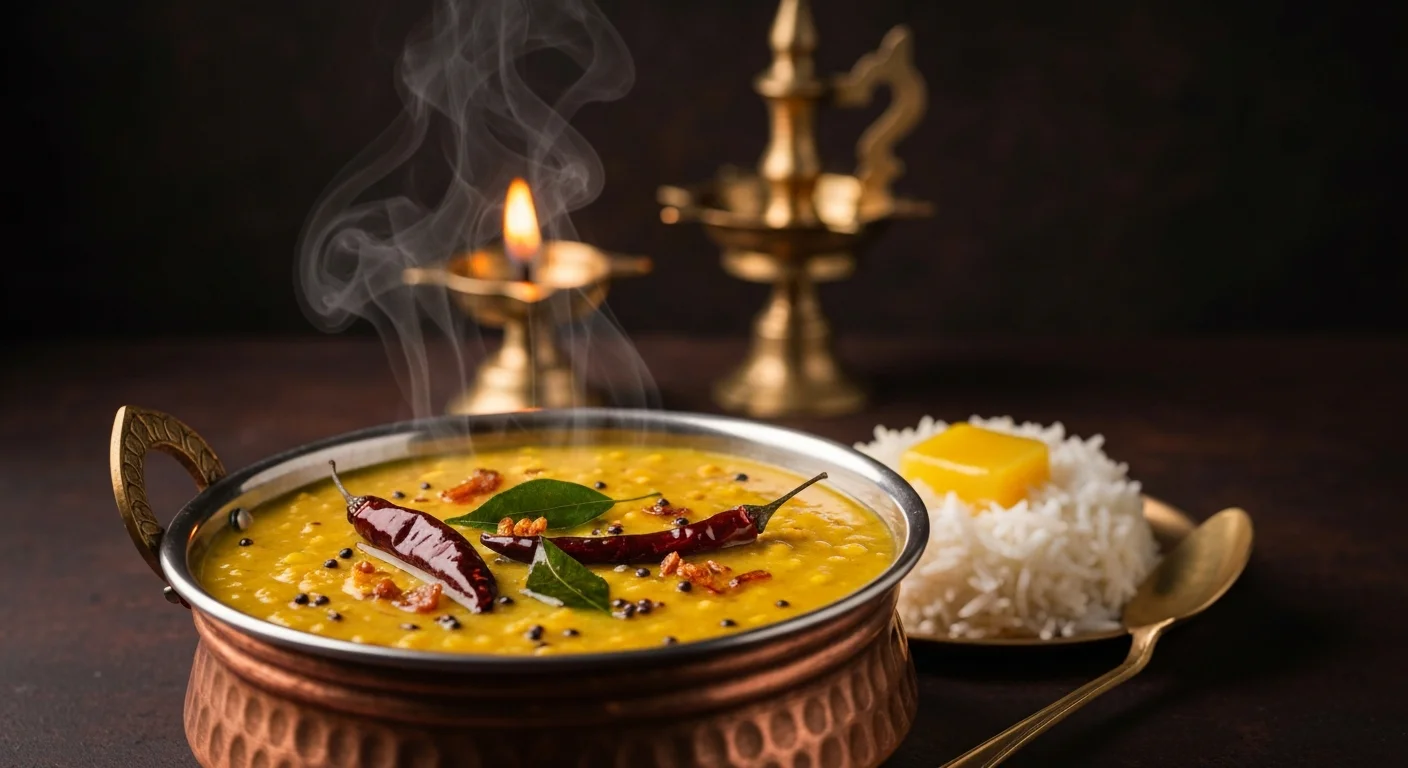
Quick answer: Mamidikaya pappu is a traditional Andhra dal cooked with raw green mango, toor dal, turmeric, and a tempering of mustard seeds, dried red chiles, and curry leaves. It takes 40 minutes, is naturally vegan and gluten-free, and is the single most beloved summer dal in Andhra and Telangana households. The tart mango cuts through the richness of the lentils and makes for an incredibly soothing meal during hot Texas summers. Best served over steamed basmati rice with a spoon of ghee and a side of mango pickle.
History and Origin
Mamidikaya pappu, which literally means raw-mango dal in Telugu, is one of the oldest dals in the Andhra kitchen. In farming villages across Krishna, Guntur, and Prakasam districts, the first green mangoes of March and April were always destined for this dal. My amma would send us children climbing the neighbor’s mango tree to bring back the tart green fruit for Sunday lunch. The dal was poured over a mound of steamed rice, topped with a spoon of fresh cow ghee, and eaten with fingers in the shade of the veranda.
The dish is a cousin to Tamil Nadu’s mambazha pulissery and Kerala’s manga curry, but the Andhra version is leaner, simpler, and more aggressively tart. Unlike the coconut-heavy southern cousins, mamidikaya pappu relies on just dal, mango, and tempering. That simplicity is what makes it a weeknight staple. Here in Austin, when my family gets homesick during a humid Texas July, I reach for a green Totapuri and a cup of toor dal. Forty minutes later, the kitchen smells like my grandmother’s house in Vijayawada, and my kids stop asking about the heat outside.
Ingredients
This is the traditional Andhra version. Recipe notes for Tamil and Kerala variations follow.
- 1 cup toor dal, also called arhar dal or split pigeon peas (200 g)
- 1 medium raw green mango, peeled and cut into 1-inch chunks (about 1 cup or 200 g)
- 1/2 teaspoon turmeric powder
- 1 teaspoon salt, plus more to taste
- 3 cups water, plus more as needed
- 2 green Thai chiles, slit lengthwise
- 1 small tomato, chopped (optional, for extra body)
- 1/4 teaspoon jaggery or brown sugar (balances the tartness)
For the tempering (popu):
- 2 tablespoons ghee or neutral oil (use oil for vegan)
- 1 teaspoon black mustard seeds
- 1 teaspoon cumin seeds
- 2 dried red chiles, broken in half
- 10 fresh curry leaves
- 1/4 teaspoon hing (asafoetida)
- 3 cloves garlic, smashed
- 1 small shallot, thinly sliced (optional, Telangana style)
Prep time: 10 minutes. Cook time: 30 minutes. Serves: 4. Dietary: vegan (use oil), gluten-free, nut-free.
Method
- Rinse and soak the dal (5 minutes). Rinse toor dal in 3 changes of water until the water runs mostly clear. Soak in warm water for 15 minutes while you prep the mango.
- Cook the dal and mango (25 minutes). Drain the dal. In a pressure cooker, combine dal, mango chunks, turmeric, green chiles, tomato if using, salt, and 3 cups of water. Pressure cook for 4 whistles on medium heat, about 15 minutes. If using an Instant Pot, set to manual high pressure for 12 minutes and natural release. Without a pressure cooker, simmer in a heavy pot for 40 to 45 minutes until dal is completely soft and mango is falling apart.
- Mash and adjust (3 minutes). Open the cooker once pressure releases naturally. Using a wooden whisk or the back of a ladle, mash the dal and mango together until creamy but still slightly textured. Stir in jaggery. Add more hot water to reach a pourable consistency, like thin porridge. Taste and adjust salt.
- Make the tempering (3 minutes). Heat ghee or oil in a small skillet over medium-high heat. Add mustard seeds and wait for them to pop, about 30 seconds. Add cumin seeds, dried red chiles, curry leaves, hing, garlic, and shallot if using. Fry for 60 to 90 seconds until garlic is golden and curry leaves are crisp.
- Pour and serve (1 minute). Pour the sizzling tempering directly over the dal and stir once. Cover immediately to trap the aroma. Serve hot over steamed rice with a spoon of ghee.
Variety Recommendations
The right mango for pappu is raw and green, not ripe and sweet.
Best: Raw Totapuri. If you can get hold of unripe Totapuri from our early-season drops across Texas, grab them. The parrot-beak shape, firm flesh, and sharp tartness are exactly what Andhra cooks grew up with. Order raw Totapuri here when in season.
Second best: Raw Banginapalli. Less fiber than Totapuri, still plenty tart when picked firm. Many Telugu households use raw Banginapalli interchangeably with Totapuri for pappu.
If you only have ripe mangoes: You can make a sweeter pappu using ripe Dasheri or Mallika, but reduce the jaggery and add an extra 1 tablespoon of tamarind paste to restore the necessary tang. The dish becomes mamidipandu pappu, a different but also wonderful variation.
Avoid: Alphonso and Kesar. Both are too sweet, too aromatic, and too expensive to cook into dal. Enjoy these varieties fresh or in shrikhand.
Tips
- The mango does the work. Good pappu needs no tamarind, no lemon, and no souring agents. The raw mango provides all the acidity.
- Do not over-cook the tempering. Curry leaves should turn translucent and crisp, not black. Garlic should be golden, not burnt.
- Pressure cook, do not boil. Toor dal under pressure reaches the creamy mashable texture we need in 15 minutes. Open-pot boiling takes 45 minutes and still often leaves a grainy finish.
- Hing is non-negotiable for Andhra flavor. A pinch is all you need. It gives the dal that unmistakable savory backbone.
- Mistake to avoid: adding the tempering too early. Pour the popu over the finished dal just before serving. If you add it during cooking, the aroma evaporates.
Serving Suggestions
Traditional Andhra meal: steamed basmati or sona masoori rice, a generous ladle of pappu, a teaspoon of ghee, a pinch of avakaya mango pickle, a side of sauteed beans or okra (vankaya fry), and plain yogurt. Here in Austin and Houston I serve it simpler on busy weeknights with just rice, ghee, and roasted papad. It also works beautifully alongside brown rice, quinoa, or jowar roti for a modern Texas-healthy twist. On hot summer evenings in Dallas and Fort Worth when no one wants a heavy meal, this pappu over a small mound of rice is exactly right.
Storage
Mamidikaya pappu keeps in the refrigerator for up to 4 days in a glass container. It thickens overnight, so reheat with a splash of hot water to loosen. Flavor actually improves on day two. You can freeze it in portions for up to 2 months. Thaw in the fridge overnight and refresh with a tiny tempering of mustard seeds and curry leaves before serving. The USDA publishes detailed nutritional data for toor dal at FoodData Central.
FAQ
Can I use ripe mango instead of raw green mango? Yes, but the dish changes significantly. Ripe mango gives a sweeter, thicker pappu called mamidipandu pappu. You will need to add 1 tablespoon of tamarind paste or 2 tablespoons of lemon juice to restore the tartness that raw mango provides naturally. We prefer raw mango for the authentic Andhra flavor.
How long does mango dal keep? Refrigerated in an airtight glass container, mamidikaya pappu lasts 4 days and tastes even better on day two as flavors deepen. It freezes well for 2 months. Reheat gently with a splash of water and a fresh tempering to bring it back to life.
Is mamidikaya pappu spicy? Moderately. The traditional recipe uses 2 green chiles and 2 dried red chiles, which registers as medium heat. Reduce to 1 green chile and skip the red chiles in tempering if you are serving children or heat-sensitive guests. The tartness of the mango amplifies perceived heat, so start low.
Can I make this without a pressure cooker? Absolutely. Simmer the dal and mango in a heavy-bottomed pot with 4 cups of water for 40 to 45 minutes, stirring occasionally, until the lentils are fully soft and mash easily. You may need to add another cup of hot water during cooking to prevent sticking.
What rice pairs best with mango dal in a Texas kitchen? Sona masoori is the traditional Andhra choice, but basmati works perfectly and is easier to find across Texas grocery stores. For a healthier spin, try short-grain brown rice or millet. Avoid jasmine rice, which is too floral and competes with the tempering.
Recipe Card
Mamidikaya Pappu (Andhra Mango Dal)
Prep: 10 minutes. Cook: 30 minutes. Serves: 4. Diet: Vegan (with oil), gluten-free.
Ingredients: 1 cup toor dal, 1 cup chopped raw mango, 1/2 tsp turmeric, 2 green chiles, salt, 3 cups water, 1/4 tsp jaggery. Tempering: 2 tbsp ghee, 1 tsp mustard seeds, 1 tsp cumin seeds, 2 dried red chiles, 10 curry leaves, 1/4 tsp hing, 3 garlic cloves.
Steps: Pressure cook dal with mango, turmeric, chiles, salt, and water for 15 minutes. Mash to creamy consistency. Stir in jaggery. Heat ghee, pop mustard and cumin seeds, add red chiles, curry leaves, hing, garlic. Pour over dal. Serve hot with rice and ghee.
Explore more Andhra mango recipes or order raw Totapuri for authentic pappu.