The Journey of Indian Mangoes: From Orchard to Your Door in Texas
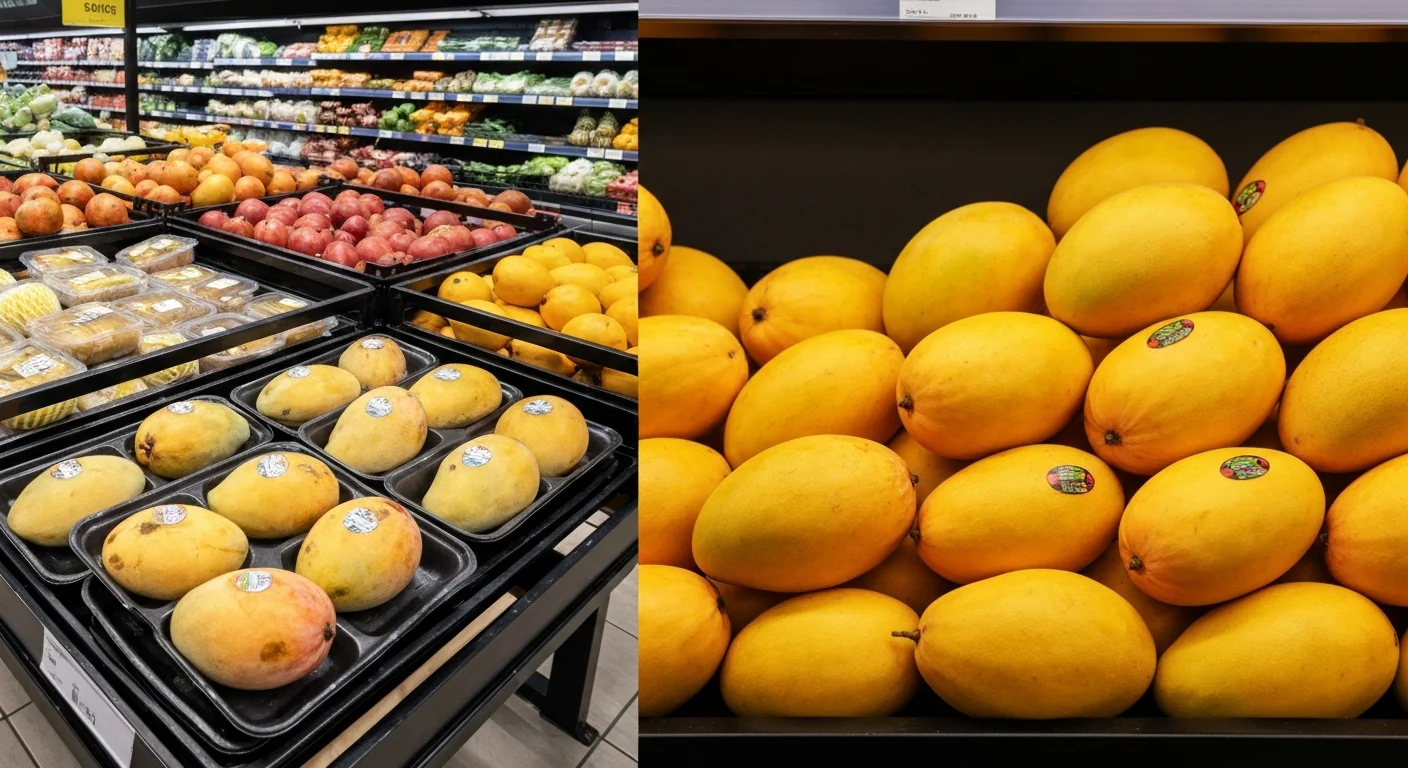
When you bite into a perfectly ripe Alphonso or Kesar mango in Dallas or Houston, you’re tasting the result of a remarkable supply chain that spans thousands of miles. Understanding how Indian mangoes are imported to the US helps you appreciate what goes into every box and why these mangoes taste so different from anything you’ll find in a regular grocery store.
It Starts in the Orchards
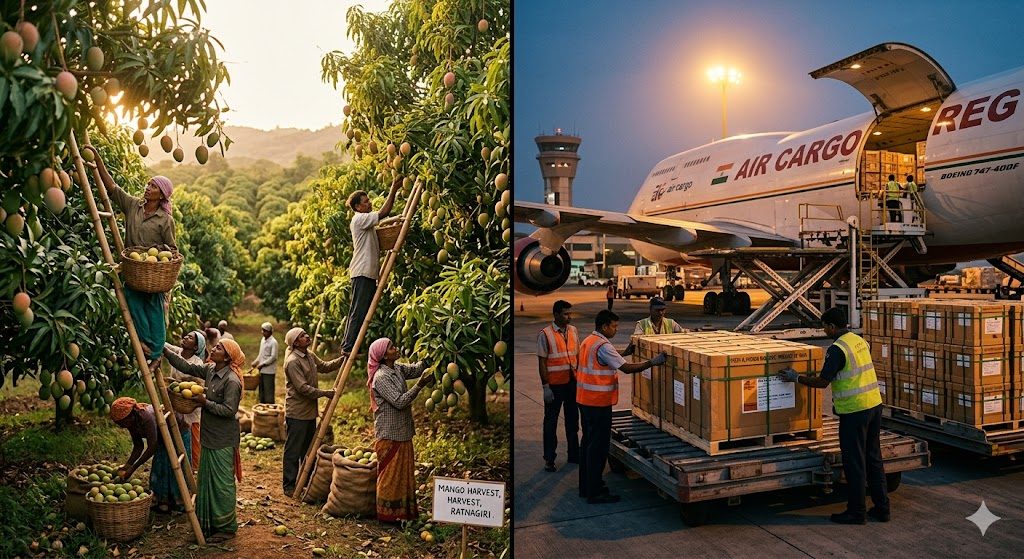
India is the world’s largest mango producer, growing over 1,500 varieties across diverse climates. The mangoes that make it to the US come from carefully managed orchards in specific regions known for premium quality:
- Maharashtra’s Konkan coast for Alphonso
- Gujarat’s Junagadh district for Kesar
- Andhra Pradesh for Banginapalli, Chinna Rasalu, and other Telugu varieties
- Telangana and Karnataka for Himayath, Totapuri, and more
Mangoes destined for US export must come from USDA-registered orchards and packing houses that meet strict phytosanitary standards. Not every orchard qualifies. The fruit is harvested at the right stage of maturity, firm enough to survive international transit but mature enough to ripen properly at its destination.
Sorting, Grading, and Packing
After harvest, mangoes go through a careful selection process:
- Sorting – Damaged, undersized, or blemished fruit is removed. Only export-grade mangoes move forward.
- Stem cut and desapping – The stem is trimmed to a 0.5-1.0 cm retention, then mangoes are inverted to drain natural sap that can stain the skin and cause spots.
- Hot water fungicidal treatment – Mangoes are dipped in 52°C water for 3-4 minutes. This kills surface fungi like anthracnose, which extends shelf life and reduces post-harvest decay. Important: this is a fungicidal step, NOT the USDA quarantine pest treatment.
- Bubble wash and air drying – Cool water bubble wash removes residue, followed by air drying.
- First sort and grading – Damaged, undersized, or blemished fruit is removed. Only export-grade mangoes move forward, sorted by size, weight, and visual quality.
- Packing and pre-cooling – Mangoes are individually wrapped or cushioned in ventilated export cartons (3 kg or 5 kg) and pre-cooled to slow ripening before treatment.
- Irradiation at 400 Gy minimum – The USDA quarantine treatment for Indian mangoes. Cartons pass through a Cobalt-60 gamma or electron-beam chamber under USDA APHIS supervision. This eliminates quarantine pests including the mango pulp weevil and fruit fly. Hot water immersion treatment used by Mexican mangoes is NOT approved by USDA for Indian origin.
- USDA APHIS joint inspection and NPPO phytosanitary certificate – Indian NPPO inspectors and US APHIS officers stationed at the irradiation facility jointly verify the treatment, then issue the phytosanitary certificate that travels with the shipment.
- Grading – Fruit is graded by size, weight, and appearance. Premium grades command the highest prices.
- Packing – Mangoes are individually wrapped or cushioned in export-standard boxes designed to minimize bruising during transit.
Irradiation: The FDA and USDA Requirement
This is the step that most people are curious about. All Indian mangoes entering the United States must undergo irradiation treatment. This is a non-negotiable requirement from the USDA’s Animal and Plant Health Inspection Service (APHIS) to prevent the introduction of fruit flies and other agricultural pests.
Here’s what you should know about irradiation:
- It uses a controlled dose of gamma radiation or electron beam to eliminate insect pests.
- It does not make the fruit radioactive. This is a common misconception.
- It does not significantly alter the taste, texture, or nutritional value of the mango.
- The process is approved by the FDA, WHO, and over 60 countries worldwide.
- Irradiation facilities in India are USDA-inspected and certified.
India invested heavily in irradiation infrastructure specifically to enable mango exports to the US. Before irradiation was approved (starting in 2007), Indian mangoes were essentially unavailable in America.
Air Freight to the United States
Unlike Mexican or South American mangoes that arrive by ship, Indian mangoes are air-freighted. This is critical for quality. Ship transit would take weeks and destroy the delicate fruit. Air shipping gets mangoes from Indian packing houses to US distribution points in 24-48 hours.
The mangoes are kept in temperature-controlled conditions throughout the journey. Upon arrival at US ports of entry (typically New York, Chicago, or other major hubs), they undergo USDA inspection before being cleared for distribution.
Distribution Across Texas
Once cleared through customs, the mangoes are transported to distribution hubs across the country. This is where Swadeshi Mangoes comes in.
We coordinate with importers to bring fresh shipments directly to Texas communities. Our local network of pickup locations across Dallas-Fort Worth, Houston, Austin, and San Antonio means you don’t have to rely on whatever happens to show up at your local Indian grocery store.
Our approach has several advantages:
- Fresher fruit – Fewer middlemen and faster last-mile delivery means your mangoes have spent less time in transit and storage.
- Known varieties – You order specific varieties rather than taking whatever is available. Every box is labeled and verified.
- Better handling – Our agents and pickup coordinators understand that these are premium fruit requiring careful handling.
Why Indian Mangoes Cost More Than Grocery Store Mangoes
The price of Indian mangoes reflects the reality of this supply chain:
- Air freight is significantly more expensive than ocean shipping.
- Irradiation adds processing cost to every box.
- USDA compliance requires registered orchards, certified packing houses, and inspections at multiple stages.
- Limited season and import quotas restrict supply.
- Premium quality – these aren’t commodity mangoes; they’re the same varieties that command top prices within India itself.
When you understand the journey, the price makes sense. And once you taste the difference, you understand why thousands of families across Texas order every year.
Quality and Safety You Can Trust
Every box of Indian mangoes you receive through Swadeshi Mangoes has passed through multiple layers of quality control and food safety inspection, from the orchard in India to the irradiation facility to US customs. The regulatory framework ensures you’re getting safe, high-quality fruit.
For tips on getting the best experience once your mangoes arrive, visit our mango care guide. Proper ripening and storage make all the difference.
Explore the full range of varieties we offer and learn what makes each one special. Have questions about the process? Check our FAQ page for answers.
Taste the Difference This Season
There’s a reason Indian mangoes inspire this level of devotion. The flavor of an orchard-fresh Alphonso or Kesar that’s been air-shipped and properly ripened is simply in a different league from anything mass-produced.
Order your Indian mangoes today and experience the fruit that’s worth the journey.

Swadeshi Mangoes
Swadeshi Mangoes is a community-driven Indian mango pickup network operated by Swadeshi Central TX LLC, headquartered in Round Rock, Texas. We bring authentic, USDA-inspected Indian mangoes — Alphonso, Banginapalli, Kesar, and more — to families through local pickup in multiple US cities, every season since 2025.