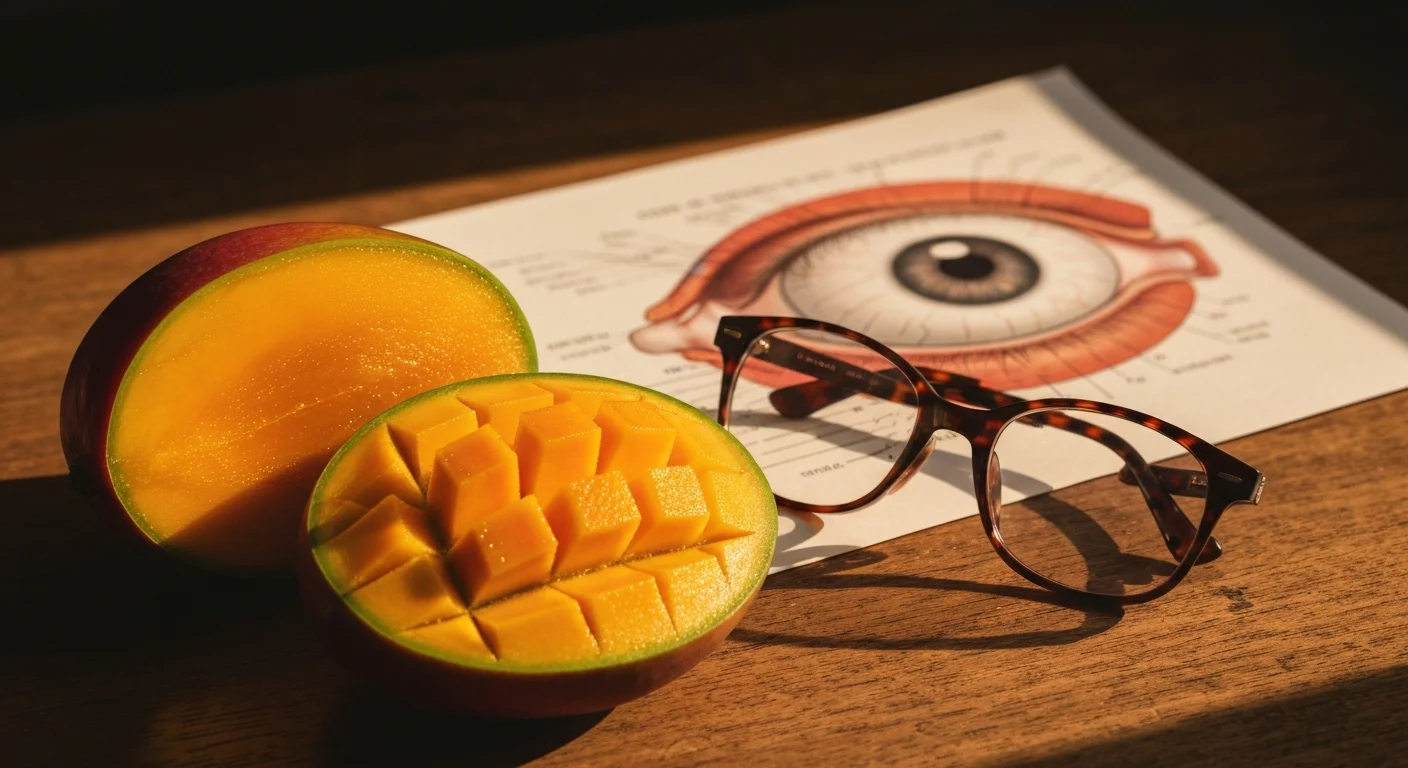
A single 200-gram mango delivers roughly 90 micrograms of lutein and zeaxanthin, 1,800 micrograms of beta-carotene, and about 112 micrograms of retinol activity equivalents of vitamin A, all compounds with documented roles in macular pigmentation, retinal photoprotection, and prevention of age-related macular degeneration. The evidence for mango specifically is modest but consistent with the broader carotenoid literature, which supports eating colorful fruits and vegetables for lifelong vision health. For Texas customers concerned about eye health, whether from age, screen time, or strong sun exposure, making seasonal mango part of a carotenoid-rich diet is a simple, enjoyable choice.
Our team has heard from many longtime customers in Austin, Dallas, Houston, and San Antonio that their ophthalmologists recommend colorful fruits and leafy greens. This guide explains exactly which compounds in the nine Indian varieties we deliver contribute to eye health, how much you actually get per serving, and how the evidence compares to better-known sources like kale and spinach.
The Eye-Specific Compounds in Mango
Lutein and Zeaxanthin
Lutein and zeaxanthin are xanthophyll carotenoids that selectively accumulate in the macula, the central region of the retina responsible for sharp vision. They absorb high-energy blue light, which damages retinal cells over time, and act as antioxidants within the macula. The landmark AREDS2 trial, published in JAMA in 2013, showed that supplemental lutein and zeaxanthin reduced progression to advanced age-related macular degeneration by about 10 percent over 5 years.
Beta-Carotene and Vitamin A
Beta-carotene is converted by the body into retinol, which is essential for rhodopsin, the light-sensitive pigment in rod photoreceptors. Vitamin A deficiency is the leading cause of preventable childhood blindness worldwide, though this is rare in Texas.
Vitamin C and Vitamin E
Mango also provides roughly 60 milligrams of vitamin C and 1.8 milligrams of vitamin E per 200 grams, both of which are co-antioxidants that protect the lens and retina.
Nutritional Table: Mango and Eye Health Nutrients
| Nutrient | Per 200 g Mango (USDA NDB #09176) | RDA for Adults | Eye Health Role |
|---|---|---|---|
| Lutein + Zeaxanthin | ~90 mcg | No RDA; 6 mg trial dose | Macular pigment |
| Beta-carotene | ~1,800 mcg | Provitamin A | Rhodopsin precursor |
| Vitamin A (RAE) | ~112 mcg | 900 mcg (male) / 700 (female) | Rod function, night vision |
| Vitamin C | ~73 mg | 90 mg (male) / 75 (female) | Lens antioxidant |
| Vitamin E | ~1.8 mg | 15 mg | Retinal antioxidant |
| Zinc | ~0.18 mg | 11 mg (male) / 8 (female) | Retinol transport |
What the Research Shows
Mango and Macular Pigment
A 2019 randomized trial in Journal of the American College of Nutrition had 55 adults consume 330 grams of mango daily for 8 weeks. Macular pigment optical density, a direct measure of lutein and zeaxanthin in the retina, increased modestly in the mango group. The change was smaller than with a 10 mg lutein supplement but statistically significant.
Carotenoid Bioavailability from Mango
A 2013 study in Food Chemistry showed that the beta-carotene and cryptoxanthin in Alphonso mango had high bioaccessibility, around 70 to 85 percent, particularly when consumed with a small amount of dietary fat. This is substantially higher than the bioaccessibility of carotenoids from raw leafy greens.
AREDS2 and the Broader Carotenoid Literature
While AREDS2 did not test mango directly, it established that lutein plus zeaxanthin at about 10 to 12 mg per day can slow progression of age-related macular degeneration. Even modest dietary intake, 2 to 6 mg per day, has been associated with lower long-term risk in observational studies like the Nurses Health Study.
How Mango Compares to Other Foods
Mango is not the top source of lutein and zeaxanthin. Kale, spinach, and egg yolk blow it away per calorie. But mango has three advantages: it is enjoyable, it pairs well with fat for absorption, and it provides complementary nutrients like vitamin C and beta-carotene in a single package. A diet that includes mango alongside leafy greens typically outperforms one that relies on greens alone.
Ranked Food Sources for Lutein and Zeaxanthin
- Cooked kale: 15 to 23 mg per 100 g
- Cooked spinach: 11 to 20 mg per 100 g
- Egg yolk: 0.3 to 0.5 mg per yolk, but with very high bioavailability
- Corn: 0.7 to 2.5 mg per 100 g
- Mango: 0.04 to 0.1 mg per 100 g
The takeaway is that mango contributes meaningfully only in combination with other sources, not alone.
Which Varieties Are Richest?
A 2015 analysis in Journal of Food Composition and Analysis compared total carotenoids across 12 Indian cultivars and found Alphonso, Banginapalli, and Kesar in the top tier, with concentrations 2 to 3 times higher than lighter-fleshed Totapuri. Mallika, Himayath, Chinna Rasalu, Suvarna Rekha, and Dasheri all had substantial carotenoid content. Deeper orange flesh correlates loosely with higher carotenoid levels, so visual cues are reasonably reliable.
Maximizing Absorption: Practical Tips
- Eat mango with a small amount of healthy fat, such as yogurt, nuts, or coconut, to boost carotenoid absorption
- Ripe mango has higher bioavailable carotenoid content than unripe
- Store at room temperature until fully ripe rather than refrigerating early
- Combine mango in a salad with leafy greens for complementary nutrition
- Avoid pairing with fat-free diet products that may actually reduce absorption
Who Benefits Most?
Older Adults
Age-related macular degeneration risk rises sharply after age 60. Seasonal mango consumption in Texas is a pleasant way to add carotenoid diversity.
Screen-Heavy Workers
Blue light exposure from screens may contribute to oxidative stress in the retina. Lutein and zeaxanthin help filter that light.
Outdoor Workers
Texas sunshine is intense. UV and visible light can damage retinal cells. Dietary carotenoids provide modest ongoing photoprotection.
What Mango Will Not Do
Mango will not reverse cataracts, cure glaucoma, or restore vision loss. If you have diagnosed eye disease, follow your ophthalmologist’s guidance. Dietary carotenoids are a long-term support measure, not a treatment.
Texas-Specific Eye Health Considerations
Texas has one of the highest sun-exposure profiles in the continental United States, with Austin, Dallas, Houston, and San Antonio all averaging more than 2,500 hours of sunshine annually. That chronic UV and visible-light exposure accelerates oxidative stress in the lens and retina over decades. A 2014 study in Ophthalmology linked higher lifetime sunlight exposure with elevated cataract risk, and dietary antioxidants, particularly vitamin C and carotenoids, partially offset that risk in epidemiologic data. Seasonal mango during the peak April-to-July Texas sun months is a small but plausible contributor to long-term retinal and lens protection when combined with UV-blocking sunglasses and a broader antioxidant-rich diet.
Blue Light from Screens
Office workers, students, and remote professionals across Texas typically clock 7 to 10 hours of screen time per day. While the direct retinal damage from modern LED screens is probably small, chronic exposure combined with natural aging increases total macular oxidative burden. Adding a diet that consistently supplies lutein and zeaxanthin, even in modest amounts from mango, eggs, and greens, supports macular pigment optical density over time.
Combining Mango with Other Eye-Healthy Foods
Our team suggests a simple weekly pattern for customers focused on eye health: leafy greens most days, one or two egg yolks several times per week, orange and yellow vegetables like carrots and sweet potatoes, and seasonal mango during Texas season. That combination supplies the full suite of eye-supporting nutrients with variety and flavor, and does not rely on any single superfood.
FAQ
Can eating mango improve my night vision?
Moderate long-term mango intake can help correct vitamin A deficiency, which does impair night vision. In well-nourished Texas adults who are not deficient, adding mango is unlikely to produce noticeable night-vision changes. If you experience persistent difficulty seeing in low light, see an ophthalmologist to rule out retinal disease rather than relying on dietary changes alone.
How much mango would I need to hit the AREDS2 dose of lutein?The AREDS2 dose was 10 mg per day of lutein plus 2 mg zeaxanthin. A 200-gram mango provides roughly 0.09 mg combined, so matching that dose from mango alone is not realistic. Mango contributes meaningfully in combination with leafy greens, egg yolk, and orange vegetables. Think of mango as one piece of a colorful diet, not a therapeutic supplement.Does mango help dry eye syndrome?There is no direct trial of mango for dry eye. However, vitamin A supports meibomian gland function and conjunctival health, and omega-3 fatty acids are the most-studied dietary intervention for dry eye. Texas customers with chronic dry eye, common in our dry summers, should combine a carotenoid-rich diet with adequate hydration and talk to an eye care provider about targeted treatment.Can children benefit from mango for eye development?Yes. Vitamin A is critical for visual development in the first few years of life, and mango is a pleasant, well-tolerated source for most children. A cup of cubed ripe mango provides about 15 percent of the RDA for vitamin A in a 4 to 8 year old. Introduce peeled, cubed fruit to avoid any peel-related urushiol contact reactions, especially in children with cashew or pistachio sensitivity.Is there a best variety for eye health?
Can children benefit from mango for eye development?Yes. Vitamin A is critical for visual development in the first few years of life, and mango is a pleasant, well-tolerated source for most children. A cup of cubed ripe mango provides about 15 percent of the RDA for vitamin A in a 4 to 8 year old. Introduce peeled, cubed fruit to avoid any peel-related urushiol contact reactions, especially in children with cashew or pistachio sensitivity.Is there a best variety for eye health?
Alphonso, Kesar, and Banginapalli have the highest measured carotenoid content in published cultivar analyses, but the practical difference across our nine Texas varieties is modest. Variety rotation across the April to July season probably provides the best overall nutrient diversity. Deeper orange flesh is a reasonable visual proxy for carotenoid density.
Check our variety guide, read our mangiferin explainer, or order fresh fruit via the Texas order form.
Not medical advice. Consult your doctor for specific conditions. Sources: PubMed, USDA FoodData Central, National Mango Board.