Indian mangoes are sweeter (16-22 Brix vs 12-16), creamier, fiberless, and contain up to 4x more beta-carotene than Mexican varieties — though they cost more and are only available April through July.
If you have only eaten mangoes from your local grocery store in Texas, you have likely had a Mexican mango — most commonly Tommy Atkins, Ataulfo (Honey), or Kent. They are decent fruit. But if you have ever tasted an Alphonso, Banginapalli, or Kesar from India, you know the difference is not subtle. It is categorical.
This guide breaks down the real differences between Indian and Mexican mangoes — in taste, texture, nutrition, availability, and price — so you can decide which is right for your family.
Side-by-Side Comparison
| Feature | Indian Mangoes | Mexican Mangoes |
|---|---|---|
| Common Varieties in US | Alphonso, Banginapalli, Kesar, Dasheri, Totapuri, Chinna Rasalu | Tommy Atkins, Ataulfo (Honey), Kent, Haden, Francis |
| Taste | Intensely sweet, complex flavor with floral and saffron notes | Mildly sweet to sweet-tart, simpler flavor profile |
| Aroma | Highly aromatic (270+ volatile compounds in Alphonso) | Mild aroma |
| Texture | Creamy, buttery, fiberless (Alphonso, Banginapalli) | Firm, sometimes fibrous (Tommy Atkins), smooth (Ataulfo) |
| Sugar Content | 16–22 Brix (Alphonso can reach 22%) | 12–16 Brix |
| Beta-Carotene | Up to 2,740 mcg/100g (Alphonso) | ~640 mcg/100g (generic) |
| Fiber in Pulp | None to minimal | Moderate to high (Tommy Atkins) |
| Availability in US | Seasonal: April–July only | Year-round (peak Feb–Sep) |
| Import Method | Air-freighted, USDA irradiation required | Trucked overland, hot water treatment |
| Price (per box) | $35–$80 depending on variety | $1–$3 per mango at grocery stores |
| Named Varieties | 1,500+ in India | ~20 commercial varieties in Mexico |
| Heritage | 4,000+ years of cultivation | Introduced by Portuguese/Spanish in 1600s |
Taste: Why Indian Mangoes Are in a Different League
The most significant difference is flavor complexity. Indian mango varieties have been selectively bred for thousands of years — not for shelf life or shipping durability, but for taste.
- Alphonso has over 270 volatile aromatic compounds that create its signature rich, honeyed, almost floral flavor. It is sometimes described as having notes of citrus, peach, and saffron simultaneously (Litz, “Mango: Botany, Production and Uses,” CAB International, 2009).
- Kesar has a pronounced saffron-like aroma that is unmistakable — hence the name (“kesar” means saffron in Hindi).
- Banginapalli is the “crowd-pleaser” — its sweetness is clean and straightforward with zero fiber, making it approachable for first-time Indian mango eaters.
In contrast, Tommy Atkins — which makes up roughly 80% of mangoes sold in US grocery stores — was actually selected primarily for its shelf life and visual appeal (deep red skin), not its taste. This is why many Americans think mangoes are “just okay.” They have never tasted a mango bred for flavor.
The Mexican Ataulfo (Honey mango) is the closest supermarket option to an Indian mango — creamy, sweet, and low-fiber — but it still lacks the aromatic complexity and sweetness intensity of Alphonso or Kesar.
Texture: Fiberless vs. Fibrous
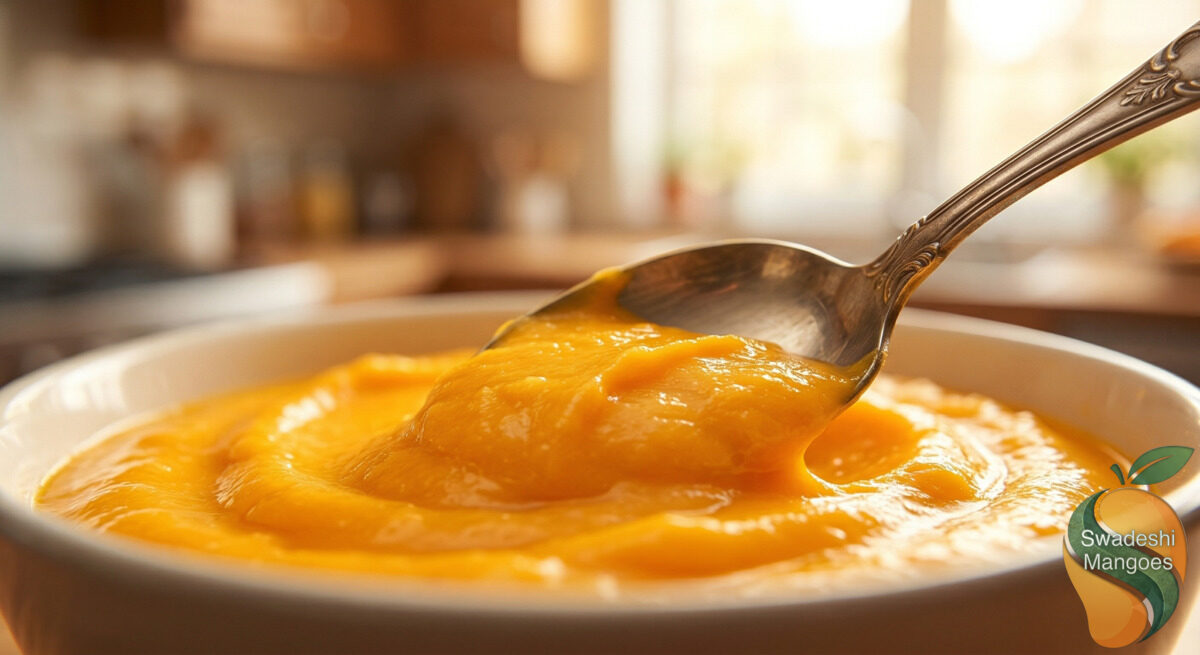
One of the biggest complaints about supermarket mangoes is the stringy fiber that gets stuck in your teeth. This is primarily a Tommy Atkins and Haden problem.
Most premium Indian varieties are completely fiberless:
- Alphonso — Buttery, custard-like texture. You can scoop it with a spoon.
- Banginapalli — Smooth, juicy, sliceable. Perfect for cutting into cubes.
- Kesar — Smooth and pulpy with minimal fiber.
- Chinna Rasalu — Small but incredibly smooth and aromatic.
If you or your kids have avoided mangoes because of the fibrous texture, Indian varieties will change your mind.
Nutrition: Indian Varieties Win on Beta-Carotene
Indian mango cultivars — particularly Alphonso and Kesar — contain dramatically higher levels of beta-carotene (provitamin A) compared to Mexican varieties:
| Variety | Beta-Carotene (mcg/100g) | Origin |
|---|---|---|
| Alphonso | ~2,740 | India (Maharashtra) |
| Kesar | ~2,000–2,500 | India (Gujarat) |
| Generic Mango (USDA) | 640 | US market average |
| Tommy Atkins | ~400–600 | Mexico/Brazil |
| Ataulfo (Honey) | ~600–800 | Mexico |
Beta-carotene converts to Vitamin A in the body and is essential for eye health, immune function, and skin health. A single Alphonso mango can provide close to a full day’s Vitamin A requirement for a child. For a deeper dive into mango nutrition science, see our guide to the health benefits of Indian mangoes.
Source: Vasant P. et al., Journal of Food Science and Technology, 2012; Varakumar et al., Food Chemistry, 2017; USDA FoodData Central.
Why Are Indian Mangoes More Expensive?
The price difference is significant — and it is real. Here is where the cost comes from:
- Air Freight: Indian mangoes are flown 9,000+ miles from India to the US. Mexican mangoes are trucked across the border. Learn more about how Indian mangoes are imported to the US.
- USDA Irradiation: Every Indian mango must undergo irradiation at USDA-approved facilities in India before export. Mexico uses cheaper hot water treatment.
- Limited Season: Indian varieties are available for only 8–12 weeks per year. Mexican mangoes are available nearly year-round.
- Demand vs. Supply: India exports less than 1% of its mango production. The Indian diaspora in the US creates intense demand for limited supply.
- Quality Selection: Export-grade Indian mangoes are the top 10–15% of the harvest. Only the best fruit makes the journey.
Is it worth it? For families who grew up eating Alphonso or Banginapalli, the answer is obvious. For newcomers, one box will tell you why Indian mangoes are called the “King of Fruits.”
Which Indian Mango Should You Try First?
If you are used to supermarket mangoes and want to experience the Indian difference:
- Start with Banginapalli if you want approachable sweetness, large fruit, and a fiberless texture your whole family will love.
- Try Alphonso if you want the ultimate, once-in-a-lifetime mango experience — the world’s most celebrated variety.
- Go with Kesar if you love aromatic fruits and want to make mango lassi, aam ras, or smoothies that taste like nothing you have had before.
- Explore Totapuri if you enjoy cooking — it is ideal for pickles, chutneys, and mango dal.
See our complete varieties page for detailed profiles of every variety we carry.
Frequently Asked Questions
Are Indian mangoes available year-round in the US?
No. Indian mangoes are seasonal, available from approximately mid-April through mid-July. This limited window is part of what makes them special — and it is why demand spikes every spring. Pre-ordering is recommended since popular varieties sell out quickly. Check our 2026 Indian mango season guide for Texas for exact arrival dates and variety schedules.
Why don’t grocery stores carry Indian mangoes?
Some specialty Indian grocery stores do carry them seasonally. However, the irradiation requirement, short shelf life, air freight costs, and limited supply make mass retail distribution challenging. Community-based delivery services like Swadeshi Mangoes can offer better freshness and pricing through group orders.
Are Indian mangoes safe to eat? What about irradiation?
Absolutely. USDA-mandated irradiation is endorsed by the World Health Organization (WHO), FDA, and USDA as safe. It eliminates quarantine pests without leaving any residue or altering nutritional content. Over 60 countries approve irradiation for food safety.
Is the Ataulfo (Honey) mango similar to Indian mangoes?
Ataulfo is the closest supermarket variety to an Indian mango — it is smooth, sweet, and relatively low-fiber. However, it lacks the aromatic intensity and higher beta-carotene content of Indian varieties like Alphonso and Kesar. Think of Ataulfo as a “good everyday mango” and Alphonso as a “special occasion mango.”
Can I buy Indian mangoes in Austin, Dallas, Houston, or San Antonio?
Yes. Swadeshi Mangoes delivers fresh, USDA-approved Indian mangoes across all major Texas metros including Austin, Dallas, Houston, and San Antonio. Visit our order page to browse available varieties.
References
- Litz RE (ed.). Mango: Botany, Production and Uses. CAB International, 2009.
- USDA FoodData Central: “Mangos, raw” (NDB #09176)
- Vasant P, et al. “Carotenoid Content of Alphonso Mango.” Journal of Food Science and Technology, 2012.
- National Mango Board (US): Mango variety profiles and nutrition data
- USDA-APHIS: Import requirements for fresh mangoes from India
- APEDA (Agricultural & Processed Food Products Export Development Authority): India mango export data
Related Reading
Ready to taste the difference?
Order Indian Mangoes in Texas →
Season: April–July • Refer a friend and earn $5 • Explore all varieties