You walked into the Indian grocery store, found the box labeled “Alphonso” or “Kesar,” paid a premium price, brought it home, cut one open — and it tasted… fine. Not bad. But not the mango experience everyone talks about.
Here is why, and what you can do about it.
This is one of the most common conversations we have with new customers. They tell us they have been buying Indian mangoes for years and never understood the hype. Then they try their first box from us and the reaction is always the same: stunned silence, followed by “Where has this been all my life?” The difference is not subtle, and it is not in your head. There are real, specific reasons why grocery store Indian mangoes consistently underdeliver.
The Cold Chain Problem
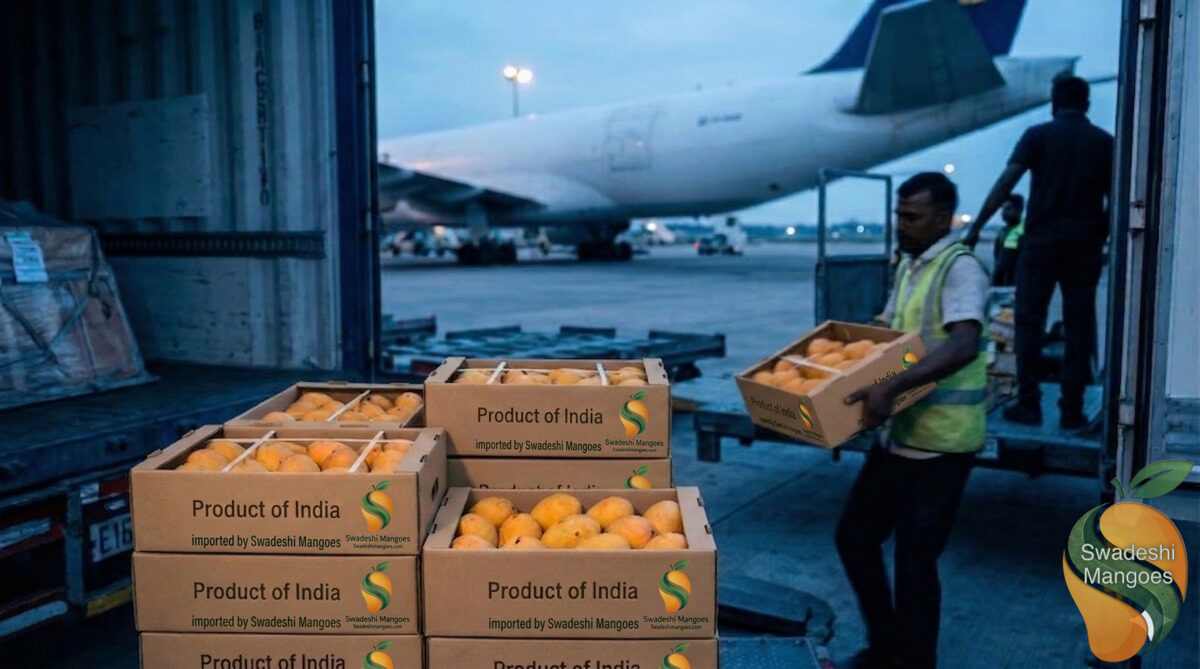
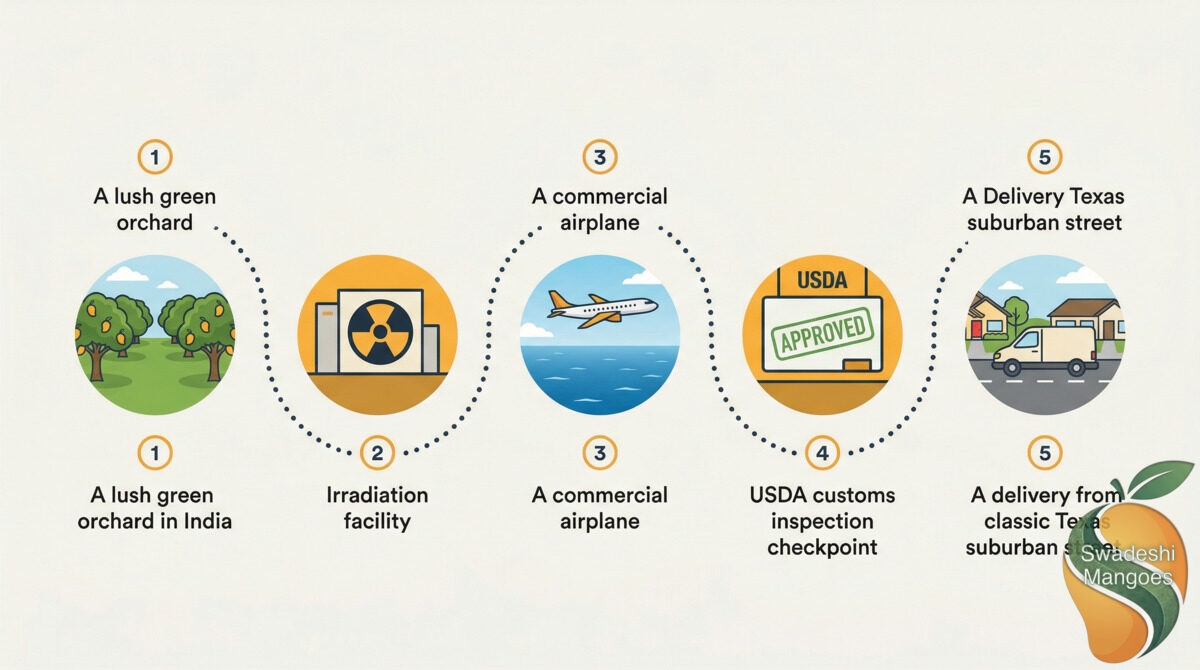
Indian mangoes must be air-shipped to the US — they cannot come by sea because they would rot in transit. The mangoes at your grocery store likely went through this journey:
- Harvested in India
- USDA-required irradiation treatment
- Shipped to a US importer (usually New Jersey or California)
- Stored in a cold warehouse for days or weeks
- Trucked to a regional distributor
- Delivered to your local grocery store
- Sits on the shelf until purchased
By the time you buy it, the mango could be 2-3 weeks post-harvest. Indian mangoes are best consumed within 7-10 days of being picked.
Every additional day in that supply chain is a day the mango is losing flavor. A mango harvested in Ratnagiri, Maharashtra, has to travel over 9,000 miles to reach Texas. In a direct supply chain, that journey takes 4-5 days. In a grocery store supply chain, it takes 2-3 weeks. That extra time is the difference between a good mango and an extraordinary one. Our detailed article on how Indian mangoes reach Texas explains each step of the import process.
The Ripening Was Interrupted
The biggest flavor killer is premature refrigeration. When an unripe mango is put in cold storage (which happens at multiple points in the grocery supply chain), the ripening process stops. Even if you later leave it on the counter, the mango will soften but never develop the full sweetness and aroma it would have with uninterrupted natural ripening.
This is why a mango can feel soft to the touch but taste bland — the texture changed but the sugars never fully developed.
The science behind this is well-documented. Mangoes produce ethylene gas as they ripen, which triggers enzymatic reactions that convert starches to sugars and develop volatile aroma compounds. When you refrigerate an unripe mango below about 55 degrees Fahrenheit, you suppress ethylene production and those processes slow or stop entirely — some cannot be restarted. The mango softens because cell walls continue to break down, but the flavor development has been permanently cut short.
When you buy from Swadeshi, your mangoes arrive slightly firm and you ripen them on your counter over 2-3 days. That uninterrupted process is what produces the aroma that fills your kitchen. Our ripening guide walks you through exactly how to do this for each variety.
The Variety May Not Be What It Says
This is uncomfortable to say but it happens. Not all boxes labeled “Alphonso” at grocery stores contain actual Alphonso mangoes from Ratnagiri. Some are Alphonso-type mangoes from other regions, or even different varieties that look similar.
Authentic Alphonso from Ratnagiri has a very specific flavor profile — saffron notes, zero fiber, buttery texture. If yours tasted like “a decent mango” but nothing special, it may not have been the real thing.
The “Alphonso” label is not a protected designation in the US market. Mangoes of the same cultivar grown in other regions — or sometimes entirely different cultivars — can be labeled and sold as Alphonso. The same applies to Kesar, which authentically comes from Junagadh and Amreli districts in Gujarat. The soil, climate, and growing conditions in these specific regions contribute to the flavor that makes each variety distinctive.
At Swadeshi, we source from verified farms in the correct growing regions. Our Alphonso comes from Ratnagiri, our Kesar from Gujarat, our Banganapalli from Andhra Pradesh, and our Himayath from Telangana.
The Irradiation Factor
All Indian mangoes imported into the United States must undergo irradiation treatment as required by USDA regulations. This is a food safety measure to eliminate fruit flies and other pests. The treatment is safe and does not make the fruit radioactive.
However, irradiation does have a subtle impact on flavor and texture. Research in the Journal of Food Science has shown that it can reduce certain volatile aroma compounds and slightly soften the flesh. All legally imported Indian mangoes are irradiated, whether from a grocery store or from us. The difference is what happens after. In a direct supply chain, the mango has time to continue developing aroma compounds during natural ripening, partially recovering from the impact. In a prolonged grocery store supply chain, the mango never gets that recovery window. Read more about how Indian mangoes reach Texas.
The Price Versus Value Question
Indian mangoes at grocery stores typically cost between $8 and $15 per box. That might seem like a deal compared to specialty importers. But if the mango spent two weeks in a supply chain, was refrigerated multiple times, and may not be the authentic variety on the label, that $10 box is not actually a bargain. You are paying for the idea of an Alphonso mango without getting the Alphonso experience. To understand exactly where your money goes, read our breakdown of why Indian mangoes cost what they cost.
Many of our customers told us they used to buy two or three boxes from the grocery store each season, feeling vaguely disappointed each time. Now they buy from us and the first box delivers what they were chasing all along.
The Swadeshi Difference
We source directly from verified farms and orchards. Our mangoes arrive in Texas within 4-5 days of harvest. There is no warehouse storage, no redistribution chain. They go from Indian farm to Texas pickup within a week.
We also let our customers ripen mangoes at home — you receive them slightly firm and ripen them on your counter over 2-3 days. This uninterrupted natural ripening is what produces the full flavor experience.
We carry seven Indian mango varieties during the season, each sourced from its authentic growing region: Alphonso, Kesar, Banganapalli, Chinna Rasalu, Himayath, Suvarna Rekha, and Totapuri. If you are not sure where to start, Alphonso is the classic choice for first-timers.
How to Test the Difference
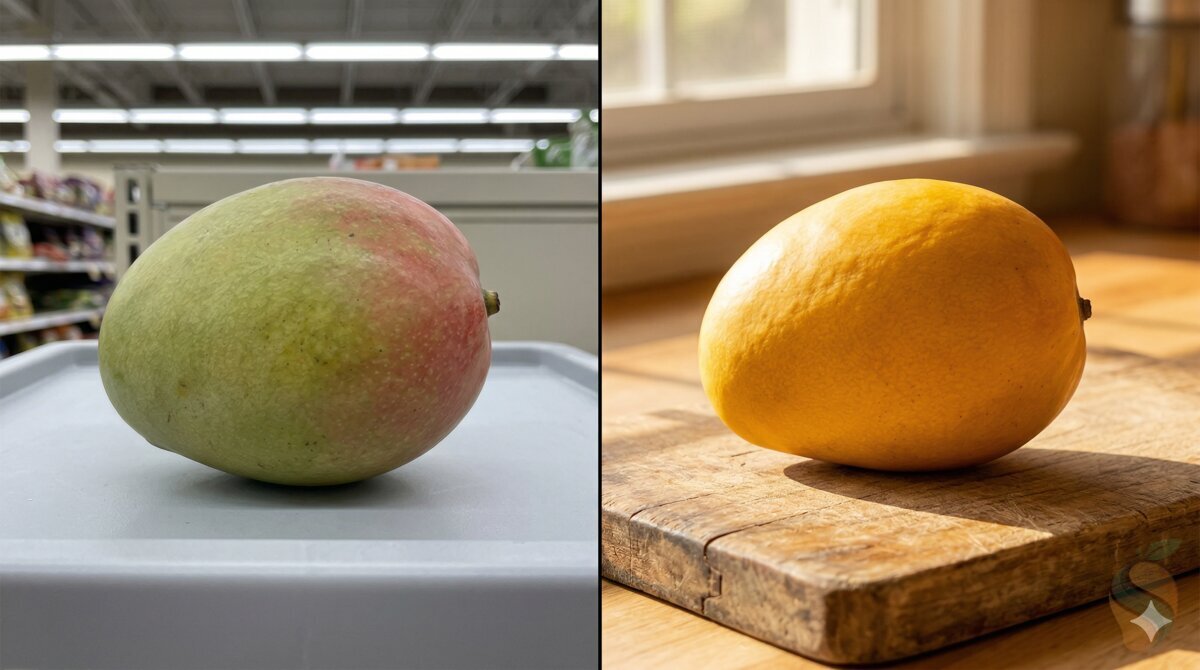
Order one box from us and buy one from the grocery store. Cut them side by side. Compare the color of the pulp, the aroma, the texture, and the sweetness. The difference is not subtle.
We have converted hundreds of families who thought they “knew what Alphonso tasted like” from grocery store boxes. One box from Swadeshi and the reaction is always the same: “This is what everyone was talking about.”
Specifically, you will notice the pulp color is different — direct-import Alphonso has a deep, vibrant saffron-orange, while grocery store versions tend to be paler. The aroma is dramatically different: a properly ripened Alphonso fills the room with fragrance when you cut it open. And the taste has layers — starting sweet, moving to floral, with a clean finish — where the grocery store mango tastes flat and one-dimensional.
We are not saying grocery store mangoes are bad. A mediocre Indian mango is still better than most other fruit. But if you have been wondering why people in India get emotional about mango season, why poets write about Alphonso — the grocery store version does not explain that. The real thing does. If you are new to Indian mangoes, our first-timer’s guide walks you through which variety to start with and what to expect.
Order your first box and taste the difference yourself.
Fresh Indian Mangoes in Texas
Swadeshi Mangoes delivers air-shipped Indian mangoes directly to pickup locations in Austin, Dallas, Houston, and San Antonio — no warehouse storage, no redistribution chain. Our mangoes arrive within 5 days of harvest. Read about how Indian mangoes reach Texas and check our FAQ for answers to common questions.
Frequently Asked Questions
Why do Indian grocery store mangoes taste different from mangoes in India?
Grocery store mangoes go through extended cold storage and multi-step distribution that interrupts natural ripening. The sugars and aroma compounds never fully develop, resulting in bland flavor even when the mango feels soft.
Where can I buy fresh Indian mangoes in Texas?
Swadeshi Mangoes delivers across Austin, Dallas, Houston, and San Antonio with local pickup agents. Mangoes arrive within days of harvest, not weeks. Place your order here.
Are Indian mangoes at grocery stores safe to eat?
Yes, all legally imported Indian mangoes undergo USDA-required irradiation and safety inspection. The issue is not safety — it is freshness and flavor. Grocery store mangoes are safe but often past their peak flavor window by the time you purchase them.