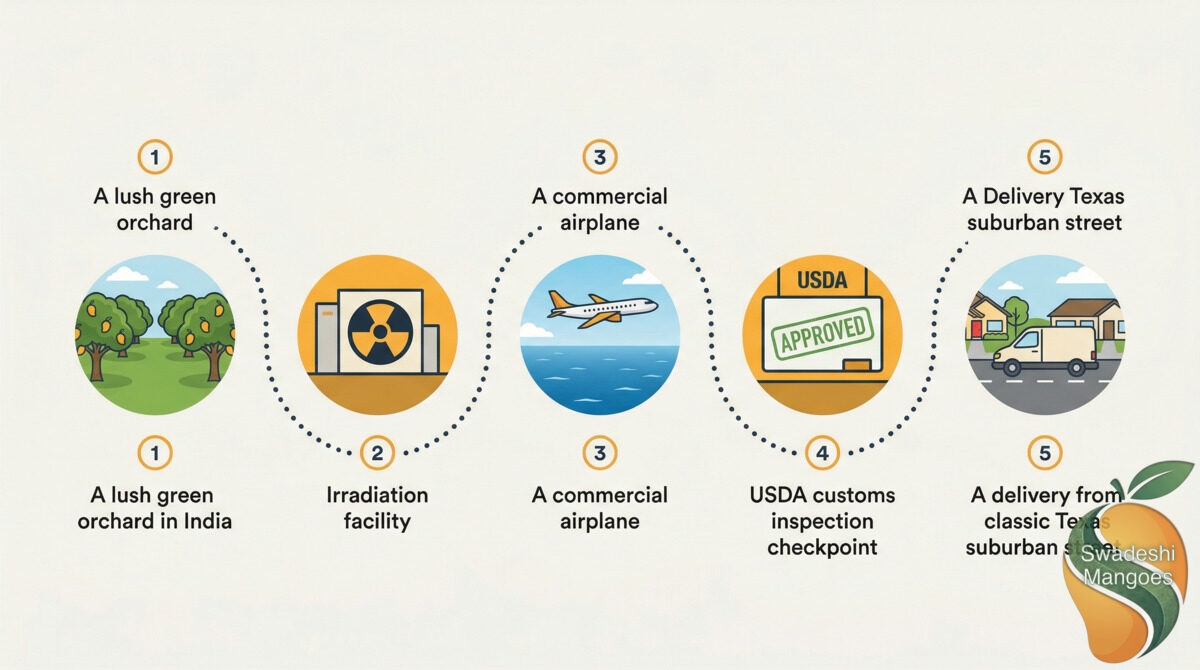
Every box of Indian mangoes that reaches Texas has traveled over 9,000 miles, passed through multiple government inspections, undergone USDA-mandated treatment, and survived international air freight — all within a window of days, not weeks. The process is fascinating, heavily regulated, and designed to guarantee that the fruit you eat is safe, pest-free, and fresh.
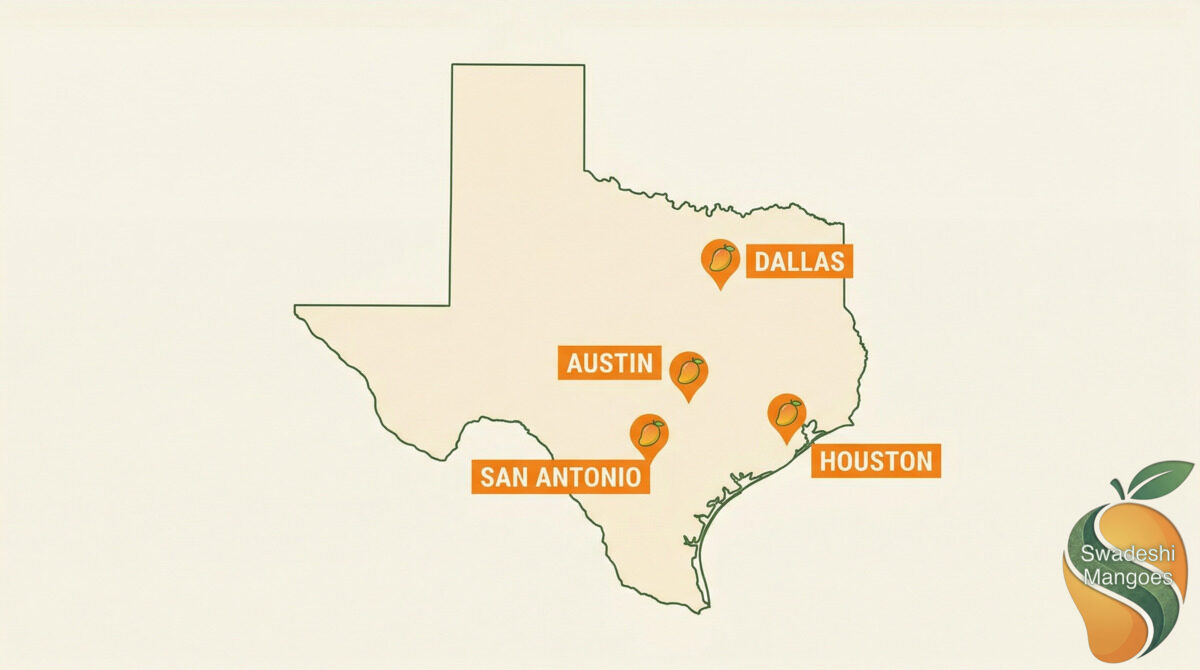
Here is exactly how it works, from orchard to your pickup point in Austin, Dallas, Houston, or San Antonio.
Step 1: Harvest and Selection in India
Indian mangoes destined for the US market are harvested from APEDA-registered orchards (Agricultural and Processed Food Products Export Development Authority). Only the top 10–15% of each harvest qualifies for export.
- Alphonso is sourced primarily from Ratnagiri and Devgad districts in Maharashtra’s Konkan coast.
- Banginapalli comes from the Kurnool and Ulavapadu districts of Andhra Pradesh — the official home of its Geographical Indication (GI) tag (registered 2017).
- Kesar is harvested from the Junagadh and Gir region of Gujarat (GI-tagged since 2011).
Fruit is hand-picked at the mature but unripe stage — this is intentional. Mangoes picked at full maturity but before ripening survive the journey better and ripen uniformly at their destination.
Source: APEDA (apeda.gov.in) exporter guidelines; Geographical Indications Registry, Chennai (ipindia.gov.in/gi).
Step 2: USDA-Mandated Irradiation
This is the step that makes Indian mango imports to the US possible — and the step that generates the most questions.
Why Irradiation?
India is home to fruit fly species (Bactrocera dorsalis and related Tephritidae) that are classified as quarantine pests by USDA-APHIS (Animal and Plant Health Inspection Service). If these pests were introduced to the US, they could devastate American agriculture. Irradiation eliminates this risk.
How It Works
Mangoes are exposed to a controlled dose of gamma radiation at 400 Gray (Gy) at USDA-APHIS approved facilities in India. Key facilities include:
- KRUSHAK (Krushi Utpadan Sanrakshan Kendra) in Lasalgaon, Maharashtra
- BRIT (Board of Radiation and Isotope Technology) facility in Vashi, Navi Mumbai
The process takes only minutes and does not:
- Make the fruit radioactive
- Change the taste or texture
- Significantly alter nutritional content
- Leave any chemical residue
Is It Safe?
Food irradiation is endorsed as safe by:
- World Health Organization (WHO)
- U.S. Food and Drug Administration (FDA)
- USDA
- Centers for Disease Control and Prevention (CDC)
Over 60 countries approve irradiation for various foods. The technology has been studied for over 50 years.
Why Not Hot Water Treatment?
Mexico and several other countries use hot water treatment (VHT) — immersing mangoes in 46.1°C water for 70–90 minutes — as their pest elimination method. This is cheaper than irradiation.
However, USDA-APHIS has not approved VHT for Indian mangoes. One reason: premium varieties like Alphonso have thin, delicate skin that is particularly sensitive to heat damage. India opted for irradiation during the 2004–2007 trade negotiations specifically to protect Alphonso quality.
This is also why Indian mangoes cost more than Mexican mangoes — irradiation infrastructure is expensive, and only a few approved facilities exist in India, creating a capacity bottleneck during peak season.
Source: USDA-APHIS Federal Import Quarantine Orders; 7 CFR 319.56; APHIS Treatment Manual T105; FAO/IAEA reports on food irradiation.
Step 3: Phytosanitary Certification
Before leaving India, each shipment must receive a phytosanitary certificate from India’s Directorate of Plant Protection, Quarantine & Storage (DPPQS) under the Ministry of Agriculture. This certifies that:
- The mangoes come from registered orchards and pack houses
- Irradiation was performed at a USDA-approved facility
- The fruit is free of soil, leaves, stems, and visible pest damage
- All APHIS protocols have been followed
Irradiated boxes carry the Radura symbol — the international food irradiation logo — along with the treatment facility details.
Step 4: Air Freight to the United States
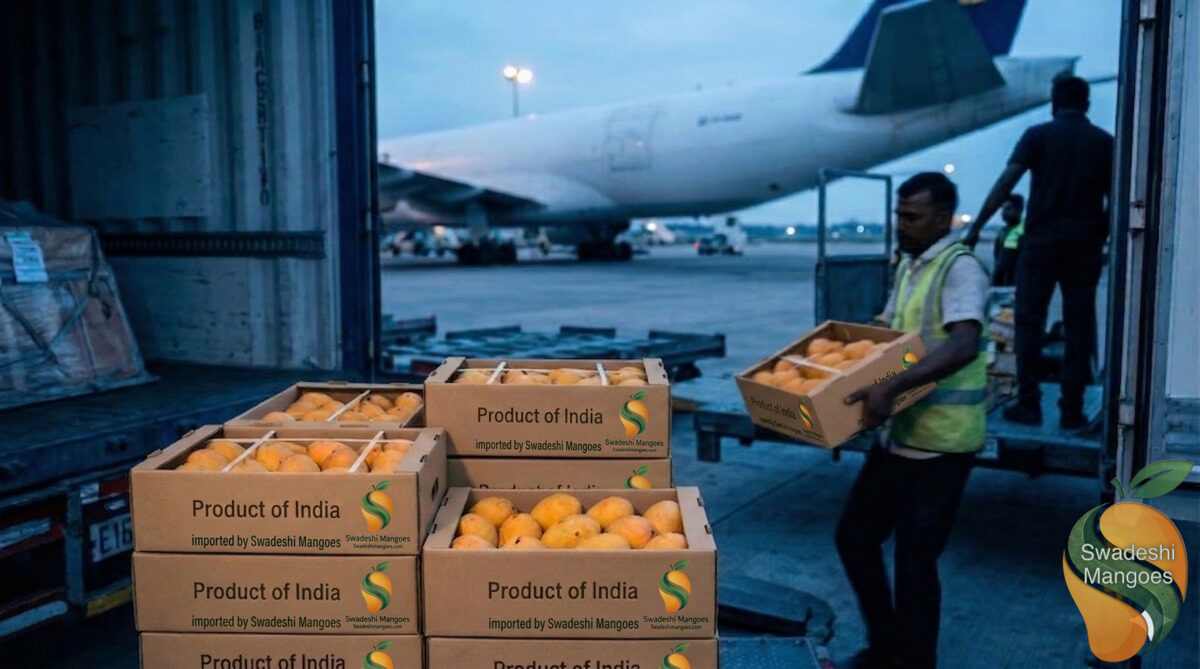
Indian mangoes are air-freighted — not shipped by sea. Sea freight takes 3–4 weeks and would destroy the fruit. Air freight gets mangoes from Mumbai or Hyderabad to US airports in 18–24 hours.
Common arrival points include:
- John F. Kennedy International Airport (JFK), New York
- Newark Liberty International Airport (EWR)
- O’Hare International Airport (ORD), Chicago
The air freight cost is a significant portion of the final price — this is why Indian mangoes cost more than Mexican mangoes, which are trucked across the border.
Step 5: USDA Port-of-Entry Inspection
Upon arrival in the US, each shipment undergoes inspection by USDA-APHIS Plant Protection and Quarantine (PPQ) officers at the port of entry. They verify:
- Phytosanitary certificate is valid
- Irradiation documentation matches the shipment
- Radura symbol and treatment facility details are on the packaging
- Random sample inspection for pest evidence
Only after clearing this inspection are the mangoes released for domestic distribution.
Step 6: Distribution to Texas
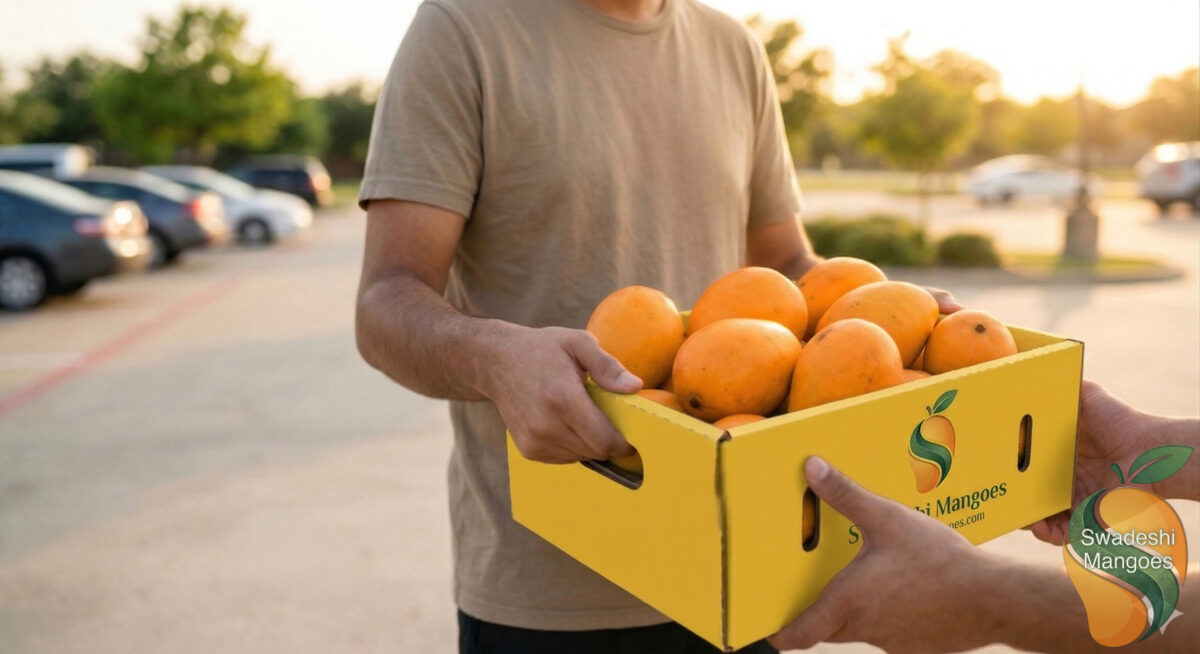
Once cleared by USDA at the port of entry, mangoes are distributed to regional hubs across the country. For Texas customers ordering through Swadeshi Mangoes, the fruit arrives at our hub in Round Rock, Texas and is immediately organized by variety and order.
From there, boxes go to our network of 30+ community pickup agents across Austin, Dallas-Fort Worth, Houston, and San Antonio. Customers receive a WhatsApp notification when their order is ready, and pick up directly from their local agent — often within hours of the fruit arriving at our hub.
This final-mile approach is critical: Indian mangoes are not designed for extended shelf life. The faster they get from our hub to your kitchen, the better they taste.
India’s Mango Exports to the US: By the Numbers
| Metric | Data |
|---|---|
| India’s total mango production | ~20–21 million metric tons/year (~45% of global production) |
| Percentage exported as fresh fruit | Less than 1% |
| Fresh mango exports to US (2024 season) | Estimated 2,500–3,000 metric tons |
| Year-over-year export growth | ~10–20% |
| Year Indian mangoes first entered the US | 2007 |
| Top exporting states to US | Maharashtra (#1), Uttar Pradesh (#2), Andhra Pradesh (#3), Gujarat (#4) |
| APEDA-registered mango exporters | 200+ |
| GI-tagged mango varieties | Banginapalli (2017), Gir Kesar (2011), Dasheri (2009), Jardalu (2018), and others |
Sources: APEDA (apeda.gov.in) export statistics; USDA FAS GATS data; National Horticulture Board of India; FAO production statistics.
GI-Tagged Varieties: Guaranteed Authenticity
A Geographical Indication (GI) tag works like an appellation for wine — it certifies that a product comes from a specific region with qualities unique to that place. Several Indian mango varieties carry GI tags:
| Variety | Region | GI Year |
|---|---|---|
| Banginapalli | Kurnool, Andhra Pradesh | 2017 |
| Gir Kesar | Junagadh/Gir, Gujarat | 2011 |
| Dasheri | Lucknow, Uttar Pradesh | 2009 |
| Jardalu | Bhagalpur, Bihar | 2018 |
| Khirsapati (Himsagar) | Murshidabad, West Bengal | 2017 |
| Laxman Bhog | Malda, West Bengal | 2017 |
When we say our Banginapalli comes from Kurnool or our Alphonso comes from Ratnagiri, these are not just marketing claims — they are verifiable origins tied to India’s GI registry.
Source: Geographical Indications Registry, Chennai (ipindia.gov.in/gi).
Frequently Asked Questions
Does irradiation make mangoes radioactive?
No. Irradiation exposes food to controlled energy — similar to how an X-ray passes through your body without making you radioactive. The mangoes do not retain any radiation. This is confirmed by the WHO, FDA, USDA, and CDC.
Does irradiation affect the taste of Indian mangoes?
No significant impact on taste has been documented. The irradiation dose used for Indian mangoes (400 Gy) is relatively low. Some studies report slight softening of the fruit, but flavor, aroma, and nutritional content remain intact.
Why were Indian mangoes banned in the US before 2007?
They were not specifically “banned” — but the US did not have an approved phytosanitary treatment protocol for Indian mangoes until 2007. The concern was fruit fly contamination. Once irradiation was approved as a treatment method, the trade opened. It took years of bilateral negotiations between USDA-APHIS and India’s DPPQS to establish the protocols.
Why are Indian mangoes more expensive than Mexican mangoes?
Three main factors: (1) Air freight from India vs. truck transport from Mexico, (2) Irradiation costs vs. cheaper hot water treatment, and (3) Limited seasonal window (8–12 weeks vs. year-round). The total landed cost per box is significantly higher than domestic alternatives.
How long do Indian mangoes last after I pick them up?
Unripe mangoes will ripen in 2–4 days at room temperature. Once ripe, consume within 2–3 days or refrigerate to extend life by another 2–3 days. For storage tips, see our Mango Care Guide.
References
- USDA-APHIS: Importation of Fresh Mangoes from India — Irradiation Requirements
- 7 CFR 319.56 — USDA Fruits and Vegetables Import Regulations
- APHIS Treatment Manual — Treatment Schedule T105 (Irradiation)
- APEDA (Agricultural & Processed Food Products Export Development Authority): apeda.gov.in
- FAO/IAEA: Reports on food irradiation safety and protocols
- WHO: Food Irradiation Safety fact sheet
- Geographical Indications Registry, Chennai: GI-tagged agricultural products
- National Horticulture Board of India: Production and export statistics
- USDA Foreign Agricultural Service (FAS): Global Agricultural Trade System (GATS) data
Related Reading
9,000 miles of care — from Indian orchards to Texas families.
Limited supply • First come, first served • Explore all varieties