Tag: lucknow

  • Dasheri Mango: Why This North Indian Classic Deserves More Attention

    Dasheri Mango: Why This North Indian Classic Deserves More Attention

    Dasheri is an elongated, medium-sized North Indian mango originally from the village of Dasheri near Lucknow, Uttar Pradesh, famous for its fiberless pulp, intensely floral aroma, and balanced sweet-tart flavor. The original Dasheri tree, still standing in Malihabad, is over 200 years old and is the mother tree of every Dasheri mango grown today. Each fruit weighs 200-350 grams with Brix readings of 19-21 at peak ripeness. At Swadeshi Mangoes we ship Dasheri from Malihabad orchards to Texas customers each June and July, and it is the single most popular variety among our customers with roots in Uttar Pradesh, Bihar, and Delhi.

    The Mother Tree of Malihabad

    Every Dasheri mango grown in the world today descends from a single tree planted sometime in the mid-18th century in the garden of the Nawab of Lucknow. That original tree still stands in the village of Dasheri, near Kakori and Malihabad, about 25 kilometers northwest of Lucknow. It is roughly 200 years old by conservative estimates, 250 or more by some accounts, and it still produces fruit annually.

    The variety spread from that single specimen through grafting. Every Dasheri orchard in India, from Malihabad to Saharanpur to the Tarai region of Uttarakhand, traces back to cuttings taken from the mother tree. This is not unusual in commercial mango cultivation. Most named varieties are vegetatively propagated, but Dasheri is one of the few where the original specimen is still alive, documented, and in Malihabad’s case, visited by agricultural researchers from ICAR and USDA-ARS.

    Malihabad: The Mango Capital of North India

    Malihabad is a small town in Lucknow district that grows approximately 30,000 hectares of mangoes, roughly 70% of which is Dasheri. The region has a geographical indication (GI) tag from the Government of India, making Malihabad Dasheri a protected designation similar to Champagne or Parmigiano-Reggiano in Europe. APEDA’s export documentation requires that any mango sold internationally under the Malihabad Dasheri label must come from this specific geographic area.

    What Makes Dasheri Different

    Dasheri has three characteristics that distinguish it from South Indian varieties like Alphonso, Banginapalli, or Himayath. First, the shape is distinctly elongated and oblong, with a pointed tip. It does not look like a typical round mango. Second, the aroma is floral and slightly perfumed, with notes of rose, jasmine, and a subtle honey undertone, different from the resinous-floral Alphonso profile. Third, the flavor balances sweetness with a mild tartness, making it less cloying than some South Indian varieties over a large serving.

    The pulp is almost completely fiberless, with a creamy, medium-firm texture. Brix at peak ripeness is 19-21 degrees, slightly lower than the top-sweet varieties but paired with a small amount of citric acid that keeps the flavor balanced. This balance is why Dasheri works so well in both fresh eating and traditional North Indian preparations like aam panna, mango kulfi, and aamras.

    Why North Indians Prefer It

    Taste preferences are regional and shaped by what grew locally during childhood. For customers from Uttar Pradesh, Bihar, Delhi, Haryana, and parts of Madhya Pradesh, Dasheri is the mango of summer memory. South Indian varieties like Alphonso or Banginapalli, while objectively excellent, do not carry the same nostalgic weight. One of our Dallas customers, a surgeon who grew up in Lucknow, put it simply: "Alphonso is the famous one, but Dasheri is home."

    Nutrition and Health Properties

    Dasheri has been studied extensively in Indian nutritional research, partly because of its commercial importance in the North Indian market. A 2021 study published in the Journal of Food Science and Technology measured polyphenol content across 14 Indian cultivars and found Dasheri had the highest total phenolic content of any cultivar tested, at approximately 182 mg GAE per 100 g of pulp.

    NutrientPer 250g fruit% Daily Value
    Calories138 kcal6.9%
    Total sugars29 g
    Vitamin C80 mg89%
    Vitamin A (RAE)102 mcg11%
    Fiber3.5 g13%
    Polyphenols182 mg GAEHighest among Indian cultivars
    MangiferinHighStudied for anti-inflammatory effects

    Mangiferin, the signature polyphenol in mango, has been the subject of multiple PubMed-indexed studies for its anti-inflammatory, antioxidant, and metabolic effects. A 2022 review paper noted that Dasheri and Langra, both North Indian cultivars, consistently rank among the highest-mangiferin mangoes globally. According to a 2023 USDA FoodData Central entry for raw mango, a 250-gram serving of Dasheri provides nearly 90% of the daily recommended vitamin C intake for an adult.

    How to Identify Authentic Malihabad Dasheri

    The GI protection helps, but visual identification is still important for Texas customers. Authentic Malihabad Dasheri has these markers:

    Size, Shape, and Color

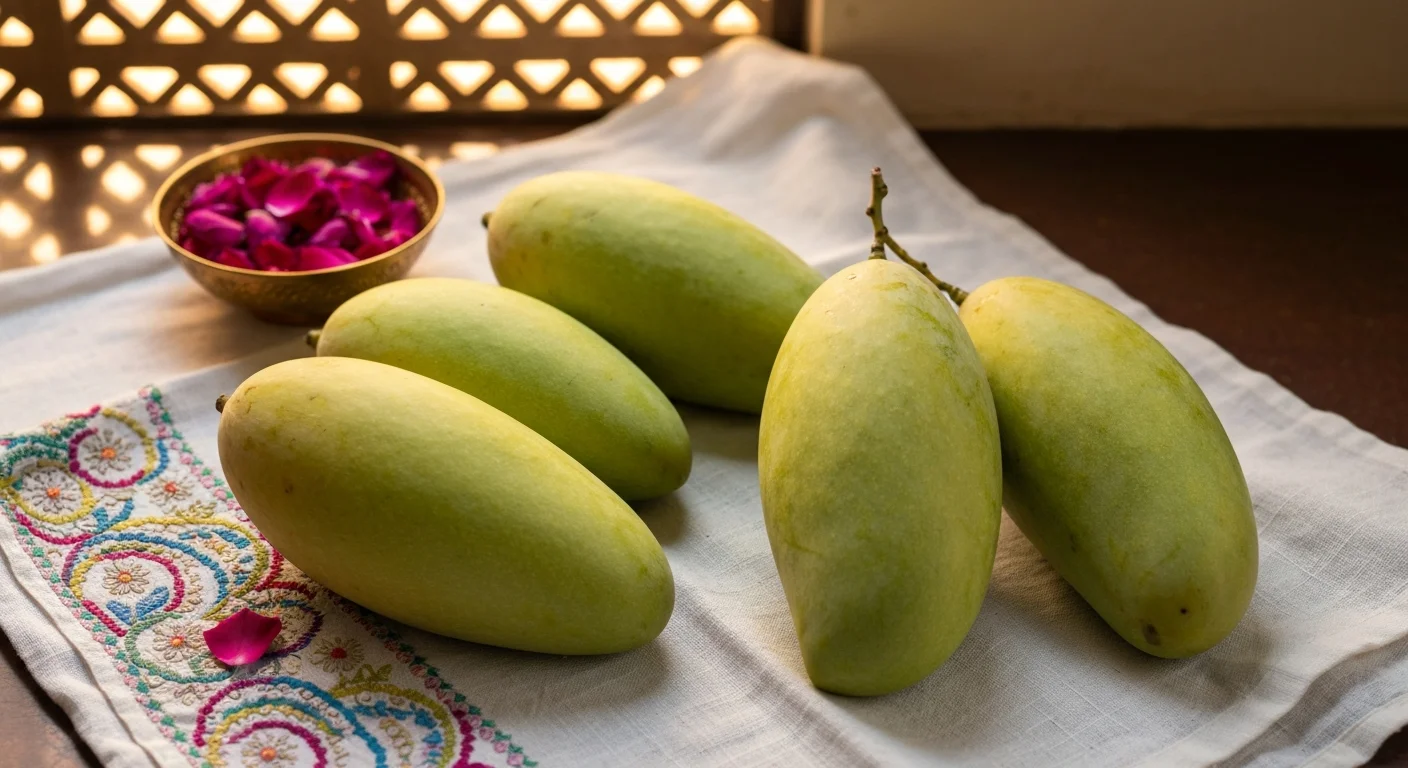
    The fruit is elongated, typically 10-12 cm long and 6-8 cm wide at the shoulder, with a distinct pointed tip. Skin color is pale green when unripe, shifting to a soft yellow-gold at peak ripeness, usually with small dark lenticel spots across the surface. Unlike Suvarna Rekha, Dasheri does not develop a red blush. The stem end is relatively flat, not deeply inset.

    How to Ripen Dasheri in Texas

    Dasheri ripens at a moderate pace. We ship from Malihabad at 70-75% maturity, and in a Texas kitchen at 78-82 F, expect 5-7 days from arrival to peak ripeness. The skin color change is subtle, moving from light green to yellow-green to golden yellow. The more reliable indicators are aroma and give.

    A ripe Dasheri smells strongly floral at the stem end, with rose and jasmine notes. The fruit gives moderately under thumb pressure along the entire length, not just at the tip. Because Dasheri has a slightly thicker skin than Alphonso or Chinna Rasalu, the fruit holds its ripeness window for 4-5 days, longer than many premium varieties. Full details in our mango care guide.

    Traditional North Indian Uses

    Dasheri’s balanced sweet-tart profile makes it the preferred variety for three classic North Indian preparations.

    First, aam panna, the cooling summer drink made from underripe mangoes. Green Dasheri, harvested before full ripening, is boiled, pulped, and blended with roasted cumin, black salt, and mint. The result is a tart, slightly savory drink that was historically used to prevent heat stroke in the harsh Lucknow summer. Our Texas customers who have never tried aam panna often request a few underripe Dasheri specifically for this purpose.

    Second, aamras. Ripe Dasheri is pureed with a pinch of saffron and cardamom, served chilled alongside hot puris. The floral aroma of Dasheri shines in this simple preparation in a way that no other variety quite matches. Third, Lucknowi mango kulfi, where Dasheri pulp is reduced with milk, sugar, and a hint of kewra (screw pine) essence, then frozen in traditional conical molds.

    Texas Home Cooking

    One Houston customer, a restaurant owner originally from Kanpur, uses Dasheri exclusively in her kitchen’s seasonal mango menu. She told us the variety holds its flavor through cooking better than Alphonso, which can turn slightly flat when heated. Her mango lassi, made with Dasheri and full-fat yogurt, is currently on the menu at two Houston locations during June and July.

    Dasheri vs. Other Indian Mangoes

    VarietyRegionShapeFlavor ProfileBest Use
    DasheriUP (Malihabad)Elongated, pointed tipFloral, sweet-tartFresh, aamras, kulfi
    AlphonsoMaharashtra (Ratnagiri)Round-ovalIntensely floral, sweetFresh, desserts
    KesarGujarat (Junagadh)RoundBalanced, aromaticLassi, smoothies
    BanginapalliAndhraOval, largeClean, medium-sweetSlicing, salads
    HimayathTelangana (Hyderabad)Elongated, largeComplex, resinousFresh, gifting

    Frequently Asked Questions

    Why is Dasheri called the North Indian Alphonso?

    The nickname comes from Dasheri’s premium status in North India, comparable to Alphonso’s status in Maharashtra and the west coast. Both are fiberless, aromatic, and command premium prices. However, their flavor profiles differ: Alphonso leans intensely floral with high sweetness, while Dasheri balances floral notes with a mild tartness and a more elongated shape.

    Is Malihabad Dasheri GI protected?

    Yes. Malihabad Dasheri received Geographical Indication (GI) protection from the Government of India in 2009, meaning only Dasheri mangoes grown in the designated Malihabad region can legally be sold under that label. APEDA enforces this for international exports. At Swadeshi Mangoes we source directly from Malihabad orchards with documented provenance.

    When is Dasheri available in Texas?

    Dasheri harvest in Malihabad runs from mid-June through late July, and Texas shipments arrive weekly during this window. Pre-orders open in early May at Swadeshi Mangoes, and we deliver across Austin, Dallas, Houston, and San Antonio through our pickup agent network. Late-season availability can extend into early August depending on monsoon timing.

    How does Dasheri differ from Langra?

    Langra is another North Indian mango, often grown in the same region as Dasheri, and the two are frequently compared. Langra retains a green-tinged skin even when ripe, has a slightly more tart profile, and is smaller on average. Dasheri is sweeter and more floral, with a cleaner yellow-gold skin at ripeness. Most home cooks prefer Langra for pickles and Dasheri for fresh eating.

    Can I order Dasheri for pickup in Dallas or Austin?

    Yes. Swadeshi Mangoes operates 30-plus pickup agents across all four major Texas metros. Place your order on our order form, select your nearest agent location, and we will notify you by text or email when your box is ready for pickup. Home delivery is also available in select Texas zip codes.

    Reserve Your Dasheri from the Mother Tree’s Lineage

    Dasheri connects Texas households to a lineage that stretches back to an 18th-century tree in a Lucknow garden. For customers with North Indian roots, it is often the first variety they request. For customers who have only tasted South Indian mangoes, it offers a completely different flavor vocabulary. Head to our order form to reserve your box, browse all nine Indian mango varieties we carry, or read more variety guides on the Swadeshi Mangoes blog. For storage and ripening advice see our mango care guide.

    Additional resources: APEDA Malihabad Dasheri GI documentation, National Mango Board variety library, and PubMed studies on mangiferin and Indian mango polyphenols.
  • Indian Mango Season 2026: Complete Guide for Texas Families

    Indian Mango Season 2026: Complete Guide for Texas Families

    Indian mango season 2026 in Texas runs from late April through mid-July, with Banginapalli arriving first and Alphonso peaking in May-June.

    Indian Mango Season 2026: What Texas Families Need to Know

    Every spring, a wave of anticipation sweeps through South Asian communities across Texas. Indian mango season 2026 is almost here, and if you’ve been craving the authentic taste of Alphonso, Banginapalli, or Kesar mangoes, this is your complete guide to ordering, timing, and enjoying the best mangoes in the Lone Star State.

    At Swadeshi Mangoes, we bring premium, orchard-fresh Indian mangoes directly to families in the Dallas-Fort Worth, Houston, Austin, and San Antonio areas. Here’s everything you need to know about this season.

    When Do Indian Mangoes Arrive in Texas?

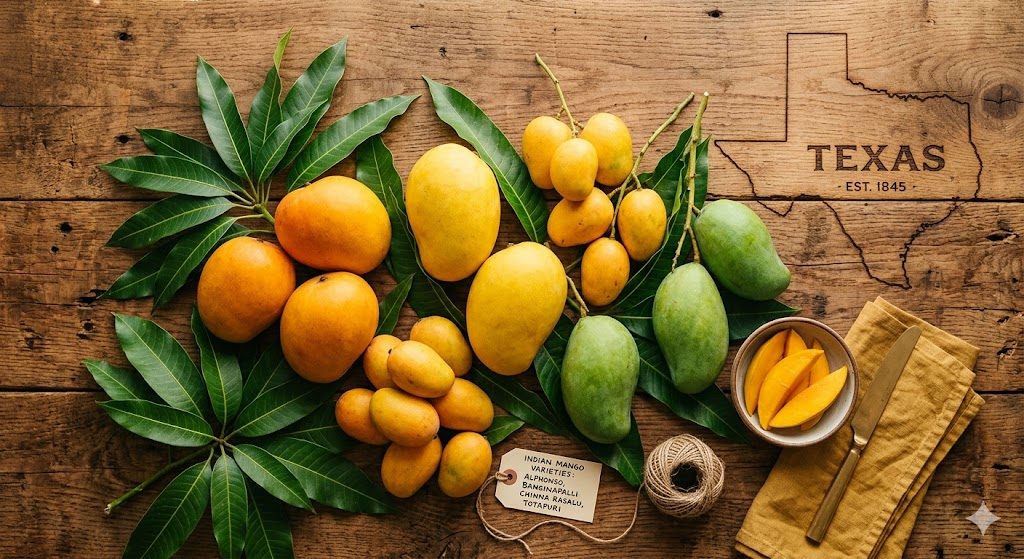
    Indian mango season typically runs from late April through July, depending on the variety. Each variety has its own harvest window, and shipments arrive in waves throughout the season. Here’s the approximate timeline for 2026:

    Early Season (Late April – May)

    • Banginapalli – One of the first to arrive. Large, golden-yellow mangoes with a mild, sweet flavor and virtually no fiber. A family favorite.
    • Totapuri – Arrives early with its distinctive elongated shape. Tangy-sweet flavor, perfect for smoothies, chutneys, and dal.
    • Suvarna Rekha – A hidden gem with rich sweetness and beautiful golden skin. Limited availability makes it a must-try.

    Mid Season (May – June)

    • Alphonso – The legendary “King of Mangoes.” Creamy, intensely aromatic, and unmistakable in flavor. This is the one most people dream about all year.
    • Kesar – Often called the “Queen of Mangoes.” Saffron-colored pulp with a fragrant, honeyed sweetness that’s hard to forget.
    • Himayath – A large, juicy mango prized in Hyderabadi households. Sweet with a subtle tang and smooth, fiber-free pulp.

    Late Season (June – July)

    • Chinna Rasalu – Small but mighty. This Andhra favorite is incredibly sweet and aromatic, with a devoted following among mango connoisseurs.
    • Mallika – A hybrid variety that combines the best traits of Neelum and Dasheri. Fiberless, extremely sweet, and wonderfully fragrant, Mallika arrives in the later waves and is gaining a strong following among Texas families.
    • Dasheri – A North Indian classic from Lucknow with a thin skin and intensely sweet, aromatic pulp. Dasheri is one of the most beloved varieties in Uttar Pradesh and a treat for anyone who grew up with it.

    Availability depends on harvest conditions in India and USDA APHIS import schedules. We recommend placing your orders early since popular varieties like Alphonso and Kesar sell out fast.

    Seasonal Availability at a Glance

    This table gives you a quick reference for all nine varieties available through Swadeshi Mangoes in 2026. Use it to plan your orders and decide which varieties to try first. For detailed profiles, visit our varieties page.

    VarietyArrival WindowSweetnessBest ForPrice Range
    AlphonsoMid May – JuneVery HighEating fresh, desserts, milkshakes$$$
    KesarMay – JuneHighEating fresh, aamras, lassi$$-$$$
    BanginapalliLate April – MayMedium-HighEating fresh, slicing for kids, sharing$$
    Chinna RasaluJune – JulyVery HighEating fresh, traditional enjoyment$$-$$$
    HimayathMay – JuneHighEating fresh, juicing, family servings$$
    Suvarna RekhaLate April – MayHighEating fresh, gifting$$
    MallikaJune – JulyVery HighEating fresh, pulp, smoothies$$
    DasheriJune – JulyHighEating fresh, sucking the pulp$$
    TotapuriLate April – MayMedium (tangy-sweet)Chutneys, pickles, dal, smoothies$

    Prices vary by season and shipment. Check the order form for current pricing when each variety becomes available.

    How Indian Mangoes Are Imported to Texas

    Indian mangoes sold in the United States go through a regulated import process overseen by USDA APHIS (Animal and Plant Health Inspection Service). Every box is irradiated at approved facilities in India before being air-shipped. This treatment eliminates potential pests without affecting the mango’s flavor, texture, or nutritional value.

    The National Mango Board works alongside importers and growers to ensure quality standards. If you’re curious about the full journey from orchard to your doorstep, read our detailed breakdown: How Indian Mangoes Are Imported to the US.

    This regulated process is why Indian mangoes in Texas taste noticeably different from the generic mangoes you find at grocery stores. You’re getting orchard-selected fruit, not commercial commodity grade.

    How to Order Indian Mangoes in Texas

    Ordering from Swadeshi Mangoes is simple. Visit our online order form to browse available varieties and select your preferred pickup location. Here’s how it works:

    1. Browse varieties – Check our varieties page to learn about each mango’s flavor profile, size, and best uses. Our Alphonso vs Banginapalli vs Kesar comparison is a great starting point if you’re deciding between the most popular options.
    2. Place your order – Select your varieties and quantities through our order form. You can mix and match boxes.
    3. Choose a pickup location – We operate convenient pickup points across major Texas metro areas.
    4. Get notified – When your mangoes arrive, we’ll notify you with pickup details via WhatsApp and email.
    5. Pick up and enjoy – Collect your mangoes at the scheduled time. It’s that easy.

    What to Expect at Pickup

    If this is your first time picking up Indian mangoes through a community group order, here’s what the experience looks like. Our pickup locations are staffed by local community agents who know the product and can answer your questions on the spot.

    When you arrive, you’ll check in with your name or order number. Your boxes will be pre-labeled and ready. Each box is packed in India and sealed for the journey, so you’ll receive them in their original packaging. The agent will confirm your order, hand over your boxes, and you’re done — the whole process usually takes under five minutes.

    A few things to keep in mind at pickup:

    • Bring a bag or crate if you ordered multiple boxes. Mango boxes are sturdy but easier to carry in a larger bag.
    • Check your box count before leaving. Confirm you have the right number of boxes and the correct varieties.
    • Ask about ripeness. Your pickup agent can tell you how ripe the batch is and whether you should expect to wait a day or two before eating.
    • Don’t worry about bruising. Minor surface marks from transit are normal for air-shipped mangoes and do not affect the fruit inside.

    For more answers about the pickup process, see our FAQ page.

    How to Ripen Your Mangoes After Pickup

    Indian mangoes are shipped slightly firm to survive the long air journey from India. This is actually a good thing — it means you have control over the ripening process at home.

    Here’s a simple approach that works for all varieties:

    1. Leave them at room temperature. Spread the mangoes out on a countertop or table. Do not stack them on top of each other. Most varieties will ripen in 2-4 days depending on how firm they were at pickup.
    2. Check daily. Gently press the mango near the stem. When it gives slightly and the aroma becomes fragrant, it’s ready. Alphonso and Kesar will develop a deeper golden color as they ripen.
    3. Speed it up. Want them faster? Place mangoes in a paper bag with a banana or apple. The ethylene gas from the other fruit accelerates ripening. Check every 12 hours.
    4. Slow it down. If some mangoes are ripening faster than you can eat them, move the ripe ones to the refrigerator. They’ll hold for another 2-3 days once chilled.

    Never refrigerate unripe mangoes. Cold temperatures halt the ripening process and can result in a chalky, flavorless fruit that never reaches its potential.

    For the full guide with variety-specific tips, read How to Store and Ripen Indian Mangoes and visit our mango care page.

    Pricing and Box Sizes for 2026

    Indian mango pricing depends on the variety, the harvest yield in India that year, and international shipping costs. Here’s a general guide to help you plan your budget:

    • Standard box: Most varieties come in boxes of approximately 6 to 12 mangoes, depending on fruit size. Banginapalli boxes tend to have fewer pieces because each fruit is larger, while Chinna Rasalu boxes contain more pieces due to their smaller size.
    • Alphonso is typically the most expensive variety due to high global demand and limited export quantities. Expect to pay a premium compared to Banginapalli or Totapuri.
    • Totapuri is the most affordable option and a great entry point if you want to try Indian mangoes without a big commitment.
    • Multi-box discounts may be available depending on the season. Check the order form for the latest pricing as each shipment arrives.

    We keep pricing transparent and community-friendly. There are no hidden fees, and what you see on the order form is what you pay. For families that order multiple varieties across the season, the per-box cost works out to be significantly less than buying Indian mangoes from specialty grocery stores — and the quality is incomparably better.

    Health Benefits of Indian Mangoes

    Beyond their incredible taste, Indian mangoes are packed with nutrition. They’re rich in Vitamin A, Vitamin C, and dietary fiber. The deep orange pulp of varieties like Alphonso and Kesar contains high levels of beta-carotene, a powerful antioxidant.

    Mangoes also provide potassium, folate, and Vitamin B6. For families with kids, they’re a natural way to get children excited about eating fruit — no convincing needed when the fruit tastes this good.

    Read our detailed article on the health benefits of Indian mangoes for a full nutritional breakdown by variety.

    What to Expect When Your Mangoes Arrive

    Indian mangoes are shipped by air from India after undergoing USDA-required irradiation treatment, which ensures they’re safe for import without affecting taste or quality. When you pick up your box, the mangoes may still be slightly firm. This is normal and actually ideal.

    Don’t refrigerate them right away. Most Indian mango varieties need 2-4 days at room temperature to ripen to perfection. For detailed ripening and storage instructions, visit our mango care guide. Proper handling makes a huge difference in flavor.

    Why Choose Swadeshi Mangoes?

    We’re not a faceless import operation. Swadeshi Mangoes is a community-driven service built by and for Indian families in Texas. Here’s what sets us apart:

    • Direct sourcing – We work with trusted orchards in India to bring you the freshest, highest-grade mangoes.
    • Transparent process – You know exactly what varieties are available, when they’re arriving, and where to pick them up.
    • Community pricing – Group ordering keeps costs reasonable for everyone.
    • Local pickup network – Convenient locations across DFW, Houston, Austin, and San Antonio staffed by community agents.

    Want to help your community get access to great mangoes? Learn about our agent program and bring Swadeshi Mangoes to your neighborhood.

    Tips for First-Time Buyers

    If this is your first time ordering Indian mangoes in the US, here are a few things to keep in mind:

    • Start with Banginapalli or Kesar if you want crowd-pleasing sweetness with minimal fiber.
    • Order early in the season – supply is limited and the best varieties go fast.
    • Buy a mix – trying 2-3 varieties lets you discover your family’s favorites. Our comparison guide can help you choose.
    • Read our FAQ page for answers to common questions about ordering, shipping, and quality.
    • Tell your friends – many families discover Indian mangoes through word of mouth. If you know someone who’d love these, point them to our blog for more information.

    Frequently Asked Questions

    When does Indian mango season start in Texas 2026?

    Indian mango season 2026 in Texas begins in late April when the first Banginapalli and Totapuri shipments arrive. The exact date depends on harvest timing in India and USDA import clearance. Early-season varieties typically land in the last week of April, with mid-season favorites like Alphonso following in May.

    How long does Indian mango season last?

    The full Indian mango season in Texas spans roughly 10 to 12 weeks, from late April through mid-July. However, individual varieties are only available for shorter windows within that range. Alphonso typically ships for about four to five weeks, while late varieties like Chinna Rasalu extend the season into July.

    Can I get Alphonso mangoes in Texas?

    Yes, Alphonso mangoes are available in Texas through community group orders like Swadeshi Mangoes. Alphonso typically arrives in mid-May and is available through June, though supply is limited and boxes sell out quickly. Visit our Alphonso page for variety details and place your order early through the order form.

    How much do Indian mangoes cost in Texas?

    Indian mango prices in Texas vary by variety and season. Alphonso is the most premium, while Totapuri is the most budget-friendly. Community group ordering through Swadeshi Mangoes keeps costs lower than specialty grocery stores. Exact pricing is posted on our order form as each shipment becomes available.

    Where to pick up Indian mangoes in Austin, Dallas, Houston, and San Antonio?

    Swadeshi Mangoes operates pickup locations across all four major Texas metro areas: Austin, Dallas-Fort Worth, Houston, and San Antonio. Pickup points are staffed by local community agents at convenient locations. When you place an order, you select your preferred pickup spot, and we notify you with the exact address and time window when your mangoes arrive.

    How do I store Indian mangoes when I get them?

    When you first receive your mangoes, keep them at room temperature to ripen for two to four days. Do not refrigerate unripe mangoes. Once they feel slightly soft when pressed and smell fragrant, they are ready to eat. Move any fully ripe mangoes you cannot eat immediately into the refrigerator, where they will keep for another two to three days. For variety-specific instructions, visit our storage and ripening guide.

    Plan Your 2026 Mango Season

    Indian mango season in Texas is a short, special window. Whether you grew up eating Alphonso in Mumbai, Banginapalli in Hyderabad, or Dasheri in Lucknow, there’s something deeply satisfying about sharing that same taste with your family here in Texas. The season waits for no one — varieties arrive and sell out within weeks, not months.

    Browse our full variety guide, explore the blog for more mango knowledge, and visit the order form when you’re ready to secure your boxes for 2026.

Chat on WhatsApp