Tag: mallika

  • Mallika Mango: The Hybrid That Revolutionized Mango Shipping

    Mallika Mango: The Hybrid That Revolutionized Mango Shipping

    Mallika is an Indian hybrid mango developed in 1971 by Dr. B.S. Sundararaj at the Indian Institute of Horticultural Research (IIHR) in Bangalore by crossing Neelum and Dasheri. The goal was to combine Dasheri’s floral sweetness with Neelum’s late-season shelf life, and the result revolutionized Indian mango shipping. Each Mallika weighs 300-500 grams, has deep saffron-orange fiberless flesh, reaches 20-22 Brix at peak ripeness, and holds on the counter for 7-10 days without losing flavor. At Swadeshi Mangoes we ship Mallika from Karnataka and Tamil Nadu to Texas customers each June and July, and it has become our top pick for customers who live far from a pickup agent or want to extend the eating window.

    The Science Behind the Hybrid

    In the 1960s the Indian government recognized a practical problem. India’s best-flavored mangoes, varieties like Alphonso, Dasheri, and Banginapalli, all had short shelf lives of 7-14 days from ripening. This limited export potential and caused massive post-harvest losses during peak season, when fruit arrived at markets faster than it could be sold. The IIHR in Bangalore was tasked with breeding hybrids that kept the flavor of premium varieties but extended their shelf life.

    Dr. B.S. Sundararaj and his team began a systematic hybridization program in the late 1950s. They selected Neelum, a late-season Tamil Nadu variety with an exceptionally long shelf life but only moderate flavor, as the maternal parent. They selected Dasheri, the floral fiberless classic from Malihabad, as the paternal parent. After more than a decade of evaluation across thousands of seedlings, Mallika was released in 1971 as the standout cross that successfully inherited Dasheri’s flavor profile and Neelum’s shelf stability.

    Why It Took Ten Years

    Mango breeding is slow. Each generation requires a seedling tree to mature to flowering, which takes 5-7 years. Hybrids do not breed true from seed, so each candidate cross must be grafted onto rootstock, evaluated for multiple fruiting seasons, and compared across different growing regions. The fact that Mallika was released within a single breeding program, rather than through decades of iteration, is a testament to both Sundararaj’s selection method and some amount of good luck. Mallika is now grown commercially across Karnataka, Tamil Nadu, Andhra Pradesh, and Florida.

    What Mallika Tastes Like

    Mallika inherited the deep saffron-orange flesh color of Dasheri and the slow-ripening, firm-fleshed character of Neelum. The flavor is sweet and honeyed with subtle floral notes, no bitterness, and a moderate citric lift. Brix at peak ripeness is 20-22 degrees, which places it alongside Alphonso and Suvarna Rekha in terms of sugar concentration. Texture is medium-firm, slightly denser than Alphonso but cleanly fiberless.

    The distinguishing feature is aromatic profile. Mallika smells less intensely floral than pure Dasheri, more restrained and slightly honeyed. Some Texas customers describe it as a "rounder" or "warmer" flavor compared to the bright top notes of Alphonso. Because of the moderate aromatic intensity, Mallika is a versatile variety for cooking, baking, and eating fresh, without the risk of overpowering other ingredients.

    The Shipping Revolution

    Mallika’s practical contribution to the mango industry is its shelf life. A fully ripe Mallika holds at room temperature for 7-10 days without significant flavor degradation. Refrigerated, it holds 5-7 additional days. This compares to 3-5 days for ripe Alphonso and 5-7 days for ripe Banginapalli. For shipping from India to Texas, those extra days matter. Mallika can be air-freighted, cleared through customs, distributed to our 30-plus pickup agents, and held for customer pickup with a wider timing window than any other variety in our catalog.

    Nutrition and Health Profile

    A 250-gram Mallika, based on cross-referenced data from the USDA FoodData Central database and the ICAR IIHR nutritional analysis:

    NutrientPer 250g fruit% Daily Value
    Calories148 kcal7.4%
    Total sugars31 g
    Vitamin C84 mg93%
    Vitamin A (RAE)128 mcg14%
    Beta-carotene5,400 mcgHigh
    Fiber3.8 g14%
    Potassium390 mg8%
    MangiferinModerate-highInherited from Dasheri

    According to the National Mango Board, the deep orange flesh of Mallika indicates high carotenoid content, and a 2020 study in the Journal of Agricultural and Food Chemistry identified Mallika as one of the higher beta-carotene mangoes grown commercially in India. The longer shelf life also means lower post-harvest losses, which has practical nutritional implications: a higher percentage of cultivated fruit reaches consumers in good condition.

    How to Recognize Ripe Mallika

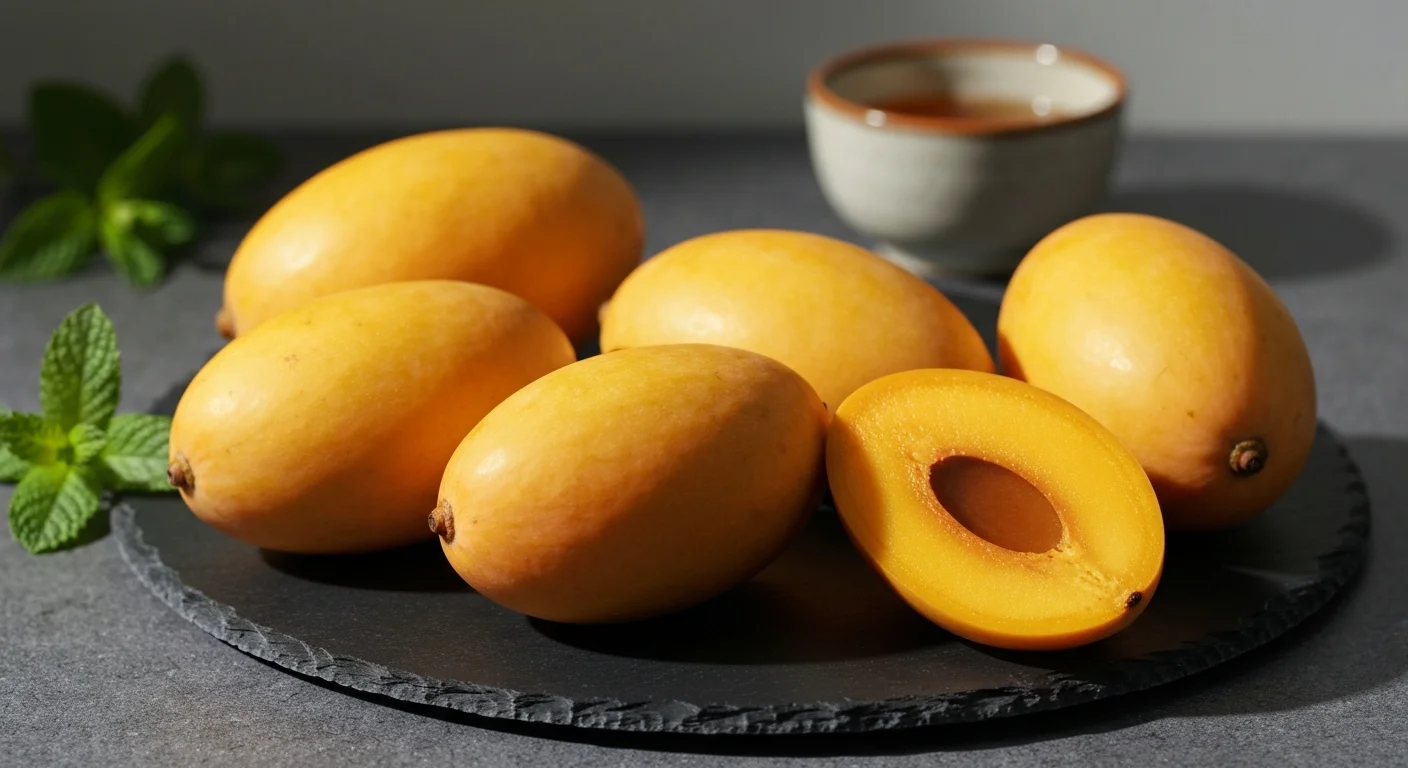
    Mallika has a distinct elongated-oval shape, similar to Dasheri but slightly plumper and more symmetrical. Unripe fruit is deep green with light lenticel spotting. As it ripens, the skin shifts to yellow-gold with occasional light pink blush at the shoulder. Unlike Alphonso or Suvarna Rekha, Mallika does not develop dramatic color contrast; the ripe fruit is mostly uniform yellow.

    The Three-Point Ripeness Check

    First, the color should be at least 70% yellow-gold, with green only at the very stem end. Second, the fruit should give gently under thumb pressure along the lower half, while still feeling slightly firm at the shoulder. Third, the aroma at the stem end should be sweet and honeyed, not sharp or fermented. If all three checks pass, the fruit is ready.

    How We Source Mallika for Texas

    Our primary Mallika sources are two orchards near Kolar in Karnataka and one near Krishnagiri in Tamil Nadu. Harvest runs mid-June through late July. The fruit is picked at 75% maturity, graded and packed in six-kilogram ventilated boxes, and air-freighted to Dallas-Fort Worth. Because of Mallika’s longer shelf life, we have slightly more flexibility in timing Texas distribution. Customers often receive Mallika at 60-70% ripeness, giving 3-5 days of counter ripening before the optimal eating window.

    A Customer Story from San Antonio

    A San Antonio customer, a working couple with young children, told us they had stopped ordering premium mangoes because the family could not eat a whole box before the fruit turned. Their Alphonso and Chinna Rasalu boxes were peaking in 3-4 days, faster than their busy schedule allowed. We suggested Mallika. They tried a six-pack the next week, and the last fruit in the box was still at peak flavor nine days after pickup. They have been twice-a-month Mallika customers ever since, and they now order Mallika specifically because the shelf life fits their household rhythm.

    Best Ways to Eat Mallika

    Mallika’s firm flesh and moderate aromatic profile make it particularly versatile. For fresh eating, it cuts into clean cheek slices without breaking down, so it is an excellent slicing mango for fruit platters and breakfast bowls. For smoothies and lassi, the deep orange color carries through without the need for additional coloring. For baking, Mallika is the best variety in our catalog. Its firm flesh holds shape when baked into tarts, cobblers, and galettes without turning mushy, and its moderate aromatic profile pairs well with butter, cream, and vanilla.

    One recipe that has become a favorite among our Texas customers is a simple Mallika galette: roughly chopped ripe Mallika tossed with a squeeze of lime, a tablespoon of raw sugar, and a pinch of cardamom, folded into a rustic butter crust and baked at 400 F for 35-40 minutes. The firm flesh holds its texture beautifully.

    Mallika vs. Its Parents and Other Varieties

    VarietyTypeShelf Life (ripe)Flavor IntensityBest Use
    MallikaHybrid (Neelum x Dasheri)7-10 daysMedium-high, balancedFresh, baking, shipping
    AlphonsoPure cultivar3-5 daysVery high, floralFresh, desserts
    KesarPure cultivar8-10 daysHigh, aromaticLassi, smoothies
    Neelum (parent)Pure cultivar14-18 daysMedium, mildFresh, storage
    HimayathPure cultivar5-7 daysHigh, complexFresh, gifting

    Frequently Asked Questions

    What does Mallika mean?

    Mallika is a Sanskrit-derived word meaning jasmine flower, selected by IIHR Bangalore researchers for the variety because of its floral aroma inherited from the Dasheri parent. The name was chosen to evoke both the flower association and the flavor association, continuing an Indian tradition of naming fruit cultivars after aromatic plants.

    Is Mallika a GMO mango?

    No. Mallika is a conventional hybrid produced through controlled cross-pollination, not genetic modification. Hybridization involves transferring pollen from one parent tree to the flowers of another, collecting the resulting seeds, growing them to fruiting, and selecting the best offspring. This is the same breeding method used for most commercial apples, citrus, and stone fruits.

    When is Mallika available in Texas?

    Mallika harvest in Karnataka and Tamil Nadu runs mid-June through late July. Swadeshi Mangoes receives weekly shipments during this window and delivers across Austin, Dallas, Houston, and San Antonio through our pickup agent network. Pre-orders open in May, and the variety typically remains available into early August.

    Why does Mallika last longer than Alphonso?

    Mallika inherited its extended shelf life from its Neelum parent. Neelum is genetically predisposed to slower ethylene production and firmer cell walls, which delays the post-harvest softening that limits Alphonso’s shelf life. Mallika retains these storage genes while also carrying Dasheri’s flavor compounds, giving it the combination of both traits.

    Can I ship Mallika to family in another state?

    Swadeshi Mangoes currently delivers within Texas only, but Mallika’s extended shelf life makes it the best candidate in our catalog for customer-arranged forwarding. Several Texas customers have picked up Mallika boxes and sent them via overnight courier to family in California or New Jersey with good results. Contact us through the order form for details.

    Try the Hybrid That Changed Indian Mango Shipping

    Mallika is the variety we recommend for first-time Indian mango customers who want flavor, value, and a forgiving shelf life. It is also the variety that busy Texas families return to year after year because a box of Mallika fits around real life. Head to our order form to reserve yours, browse the full mango variety list, or read more guides on the Swadeshi Mangoes blog. For ripening and storage tips see our mango care guide.

    Additional resources: the ICAR-Indian Institute of Horticultural Research original release documentation, National Mango Board hybrid cultivar notes, and APEDA export guidelines for Indian hybrid mangoes.
  • Indian Mango Season 2026: Complete Guide for Texas Families

    Indian Mango Season 2026: Complete Guide for Texas Families

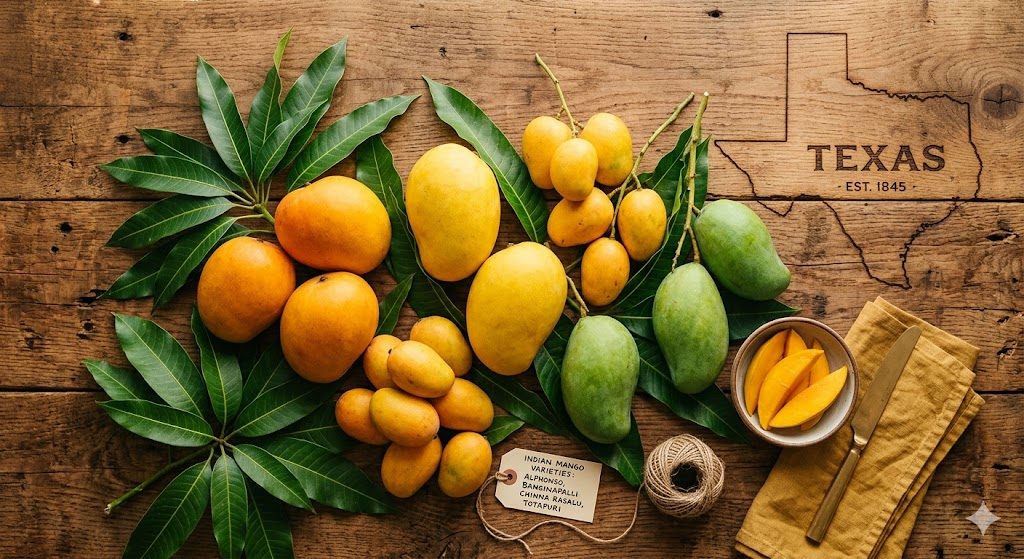
    Indian mango season 2026 in Texas runs from late April through mid-July, with Banginapalli arriving first and Alphonso peaking in May-June.

    Indian Mango Season 2026: What Texas Families Need to Know

    Every spring, a wave of anticipation sweeps through South Asian communities across Texas. Indian mango season 2026 is almost here, and if you’ve been craving the authentic taste of Alphonso, Banginapalli, or Kesar mangoes, this is your complete guide to ordering, timing, and enjoying the best mangoes in the Lone Star State.

    At Swadeshi Mangoes, we bring premium, orchard-fresh Indian mangoes directly to families in the Dallas-Fort Worth, Houston, Austin, and San Antonio areas. Here’s everything you need to know about this season.

    When Do Indian Mangoes Arrive in Texas?

    Indian mango season typically runs from late April through July, depending on the variety. Each variety has its own harvest window, and shipments arrive in waves throughout the season. Here’s the approximate timeline for 2026:

    Early Season (Late April – May)

    • Banginapalli – One of the first to arrive. Large, golden-yellow mangoes with a mild, sweet flavor and virtually no fiber. A family favorite.
    • Totapuri – Arrives early with its distinctive elongated shape. Tangy-sweet flavor, perfect for smoothies, chutneys, and dal.
    • Suvarna Rekha – A hidden gem with rich sweetness and beautiful golden skin. Limited availability makes it a must-try.

    Mid Season (May – June)

    • Alphonso – The legendary “King of Mangoes.” Creamy, intensely aromatic, and unmistakable in flavor. This is the one most people dream about all year.
    • Kesar – Often called the “Queen of Mangoes.” Saffron-colored pulp with a fragrant, honeyed sweetness that’s hard to forget.
    • Himayath – A large, juicy mango prized in Hyderabadi households. Sweet with a subtle tang and smooth, fiber-free pulp.

    Late Season (June – July)

    • Chinna Rasalu – Small but mighty. This Andhra favorite is incredibly sweet and aromatic, with a devoted following among mango connoisseurs.
    • Mallika – A hybrid variety that combines the best traits of Neelum and Dasheri. Fiberless, extremely sweet, and wonderfully fragrant, Mallika arrives in the later waves and is gaining a strong following among Texas families.
    • Dasheri – A North Indian classic from Lucknow with a thin skin and intensely sweet, aromatic pulp. Dasheri is one of the most beloved varieties in Uttar Pradesh and a treat for anyone who grew up with it.

    Availability depends on harvest conditions in India and USDA APHIS import schedules. We recommend placing your orders early since popular varieties like Alphonso and Kesar sell out fast.

    Seasonal Availability at a Glance

    This table gives you a quick reference for all nine varieties available through Swadeshi Mangoes in 2026. Use it to plan your orders and decide which varieties to try first. For detailed profiles, visit our varieties page.

    VarietyArrival WindowSweetnessBest ForPrice Range
    AlphonsoMid May – JuneVery HighEating fresh, desserts, milkshakes$$$
    KesarMay – JuneHighEating fresh, aamras, lassi$$-$$$
    BanginapalliLate April – MayMedium-HighEating fresh, slicing for kids, sharing$$
    Chinna RasaluJune – JulyVery HighEating fresh, traditional enjoyment$$-$$$
    HimayathMay – JuneHighEating fresh, juicing, family servings$$
    Suvarna RekhaLate April – MayHighEating fresh, gifting$$
    MallikaJune – JulyVery HighEating fresh, pulp, smoothies$$
    DasheriJune – JulyHighEating fresh, sucking the pulp$$
    TotapuriLate April – MayMedium (tangy-sweet)Chutneys, pickles, dal, smoothies$

    Prices vary by season and shipment. Check the order form for current pricing when each variety becomes available.

    How Indian Mangoes Are Imported to Texas

    Indian mangoes sold in the United States go through a regulated import process overseen by USDA APHIS (Animal and Plant Health Inspection Service). Every box is irradiated at approved facilities in India before being air-shipped. This treatment eliminates potential pests without affecting the mango’s flavor, texture, or nutritional value.

    The National Mango Board works alongside importers and growers to ensure quality standards. If you’re curious about the full journey from orchard to your doorstep, read our detailed breakdown: How Indian Mangoes Are Imported to the US.

    This regulated process is why Indian mangoes in Texas taste noticeably different from the generic mangoes you find at grocery stores. You’re getting orchard-selected fruit, not commercial commodity grade.

    How to Order Indian Mangoes in Texas

    Ordering from Swadeshi Mangoes is simple. Visit our online order form to browse available varieties and select your preferred pickup location. Here’s how it works:

    1. Browse varieties – Check our varieties page to learn about each mango’s flavor profile, size, and best uses. Our Alphonso vs Banginapalli vs Kesar comparison is a great starting point if you’re deciding between the most popular options.
    2. Place your order – Select your varieties and quantities through our order form. You can mix and match boxes.
    3. Choose a pickup location – We operate convenient pickup points across major Texas metro areas.
    4. Get notified – When your mangoes arrive, we’ll notify you with pickup details via WhatsApp and email.
    5. Pick up and enjoy – Collect your mangoes at the scheduled time. It’s that easy.

    What to Expect at Pickup

    If this is your first time picking up Indian mangoes through a community group order, here’s what the experience looks like. Our pickup locations are staffed by local community agents who know the product and can answer your questions on the spot.

    When you arrive, you’ll check in with your name or order number. Your boxes will be pre-labeled and ready. Each box is packed in India and sealed for the journey, so you’ll receive them in their original packaging. The agent will confirm your order, hand over your boxes, and you’re done — the whole process usually takes under five minutes.

    A few things to keep in mind at pickup:

    • Bring a bag or crate if you ordered multiple boxes. Mango boxes are sturdy but easier to carry in a larger bag.
    • Check your box count before leaving. Confirm you have the right number of boxes and the correct varieties.
    • Ask about ripeness. Your pickup agent can tell you how ripe the batch is and whether you should expect to wait a day or two before eating.
    • Don’t worry about bruising. Minor surface marks from transit are normal for air-shipped mangoes and do not affect the fruit inside.

    For more answers about the pickup process, see our FAQ page.

    How to Ripen Your Mangoes After Pickup

    Indian mangoes are shipped slightly firm to survive the long air journey from India. This is actually a good thing — it means you have control over the ripening process at home.

    Here’s a simple approach that works for all varieties:

    1. Leave them at room temperature. Spread the mangoes out on a countertop or table. Do not stack them on top of each other. Most varieties will ripen in 2-4 days depending on how firm they were at pickup.
    2. Check daily. Gently press the mango near the stem. When it gives slightly and the aroma becomes fragrant, it’s ready. Alphonso and Kesar will develop a deeper golden color as they ripen.
    3. Speed it up. Want them faster? Place mangoes in a paper bag with a banana or apple. The ethylene gas from the other fruit accelerates ripening. Check every 12 hours.
    4. Slow it down. If some mangoes are ripening faster than you can eat them, move the ripe ones to the refrigerator. They’ll hold for another 2-3 days once chilled.

    Never refrigerate unripe mangoes. Cold temperatures halt the ripening process and can result in a chalky, flavorless fruit that never reaches its potential.

    For the full guide with variety-specific tips, read How to Store and Ripen Indian Mangoes and visit our mango care page.

    Pricing and Box Sizes for 2026

    Indian mango pricing depends on the variety, the harvest yield in India that year, and international shipping costs. Here’s a general guide to help you plan your budget:

    • Standard box: Most varieties come in boxes of approximately 6 to 12 mangoes, depending on fruit size. Banginapalli boxes tend to have fewer pieces because each fruit is larger, while Chinna Rasalu boxes contain more pieces due to their smaller size.
    • Alphonso is typically the most expensive variety due to high global demand and limited export quantities. Expect to pay a premium compared to Banginapalli or Totapuri.
    • Totapuri is the most affordable option and a great entry point if you want to try Indian mangoes without a big commitment.
    • Multi-box discounts may be available depending on the season. Check the order form for the latest pricing as each shipment arrives.

    We keep pricing transparent and community-friendly. There are no hidden fees, and what you see on the order form is what you pay. For families that order multiple varieties across the season, the per-box cost works out to be significantly less than buying Indian mangoes from specialty grocery stores — and the quality is incomparably better.

    Health Benefits of Indian Mangoes

    Beyond their incredible taste, Indian mangoes are packed with nutrition. They’re rich in Vitamin A, Vitamin C, and dietary fiber. The deep orange pulp of varieties like Alphonso and Kesar contains high levels of beta-carotene, a powerful antioxidant.

    Mangoes also provide potassium, folate, and Vitamin B6. For families with kids, they’re a natural way to get children excited about eating fruit — no convincing needed when the fruit tastes this good.

    Read our detailed article on the health benefits of Indian mangoes for a full nutritional breakdown by variety.

    What to Expect When Your Mangoes Arrive

    Indian mangoes are shipped by air from India after undergoing USDA-required irradiation treatment, which ensures they’re safe for import without affecting taste or quality. When you pick up your box, the mangoes may still be slightly firm. This is normal and actually ideal.

    Don’t refrigerate them right away. Most Indian mango varieties need 2-4 days at room temperature to ripen to perfection. For detailed ripening and storage instructions, visit our mango care guide. Proper handling makes a huge difference in flavor.

    Why Choose Swadeshi Mangoes?

    We’re not a faceless import operation. Swadeshi Mangoes is a community-driven service built by and for Indian families in Texas. Here’s what sets us apart:

    • Direct sourcing – We work with trusted orchards in India to bring you the freshest, highest-grade mangoes.
    • Transparent process – You know exactly what varieties are available, when they’re arriving, and where to pick them up.
    • Community pricing – Group ordering keeps costs reasonable for everyone.
    • Local pickup network – Convenient locations across DFW, Houston, Austin, and San Antonio staffed by community agents.

    Want to help your community get access to great mangoes? Learn about our agent program and bring Swadeshi Mangoes to your neighborhood.

    Tips for First-Time Buyers

    If this is your first time ordering Indian mangoes in the US, here are a few things to keep in mind:

    • Start with Banginapalli or Kesar if you want crowd-pleasing sweetness with minimal fiber.
    • Order early in the season – supply is limited and the best varieties go fast.
    • Buy a mix – trying 2-3 varieties lets you discover your family’s favorites. Our comparison guide can help you choose.
    • Read our FAQ page for answers to common questions about ordering, shipping, and quality.
    • Tell your friends – many families discover Indian mangoes through word of mouth. If you know someone who’d love these, point them to our blog for more information.

    Frequently Asked Questions

    When does Indian mango season start in Texas 2026?

    Indian mango season 2026 in Texas begins in late April when the first Banginapalli and Totapuri shipments arrive. The exact date depends on harvest timing in India and USDA import clearance. Early-season varieties typically land in the last week of April, with mid-season favorites like Alphonso following in May.

    How long does Indian mango season last?

    The full Indian mango season in Texas spans roughly 10 to 12 weeks, from late April through mid-July. However, individual varieties are only available for shorter windows within that range. Alphonso typically ships for about four to five weeks, while late varieties like Chinna Rasalu extend the season into July.

    Can I get Alphonso mangoes in Texas?

    Yes, Alphonso mangoes are available in Texas through community group orders like Swadeshi Mangoes. Alphonso typically arrives in mid-May and is available through June, though supply is limited and boxes sell out quickly. Visit our Alphonso page for variety details and place your order early through the order form.

    How much do Indian mangoes cost in Texas?

    Indian mango prices in Texas vary by variety and season. Alphonso is the most premium, while Totapuri is the most budget-friendly. Community group ordering through Swadeshi Mangoes keeps costs lower than specialty grocery stores. Exact pricing is posted on our order form as each shipment becomes available.

    Where to pick up Indian mangoes in Austin, Dallas, Houston, and San Antonio?

    Swadeshi Mangoes operates pickup locations across all four major Texas metro areas: Austin, Dallas-Fort Worth, Houston, and San Antonio. Pickup points are staffed by local community agents at convenient locations. When you place an order, you select your preferred pickup spot, and we notify you with the exact address and time window when your mangoes arrive.

    How do I store Indian mangoes when I get them?

    When you first receive your mangoes, keep them at room temperature to ripen for two to four days. Do not refrigerate unripe mangoes. Once they feel slightly soft when pressed and smell fragrant, they are ready to eat. Move any fully ripe mangoes you cannot eat immediately into the refrigerator, where they will keep for another two to three days. For variety-specific instructions, visit our storage and ripening guide.

    Plan Your 2026 Mango Season

    Indian mango season in Texas is a short, special window. Whether you grew up eating Alphonso in Mumbai, Banginapalli in Hyderabad, or Dasheri in Lucknow, there’s something deeply satisfying about sharing that same taste with your family here in Texas. The season waits for no one — varieties arrive and sell out within weeks, not months.

    Browse our full variety guide, explore the blog for more mango knowledge, and visit the order form when you’re ready to secure your boxes for 2026.

Chat on WhatsApp