Tag: mango-culture

  • The Art of Eating an Indian Mango: Sticky Fingers, Sink Stories, Pure Joy

    The Art of Eating an Indian Mango: Sticky Fingers, Sink Stories, Pure Joy

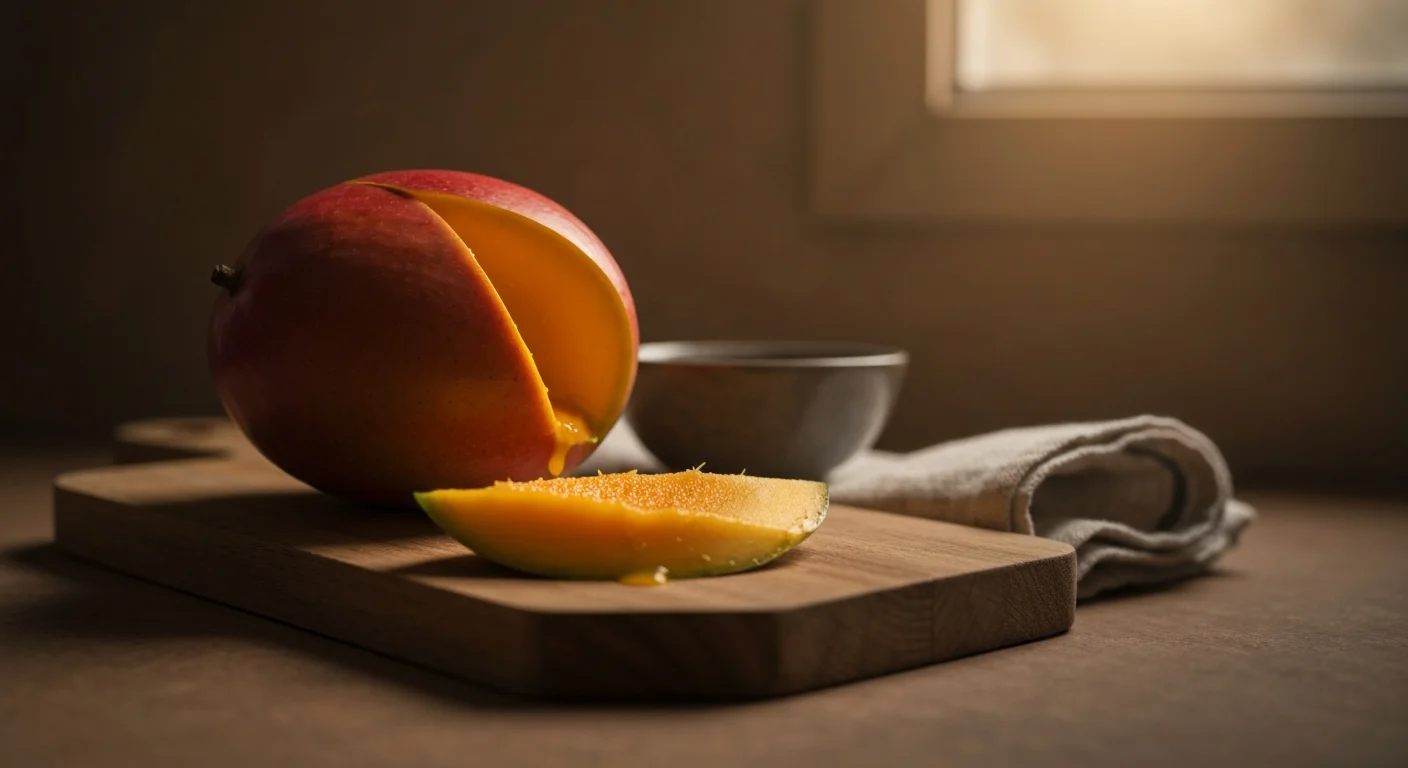
    The art of eating an Indian mango is not about forks, plates, or napkins. It’s a ritual with its own rules — and in Andhra Pradesh, the ultimate test is the Nuzvid Rasalu: squeeze, suck, and at the end, the seed must come out white.

    Every Indian mango has a proper way to eat it. Most of us don’t learn this from cookbooks. We learn it from our mothers, our grandmothers, and the older cousins who laughed at us when we tried to use a spoon. The ritual is older than we are, older than most cookbooks, and it changes slightly by region, by variety, and by family.

    Today I want to share the one I grew up with in Andhra Pradesh — and why, even here in our Texas kitchens, we still do it the same way.

    The Nuzvid Rasalu Method: My Childhood’s Ultimate Test

    Nuzvid is a small town in Krishna district, Andhra Pradesh. It is famous for one thing: the best Rasalu mangoes in the country. These are small, fiberless, intensely sweet mangoes with thin skin. You’ll find them on our website as Chinna Rasalu — the petite, aromatic variety we ship to Texas during the short May-to-June window.

    Here’s how we eat them — and here’s the competition we turned it into as kids:

    1. Squeeze gently. The mango must be fully ripe. You roll it between your palms for about a minute — not hard enough to break the skin, but firm enough that the flesh inside turns to pulp. You can feel it give way under your fingers.
    2. Poke a small hole at the top. Just at the stem end, with your thumbnail or a clean knife tip. No bigger than a pea.
    3. Suck. The pulp comes out through that tiny hole, sweet and silky. No knife, no spoon, no plate.
    4. Keep squeezing from the bottom. As you suck, you push the pulp up toward the hole. Bottom to top, steady pressure, patient rhythm.
    5. Finish clean. This is where the competition begins.

    In our family, finishing a Nuzvid Rasalu properly meant three things, all of which had to be true at the same time:

    • No spillage. Not a drop of juice on the floor, the shirt, or the table.
    • Clean hands and fingers. If your palms were sticky when you were done, you had done it wrong somewhere.
    • The seed must come out white. Not yellow. Not orange. White.

    That last one was the real test. A yellow seed meant you had left pulp behind. You had not squeezed all the way down to the seed. A white seed meant you had gotten every last bit — that the mango had been honored, that nothing was wasted, and that you had done your grandmother’s method right.

    My older cousin, Kiran, held the family record for years. He could finish a rasalu in under two minutes, seed bleached clean, not a single drop anywhere. The rest of us were chasing him from age five.

    The Three Rules of Proper Mango Eating in Andhra

    The Rasalu squeeze is not the only technique — just the most iconic one. Across Andhra and Telangana, the rules we all grew up with were simpler:

    Rule one: eat it raw, not cooked. A ripe mango does not need anything added to it. Not sugar, not cream, not lime. If the mango needs help, the mango is not ripe.

    Rule two: eat it with your hands. A mango is sensual. You need to feel the skin, the give of the flesh, the slickness of the juice. A fork puts a metal wall between you and the fruit. Nothing good comes from that wall.

    Rule three: eat it where spillage is expected. Over a plate at the dining table is acceptable. Over a newspaper on the floor is better. Over the kitchen sink is fine in modern homes. The bathroom is where my uncle Raghu used to eat his — he said the acoustics made the slurping sound more satisfying. Nobody ever questioned him.

    Why Forks Are an Insult to a Ripe Mango

    When I moved to Texas, I watched Americans eat mangoes with forks. They’d cut them into little cubes, arrange them in bowls, and eat them like a polite fruit salad. No offense to anyone — I’ve been to those brunches too — but a fork turns a mango into just another piece of fruit. And a real Alphonso or Himayath deserves better than “just another piece of fruit.”

    The thing about eating a mango with your hands is that you can’t be in a hurry. You have to slow down. You have to commit to getting sticky. You have to accept that for the next ten minutes, you will not be doing anything else. That slowness is part of the flavor. When you rush a mango, it rushes you back.

    The Newspaper-on-Floor Method

    Back home, when multiple mangoes were being eaten at once — during a family visit, on a Sunday afternoon, or when a whole crate had arrived — we didn’t use the table. We spread a newspaper on the floor of the front room, and everyone sat cross-legged around it.

    The oldest person got first pick. The youngest child was allowed to make the most mess. My grandmother would inspect everyone’s seeds at the end. A yellow seed from anyone over the age of ten got a gentle smack and a lecture: “Do you know how long it took to grow this mango? Do you know how many people it passed through to reach you? And you’re throwing away the best part?”

    The mangoes came from the packing houses of Andhra in wooden crates wrapped in hay. Each one had been hand-picked and hand-sorted. That lecture was not really about the pulp on the seed. It was about respecting the people, the trees, the rain, the distance, the time.

    The Texas Sink Method: Our Plan B

    You can’t spread a newspaper on a Texas dining room floor. Or I mean, you can, but the dog will eat it, the kids will track it through the house, and your spouse will have questions. Most of our customers in Austin, Dallas, Houston, and San Antonio have modernized the ritual. Here’s what works:

    • Stand over the kitchen sink. This is the Texas version of the newspaper on the floor. The sink catches everything. The juice can go anywhere. Nobody judges.
    • Have a paper towel ready. Not for wiping while you eat — for after. Mid-mango wiping breaks the rhythm.
    • Roll up your sleeves. Mango juice on a shirt cuff is a stain you will remember for years. I learned this the hard way in a white shirt at my first job in Texas.
    • Eat over a deep bowl if you want to sit down. A wide, deep bowl catches the drips. A plate does not. Your grandmother would disapprove of a plate.

    Different Rituals for Different Varieties

    Not every Indian mango is a Rasalu. Each variety in our nine-variety lineup has its own proper method:

    • Alphonso: Too precious to squeeze. Cut it into cheeks, score the flesh with a knife, invert it so the cubes pop up, eat each cube slowly with your fingers. The skin is fragile. The flavor is delicate. This one deserves ceremony.
    • Kesar: Can be eaten either way. The pulp is firm enough to slice but sweet enough to squeeze. Most people in Gujarat do both.
    • Banginapalli: The hedgehog cut. Firm flesh, zero fiber, holds shape beautifully. You can eat this with a spoon and not feel guilty.
    • Chinna Rasalu (Nuzvid Rasalu): The squeeze and suck method. This is the one I described above. Non-negotiable.
    • Himayath: Large, thin-skinned, fiberless. Peel by hand, bite directly, let the juice run down your wrist. There is no clean way to eat a Himayath. That is the point.
    • Totapuri: Rarely eaten raw. This one is for pickles, chutneys, and juice. If you must eat it fresh, slice it thin and sprinkle salt and chili powder on it.

    Teaching Your Texas-Born Kids the Rasalu Rules

    My daughter was born in Round Rock. She had never seen a newspaper-on-the-floor mango session. The first time we handed her a rasalu, she tried to eat it with a fork.

    We sat her down and taught her the three rules. She was seven. She got juice on her shirt, on the counter, on the dog. The seed came out yellow. She cried.

    The next year, she got a better seed. The year after that, her seed came out almost white. By last summer, at eleven, she was inspecting my seed and laughing. “Daddy, look at that. So much pulp left. Thatha would not be proud.”

    That is the point of the ritual. It is not really about the mango. It is about slowing down, paying attention, and teaching the next generation that some things are worth doing with your hands. Even if the kitchen is in Texas and the mango flew in from Nuzvid four days ago.

    Frequently Asked Questions

    What is the Nuzvid Rasalu sucking method?

    The Nuzvid Rasalu method is an Andhra tradition: squeeze a fully ripe rasalu mango between your palms to soften the pulp, poke a small hole at the stem end, and suck the pulp out while squeezing from the bottom upward. Done right, the seed comes out white and your hands stay clean.

    Why does the seed need to come out white?

    A white seed means you extracted every bit of pulp successfully. A yellow or orange seed means you left flavor behind. In Andhra households, this is the family test for whether you ate the mango properly. It’s about skill and respect for the fruit.

    Can you use the squeeze method on Alphonso?

    No. Alphonso mangoes have delicate skin that tears under pressure, and the flavor profile rewards slow appreciation rather than suck-and-squeeze speed. Alphonso is best cut into cheeks, scored, and eaten cube by cube. Save the squeeze method for Rasalu varieties like our Chinna Rasalu.

    Why do Indians prefer eating mangoes by hand?

    Eating by hand preserves the slow, sensory ritual that defines mango season. A fork rushes the experience and creates distance from the fruit. Hands let you feel the ripeness, control the juice, and commit fully to the moment. Most Indian families consider this the only proper method.

    How do I teach my Texas-born kids this tradition?

    Start with our Chinna Rasalu mangoes when they’re fully ripe. Show them the squeeze, the hole, the suck, and the white-seed test. Let them get sticky the first few times. Explain why it matters — that it’s how their grandparents in India did it, and doing it slowly is half the point.

    Bring Nuzvid Rasalu to Your Texas Kitchen

    We ship Chinna Rasalu mangoes from Nuzvid to pickup points across Austin, Dallas, Houston, and San Antonio during the short May-to-June window. The box comes with firm mangoes — you’ll need to ripen them on the counter for 2-3 days before the squeeze method will work (full ripening guide here).

    When you’re ready, stand over the sink. Roll up your sleeves. Teach the kids. Keep score on the seeds. Send us a photo of a perfectly white seed — we’ll put it on the wall.
    Order Chinna Rasalu for Pickup

  • The Paisley Pattern: How Indian Mangoes Shaped Global Design

    The Paisley Pattern: How Indian Mangoes Shaped Global Design

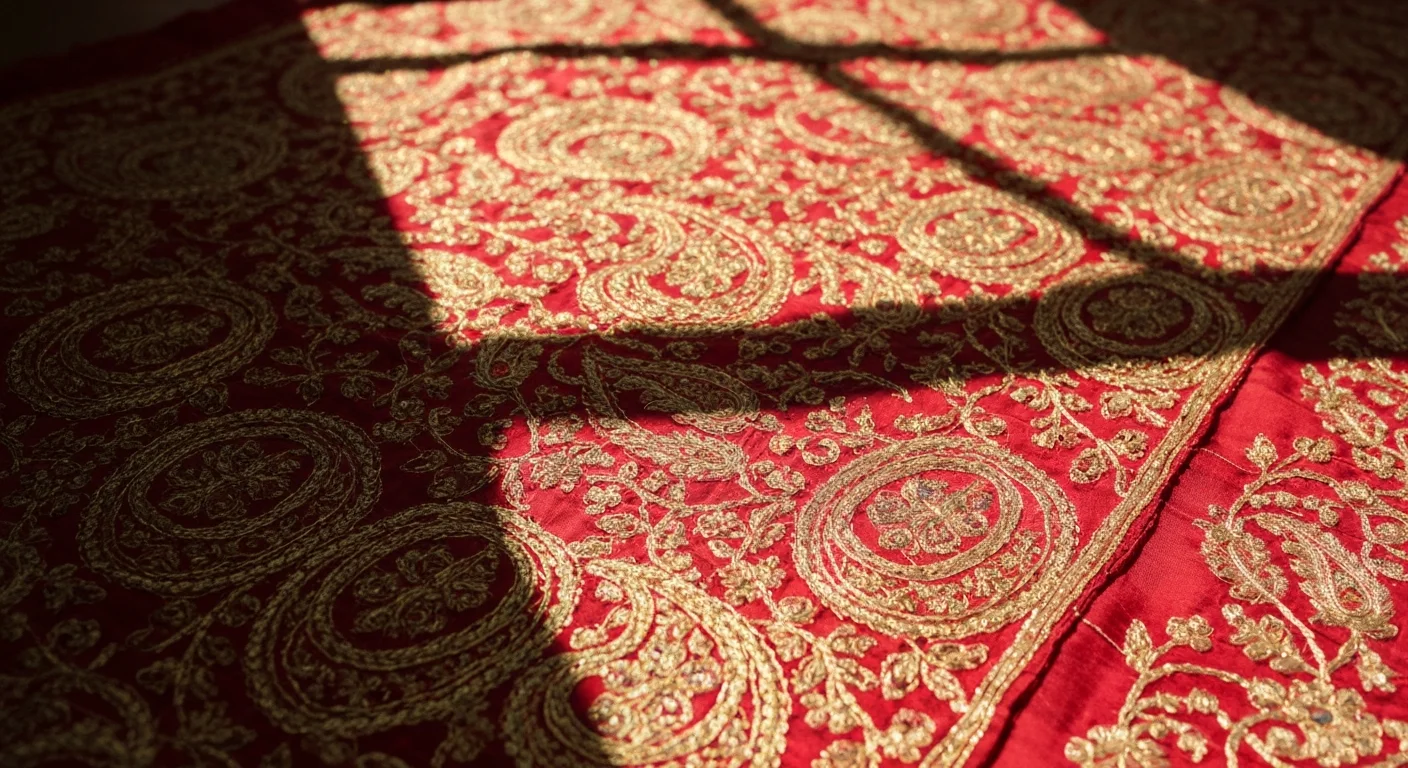
    The paisley pattern, known around the world as a teardrop curl found on Kashmir shawls, Iranian carpets, and Victorian fabrics, originated as a stylized representation of the mango called buta or boteh in Persian and Sanskrit sources. The motif spread from Mughal-era Kashmir to Iran, then to Paisley, Scotland, which gave the design its English name in the nineteenth century. Today, descendants of that same mango-shaped motif decorate everything from bandanas to boutique textiles in Austin and Houston, a silent reminder that Indian mangoes have shaped not just taste but visual culture.

    The Mango as Motif

    The mango’s elegant teardrop shape made it a natural candidate for decorative abstraction. South Asian artisans working in textiles, metalwork, and miniature painting developed the buta as a stylized mango curl centuries before European eyes ever saw it. The form combined the fruit’s profile with a gentle flame-like curve, suggesting fertility, abundance, and auspiciousness.

    Sanskrit and Persian Roots

    The word buta in Sanskrit refers to a flower or ornament, while boteh in Persian carries similar connotations. Scholars including the textile historian Jasleen Dhamija have traced the motif through pre-Mughal Indian artifacts and into the court arts of Safavid Iran, where it flourished in carpet design and illuminated manuscripts.

    Kashmir Shawls: The Golden Age

    By the seventeenth and eighteenth centuries, Kashmir’s shawl weavers had elevated the buta to extraordinary sophistication. Woven from the fine undercoat of the Himalayan mountain goat in a technique called kani, Kashmir shawls could take years to complete and cost the price of a small estate.

    Royal Patronage

    Mughal emperors, Sikh maharajas, and later British officers all prized Kashmir shawls. Maharaja Ranjit Singh of the Sikh Empire was particularly known for his collection, and his shawls were gifted to European royalty in the early nineteenth century, helping spread the buta motif far beyond the subcontinent.

    The Journey to Paisley, Scotland

    In the early 1800s, Kashmir shawls became fashionable among European upper classes following Napoleon’s Egyptian campaign and the subsequent orientalist vogue. Demand vastly outstripped supply. British weavers in several towns, most famously the town of Paisley southwest of Glasgow, began producing imitations on Jacquard looms.

    Why Paisley Gave the Pattern Its Name

    Paisley became so dominant in European production that the buta motif became synonymous with the town. By the mid-nineteenth century, English-speaking markets simply called the pattern paisley. The original Indian and Persian names faded from common use outside specialist circles, though textile historians continue to emphasize the mango origin.

    Timeline: From Kashmir to Global

    PeriodDevelopment
    Pre-15th centuryButa motif appears in pre-Mughal Indian and Safavid Persian arts
    16th-17th centuryKashmir shawl weavers refine kani technique with buta as central motif
    1799-1839Maharaja Ranjit Singh’s patronage; shawls gifted to European royalty
    1800-1820European demand soars; British weavers begin imitating Kashmir patterns
    1840s-1870sPaisley, Scotland dominates imitation market; English name takes hold
    1960sPaisley revival via the Beatles and counterculture fashion

    The Counterculture Revival

    In the mid-1960s, paisley returned to prominence through rock-and-roll fashion. The Beatles, after their 1968 trip to Rishikesh to study with Maharishi Mahesh Yogi, helped catapult paisley into Western youth culture. Pop artists wore paisley shirts, guitars were painted in paisley finishes, and the motif became a visual shorthand for psychedelic aesthetics.

    Fender Paisley Telecaster

    Fender’s 1968 Pink Paisley Telecaster, introduced for James Burton, remains one of the most visually distinctive guitars in rock history. Burton played it behind Elvis Presley, and the design became iconic. Texas guitar players from Austin to Dallas still seek out vintage Fender paisleys at music stores on South Lamar and in Deep Ellum.

    Paisley in Modern Texas

    Texas has a long relationship with paisley through multiple cultural channels. Western wear incorporates paisley bandanas, cowboy shirts, and scarves. The Austin music scene continues the 1960s paisley association. Indian-American families in Houston, Dallas, and Round Rock wear paisley embroidery on bridal outfits, saris, and sherwanis that preserve the motif’s original cultural meaning.

    Diaspora Weddings

    A Hindu or Sikh wedding in Houston or Dallas often features dozens of paisley patterns in silk, zari embroidery, and even mehndi designs. For diaspora families, the motif carries layered meanings: it is both ancient and modern, both Indian and globally recognized, both formal and familiar.

    The Mango Connection Remains

    Despite centuries of abstraction and global travel, the paisley remains recognizably a mango. Cut any ripe Alphonso or Kesar in half, look at the seed profile, and the shape is unmistakable. When Texas families receive a box from Swadeshi Mangoes during the April-July season, they hold in their hands the living original of a design that now decorates ties in London, scarves in Milan, and quilts in Round Rock.

    From Fruit to Fabric and Back

    Visit our varieties page to see the specific cultivars whose profiles inspired the ancient buta. Order through our order form for delivery anywhere in Texas, and consult our mango care guide to ripen your fruit properly. The fruit you eat is the ancestor of the pattern on your grandmother’s shawl.

    Why Design History Belongs in Food Writing

    The paisley story illustrates a broader truth about mangoes. The fruit is not merely agricultural produce; it is a thread in the fabric of world culture. Its taste sustains bodies, its shape decorates cloth, and its cultivation has occupied human labor and imagination for more than four thousand years.

    The Jacquard Loom Revolution

    Part of what allowed Scottish paisley to overtake Kashmir production was the Jacquard loom, invented by Joseph Marie Jacquard in Lyon, France in 1804. The Jacquard used punched cards to automate complex patterning that had previously required expert weavers. When Paisley mills adopted the Jacquard in the 1820s and 1830s, they could produce elaborate buta-patterned shawls at a fraction of the cost of handwoven Kashmir originals. The technology eventually influenced early computer science, with Charles Babbage and Ada Lovelace citing the Jacquard as an inspiration for programmable machines.

    Indian Weavers and Economic Disruption

    The Scottish paisley boom had devastating consequences for Kashmir weavers. Traditional kani shawl production employed thousands of artisans in the Srinagar valley, and the flood of European imitations depressed prices and collapsed livelihoods. By the late nineteenth century, many Kashmir weavers had switched to other crafts or migrated. Textile historians including Frank Ames, in his book The Kashmir Shawl and Its Indo-French Influence, have documented this economic disruption as one of the earliest examples of industrial globalization undercutting traditional craft economies. Today’s revived Kashmir pashmina industry represents a partial reconstruction of that lost heritage.

    Paisley in American Western Wear

    Paisley entered American cowboy culture through multiple routes. Bandanas, originally produced in the eastern United States from printed cotton in the nineteenth century, adopted paisley motifs early because the pattern hid dirt and wear effectively. The bandana became a utility garment for ranch hands across Texas, and by the early twentieth century, paisley prints were a standard element of Western wear. Visit any Western store in Fort Worth or San Antonio today and paisley scarves, yokes, and pocket squares remain ubiquitous.

    Nathan Turk and the Nudie Suit Era

    Custom Western tailors like Nathan Turk and Nudie Cohn incorporated elaborate paisley into the stage costumes of country music stars including Hank Williams, Porter Wagoner, and later Elvis Presley. This tradition continued through the Texas honky-tonk scene, and contemporary Americana artists in Austin and Waco still commission paisley-embellished stage wear from custom tailors. The motif’s journey from Kashmir to Austin via Paisley, Scotland and Hollywood tailoring is one of the more remarkable migrations in textile history.

    The Buta in Indian Wedding Culture

    For Indian-American families planning weddings in Texas, paisley remains central to sartorial tradition. A Banarasi sari purchased for a Houston wedding may feature zari-embroidered buta motifs woven into the fabric. Sherwanis for grooms often incorporate paisley in gold thread. Even the mehndi patterns applied to brides’ hands routinely feature mango-shaped motifs. The visual vocabulary of the Indian wedding preserves the buta’s original cultural meaning as an emblem of fertility, abundance, and auspiciousness.

    FAQ

    Did the paisley pattern really come from a mango?
    Yes. Textile historians including Jasleen Dhamija have documented the origin of the paisley motif, known as buta in Sanskrit and boteh in Persian, as a stylized mango shape. The motif flourished in Mughal-era Kashmir and Safavid Iran before reaching Europe, where Scottish weavers in Paisley gave the design its modern English name.

    Why is it called paisley and not buta?
    The town of Paisley in Scotland became the largest producer of imitation Kashmir shawls during the early nineteenth century, when European demand for the genuine article outstripped supply. The town’s name became a metonym for the pattern in English-speaking markets, replacing the older Indian and Persian terms.

    What is a Kashmir shawl?
    A Kashmir shawl is a finely woven garment traditionally made from the fine undercoat of the Himalayan mountain goat using the kani weaving technique. Classic shawls prominently feature the buta or mango motif and could take months or years to complete. Genuine antiques are preserved in museums including the Victoria and Albert Museum in London.

    How did paisley become associated with the 1960s counterculture?
    After the Beatles traveled to Rishikesh in 1968 to study meditation, Indian fashion elements including paisley became emblematic of psychedelic rock and the broader counterculture. Fender’s 1968 Pink Paisley Telecaster guitar and the widespread use of paisley shirts cemented the association in popular memory.

    Can I find paisley in Texas culture today?
    Yes. Paisley appears throughout Texas culture, from Western-wear bandanas and cowboy shirts to Indian-American bridal outfits worn at weddings in Houston, Dallas, and Austin. Vintage Fender paisley guitars remain sought after in Austin music stores. Diaspora families often decorate homes with paisley-motif textiles.

    External references: Wikipedia: Paisley design, Victoria and Albert Museum, Wikipedia: Kashmir shawl.

Chat on WhatsApp