In India, the mango is not just a fruit — it is a symbol of prosperity, love, and auspiciousness. You will find it in every major celebration, from weddings to Diwali. Here is why the mango shows up everywhere that matters.
For the Indian diaspora in Texas, mangoes carry an emotional weight that goes far beyond nutrition or taste. A box of Alphonso arriving during April is not just a delivery — it is a time machine. It connects you to the festivals you celebrated as a child, the weddings you attended with your grandparents, and the summer rituals that defined your year. Understanding the mango’s role in Indian culture helps explain why so many families treat mango season as something sacred, not just seasonal.
Weddings: The Mango Motif
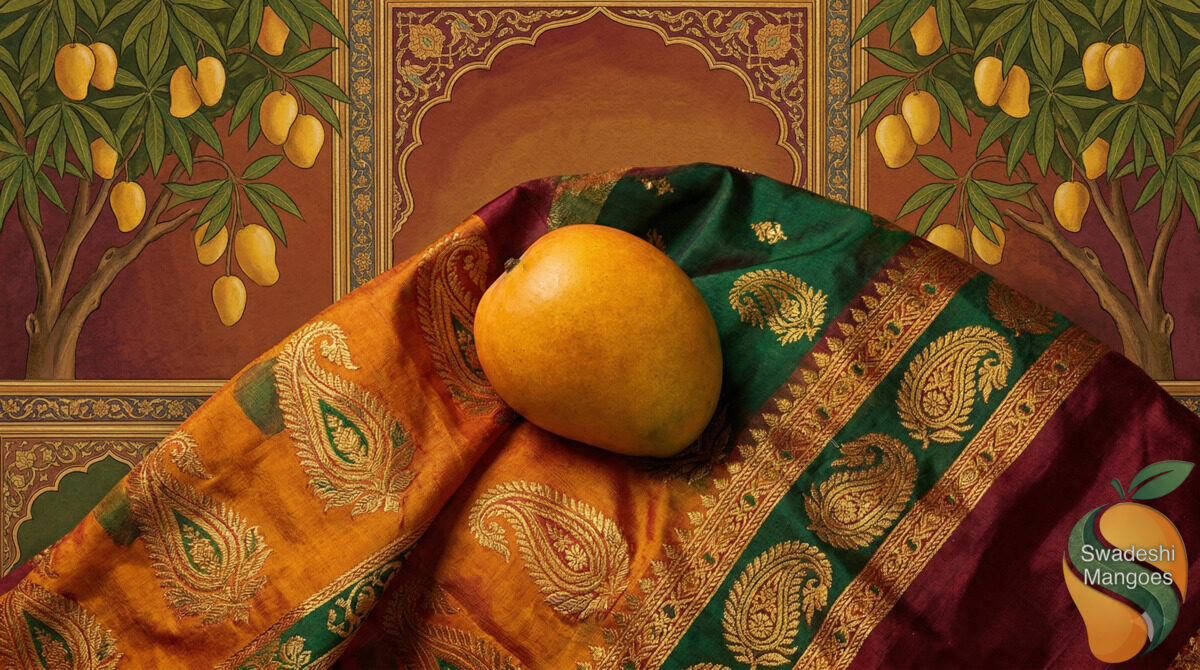
Walk into any Indian wedding venue and count the mango references. The paisley pattern — that teardrop shape you see on shawls, invitations, and decorations — is actually a stylized mango (called ambi or kalka). It represents fertility, abundance, and good fortune.
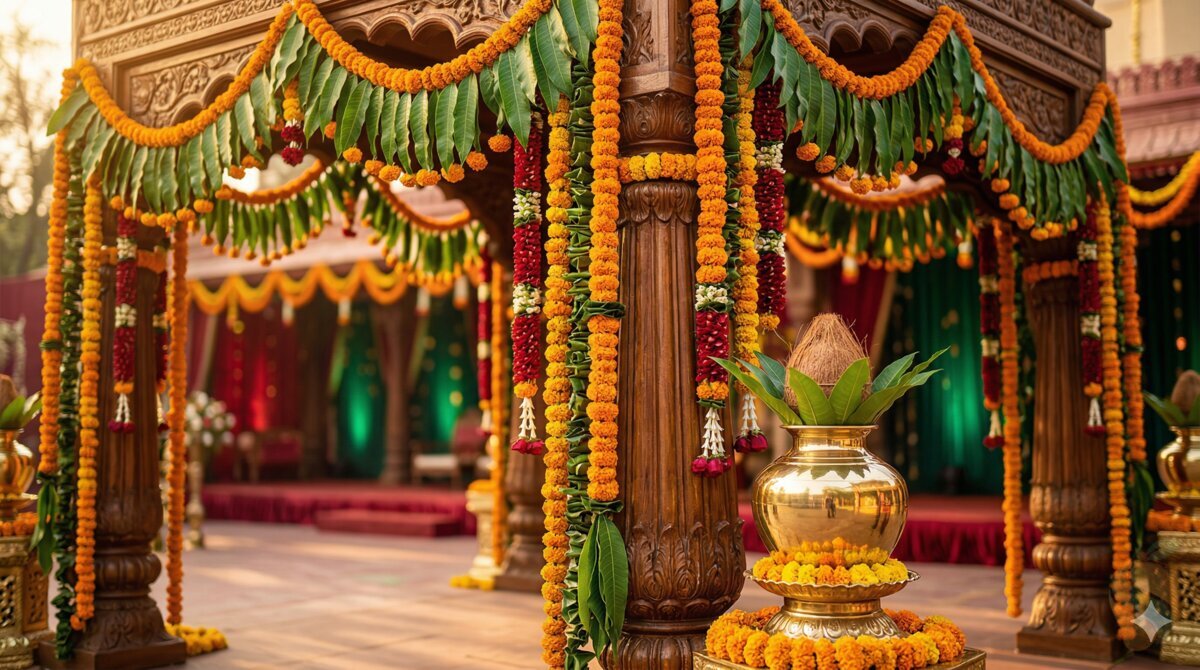
The mango leaf is equally important. Strings of fresh mango leaves (toran) hang at the entrance of the wedding hall and the couple’s new home. In Hindu tradition, mango leaves purify the surroundings and invite Lakshmi, the goddess of prosperity.
In South Indian weddings, a pot of water decorated with mango leaves and a coconut on top (Purna Kumbham) is placed at the entrance. It symbolizes completeness and the fullness of life the couple is about to begin.
The mango’s presence in weddings goes even deeper than decoration. In many traditions, mango wood is preferred for the sacred fire (havan kund) during the wedding ceremony because it is considered the purest wood. The smoke from mango wood is believed to have purifying properties. In some regions, the bride and groom exchange mango leaves as part of the ceremony, symbolizing the sweetness and fertility they wish for their new life together.
Even in modern Indian-American weddings in Texas, these traditions persist. We have had customers order boxes of mangoes specifically for their wedding celebrations — not to eat (though that happens too) but to use the leaves for the toran and the wood for the havan. When Indian families in Houston, Dallas, and Austin plan weddings during mango season, the timing feels doubly auspicious.
The Mango in Hindu Mythology
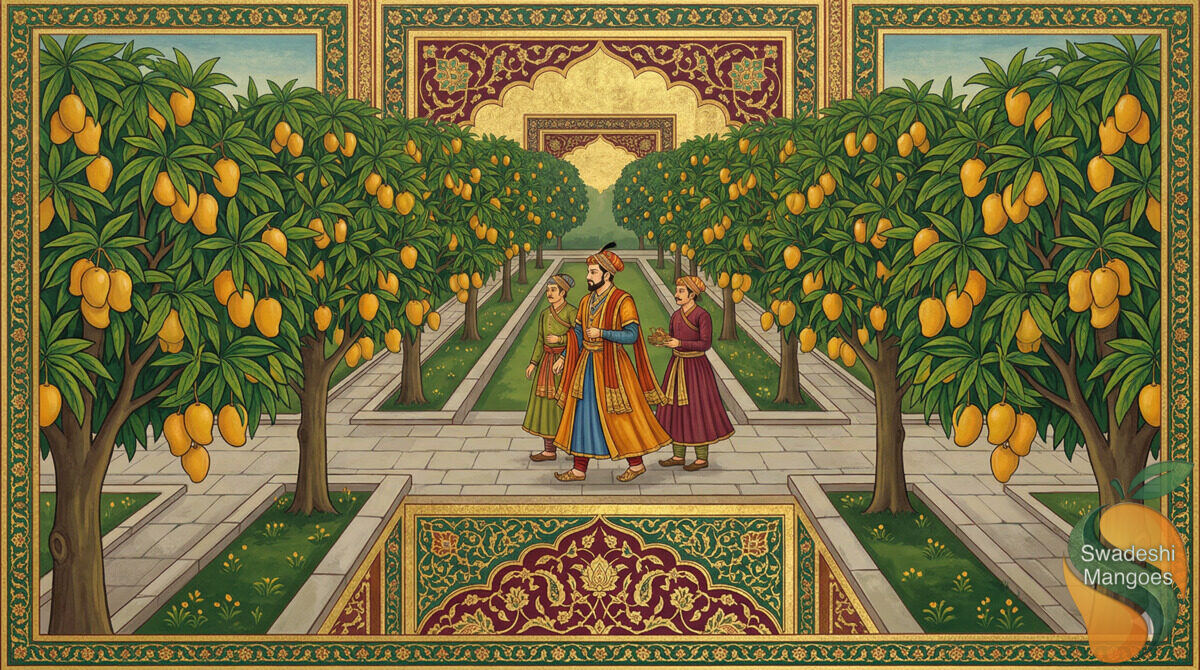
The mango’s cultural significance is rooted in mythology that goes back thousands of years. In Hindu tradition, the mango tree is associated with Prajapati, the lord of creation. The Vedas refer to the mango as a heavenly fruit, and ancient texts describe mango groves as places of peace and meditation.
Lord Ganesh is often depicted holding a mango as a symbol of attainment and perfection. In the legend of the mango and the divine fruit, Ganesh and Kartikeya competed for a golden mango by racing around the world. While Kartikeya sped off on his peacock, Ganesh simply walked around his parents, Shiva and Parvati, declaring that they were his entire world. He won the mango through wisdom, not speed. This story is told to children across India and reinforces the mango as a symbol of wisdom and devotion.
The Buddha himself is said to have meditated in mango groves, and several stories in Buddhist literature feature the mango as a sacred offering. This cross-religious reverence is part of why the mango was designated as India’s national fruit — it belongs to all of India’s traditions, not just one.
Akshaya Tritiya: The Mango Day
While not as widely known outside India, Akshaya Tritiya is considered one of the most auspicious days of the Hindu calendar. It falls in April-May — right at the start of mango season. Tradition says that eating mangoes on this day brings good luck for the year.
Many families mark Akshaya Tritiya as the “official” start of their mango eating season. Before this day, some families will not eat mangoes even if they are available.
For Indian families in Texas, Akshaya Tritiya has become an anchor point for the mango season. It is the day when WhatsApp groups start buzzing with order links, when families check the Swadeshi order page for the first shipments, and when the first box of the season is opened with genuine ceremony. Some families perform a small puja before cutting the first mango, offering a slice to the deities before anyone else eats. It is a small ritual, but it connects a family in San Antonio or Austin to generations of tradition stretching back centuries.
Ugadi and Gudi Padwa: The New Year Mango
The Telugu and Kannada New Year (Ugadi) and Marathi New Year (Gudi Padwa) both involve a special preparation called Ugadi Pachadi — a mixture of six tastes that represent life. One of the key ingredients? Raw mango, representing sourness and the challenges that add flavor to life.
The six tastes in Ugadi Pachadi are a philosophy lesson in a bowl: neem flowers for bitterness (sadness), raw mango for sourness (challenges), jaggery for sweetness (happiness), tamarind juice for tanginess (surprise), green chili for spice (anger), and salt for, well, salt (fear). The raw mango is essential because it represents the idea that difficult experiences are not obstacles — they are what give life its depth and flavor. Without the sour, the sweet means less.
For Telugu and Marathi families in Texas, sourcing fresh raw mangoes for Ugadi can be a challenge. Some use the first green, unripe mangoes from early-season deliveries. Others use Totapuri varieties, which have a tanginess that works well even when semi-ripe. The important thing is the ritual: gathering the ingredients, preparing the pachadi together, and tasting all six flavors to start the new year with awareness and gratitude.
Dussehra and Diwali
Mango leaves appear again during Navratri and Dussehra. In many households, mango wood is used for the havan (sacred fire) because it is considered pure. During Diwali, mango leaf torans are refreshed at entrances to welcome Lakshmi into the home.
The mango leaf toran at the doorway during Diwali serves both a symbolic and practical purpose. Symbolically, the fresh green leaves represent new life and prosperity entering the home. Practically, in traditional Indian homes without air conditioning, the mango leaves were believed to absorb negative energy and purify the air. In modern Indian-American homes in Texas, the toran is often the first thing visitors notice, and it immediately signals that this is a home that honors its heritage.
During Navratri, some families in South India place mango leaves in the Golu (the stepped display of dolls and figurines). The leaves represent nature’s abundance and are arranged alongside the deities as a natural offering. In North India, mango leaves are part of the Kalash (sacred pot) decoration during Navratri pujas.
Mango Season as a Marker of Time
In India, people do not just say “summer” — they say “mango season.” It is a more specific, more emotionally loaded term. Mango season means school vacations, visits to grandparents’ houses, afternoons spent eating mangoes on the terrace, and the distinctive smell of ripe Kesar or Alphonso filling the kitchen.
For the Indian diaspora, mango season serves as a cultural clock. It arrives at the same time each year, brings the same rituals, and evokes the same memories. Ordering mangoes from Swadeshi is not just about fruit — it is about maintaining a rhythm that connects you to home. When a family in Dallas opens their first box of Banganapalli, cuts them up on a Sunday afternoon, and eats them together, they are participating in a tradition shared by hundreds of millions of people across India. Geography changes. The ritual does not.
Summer Celebrations in Texas
For Indian families in Texas, mango season bridges the gap between Indian traditions and American summer. The mangoes arrive just in time for:
- Mother’s Day — A box of Alphonso says “I love you” in a language every Indian mom understands.
- Graduation parties — Add a mango tasting station to your grad party spread.
- Fourth of July — Mango salsa, mango margaritas, and mango popsicles alongside the BBQ.
- Janmashtami — Mango-based offerings for Krishna, who is traditionally depicted near mango trees.
What makes mango season in Texas special is the blending of two cultures. You might serve Chinna Rasalu at a backyard barbecue, bring a box of Himayath to a potluck at work, or make mango popsicles for your kids’ soccer team. The mango does not ask you to choose between your Indian identity and your Texas life. It fits both. It enhances both.
Many of our customers have told us that mango season has become a way to share their culture with non-Indian friends and neighbors. A tasting of different varieties at a neighborhood gathering is one of the simplest, most effective forms of cultural exchange. No explanation needed — the mango speaks for itself.
Passing Traditions to the Next Generation
For Indian-American parents, one of the quiet concerns is whether their children will connect with Indian traditions. Mango season offers a natural, low-pressure way to keep that connection alive. Children may not sit through a puja or understand the significance of every festival, but they will remember the taste of their first Alphonso. They will remember Dad cutting mangoes on the kitchen counter, Mom making aam ras, the family fighting over the last piece.
These are the memories that traditions are built on. Not lectures about culture, but shared experiences around food. When your child grows up and orders their own box of Indian mangoes for their apartment in some city far from Texas, they will be continuing something that started with you. And that, more than any scripture or ceremony, is how traditions survive across generations and across oceans.
The mango is not just food. It is the thread that connects Indian traditions to Texas life.
Order your celebration mangoes for this season’s festivals.
Frequently Asked Questions
Why are mangoes important in Indian culture?
The mango is India’s national fruit and a symbol of prosperity, love, and abundance. Mango motifs (paisley/ambi) appear in weddings, mango leaves decorate entrances during festivals, and mango season marks the start of summer celebrations.
What is the paisley pattern?
The paisley pattern is a stylized mango shape (called ambi or kalka in Hindi). It represents fertility and good fortune and is used extensively in Indian textiles, wedding decorations, and art.
Which Indian festivals feature mangoes?
Mangoes play a role in Akshaya Tritiya (the auspicious start of mango season), Ugadi and Gudi Padwa (Telugu/Marathi New Year, featuring raw mango in Ugadi Pachadi), Navratri, Dussehra, Diwali (mango leaf torans), Janmashtami, and weddings throughout the year. Visit our blog for more articles on mango culture and traditions.
How can I incorporate mangoes into American celebrations?
Mango season in Texas overlaps perfectly with Mother’s Day, graduation season, Memorial Day, and the Fourth of July. Set up a variety tasting station at your next party, make mango salsa for a barbecue, or create mango popsicles for the kids. Check our FAQ for ordering details and pickup locations across Texas.