Tag: rasalu

  • The Art of Eating an Indian Mango: Sticky Fingers, Sink Stories, Pure Joy

    The Art of Eating an Indian Mango: Sticky Fingers, Sink Stories, Pure Joy

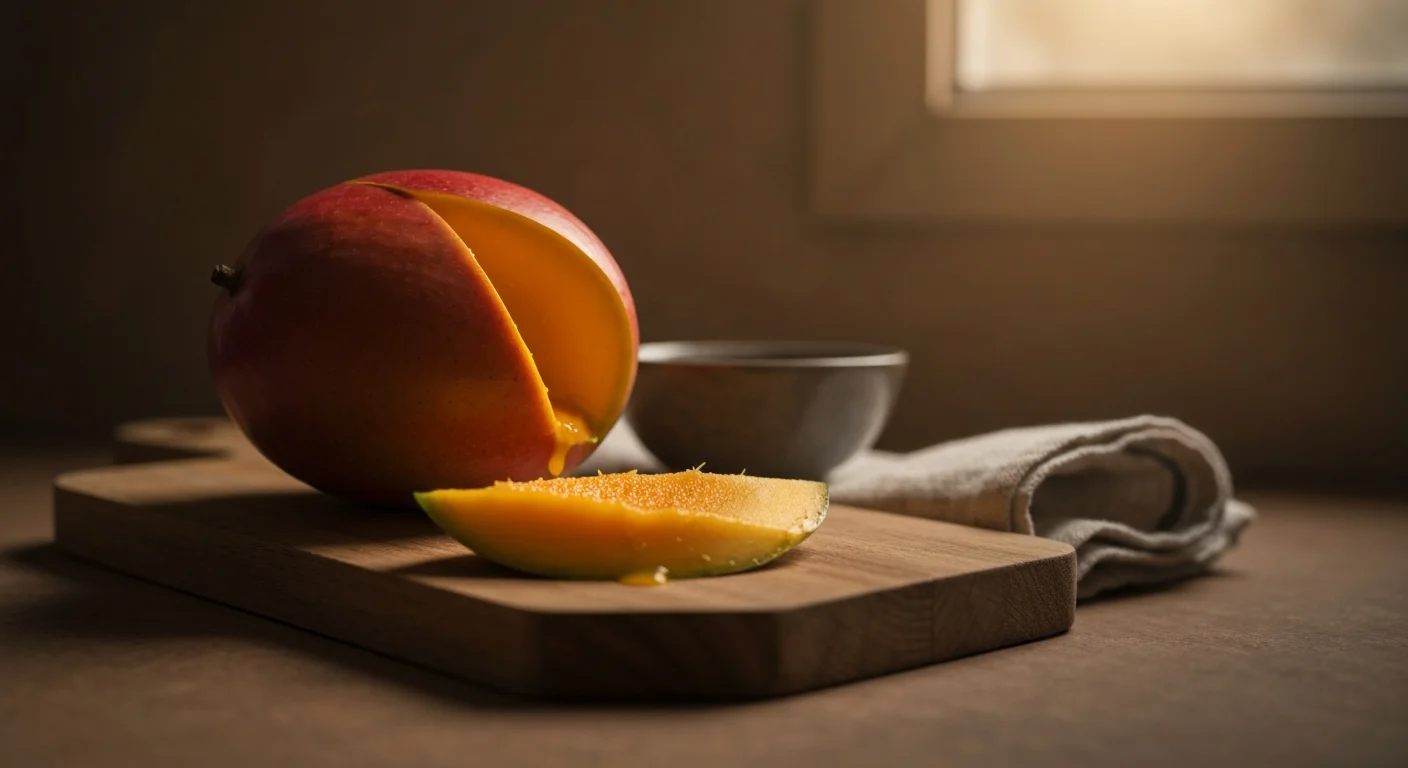
    The art of eating an Indian mango is not about forks, plates, or napkins. It’s a ritual with its own rules — and in Andhra Pradesh, the ultimate test is the Nuzvid Rasalu: squeeze, suck, and at the end, the seed must come out white.

    Every Indian mango has a proper way to eat it. Most of us don’t learn this from cookbooks. We learn it from our mothers, our grandmothers, and the older cousins who laughed at us when we tried to use a spoon. The ritual is older than we are, older than most cookbooks, and it changes slightly by region, by variety, and by family.

    Today I want to share the one I grew up with in Andhra Pradesh — and why, even here in our Texas kitchens, we still do it the same way.

    The Nuzvid Rasalu Method: My Childhood’s Ultimate Test

    Nuzvid is a small town in Krishna district, Andhra Pradesh. It is famous for one thing: the best Rasalu mangoes in the country. These are small, fiberless, intensely sweet mangoes with thin skin. You’ll find them on our website as Chinna Rasalu — the petite, aromatic variety we ship to Texas during the short May-to-June window.

    Here’s how we eat them — and here’s the competition we turned it into as kids:

    1. Squeeze gently. The mango must be fully ripe. You roll it between your palms for about a minute — not hard enough to break the skin, but firm enough that the flesh inside turns to pulp. You can feel it give way under your fingers.
    2. Poke a small hole at the top. Just at the stem end, with your thumbnail or a clean knife tip. No bigger than a pea.
    3. Suck. The pulp comes out through that tiny hole, sweet and silky. No knife, no spoon, no plate.
    4. Keep squeezing from the bottom. As you suck, you push the pulp up toward the hole. Bottom to top, steady pressure, patient rhythm.
    5. Finish clean. This is where the competition begins.

    In our family, finishing a Nuzvid Rasalu properly meant three things, all of which had to be true at the same time:

    • No spillage. Not a drop of juice on the floor, the shirt, or the table.
    • Clean hands and fingers. If your palms were sticky when you were done, you had done it wrong somewhere.
    • The seed must come out white. Not yellow. Not orange. White.

    That last one was the real test. A yellow seed meant you had left pulp behind. You had not squeezed all the way down to the seed. A white seed meant you had gotten every last bit — that the mango had been honored, that nothing was wasted, and that you had done your grandmother’s method right.

    My older cousin, Kiran, held the family record for years. He could finish a rasalu in under two minutes, seed bleached clean, not a single drop anywhere. The rest of us were chasing him from age five.

    The Three Rules of Proper Mango Eating in Andhra

    The Rasalu squeeze is not the only technique — just the most iconic one. Across Andhra and Telangana, the rules we all grew up with were simpler:

    Rule one: eat it raw, not cooked. A ripe mango does not need anything added to it. Not sugar, not cream, not lime. If the mango needs help, the mango is not ripe.

    Rule two: eat it with your hands. A mango is sensual. You need to feel the skin, the give of the flesh, the slickness of the juice. A fork puts a metal wall between you and the fruit. Nothing good comes from that wall.

    Rule three: eat it where spillage is expected. Over a plate at the dining table is acceptable. Over a newspaper on the floor is better. Over the kitchen sink is fine in modern homes. The bathroom is where my uncle Raghu used to eat his — he said the acoustics made the slurping sound more satisfying. Nobody ever questioned him.

    Why Forks Are an Insult to a Ripe Mango

    When I moved to Texas, I watched Americans eat mangoes with forks. They’d cut them into little cubes, arrange them in bowls, and eat them like a polite fruit salad. No offense to anyone — I’ve been to those brunches too — but a fork turns a mango into just another piece of fruit. And a real Alphonso or Himayath deserves better than “just another piece of fruit.”

    The thing about eating a mango with your hands is that you can’t be in a hurry. You have to slow down. You have to commit to getting sticky. You have to accept that for the next ten minutes, you will not be doing anything else. That slowness is part of the flavor. When you rush a mango, it rushes you back.

    The Newspaper-on-Floor Method

    Back home, when multiple mangoes were being eaten at once — during a family visit, on a Sunday afternoon, or when a whole crate had arrived — we didn’t use the table. We spread a newspaper on the floor of the front room, and everyone sat cross-legged around it.

    The oldest person got first pick. The youngest child was allowed to make the most mess. My grandmother would inspect everyone’s seeds at the end. A yellow seed from anyone over the age of ten got a gentle smack and a lecture: “Do you know how long it took to grow this mango? Do you know how many people it passed through to reach you? And you’re throwing away the best part?”

    The mangoes came from the packing houses of Andhra in wooden crates wrapped in hay. Each one had been hand-picked and hand-sorted. That lecture was not really about the pulp on the seed. It was about respecting the people, the trees, the rain, the distance, the time.

    The Texas Sink Method: Our Plan B

    You can’t spread a newspaper on a Texas dining room floor. Or I mean, you can, but the dog will eat it, the kids will track it through the house, and your spouse will have questions. Most of our customers in Austin, Dallas, Houston, and San Antonio have modernized the ritual. Here’s what works:

    • Stand over the kitchen sink. This is the Texas version of the newspaper on the floor. The sink catches everything. The juice can go anywhere. Nobody judges.
    • Have a paper towel ready. Not for wiping while you eat — for after. Mid-mango wiping breaks the rhythm.
    • Roll up your sleeves. Mango juice on a shirt cuff is a stain you will remember for years. I learned this the hard way in a white shirt at my first job in Texas.
    • Eat over a deep bowl if you want to sit down. A wide, deep bowl catches the drips. A plate does not. Your grandmother would disapprove of a plate.

    Different Rituals for Different Varieties

    Not every Indian mango is a Rasalu. Each variety in our nine-variety lineup has its own proper method:

    • Alphonso: Too precious to squeeze. Cut it into cheeks, score the flesh with a knife, invert it so the cubes pop up, eat each cube slowly with your fingers. The skin is fragile. The flavor is delicate. This one deserves ceremony.
    • Kesar: Can be eaten either way. The pulp is firm enough to slice but sweet enough to squeeze. Most people in Gujarat do both.
    • Banginapalli: The hedgehog cut. Firm flesh, zero fiber, holds shape beautifully. You can eat this with a spoon and not feel guilty.
    • Chinna Rasalu (Nuzvid Rasalu): The squeeze and suck method. This is the one I described above. Non-negotiable.
    • Himayath: Large, thin-skinned, fiberless. Peel by hand, bite directly, let the juice run down your wrist. There is no clean way to eat a Himayath. That is the point.
    • Totapuri: Rarely eaten raw. This one is for pickles, chutneys, and juice. If you must eat it fresh, slice it thin and sprinkle salt and chili powder on it.

    Teaching Your Texas-Born Kids the Rasalu Rules

    My daughter was born in Round Rock. She had never seen a newspaper-on-the-floor mango session. The first time we handed her a rasalu, she tried to eat it with a fork.

    We sat her down and taught her the three rules. She was seven. She got juice on her shirt, on the counter, on the dog. The seed came out yellow. She cried.

    The next year, she got a better seed. The year after that, her seed came out almost white. By last summer, at eleven, she was inspecting my seed and laughing. “Daddy, look at that. So much pulp left. Thatha would not be proud.”

    That is the point of the ritual. It is not really about the mango. It is about slowing down, paying attention, and teaching the next generation that some things are worth doing with your hands. Even if the kitchen is in Texas and the mango flew in from Nuzvid four days ago.

    Frequently Asked Questions

    What is the Nuzvid Rasalu sucking method?

    The Nuzvid Rasalu method is an Andhra tradition: squeeze a fully ripe rasalu mango between your palms to soften the pulp, poke a small hole at the stem end, and suck the pulp out while squeezing from the bottom upward. Done right, the seed comes out white and your hands stay clean.

    Why does the seed need to come out white?

    A white seed means you extracted every bit of pulp successfully. A yellow or orange seed means you left flavor behind. In Andhra households, this is the family test for whether you ate the mango properly. It’s about skill and respect for the fruit.

    Can you use the squeeze method on Alphonso?

    No. Alphonso mangoes have delicate skin that tears under pressure, and the flavor profile rewards slow appreciation rather than suck-and-squeeze speed. Alphonso is best cut into cheeks, scored, and eaten cube by cube. Save the squeeze method for Rasalu varieties like our Chinna Rasalu.

    Why do Indians prefer eating mangoes by hand?

    Eating by hand preserves the slow, sensory ritual that defines mango season. A fork rushes the experience and creates distance from the fruit. Hands let you feel the ripeness, control the juice, and commit fully to the moment. Most Indian families consider this the only proper method.

    How do I teach my Texas-born kids this tradition?

    Start with our Chinna Rasalu mangoes when they’re fully ripe. Show them the squeeze, the hole, the suck, and the white-seed test. Let them get sticky the first few times. Explain why it matters — that it’s how their grandparents in India did it, and doing it slowly is half the point.

    Bring Nuzvid Rasalu to Your Texas Kitchen

    We ship Chinna Rasalu mangoes from Nuzvid to pickup points across Austin, Dallas, Houston, and San Antonio during the short May-to-June window. The box comes with firm mangoes — you’ll need to ripen them on the counter for 2-3 days before the squeeze method will work (full ripening guide here).

    When you’re ready, stand over the sink. Roll up your sleeves. Teach the kids. Keep score on the seeds. Send us a photo of a perfectly white seed — we’ll put it on the wall.
    Order Chinna Rasalu for Pickup

  • Chinna Rasalu Mango: The Small Variety Most Americans Miss

    Chinna Rasalu Mango: The Small Variety Most Americans Miss

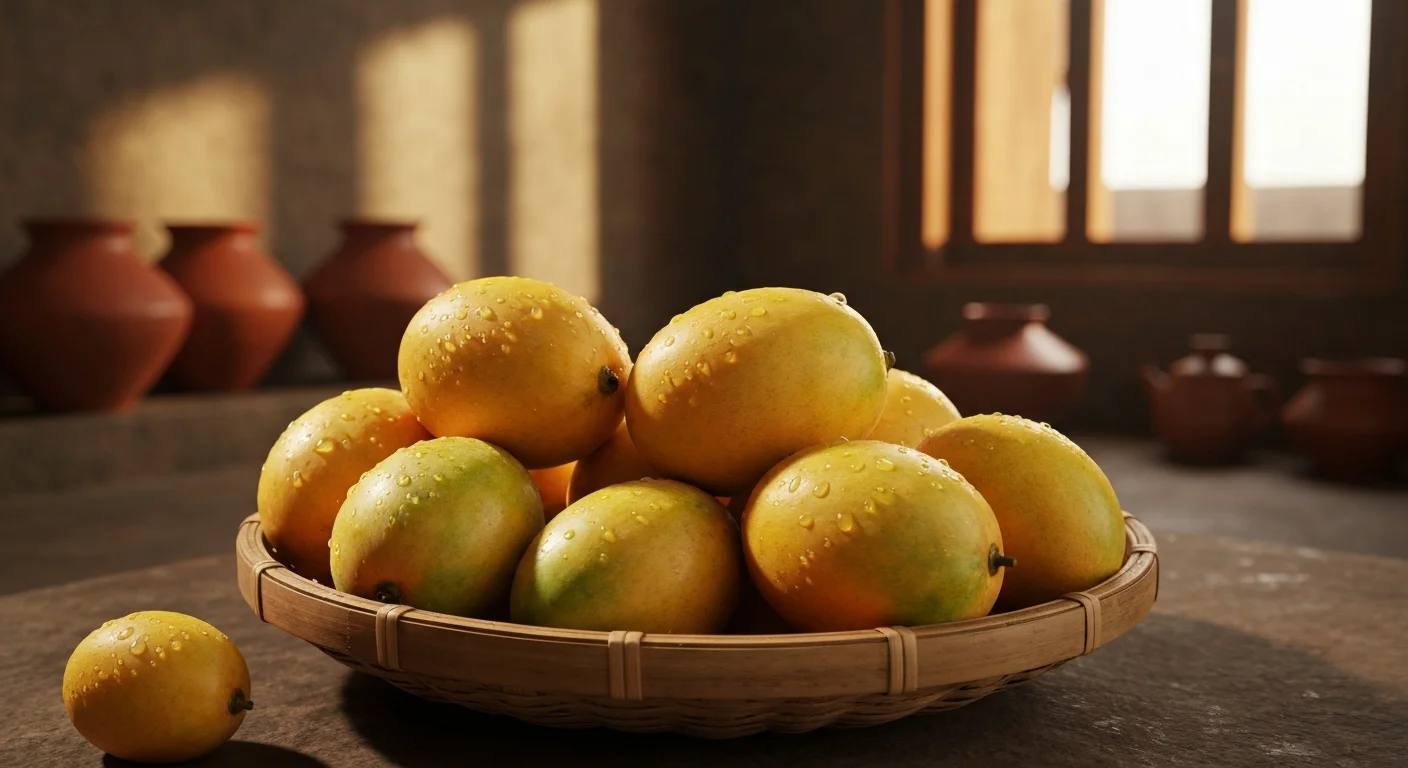
    Chinna Rasalu is a small, oval-shaped mango from coastal Andhra Pradesh, India, prized for its exceptionally high sugar content (22-24 Brix), fiberless pulp, and concentrated aroma. Unlike the larger Banginapalli or Alphonso varieties, a single Chinna Rasalu weighs only 150-200 grams, yet delivers more sweetness per gram than almost any mango in the world. At Swadeshi Mangoes, we deliver hand-picked Chinna Rasalu from Krishna and Guntur districts to customers across Texas each May and June, and most first-time buyers are stunned by how much flavor fits inside such a small fruit.

    What Is Chinna Rasalu and Where Does It Come From?

    The word “Chinna” means small in Telugu, and “Rasalu” translates to juice or essence. Together the name describes exactly what this mango is: a small juice mango. It is a sibling variety to the larger Pedda Rasalu (big juice mango), but Texas customers who have tried both almost always come back asking for Chinna. The fruit grows primarily in the Krishna, Guntur, Khammam, and West Godavari districts of Andhra Pradesh and Telangana, with harvest running from mid-May through late June depending on monsoon timing.

    Coastal Andhra sits between 16 and 17 degrees north latitude, with red lateritic soils, hot April-May temperatures that push 44 C, and a short cool winter that stresses the tree into heavy flowering. Those exact conditions, according to a 2022 ICAR-Central Institute of Subtropical Horticulture study, are what concentrate sugars in the small-sized rasalu varieties. The same cultivar grown in less stressful climates produces larger, blander fruit.

    How Chinna Rasalu Differs from Pedda Rasalu

    Pedda Rasalu weighs 300-400 grams per fruit, has a slightly tangier finish, and is typically used for aam ras (mango pulp) because the yield per mango is higher. Chinna Rasalu, weighing roughly half as much, delivers a rounder, honey-forward sweetness with almost no acidity. The pulp is so soft at peak ripeness that the traditional way to eat it in Vijayawada and Eluru is to massage the fruit gently between your hands, snip off the tip, and suck the juice directly out. No knife, no plate, no mess beyond your chin.

    Why Most Americans Have Never Heard of It

    Chinna Rasalu rarely shows up in American grocery stores for three practical reasons. First, the fruit is small, so the cost per pound to ship refrigerated from India is higher than Alphonso or Kesar. Second, it ripens unevenly on the tree and must be hand-picked over two or three visits, which cuts into scale. Third, it has a shelf life of only 6-8 days after ripening, compared to 10-14 days for Banginapalli. Large importers optimize for shelf life and margin, so small rasalu varieties get left behind.

    We decided to carry it anyway. A large portion of our Texas customer base has roots in Andhra Pradesh and Telangana, and every season the same request comes in: “Can you get the small one, the one my grandmother used to buy?” That grandmother was almost always buying Chinna Rasalu from a roadside cart in Vijayawada or Rajahmundry.

    Flavor Profile and Eating Experience

    If you line up nine Indian mango varieties blindfolded, Chinna Rasalu is the one that registers as pure honey with a faint floral lift. There is no citric edge, no resinous undertone, no aftertaste. The sugar reading at peak ripeness regularly hits 22-24 degrees Brix on a refractometer, which is higher than most table grapes and roughly equivalent to a ripe Medjool date. For comparison, a typical grocery-store Tommy Atkins mango measures 12-14 Brix.

    The texture is the other standout feature. Chinna Rasalu has almost no fiber. When you cut one open, the pulp is the consistency of loose custard rather than the firmer flesh of an Alphonso. That makes it the preferred variety for people who dislike stringy mangoes, including children and older adults who find fibrous fruit hard to eat.

    A Texas Customer Story

    One of our Plano customers, a retired engineer who grew up in Kakinada, ordered two boxes last June. He called the next day and said he had eaten four in one sitting, something his cardiologist would not approve of, and asked if we could reserve him a third box. His wife sent a photo of their grandchildren sucking the juice out of the fruit over the kitchen sink, all four cheeks smeared yellow. That photo is why we keep carrying the variety even though the logistics are harder.

    Chinna Rasalu Nutrition Facts

    According to a 2023 USDA FoodData Central entry cross-referenced with the Indian Council of Medical Research nutrient database, a 150-gram Chinna Rasalu delivers the following:

    NutrientPer 150g fruit% Daily Value
    Calories90 kcal4.5%
    Total sugars21 g
    Vitamin C54 mg60%
    Vitamin A (RAE)84 mcg9%
    Fiber2.4 g9%
    Folate65 mcg16%
    Potassium252 mg5%

    The National Mango Board notes that the polyphenol content of small Indian mango varieties, including the rasalu family, is 2-3 times higher than that of Central American shipping varieties, likely due to slower ripening and higher UV exposure during cultivation.

    How to Ripen and Store Chinna Rasalu in Texas

    Texas heat is actually an advantage. We ship Chinna Rasalu from India at the mature-green stage, meaning the fruit has reached full size but has not begun the ethylene climacteric. In a Texas kitchen at 78-82 F, the fruit will ripen evenly over 4-6 days on the counter. Do not refrigerate green. The cold will permanently arrest the ripening process.

    Once the fruit yields to gentle pressure and smells floral at the stem end, it is ready. At that point you can move it to the fridge for 2-3 days of hold time, but flavor is best at room temperature. For detailed handling tips, see our mango care guide.

    Serving Suggestions

    The traditional Andhra way is to soften the fruit by rolling it between your palms, snip the stem tip, and drink the juice directly. For a more presentable serving, cut around the flat pit, score the cheeks, and invert. Chinna Rasalu also makes an extraordinary aam ras: blend the pulp with a pinch of cardamom and serve over hot puris. Because the variety is fiberless, it purees to a glass-smooth consistency without straining.

    How We Source Chinna Rasalu for Texas Delivery

    We work directly with two orchard families near Nuzvid and one near Eluru. The fruit is harvested at commercial maturity, sorted by weight and skin clarity, packed in ventilated six-kilogram boxes, and air-freighted to Dallas-Fort Worth. From there our Texas pickup agent network distributes to Austin, Houston, and San Antonio within 48 hours of customs clearance.

    Our 30-plus pickup agents across Texas hold the fruit at controlled temperatures and hand it to customers at the green-mature or half-ripe stage, depending on the customer’s pickup window. This is why we do not ship through standard grocery channels. The variety is too delicate and the ripening window too narrow.

    Chinna Rasalu vs. Other Indian Mangoes

    VarietyAvg. WeightBrix (sugar)Fiber levelBest use
    Chinna Rasalu150-200 g22-24Very lowEat fresh, aam ras
    Alphonso200-300 g20-22LowEat fresh, desserts
    Banginapalli350-500 g18-20LowSlicing, salads
    Kesar250-350 g20-22Low-mediumSmoothies, lassi
    Himayath400-600 g19-21Very lowEat fresh, gifting

    Frequently Asked Questions

    Why is Chinna Rasalu so small?

    Chinna Rasalu is genetically a small-fruited cultivar native to coastal Andhra Pradesh. The small size is not due to under-ripening or poor cultivation; it is the natural mature size for this variety. The compact fruit concentrates sugars and aromatic compounds, which is why it tastes sweeter per bite than larger mangoes.

    When is Chinna Rasalu available in Texas?

    Chinna Rasalu has a short harvest window in India, typically mid-May through late June. At Swadeshi Mangoes we receive shipments weekly during this period and deliver across Austin, Dallas, Houston, and San Antonio. Pre-orders open in April each year and sell out by early June in most seasons.

    How is Chinna Rasalu different from Alphonso?

    Alphonso is larger (200-300 g), has a firmer, denser pulp, and carries a distinctive resinous-floral aroma. Chinna Rasalu is smaller, softer, fiberless, and tastes closer to pure honey with almost no tang. Alphonso works better for desserts; Chinna Rasalu is built for eating out of hand or sucking directly from the fruit.

    Is Chinna Rasalu safe for diabetics?

    Chinna Rasalu has a high natural sugar content (22-24 Brix) and a glycemic index around 55-60. Diabetics should portion carefully, ideally half a fruit paired with protein or fat, and consult their physician. The fruit does contain fiber, vitamin C, and polyphenols that have shown favorable effects on postprandial glucose in a 2021 PubMed-indexed study on Indian mango cultivars.

    Can I order Chinna Rasalu for delivery in Houston or Austin?

    Yes. Swadeshi Mangoes delivers Chinna Rasalu to all four major Texas metros through our pickup agent network. Place your order on our order form, select your nearest agent, and we will notify you when your box is ready for pickup. Home delivery is available in select Texas zip codes.

    Ready to Try the Mango Americans Miss?

    Chinna Rasalu is one of the nine Indian mango varieties we carry in Texas this season, and it is the one we most often recommend to customers who want the authentic taste of an Andhra summer. Season windows are narrow and the fruit sells out fast. Head to our order form to reserve your box, browse all our mango varieties, or read more variety guides on the Swadeshi Mangoes blog. If you have questions about ripening or pickup, check our mango care guide or message us directly.

    For more on Indian mango cultivation standards, see the APEDA export guidelines and the National Mango Board research library.

Chat on WhatsApp