Flowers die in a week. Chocolates are forgotten by Tuesday. A box of Indian mangoes? That is a gift people will talk about for the entire season. Here is how to use mango gifting for every occasion in Texas.
Gift-giving should be personal and memorable. But we all fell into predictable patterns — the Amazon gift card, the bottle of wine, the scented candle. A box of fresh Alphonso or Kesar mangoes breaks that pattern. It is unexpected, luxurious, deeply personal for anyone with Indian roots, and genuinely delightful for anyone who loves great food.
Mother’s Day (May)
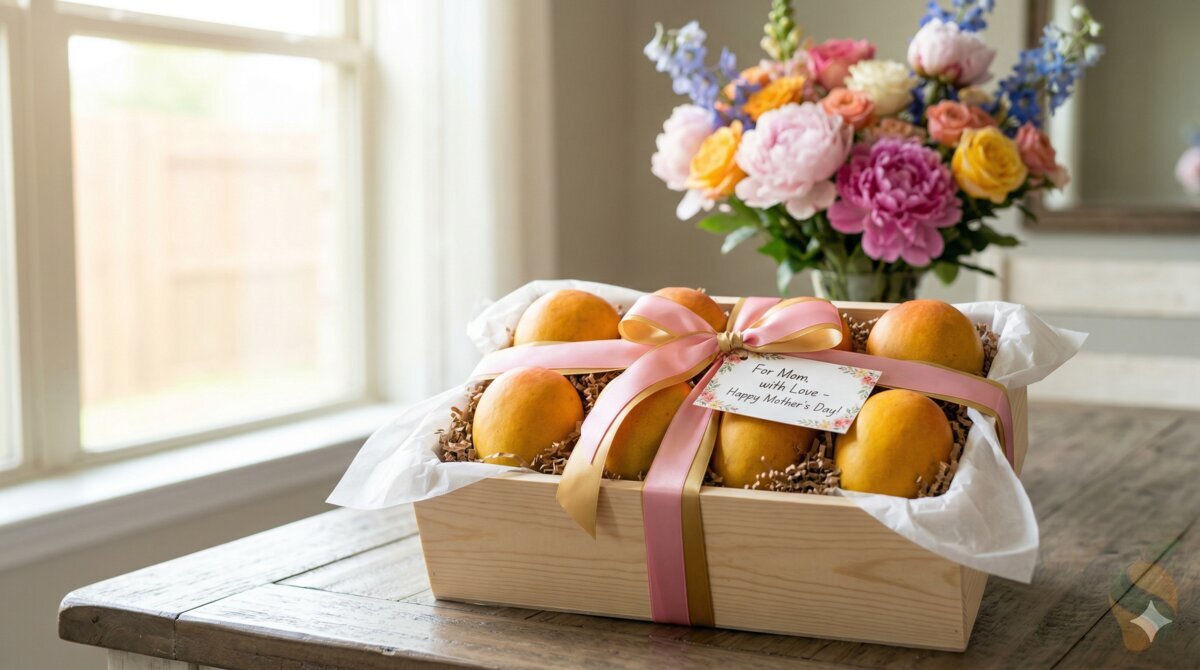
The timing is perfect — peak mango season overlaps with Mother’s Day. A box of Alphonso is the gift every Indian mom actually wants but will never ask for.
The play: Order a box to arrive the weekend before Mother’s Day. Include a handwritten note: “Because no one deserves the best mangoes more than you.” She will call you crying. In a good way.
For Indian mothers who grew up in India, Alphonso carries decades of memories — childhood summers, family gatherings, the way their own mother served them. You are not just giving fruit. You are giving her a time machine. For non-Indian mothers, frame it as “the world’s most famous mango” — a luxury gift that rivals any gourmet basket. Pair it with our ripening guide so she knows exactly when to enjoy them.
Teacher Appreciation (May)
Your kid’s teacher has received 47 mugs that say “Best Teacher Ever.” Give them something they will actually remember.
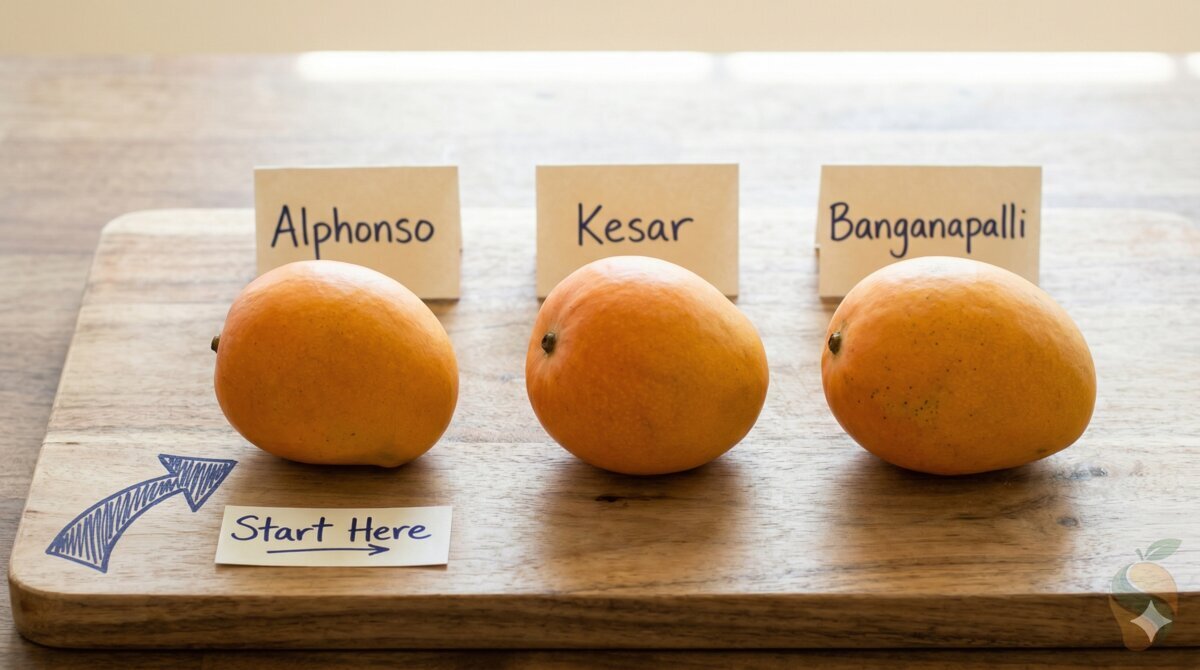
The play: A 3-piece mango sampler (one Alphonso, one Kesar, one Banganapalli) in a small gift bag with a note explaining each variety. Teachers talk. This will be the gift that gets mentioned in the staff room.
Include a simple card with tasting notes — just two or three lines per variety. Teachers appreciate thoughtfulness and learning, and this transforms a food gift into an experience. We have seen entire school teams place group orders the following year after one parent started the mango gifting tradition.
Graduation Season (May-June)
Add a mango tasting station to the graduation party. It is a conversation starter, a cultural moment, and a way to feed 20 guests without ordering more pizza.
The play: Order 3-4 boxes of mixed varieties. Set up a tasting station with small plates, toothpicks, and variety labels. Let guests try each one and vote for their favorite. This becomes the highlight of the party.
For the graduate, a box of premium mangoes says “enjoy one last summer luxury before dining hall food.” If the graduate is Indian, mangoes represent sweetness and auspicious beginnings — exactly the energy for a new chapter.
Housewarming
In Indian tradition, mangoes represent prosperity and new beginnings. A box of mangoes for a new home is deeply meaningful — and practical. They will eat them.
The play: One box of premium Alphonso with mango leaf decoration (if you can find fresh leaves). Include a card explaining the tradition of the mango as a symbol of abundance.
In Hindu tradition, a “toran” of mango leaves is hung at the entrance of a new home to invite prosperity. If you can source fresh mango leaves, tying a small bunch to the box elevates this from a food gift to a cultural blessing. Practical bonus: people moving into a new home are tired and hungry. Fresh mangoes require no cooking, no dishes — just a knife and a moment of sweetness amid the chaos.
Corporate and Client Gifts
Every business gives the same corporate gifts: branded notebooks, gift cards, fruit baskets from Harry and David. A box of imported Indian mangoes is memorable because it is unexpected.
The play: Order 5-10 boxes for your team or top clients. Include a professional card with your company name: “Something sweet for a great partnership.” Bulk pricing available — contact us directly.
Mango gifting works for business because it is premium without being ostentatious. A box of Alphonso costs less than a nice bottle of wine but feels more luxurious because it is rare and unfamiliar. Recipients ask about the mangoes, where they come from, why they taste different — that conversation keeps your brand in mind far longer than a logo-printed pen. Mangoes are also a safe choice for diverse teams: vegan, gluten-free, allergen-friendly, and culturally neutral.
Father’s Day (June)
Every desi dad has a mango story from childhood. This gift is not just fruit — it is a time machine.
The play: Order his favorite variety (ask mom which one) and pair it with a note: “For the man who told us about the mango tree in his backyard 400 times.” He will pretend he is not emotional. He is.
The key is specificity. Was it Alphonso from Maharashtra? Banganapalli from Andhra Pradesh? Kesar from Gujarat? Himayath from Hyderabad? The variety from his childhood hits hardest. For non-Indian food-enthusiast fathers, position it as a gourmet experience: “These are rated the best mangoes in the world. Not available in any grocery store.”
Get Well Soon
Mangoes are packed with Vitamin C, Vitamin A, and antioxidants. They are also genuinely comforting. A box of mangoes says “I hope you feel better” in a way that grocery store fruit baskets cannot.
The play: Order a small box of Kesar or Alphonso with a note: “Something to make the recovery taste sweeter.” Both can be scooped with a spoon, requiring almost no energy from someone unwell. Mangoes are nutrient-dense, easy to digest, and provide quick energy from natural sugars. Include our ripening guide so the recipient knows when they are ready.
Diwali and Festival Season
While peak mango season (April-July) does not overlap with Diwali, the spring festival season — Ugadi, Gudi Padwa, Vishu, and Baisakhi — aligns perfectly. Fresh mangoes are a traditional offering and gift during these celebrations.
The play: Order early-season varieties and pair with traditional sweets from your local Indian bakery. Fresh mangoes and mithai together create a gift that is entirely Indian and far more meaningful than the generic dry fruit boxes that circulate during festivals.
For Eid and Ramadan: Mangoes hold a special place in South Asian Muslim culture. An iftar gift of premium mangoes is deeply appreciated. Time your order so they ripen for the last ten days of Ramadan, when generosity and gift-giving peak.
How to Present a Mango Gift Box
Presentation matters, especially when the recipient is unfamiliar with Indian mangoes:
- Include tasting notes: Write the variety name, flavor description, and best way to eat it. This turns the gift into a guided experience.
- Add a cultural note: “In India, the mango is called the king of fruits and symbolizes love, prosperity, and abundance.”
- Pair with a complementary item: A small jar of cardamom, pistachios, or saffron threads — traditional accompaniments to mango desserts that signal thoughtful pairing.
- Use a cloth wrap: Instead of a gift bag, wrap the box in cotton cloth with a ribbon. Beautiful, premium, reusable.
How to Order as a Gift
When placing your order at swadeshimangoes.com, add a note in the comments with the recipient’s name, pickup location preference, and any message you want included. Our agents will coordinate the handoff.
Practical tips for gift orders:
- Order 3-5 days before the occasion: This accounts for shipping plus 2-3 days of ripening at room temperature.
- Choose the right pickup location: Pick the location closest to the recipient, not to you.
- Match variety to their home state: Maharashtra means Alphonso. Andhra Pradesh means Banganapalli or Chinna Rasalu. Gujarat means Kesar. This personalization turns a good gift into an unforgettable one.
- For surprises: Mention in your order notes that this is a gift. Our pickup agents are experienced with gift handoffs.
For bulk corporate orders (5+ boxes), email us directly at [email protected] for pricing and scheduling.
Order a mango gift box for your next occasion.
Delivering Mango Gifts Across Texas
Swadeshi delivers mango gift boxes to Austin, Dallas, Houston, and San Antonio with 30+ pickup locations. Browse our variety guide to choose the perfect gift, check the FAQ page for ordering questions, or visit the blog for more inspiration.
Frequently Asked Questions
Can I send mango gift boxes to someone else?
Yes. When ordering, add the recipient’s name and preferred pickup location in the comments. Our agents will coordinate the handoff. Include a personal message and we will pass it along.
Do you offer bulk pricing for corporate mango gifts?
Yes. Orders of 5+ boxes qualify for bulk pricing. Email [email protected] with your quantity and delivery timeline for a custom quote.
Which mango variety makes the best gift?
Alphonso is the safest choice — universally loved and recognized as the premium variety. For someone from a specific region, matching the variety to their home state adds a deeply personal touch.
How far in advance should I order mango gifts?
Order 3-5 days before the occasion for shipping and ripening time. For Mother’s Day and Father’s Day, order a week in advance as demand is high and varieties may sell out.