Tag: alphonso

  • Health Benefits of Indian Mangoes: Nutrition Facts Backed by Science

    Health Benefits of Indian Mangoes: Nutrition Facts Backed by Science

    Indian mango varieties like Alphonso contain up to 2,740 mcg of beta-carotene per 100g — over 4x the USDA baseline — along with 36mg vitamin C, 1.6g fiber, and powerful antioxidants including mangiferin.

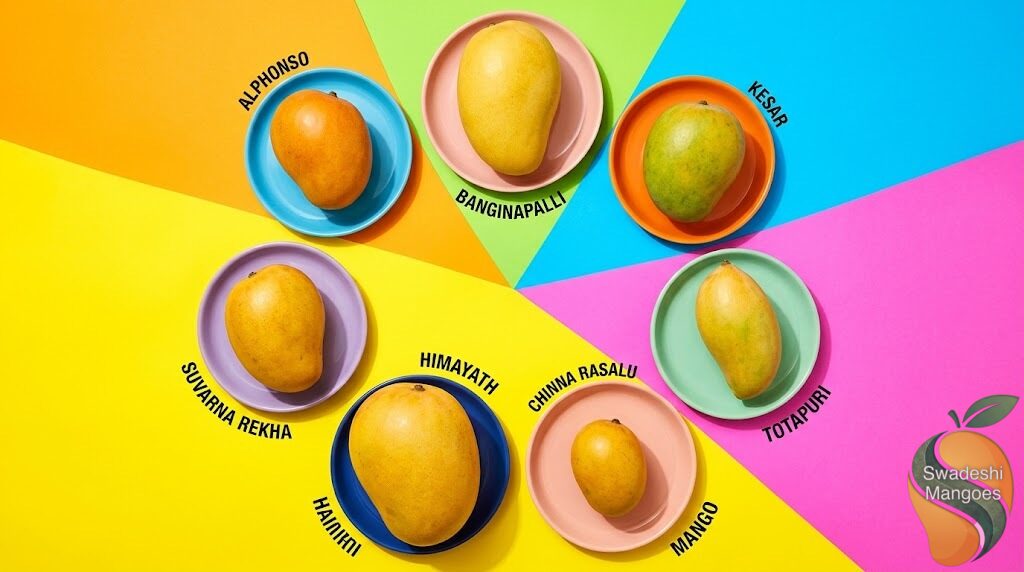
    Indian mangoes are not just the most flavorful fruit you will eat this summer — they are also one of the most nutrient-dense. Varieties like Alphonso, Banginapalli, and Kesar contain significantly higher levels of beta-carotene, vitamins, and antioxidants than the generic supermarket mangoes most Americans are used to.

    At Swadeshi Mangoes, we believe knowing what you are eating matters. Here is a complete, science-backed breakdown of why Indian mangoes deserve a spot in your family’s diet.


    Mango Nutrition Facts: What’s in 100g of Fresh Mango?

    The following data is from the USDA FoodData Central (NDB #09176, “Mangos, raw”), with Indian variety-specific notes from the National Institute of Nutrition (NIN), Hyderabad and Indian Council of Agricultural Research (ICAR).

    NutrientPer 100g (USDA Baseline)% Daily Value
    Calories60 kcal
    Carbohydrates15.0 g5%
    Dietary Fiber1.6 g6%
    Vitamin C36.4 mg40%
    Vitamin A (RAE)54 mcg6%
    Beta-Carotene640 mcg
    Folate (B9)43 mcg11%
    Vitamin B60.119 mg7%
    Vitamin E0.9 mg6%
    Potassium168 mg5%
    Copper0.111 mg12%

    Important: The USDA baseline reflects generic supermarket mangoes (typically Tommy Atkins or Kent). Indian varieties like Alphonso contain significantly more beta-carotene — up to 2,740 mcg per 100g, which is over 4 times the USDA baseline (Vasant P. et al., Journal of Food Science and Technology, 2012).


    How Indian Mango Varieties Compare Nutritionally

    Nutrient HighlightAlphonsoBanginapalliKesar
    Beta-Carotene~2,740 mcg/100g~640 mcg/100g~2,000–2,500 mcg/100g
    Calories70–74 kcal/100g~60 kcal/100g~65 kcal/100g
    Sugar Content16–17g/100g13–14g/100g~15g/100g
    Vitamin C~36 mg/100g~30–35 mg/100g~35 mg/100g
    FiberNone (fiberless)None (fiberless)Minimal
    StandoutHighest beta-caroteneBest pulp-to-seed ratioRich total carotenoids

    Source: Varakumar et al., Food Chemistry, 2017; NIN Hyderabad cultivar analyses. For a full flavor and texture comparison between these three popular varieties, see our Alphonso vs Banginapalli vs Kesar guide.


    Indian mango health benefits infographic showing vitamin A, vitamin C, digestion, and heart health
    Key health benefits of Indian mangoes at a glance

    6 Science-Backed Health Benefits of Indian Mangoes

    1. Related: the science of mangoes and metabolic health. Related: elevate your Banginapalli experience with savory-sweet pairings. Powerful Immune Support

    A single cup of mango (~165g) delivers about 66% of your daily Vitamin C requirement. Vitamin C is a proven immune modulator — it strengthens epithelial barriers and enhances the activity of neutrophils and lymphocytes, your body’s front-line defenders.

    Beyond Vitamin C, mango polyphenols have been shown to modulate inflammatory markers in laboratory studies.

    Reference: Carr & Maggini, “Vitamin C and Immune Function,” Nutrients, 2017 (PMID: 29099763); Edirisinghe et al., Molecular Nutrition & Food Research, 2011.

    2. Exceptional for Eye Health

    Indian mangoes — especially Alphonso — are among the richest fruit sources of beta-carotene (provitamin A) available. Your body converts beta-carotene into retinol, essential for rhodopsin production and night vision. Alphonso delivers roughly 18 times more beta-carotene than an apple and nearly 40 times more than a banana.

    Mangoes also contain lutein and zeaxanthin, carotenoids that accumulate in the retina and help protect against age-related macular degeneration.

    Reference: Abdel-Aal et al., “Dietary Sources of Lutein and Zeaxanthin Carotenoids,” Nutrients, 2013 (PMID: 23571649).

    3. Digestive Health — Better Than Fiber Supplements

    A clinical trial at Texas A&M University found that daily mango consumption was more effective than an equivalent amount of fiber from psyllium (Metamucil) for relieving chronic constipation. The researchers attributed this to the interaction between mango polyphenols and gut bacteria — not just the fiber content.

    Mangoes also contain natural digestive enzymes called amylases that help break down complex carbohydrates.

    Reference: Kim et al., “Mango Supplementation Improves Constipation,” Molecular Nutrition & Food Research, 2018 (PMID: 29377594).

    4. Heart-Healthy Potassium and Polyphenols

    Mangoes provide 168 mg of potassium per 100g, which supports healthy blood pressure. A 2018 pilot study found that consuming 2 cups of mango daily for 6 weeks reduced systolic blood pressure in lean adults.

    Mangiferin, a polyphenol concentrated in Indian mango varieties, has demonstrated lipid-lowering effects in published research.

    Reference: Lucas et al., FASEB Journal, 2018; Muruganandan et al., Journal of Ethnopharmacology, 2005 (PMID: 15740886).

    5. Skin Health and UV Protection

    Vitamin C is a required cofactor for collagen synthesis — the protein that keeps skin firm and elastic. Combined with Vitamin A (which supports skin cell turnover) and mangiferin (which has demonstrated UV-protective properties in cell models), mangoes support skin health from multiple angles.

    Reference: Pullar et al., “The Roles of Vitamin C in Skin Health,” Nutrients, 2017 (PMID: 28805671); Telang et al., Pharmacognosy Reviews, 2013 (PMID: 24347919).

    6. Blood Sugar Friendly (Despite the Sweetness)

    This surprises many people: despite their sweetness, mangoes have a glycemic index of 51 (medium). A study on obese individuals found that freeze-dried mango supplementation actually improved glucose tolerance. This is attributed to mangiferin and the fruit’s natural fiber matrix, which moderates sugar absorption. We explore this topic in depth in our article on mangoes and diabetes research.

    Reference: Evans et al., “Mango Supplementation Improves Blood Glucose,” Nutrition and Metabolic Insights, 2014 (PMID: 25210462).


    How Mangoes Compare to Other Popular Fruits

    Per 100gMangoAppleBananaBlueberryOrangeStrawberry
    Vitamin A (mcg)54333111
    Beta-Carotene (mcg)640272632717
    Vitamin C (mg)36.44.68.79.753.258.8
    Folate (mcg)4332063024
    Potassium (mg)16810735877181153
    Calories605289574732

    Key takeaway: Mango dominates in Vitamin A, beta-carotene, and folate. Indian Alphonso mangoes push beta-carotene to ~2,740 mcg — making them one of the richest fruit sources of provitamin A available anywhere. For a detailed side-by-side breakdown, see our Indian mangoes vs Mexican mangoes comparison.

    Source: USDA FoodData Central.


    Indian Mangoes for Kids and Pregnant Women

    For Pregnant Women

    • Folate: One cup of mango (~165g) provides approximately 71 mcg of folate — about 18% of the recommended 400 mcg daily intake. Folate is critical for neural tube development in the first trimester (MRC Vitamin Study, Lancet, 1991).
    • Safe Vitamin A: Unlike retinol supplements (which can be harmful in excess during pregnancy), the beta-carotene in mangoes is the safe, plant-based form. Your body only converts what it needs.
    • Iron Absorption: The Vitamin C in mango enhances absorption of non-heme iron from plant foods — important since iron-deficiency anemia affects approximately 40% of pregnant women globally (WHO).
    • Constipation Relief: The Texas A&M study on mango and constipation is directly relevant — constipation is one of the most common pregnancy complaints.
    • Note: Women with gestational diabetes should account for mango’s sugar content (about 23g per cup) within their carbohydrate budget.

    For Children

    • Vitamin A Powerhouse: The WHO identifies Vitamin A deficiency as a leading cause of preventable childhood blindness. A single Alphonso mango (~200g edible pulp) can provide nearly 100% of a child’s daily Vitamin A requirement.
    • Natural vs. Processed Sugar: Mango delivers its sugar within a fiber and polyphenol matrix that moderates glycemic response — making it a far better snack than processed alternatives with comparable calories.
    • Growth Support: Copper (12% DV per 100g) supports iron metabolism and connective tissue development. Folate supports DNA synthesis during rapid growth phases.
    • Kid-Friendly: The naturally sweet, fiberless texture of Banginapalli and Alphonso makes them easy for even picky eaters to enjoy. No stringy fibers, no tartness — just smooth, sweet fruit.

    The Mangiferin Advantage: Why Indian Varieties Stand Out

    Mangiferin is a polyphenol unique to the mango family. It is concentrated in the peel, bark, and kernel, but is also present in the pulp — especially in Indian cultivars like Alphonso. Research has documented multiple bioactivities:

    • Antioxidant: Scavenges free radicals and reduces oxidative stress markers
    • Anti-inflammatory: Reduces NF-kB pathway activation (Garcia-Rivera et al., Pharmacological Research, 2011)
    • Anti-diabetic: Improved insulin sensitivity in Type 2 diabetes models (Sellamuthu et al., Journal of Medicinal Food, 2013)
    • Gut Health: Modulated gut microbiota composition, increasing beneficial Bifidobacteria (Kim et al., Molecular Nutrition & Food Research, 2018)
    • Neuroprotective: Early animal studies show potential in reducing amyloid-beta aggregation (relevant to Alzheimer’s research)

    A comprehensive review of mangiferin’s bioactivities was published in Molecules (Imran et al., 2017, PMID: 28291784).


    Frequently Asked Questions

    Are mangoes fattening?

    No. A 100g serving of mango contains only 60 calories and 0.38g of fat. The natural sugars are delivered within a polyphenol and fiber matrix that moderates absorption. Studies have shown mango consumption can actually improve glucose tolerance in overweight individuals.

    Which Indian mango variety is the healthiest?

    Alphonso leads in beta-carotene content (up to 2,740 mcg/100g), making it the best choice for Vitamin A. Kesar is a close second with high total carotenoid levels. All Indian varieties are nutritionally superior to generic supermarket mangoes.

    How many mangoes can I eat per day?

    Most nutritionists recommend 1–2 mangoes per day as part of a balanced diet. This provides significant vitamins and antioxidants without excessive sugar intake. One medium Indian mango contains roughly 150–180 calories and about 30–35 grams of natural sugar. For individuals managing diabetes or watching carbohydrate intake, consult your doctor about appropriate portion sizes.

    Are Indian mangoes safe? What about irradiation?

    Yes. All Indian mangoes imported to the US undergo USDA-mandated irradiation at approved facilities. This treatment eliminates pests while preserving nutritional integrity. The process is endorsed by the WHO, FDA, and USDA as safe for food. Learn more about the import process.

    How many calories in an Indian mango?

    An Indian mango contains approximately 60 kcal per 100g based on USDA data, with one medium Alphonso containing approximately 150–180 calories. Indian varieties like Alphonso and Kesar have similar calorie counts to grocery store mangoes, but deliver significantly more vitamins and antioxidants per serving.

    Are mangoes good for gut health?

    Research from Texas A&M University found that mango consumption improved gut bacteria diversity and reduced intestinal inflammation markers. The fiber and polyphenols in Indian varieties like Alphonso support healthy digestion when consumed as part of a balanced diet.


    References

    • USDA FoodData Central: “Mangos, raw” (NDB #09176)
    • Carr AC, Maggini S. “Vitamin C and Immune Function.” Nutrients, 2017. PMID: 29099763
    • Kim H, et al. “Mango Polyphenolics and Chronic Constipation.” Molecular Nutrition & Food Research, 2018. PMID: 29377594
    • Evans SF, et al. “Mango Supplementation and Blood Glucose.” Nutrition and Metabolic Insights, 2014. PMID: 25210462
    • Imran M, et al. “Mangiferin: A Comprehensive Review.” Molecules, 2017. PMID: 28291784
    • Abdel-Aal EM, et al. “Dietary Sources of Lutein and Zeaxanthin.” Nutrients, 2013. PMID: 23571649
    • Vasant P, et al. “Carotenoid Content of Alphonso Mango.” Journal of Food Science and Technology, 2012.
    • Varakumar S, et al. “Total Carotenoids in Indian Mango Cultivars.” Food Chemistry, 2017.
    • National Institute of Nutrition (NIN), Hyderabad — Indian mango cultivar nutrition data
    • World Health Organization — Vitamin A Deficiency and Iron-Deficiency Anemia statistics

    Ready to add the healthiest mangoes to your family’s diet?

    Order Fresh Indian Mangoes →

    Available April–July • Delivery across Texas • Explore all varieties

  • Best Indian Mango Varieties for Kids and Families

    Best Indian Mango Varieties for Kids and Families

    Which Indian Mangoes Are Best for Kids? A Parent’s Guide

    If you grew up eating Indian mangoes, you know the joy of biting into a perfectly ripe Alphonso or Banginapalli during summer. Now you want your kids to experience that same magic. But which varieties are best for kids and families? Not all mangoes are created equal when it comes to little ones.

    This guide breaks down the best Indian mango varieties for kids, considering sweetness, fiber content, ease of eating, and the all-important “will my child actually eat this” factor.

    What Makes a Mango Kid-Friendly?

    Kids are particular eaters (to put it mildly). When choosing Indian mangoes for children, look for these qualities:

    • Low fiber – Nobody wants to watch their kid struggle with stringy mango fibers. The best kid mangoes have smooth, fiber-free pulp.
    • High sweetness – Kids gravitate toward sweet flavors. Mangoes with a tangy or complex flavor profile might not win them over initially.
    • Easy to eat – Size and structure matter. Mangoes that are easy to cut into cubes or scoop with a spoon are practical winners.
    • Mild aroma – Some kids are sensitive to strong smells. Intensely aromatic varieties might overwhelm younger children.

    The Best Varieties for Kids (Ranked)

    1. Banginapalli – The #1 Pick for Families

    Banginapalli is hands down the most kid-friendly Indian mango. Here’s why:

    • Zero fiber. The pulp is completely smooth and silky. No strings, no complaints.
    • Very sweet with a clean, straightforward flavor that kids love.
    • Large size means you get a lot of fruit from each mango. One Banginapalli can easily serve two young children.
    • Easy to cut. The flat seed and large cheeks make it simple to slice into cubes using the hedgehog method.
    • Mild aroma that won’t overwhelm sensitive noses.

    If you’re buying mangoes primarily for kids under 10, start here. Banginapalli is the variety that creates mango lovers for life.

    2. Kesar – Sweet and Aromatic

    Kesar is another excellent choice for families. The sweetness is pronounced and honeyed, which kids respond to immediately. Fiber is minimal, mostly near the seed, and the medium size makes portions manageable.

    Kesar purees beautifully, making it perfect for:

    • Mango milkshakes and smoothies – Blend with cold milk for an instant treat.
    • Mango lassi – A classic that kids love.
    • Mango popsicles – Puree and freeze in molds for a healthy summer snack.
    • Mango yogurt bowls – Mix with plain yogurt and a drizzle of honey.

    The saffron-orange color is also visually appealing, which matters more than adults think when it comes to kids and food.

    3. Alphonso – For the Adventurous Eater

    Alphonso is the finest Indian mango, period. Zero fiber, incredibly creamy texture, and complex sweetness. However, its intense aroma and rich flavor can be a lot for very young children. Kids over 6-7 tend to love it.

    Try serving Alphonso as a dessert course. Cut it into cubes, chill them slightly, and present it as something special. Kids appreciate the “this is fancy fruit” approach.

    4. Himayath – Gentle and Juicy

    Himayath is an underrated family mango. Large, juicy, and with a gentler sweetness that’s never cloying. The smooth texture and generous size make it practical for family consumption. If your kids prefer flavors that aren’t super intense, Himayath is a great option.

    5. Suvarna Rekha – A Sweet Surprise

    Suvarna Rekha is sweet and golden with smooth pulp. While less well-known, it’s a variety that consistently surprises families. Good sweetness and minimal fiber make it a solid family choice when available.

    Varieties to Approach with Caution (for Kids)

    Chinna Rasalu is intensely sweet and aromatic. Adults adore it, but the small size means more seed-to-fruit ratio and the intense flavor can be polarizing for children. Try it with older kids first.

    Totapuri has a tangy-sweet flavor that many kids find too sour. It’s better suited for cooking, chutneys, and dal. Some kids enjoy eating it with a sprinkle of salt and chili powder, but this is generally a grown-up taste.

    Practical Tips for Serving Mangoes to Kids

    The Hedgehog Cut

    This is the best method for serving mangoes to children:

    1. Slice off each cheek along the flat seed.
    2. Score the flesh in a crosshatch pattern without cutting through the skin.
    3. Push the skin side to invert the cheek so the cubes pop out.
    4. Let kids pick cubes off with their fingers or a fork.

    This method is fun, interactive, and mess-minimizing (relatively speaking, since mangoes and kids together will always involve some mess).

    Freeze Mango Cubes

    Frozen mango cubes are a healthier alternative to ice cream and kids love the popsicle-like texture. Cut ripe mango into cubes, spread on a parchment-lined tray, freeze for 2 hours, then transfer to a bag. They’ll keep for months.

    Mango Dipping

    Serve mango slices with a small bowl of yogurt or whipped cream for dipping. This turns snack time into an activity, and kids eat more fruit when there’s a dipping element involved.

    Let Them Help

    Older kids can help with the hedgehog cut (under supervision). Younger ones can help scoop the pulp from halved mangoes with a spoon. Involvement increases enthusiasm.

    How Much to Order for a Family

    A rough guide for families with kids:

    • Family of 3-4 – Start with one box. If your kids are enthusiastic eaters, you’ll want a second.
    • Family of 5+ – Two boxes minimum, especially if ordering Banginapalli (they’ll go fast).
    • Hosting a playdate or party? – Budget 1-2 mangoes per child depending on the variety size.

    Remember that Indian mangoes ripen over several days, so you don’t need to eat the whole box at once. For storage and ripening guidance, check our mango care page.

    Creating Mango Memories

    For many Indian families in Texas, sharing mangoes with the next generation is about more than fruit. It’s about connecting kids to culture, to summers in India, to the tastes that defined your own childhood. There’s something irreplaceable about watching your child’s face light up at their first bite of real Indian mango.

    Have friends with kids who’d love to try? Our refer-a-friend program makes it easy to share the experience. Have questions about ordering? Visit our FAQ page.

    Order Kid-Friendly Mangoes Today

    Don’t let mango season pass without giving your kids the experience. Start with Banginapalli or Kesar, and we guarantee they’ll be asking for more.

    Place your order now and bring the taste of Indian summers to your family’s table in Texas.

Chat on WhatsApp