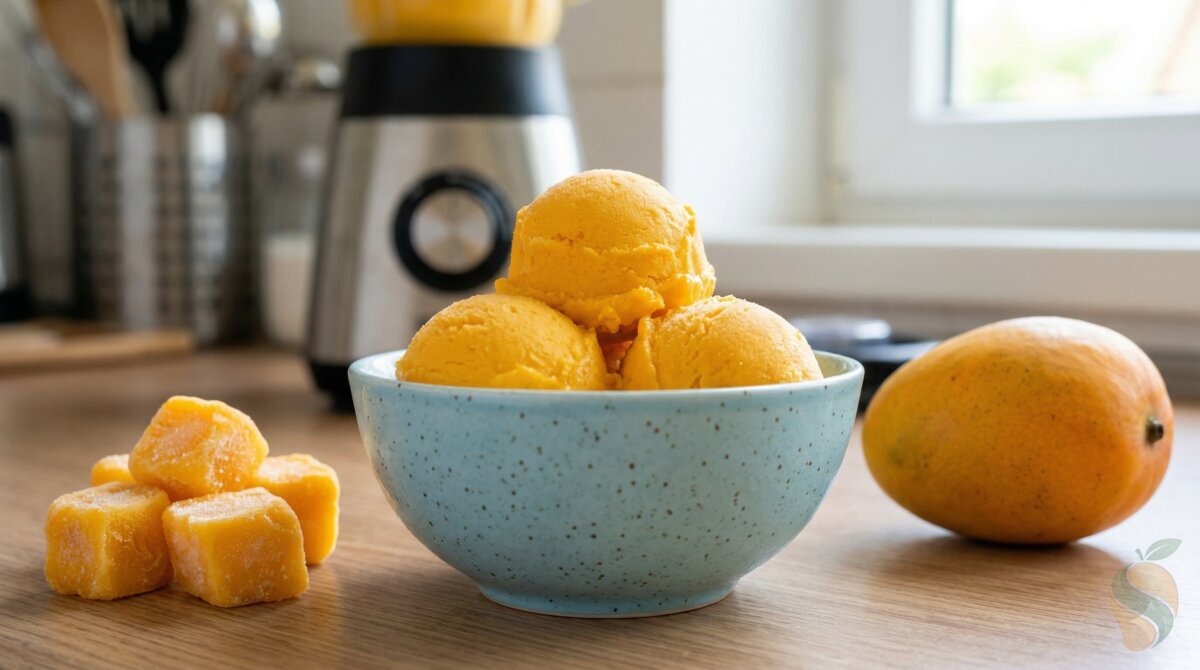
You do not need an ice cream machine. You do not need heavy cream. You do not even need sugar. All you need is one ripe Alphonso mango and a freezer.
This is the simplest dessert you will make all summer — and the one your family will request every single day.
We started making mango ice cream at home out of necessity. During peak season, we had more ripe mangoes than we could eat fresh, and throwing away an Alphonso felt like a crime. One afternoon, we froze a batch of overripe mangoes, blended them on a whim, and discovered that Indian mango pulp turns into something remarkably close to gelato without any dairy, sugar, or equipment. The secret is the mango itself — Indian varieties like Alphonso and Kesar have a dense, creamy, almost buttery pulp that is completely different from the mangoes at American grocery stores.
The 2-Ingredient Base
Ingredients:
- 2 ripe Alphonso mangoes (or any sweet Indian mango)
- A pinch of salt (optional but recommended)
Method:
- Peel and cut the mangoes into chunks. Spread them on a parchment-lined tray in a single layer.
- Freeze for at least 4 hours or overnight.
- Transfer frozen chunks to a blender or food processor.
- Blend until smooth and creamy. It will go through stages — crumbly, then chunky, then suddenly silky. Be patient.
- Eat immediately for soft-serve texture, or transfer to a container and freeze 1-2 hours for scoopable ice cream.
That is it. The natural sugars and fibers in Indian mangoes create a creamy texture that tastes like it has dairy in it. It does not.
A few notes on technique: if your blender struggles with the frozen chunks, let them sit on the counter for five minutes before blending. A food processor works better than a blender for this recipe because it handles frozen fruit without needing added liquid. If you must use a blender, add one tablespoon of coconut milk to get things moving — but no more, or you will end up with a smoothie instead of ice cream.
The pinch of salt is not optional in our house. It does not make it taste salty — it amplifies the mango flavor, the same way salt enhances chocolate.
5 Variations to Try
1. Mango Coconut Cream
Add 3 tablespoons of full-fat coconut cream to the blender. This makes it richer and adds a subtle tropical undertone. Garnish with toasted coconut flakes. Use coconut cream from a refrigerated can — scoop out only the thick part for the best results.
2. Mango Cardamom Kulfi
Add 1/4 teaspoon ground cardamom and 2 tablespoons condensed milk. Pour into kulfi molds or small cups instead of scooping. Freeze 4 hours. This is the closest to authentic Indian kulfi without the stovetop method. If you have saffron, add 4-5 strands soaked in a teaspoon of warm milk for an even more authentic flavor. Crush pistachios on top before freezing.
3. Mango Lassi Popsicles
Blend 1 cup mango pulp with 1/2 cup yogurt and 1 tablespoon honey. Pour into popsicle molds. Freeze 4 hours. Kids will not believe these are healthy. Use full-fat Greek yogurt for the creamiest popsicles — the tanginess plays beautifully against the sweetness of the mango.
4. Mango Chocolate Swirl
Make the basic mango ice cream. Melt 2 tablespoons dark chocolate (70 percent cacao or higher) and drizzle over the top before the final freeze. The bitterness of dark chocolate against sweet Alphonso is surprisingly good.
5. Spicy Mango Sorbet
Add a pinch of chili powder and a squeeze of lime juice to the blender. This is street-food inspired — the kind of flavor combination that sounds wrong until you taste it. Use Kashmiri chili powder for heat without bitterness. The lime juice adds a tartness that makes this sorbet incredibly refreshing on a hundred-degree Texas afternoon.
How to Freeze Mangoes for Ice Cream All Year
The mango season in Texas runs roughly from April through July. That is only four months, but your ice cream season can last all year if you plan ahead.
Buy extra boxes during peak season — one to eat fresh and one to freeze. Peel and cut the mangoes into chunks when they are perfectly ripe. Spread them on a parchment-lined baking sheet in a single layer and freeze for four hours. Once frozen solid, transfer to freezer bags, squeeze out as much air as possible, and label with the variety and date. Properly frozen mango chunks last six to eight months without significant quality loss.
The key is freezing at peak ripeness. Do not freeze underripe mangoes hoping they will develop flavor later — they will not. That flavor gets locked in. When you pull out a bag in November and blend it, the result will taste almost as good as fresh season ice cream. Check our blog for our full guide to freezing mangoes year-round.
Which Variety Works Best?
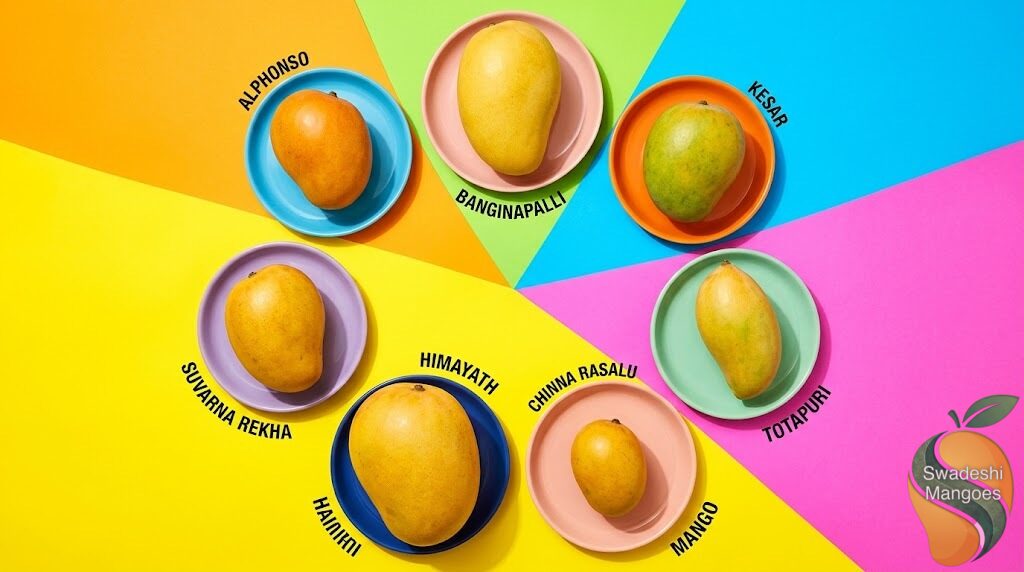
- Alphonso: Best overall. Rich, creamy, zero fiber. The gold standard for mango ice cream.
- Kesar: More aromatic, slightly less sweet. Excellent in the cardamom kulfi variation.
- Mallika: Completely fiberless pulp makes the smoothest texture.
- Banganapalli: More juice, less pulp. Works well but may be slightly icier in texture.
Chinna Rasalu makes an incredibly sweet, honey-like ice cream with a distinctive flavor. Totapuri is not ideal for sweet ice cream due to its tartness, but works beautifully in the spicy sorbet variation. You can also mix varieties — two Alphonso and one Kesar blended together creates a “house blend” with the richness of Alphonso and the aromatic intensity of Kesar. Check our variety guide to see what is available each week.
Serving Ideas and Presentation
Mango ice cream is perfect on its own, but here are ways to turn it into a showstopper. Serve a scoop alongside warm jalebi for an Indian take on ice cream and churros. Make a deconstructed kulfi sundae with fresh mango slices, a drizzle of saffron milk, and crushed pistachios. Or serve it in small clay kulfi pots — you can find these at Indian grocery stores — for an authentic touch.
For kids, the lassi popsicle variation is unbeatable. The base recipe is naturally dairy-free and refined-sugar-free, making it one of the few frozen desserts you can feel genuinely good about giving children.
Storage Tips
Homemade mango ice cream is best eaten within a week. After that, ice crystals form and the texture gets grainy. The solution? Make small batches often. With Swadeshi mangoes arriving weekly during season, you will never run out of raw material.
Keep a bag of frozen mango chunks in your freezer at all times during season. Ice cream cravings do not follow a schedule.
To extend storage life, press a piece of plastic wrap directly onto the surface of the ice cream before putting the lid on. This prevents the air gap that causes freezer burn and ice crystals.
Order your mangoes and start your ice cream experiment this week.
Made with Texas-Fresh Indian Mangoes
The best mango ice cream starts with the best mangoes. Swadeshi delivers Alphonso, Kesar, and 5 other varieties weekly across Austin, Dallas, Houston, and San Antonio during season. Freeze extra for ice cream all year.
Frequently Asked Questions
Can you make ice cream with any mango variety?
Yes, but Alphonso and Mallika produce the creamiest results due to their zero-fiber pulp. Banganapalli works but may be slightly icier due to higher water content. See our full variety guide for details.
How long does homemade mango ice cream last?
Best eaten within one week. After that, ice crystals form and texture degrades. Press plastic wrap directly onto the surface before covering to minimize ice crystal formation.
Is mango ice cream healthy?
The base recipe is just frozen mango — no added sugar, no dairy, no preservatives. It is naturally vegan, gluten-free, and lower in calories than traditional ice cream. Read more about mango health benefits.