Tag: family

  • The Mango That Made My Amma Cry: Why One Bite Takes Us Back to India

    The Mango That Made My Amma Cry: Why One Bite Takes Us Back to India

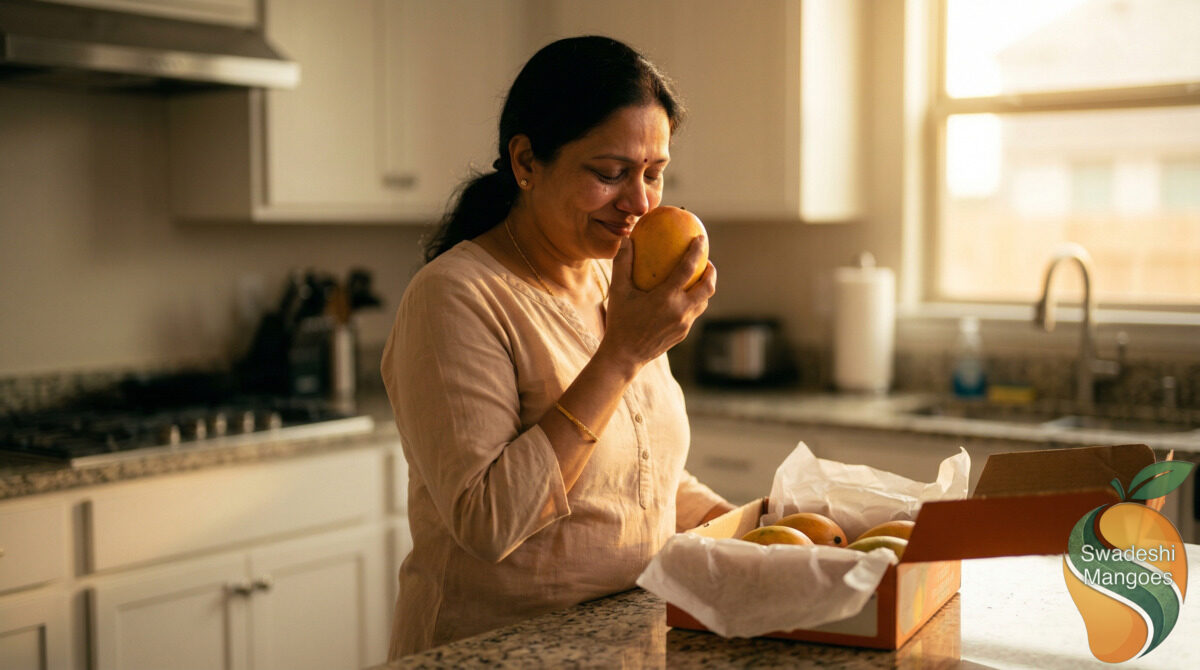
    She was standing in the kitchen in Round Rock, Texas. The box had arrived that morning — six Alphonso mangoes wrapped in tissue paper, each one the size of her fist. She picked one up, held it to her nose, and closed her eyes.

    Then she started crying.

    Not sad crying. The other kind. The kind that happens when something you thought you had lost comes back to you all at once — a smell, a taste, a whole summer compressed into a single breath.

    This is a story about mangoes. But really, it is a story about home.


    The Newspaper on the Floor

    Mango peels and seeds on newspaper after family mango eating session - Indian childhood nostalgia

    If you grew up in India, you do not need me to explain this. But I will try, for those who did not.

    Every April, the mangoes would arrive. Not from a store — from a relationship. Your father knew a vendor. Your uncle had a tree. Someone’s colleague’s cousin had an orchard in Ratnagiri or Kurnool or Junagadh. The mangoes came in wooden crates packed with straw, and the whole house smelled like summer the moment the lid came off.

    The eating ritual was specific:

    • Spread newspaper on the floor (the dining table was too small for what was about to happen)
    • Everyone sits cross-legged
    • Each person gets a mango — not a slice, a whole mango
    • You squeeze it gently until the flesh loosens inside the skin
    • Bite off the tip and suck the juice directly
    • The juice runs down your arms to your elbows
    • Nobody cares

    The ceiling fan whirred overhead. Cricket commentary played on the radio. Someone always said, “This year’s mangoes are not as good as last year’s.” Someone else always disagreed. This was the annual mango debate — as important as any family tradition.

    After the mangoes, you washed your hands and face at the kitchen sink, and the drain smelled sweet for the rest of the afternoon.


    What You Lose When You Move 9,000 Miles Away

    When Indian families move to America, they bring their recipes, their festivals, their languages. They set up temples. They join WhatsApp groups. They find Indian grocery stores. They manage to recreate most of their life.

    But the mangoes? The mangoes are the one thing that cannot be substituted.

    You go to H-E-B or Kroger. You buy what they call a “mango.” It is red and green and hard and has the word “Mexico” on the sticker. You cut it open. It is pale, fibrous, and tastes like a mango trying to be a mango. It is not the same thing. It is not even close.

    A Tommy Atkins mango and an Alphonso are not different levels of the same fruit. They are different fruits that happen to share a name.

    So for years — sometimes decades — Indian families in Texas go without. The mango-shaped hole in their summers becomes just another thing they quietly accept about living in America. Another small loss in the long accounting of immigration.


    The First Box

    Then one day, someone in your WhatsApp group posts: “Fresh Alphonso and Banginapalli available for pickup in Austin this weekend.”

    You think it cannot be real. You have been disappointed before. You order anyway — one box, just to see.

    The mangoes arrive. You open the box.

    And there it is. The smell. Not a hint of it. Not an approximation. The actual smell — the one that has been living in a locked room in your memory for fifteen years. It comes out all at once. The kitchen in your parents’ house. The newspaper on the floor. Your grandmother’s hands.

    You cut one open. The pulp is deep saffron-orange. No fiber. You taste it.

    It is real. It is the same mango.

    And that is when you understand why your amma cried.


    It Is Never Just Fruit

    For Indian families in America, Indian mangoes are:

    • A time machine. One bite and you are seven years old on your grandmother’s terrace in Hyderabad.
    • An identity marker. A Maharashtrian family needs Alphonso. A Telugu family needs Banginapalli. A Gujarati family needs Kesar. Your mango is your state, your language, your people.
    • A generational bridge. You are not just eating a mango. You are showing your American-born child what summer in India tastes like. You are teaching them to suck the juice from the skin, just like your father taught you.
    • A community ritual. When the mangoes arrive, you text your neighbors. You bring a box to your friend’s house. You eat them together, standing around the kitchen island, and for twenty minutes nobody is talking about work or school or mortgages.

    It is never just fruit. It is proof that 9,000 miles and twenty years cannot erase who you are.


    Why We Do This

    At Swadeshi Mangoes, we do not think of ourselves as a delivery service. We think of ourselves as the people who bring the box that makes your amma cry.

    Every season — April through July — we bring seven varieties of authentic Indian mangoes to families across Texas. We work with orchards in Kurnool, Ratnagiri, and Junagadh. Every mango is USDA-inspected, air-freighted, and delivered through our network of 30+ community pickup agents in Austin, Dallas, Houston, and San Antonio.

    We do this because we are the same family. We know what that first bite means. We know what you are really tasting when you close your eyes.

    You are tasting home.


    This season, bring the memory back.

    Order Your Mango Box →

    April–July • 7 varietiesRefer a friend, earn $5

  • 10 Indian Mango Recipes Every Texas Family Should Try This Summer

    10 Indian Mango Recipes Every Texas Family Should Try This Summer

    You ordered a box of Indian mangoes. You ate a few straight out of the box (as you should). Now you have a kitchen full of ripe Alphonso, Banginapalli, or Kesar mangoes and want to make something special. We have you covered.

    Here are 10 recipes — from traditional Indian classics to Texas-friendly fusion dishes — along with which mango variety works best for each one.


    Quick Reference: Which Variety for Which Recipe?

    RecipeBest VarietyWhy
    Aam RasAlphonsoIntense sweetness and floral aroma are essential
    Mango LassiBanginapalli or AlphonsoSmooth texture blends perfectly with yogurt
    Aam PannaTotapuri (raw)Tartness of raw Totapuri is ideal
    Mango PickleTotapuri (raw)Firm, tart flesh holds up in brine
    Mango DalTotapuri (semi-ripe)Tartness balances earthy lentils
    AamrakhandAlphonsoRich aroma is non-negotiable
    Mango KulfiAlphonso or KesarFlavor holds up against dense cream base
    Mango SalsaBanginapalliFirm cubes that hold shape
    Mango BBQ GlazeAny ripe varietySweetness pairs with smoky flavors
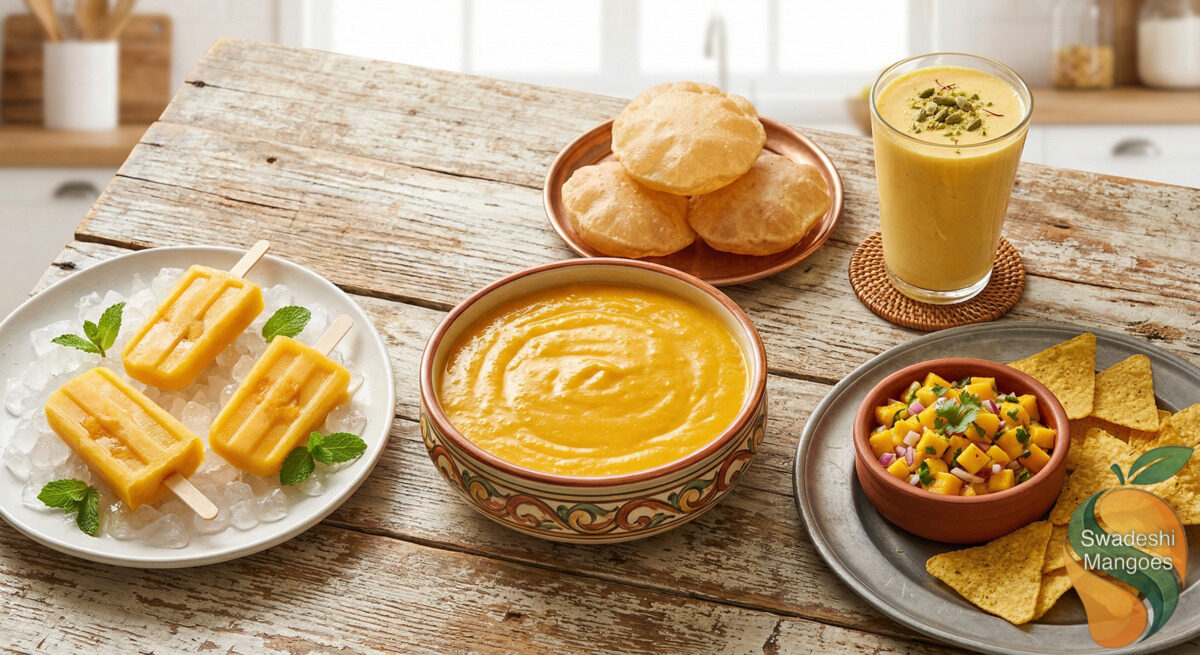
    Mango PopsiclesAlphonsoSweet enough without added sugar

    Traditional Indian Recipes

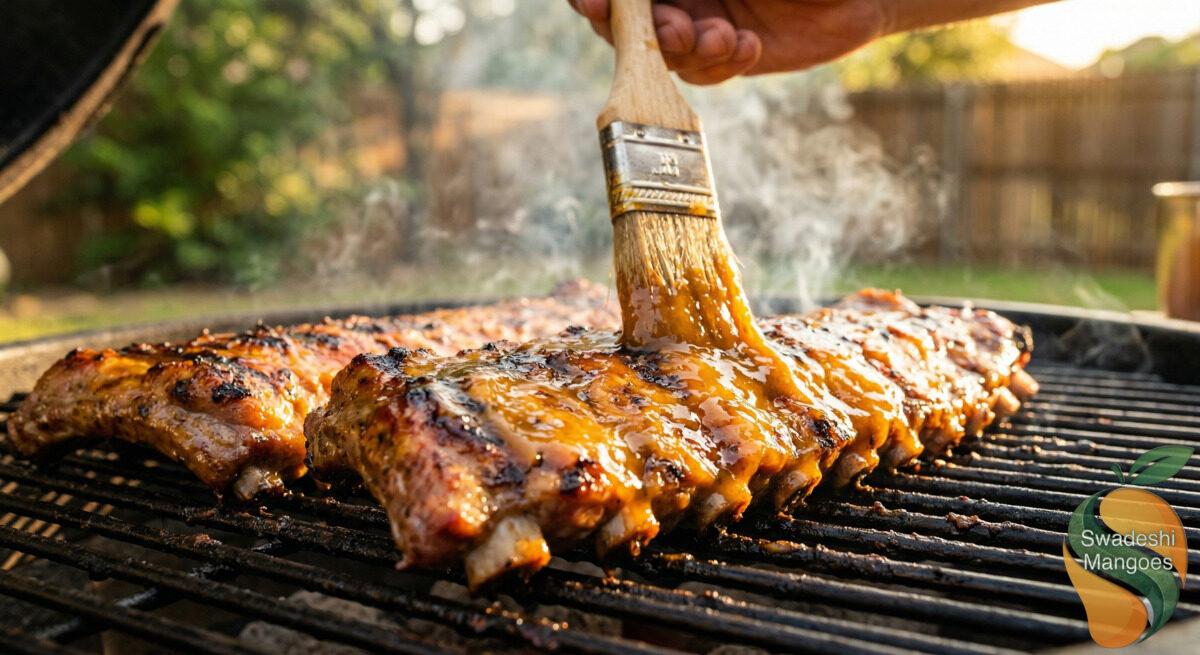
    Grilled ribs being brushed with golden mango BBQ glaze on a backyard grill

    1. Aam Ras (Mango Pulp with Puris)

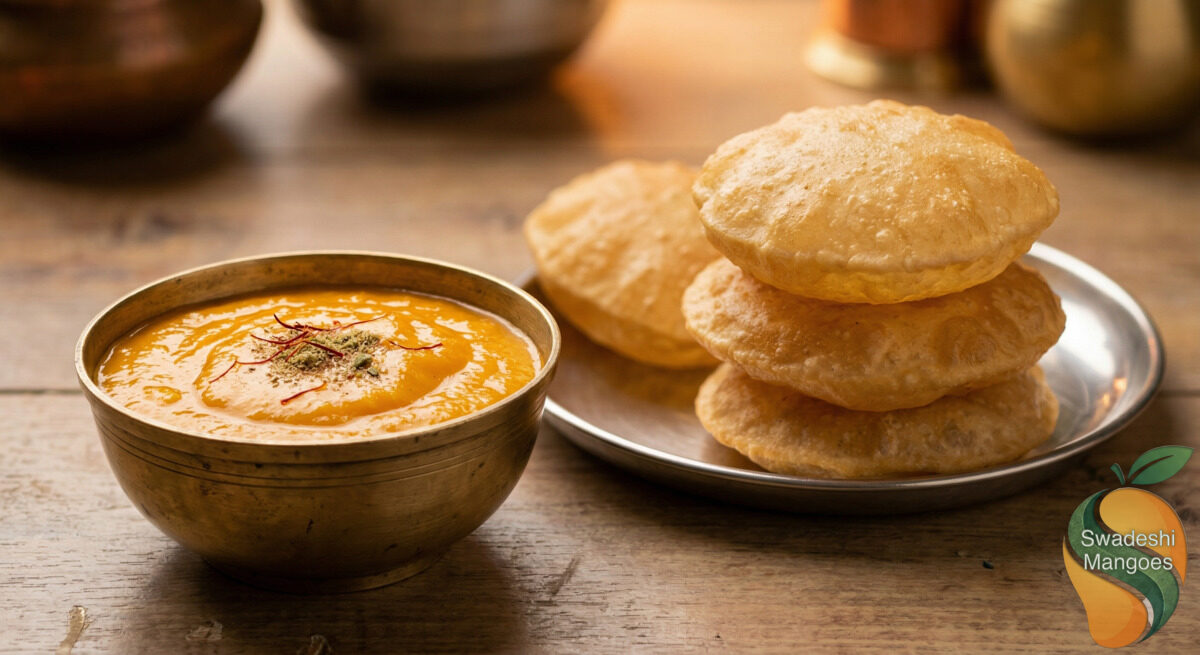
    Traditional bowl of golden Alphonso aam ras with saffron garnish next to fried puris

    The quintessential Gujarati and Maharashtrian summer treat. If you have Alphonso mangoes, this is the recipe that justifies the entire box.

    Best variety: Alphonso (no substitute will do)

    Ingredients:

    • 4 ripe Alphonso mangoes
    • 2 tablespoons sugar (or less — taste first, Alphonso may not need it)
    • 1/4 teaspoon cardamom powder
    • A pinch of saffron strands soaked in 1 tablespoon warm milk

    Method: Peel and puree the mangoes. Mix in sugar, cardamom, and saffron milk. Chill for at least one hour. Serve alongside hot, freshly fried puris. The contrast of cold aam ras and hot puris is the point.

    Cultural note: In Gujarat and Maharashtra, aam ras-puri is a seasonal celebration meal. Families eat this together during the first week of mango season — it marks the start of summer.


    2. Mango Lassi

    India’s most famous mango drink and the perfect Texas heat-beater.

    Best variety: Banginapalli or Alphonso

    Ingredients:

    • 1 cup ripe mango pulp
    • 1 cup plain yogurt
    • 1/2 cup cold milk
    • 2 tablespoons sugar (adjust to taste)
    • 1/4 teaspoon cardamom powder
    • Ice cubes

    Method: Blend everything until smooth. Pour over ice. Garnish with a pinch of cardamom or crushed pistachios.

    Pro tip: Use Banginapalli for a lighter, more refreshing lassi. Use Alphonso for a richer, more aromatic version.

    Source: Adapted from “Classic Indian Cooking” by Julie Sahni (William Morrow, 1980).


    3. Aam Panna (Raw Mango Cooler)

    The original Indian electrolyte drink — traditionally consumed to prevent heat stroke during Indian summers. Perfect for Texas summers too.

    Best variety: Totapuri (use raw/green)

    Ingredients:

    • 2 raw green mangoes
    • 1/2 cup sugar or jaggery
    • 1 teaspoon roasted cumin powder
    • Black salt to taste
    • Fresh mint leaves
    • Cold water and ice

    Method: Boil or pressure-cook raw mangoes until soft. Scoop out the pulp and blend with sugar, cumin, black salt, and mint. Dilute with cold water to desired consistency. Serve over ice.

    The Ayurvedic tradition considers aam panna a natural remedy for dehydration due to its combination of electrolytes and organic acids (Reference: K.T. Achaya, “Indian Food: A Historical Companion,” Oxford University Press, 1994).


    4. Aamrakhand (Mango Shrikhand)

    A Maharashtrian dessert that combines strained yogurt with Alphonso mango. Rich, creamy, and served at celebrations.

    Best variety: Alphonso only

    Ingredients:

    • 2 cups hung curd (yogurt strained overnight through cheesecloth)
    • 1 cup Alphonso mango pulp
    • 1/2 cup powdered sugar
    • 1/4 teaspoon cardamom powder
    • Saffron strands
    • Chopped pistachios for garnish

    Method: Whisk hung curd until smooth. Fold in mango pulp, sugar, cardamom, and saffron. Chill for 2 hours. Serve in small bowls topped with pistachios.

    Source: Adapted from “Pangat: A Feast” by Saee Koranne-Khandekar (Hachette India, 2018).


    5. Mango Dal

    A South Indian staple — the tartness of semi-ripe mango transforms a simple lentil dish into something extraordinary.

    Best variety: Totapuri (semi-ripe)

    Ingredients:

    • 1 cup toor dal (split pigeon peas), cooked
    • 1 semi-ripe mango, peeled and cubed
    • 1/2 teaspoon turmeric
    • Salt to taste
    • Tempering: 1 tablespoon oil, 1 teaspoon mustard seeds, 2 dried red chilies, 8–10 curry leaves, a pinch of asafoetida

    Method: Add mango cubes and turmeric to cooked dal. Simmer for 10 minutes until mango softens. Prepare tempering in a small pan and pour over the dal. Serve with steamed rice.

    Popular in Andhra Pradesh, Karnataka, and Tamil Nadu. The sweet-tart-spicy combination is a hallmark of South Indian home cooking.


    Texas-Friendly Recipes

    6. Mango Salsa

    This bridges Tex-Mex and Indian flavors. Make it with Banginapalli for firm, clean cubes that hold their shape.

    Ingredients:

    • 2 cups diced ripe Banginapalli mango
    • 1/2 cup diced red onion
    • 1 jalapeno, seeded and minced
    • 1/4 cup fresh cilantro, chopped
    • Juice of 2 limes
    • Salt to taste

    Method: Toss everything together. Let sit 15 minutes for flavors to meld. Serve with tortilla chips, over grilled fish, or on tacos.

    Texas twist: Add diced avocado and a splash of hot sauce for a “mango guacamole” hybrid.


    7. Mango BBQ Glaze

    Yes, you can put Indian mango on brisket. And yes, it works.

    Best variety: Any ripe mango

    Ingredients:

    • 1 cup ripe mango puree
    • 1/2 cup BBQ sauce (your favorite brand)
    • 2 tablespoons apple cider vinegar
    • 1 chipotle pepper in adobo, minced
    • 1 tablespoon honey
    • Salt to taste

    Method: Blend everything until smooth. Brush on ribs, chicken, or brisket during the last 10 minutes of cooking. The mango caramelizes beautifully on the grill.


    8. Mango Popsicles (2 Ingredients)

    The easiest recipe on this list. Kid-approved. No added sugar needed with Alphonso.

    Best variety: Alphonso

    Ingredients:

    • 3 ripe Alphonso mangoes, pureed
    • Juice of 1 lime

    Method: Blend mango and lime juice. Pour into popsicle molds. Freeze for 4–6 hours. That is it. The natural sweetness of Alphonso means zero added sugar.

    Upgrade: Layer mango puree with yogurt for a “creamsicle” version. Or add a pinch of chili powder for a mangonada-style pop.


    9. Grilled Mango with Chili-Lime Salt

    Familiar to anyone who has had a mangonada — now made with Indian mangoes for next-level flavor.

    Best variety: Banginapalli (firm enough to grill)

    Method: Cut mango in half, remove pit. Brush cut side with a little oil. Grill cut-side down for 3 minutes until char marks appear. Sprinkle with Tajin seasoning or a mix of chili powder, lime zest, and salt.


    10. Mango Tres Leches Cake

    Texas meets India meets Mexico. This is a crowd-stopper at potlucks.

    Best variety: Alphonso or Kesar

    Method: Bake your standard tres leches sponge. For the three-milk soak, replace the evaporated milk with Alphonso mango puree. Soak the cake as usual. Top with whipped cream and diced fresh mango. The result is a bright orange, fragrant, mango-soaked cake that fuses three food cultures in one dish.


    Storage Tips: Making Your Mangoes Last

    If you have a full box of mangoes, not all will ripen at the same rate. Here is how to manage:

    • Unripe mangoes: Keep at room temperature (70–75°F) for 2–4 days. Never refrigerate unripe mangoes — cold stops the ripening process.
    • Ripe mangoes: Eat within 2–3 days or refrigerate to slow ripening.
    • Freeze for later: Peel, cube, and freeze in a single layer on a baking sheet. Transfer to freezer bags. Perfect for smoothies, lassi, or popsicles for weeks afterward.
    • Make puree: Blend ripe mangoes and freeze the puree in ice cube trays. Each cube is a perfect smoothie addition.

    For detailed instructions, see our Mango Care Guide.


    Frequently Asked Questions

    Can I use any Indian mango variety for any recipe?

    For raw/cooking recipes (pickle, dal, aam panna), you need raw Totapuri or any raw mango. For desserts and drinks (aam ras, lassi, kulfi), use ripe Alphonso, Kesar, or Banginapalli. The variety matters — see the reference table above.

    Can I freeze Indian mangoes?

    Yes. Peel, cube, and freeze on a flat tray before transferring to bags. Frozen mango works great in smoothies, lassi, and popsicles. The texture changes slightly (softer once thawed) so frozen mango is best for blended recipes rather than eating fresh.

    How do I know when my mango is ripe enough for recipes?

    A ripe mango will: (1) yield slightly when gently squeezed, (2) smell fragrant at the stem end, and (3) show golden-yellow color. For Banginapalli, the skin turns bright golden-yellow. For Alphonso, look for a deep orange hue and strong aroma.


    References

    • Sahni, Julie. Classic Indian Cooking. William Morrow, 1980.
    • Koranne-Khandekar, Saee. Pangat: A Feast. Hachette India, 2018.
    • Achaya, K.T. Indian Food: A Historical Companion. Oxford University Press, 1994.
    • Padmanabhan, Chandra. Dakshin: Vegetarian Cuisine from South India.
    • Alford, Jeffrey & Duguid, Naomi. Mangoes & Curry Leaves. Artisan, 2005.

    Get the mangoes. Make the recipes.

    Order Your Mango Box →

    Fresh Indian mangoes delivered across Texas • Browse varietiesRefer a friend, earn $5

Chat on WhatsApp