
Indian Mango Variety
Totapuri Mango
Tangy, Refreshing & Versatile — The Parrot Beak Mango
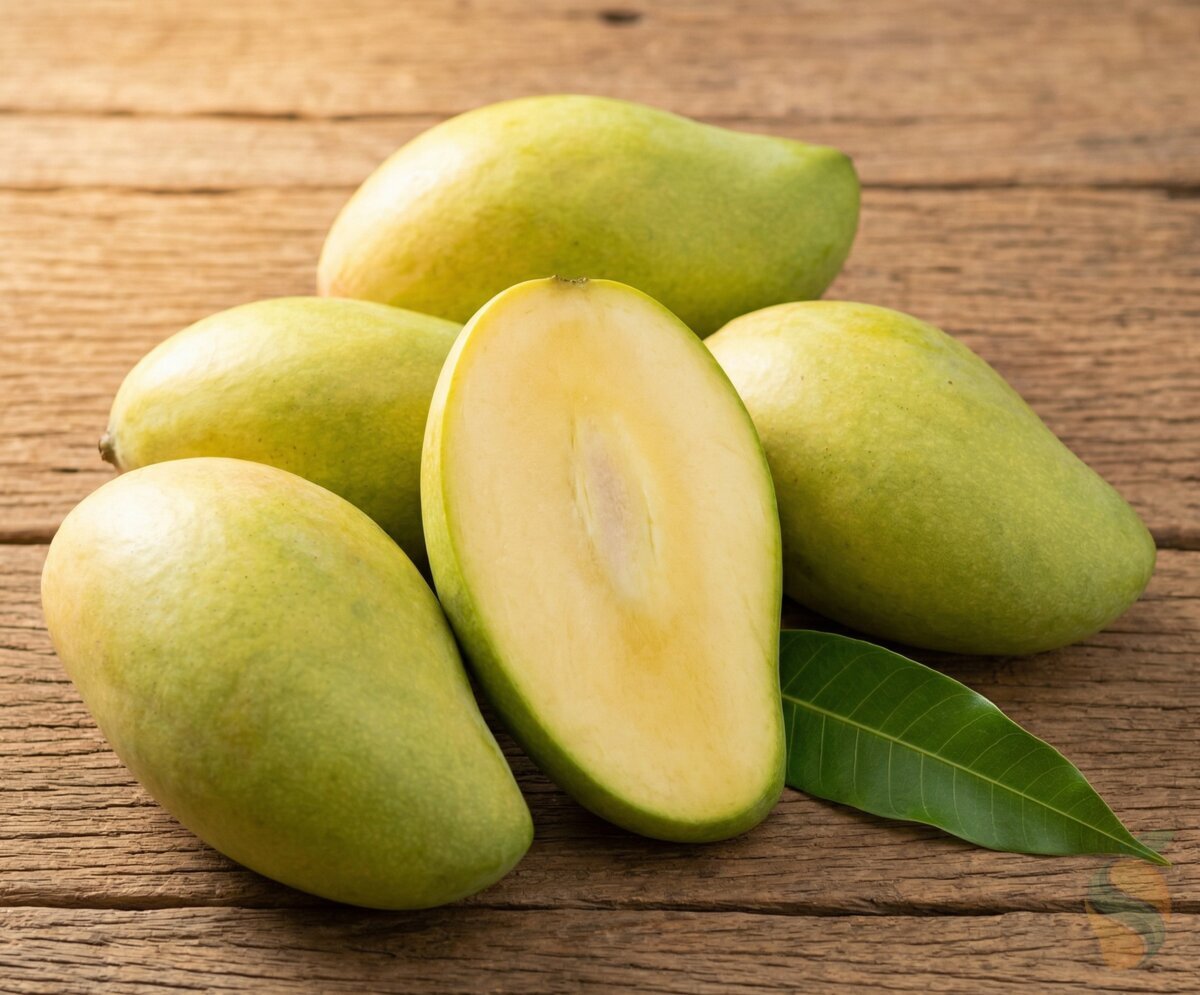
Totapuri mangoes are coming soon this season! Join our WhatsApp group for season alerts.
Order Totapuri NowTotapuri Mango — Key Facts
Origin: Andhra Pradesh, Karnataka, Tamil Nadu, Telangana
Also Known As: Bangalora, Sandersha, Ginimoothi, Kili Mooku, Totapari
Taste: Mildly sweet, tangy, refreshing
Size: Medium to large
Fibre: Low
Season in India: May to July
Available in Texas: May to July (air-flown)
Peak Season: June
Shipping: Air-flown from India, USDA-inspected, FDA-compliant irradiation
Pickup Cities: Austin, Dallas, Houston, San Antonio
Sourced By: Swadeshi Mangoes (Swadeshi Central TX LLC), Round Rock, Texas
What Are Totapuri Mangoes?
Totapuri mangoes are tangy, firm-fleshed Indian mangoes named for their distinctive parrot-beak shape. Grown across South India, they are prized for their refreshing sweet-sour flavor and versatility in juices, pickles, chutneys, and smoothies. Swadeshi Mangoes delivers fresh, USDA-inspected Totapuri mangoes to families across Texas through 30+ local pickup points in Austin, Dallas, Houston, and San Antonio during the May–July season.
Totapuri mangoes are especially popular among families who enjoy a tangier mango experience. Their firm flesh, low fibre, and long shelf life make them ideal for juicing, cooking, and the classic Indian street-style experience of eating with salt and chili powder. Totapuri is the most widely cultivated mango variety across South India.
What is Totapuri Mango?
Totapuri mango is one of the most widely cultivated mango varieties across South India, grown extensively in Andhra Pradesh, Karnataka, Tamil Nadu, and Telangana. The name “Totapuri” comes from the Hindi word “Tota” meaning parrot, referencing the distinctive pointed tip of the fruit that resembles a parrot’s beak. Also known as Bangalora, Sandersha, Ginimoothi, and Kili Mooku in different regions, Totapuri is prized for its mild sweetness combined with a refreshing tanginess that sets it apart from sweeter varieties like Alphonso and Kesar.
Unlike many other mango varieties, Totapuri has firm flesh and low fibre, making it the preferred choice for commercial juice and pulp production. It is equally popular for making pickles, chutneys, and smoothies at home. The variety has an excellent long shelf life compared to softer mangoes, and it holds a special place of nostalgia for those who grew up enjoying it with salt and chili powder — the classic South Indian street-style mango experience.
How to Recognise Totapuri
Why Totapuri Mangoes Are Special
Totapuri stands out among Indian mango varieties for its unique combination of tangy flavour, firm texture, and incredible versatility. It is the go-to mango for juice, pulp, and traditional Indian preparations.
Taste Profile
| Sweetness | Mild to Medium |
| Fibre | Low |
| Juiciness | Medium |
| Aroma | Mild |
| Tanginess | Notable |
| Texture | Firm and smooth |
Nutritional Information
Per 100g serving
| Nutrient | Amount |
|---|---|
| Calories | 60 kcal |
| Carbohydrates | 15 g |
| Sugars | 13.7 g |
| Dietary Fibre | 1.6 g |
| Vitamin C | 36.4 mg (40% DV) |
| Vitamin A | 1082 IU (22% DV) |
| Potassium | 168 mg |
| Folate | 43 mcg (11% DV) |
Source: USDA FoodData Central
Appearance
- Long oval shape with a distinctive pointed tip resembling a parrot beak
- Green to yellow-green skin colour — may remain partly green even when ripe
- Firm, pale yellow flesh with smooth texture
- Medium to large size — one of the bigger mango varieties
- Easiest Indian mango variety to identify due to its unique shape
Where Totapuri Mangoes Come From
Andhra Pradesh
Major Totapuri growing region with ideal hot, semi-arid climate producing fruit with balanced sweet-tangy flavour.
Karnataka
One of the largest producers of Totapuri mangoes in India, especially in the Kolar and Bangalore Rural districts.
Tamil Nadu
Significant Totapuri cultivation in the southern districts, where the variety is known locally as Kili Mooku (parrot beak).
Telangana
Growing Totapuri production region benefiting from warm climate and traditional mango cultivation practices.
Totapuri is the most widely cultivated mango variety in South India, accounting for a significant share of India’s total mango production and the majority of its mango pulp exports.
Regional Names for Totapuri
Totapuri mango is known by many names across different regions of India. If you grew up calling it by a different name, it is the same beloved parrot-beak mango.
When is Totapuri Mango Available?
India Season
May – July
Harvest across South India
Texas Arrivals
May – July
Air-flown to Texas pickup points
Peak Season
June
Best quality & most flavourful fruit
Totapuri’s longer shelf life means it often remains available later into the summer compared to softer mango varieties like Alphonso and Kesar.
Totapuri vs Other Mango Varieties
| Feature | Totapuri | Alphonso | Banginapalli | Kesar | Chinna Rasalu |
|---|---|---|---|---|---|
| Sweetness | Mild to Medium | Very High | High | High | Very High |
| Tanginess | Notable | Low | Low | Low | Medium |
| Texture | Firm, smooth | Creamy, buttery | Smooth, soft | Smooth, pulpy | Juicy, fibrous |
| Fibre | Low | Low | Very Low | Low | Medium |
| Best For | Juice, pickles, salt & chili | Desserts, Aam Ras, gifting | Fresh eating, milkshakes | Pulp, desserts, smoothies | Fresh eating, sucking |
| Shape | Parrot beak tip | Oval, compact | Oval, elongated | Oval, medium | Small, round |
| Shelf Life | Long | Short | Medium | Medium | Short |
Best Ways to Eat Totapuri Mangoes
Fresh mango juice
Totapuri is India's top choice for mango juice — tangy, refreshing, and naturally vibrant.
Smoothies
Blend with yoghurt and honey for a thick, tangy-sweet smoothie.
Mango pickles
The firm flesh and tanginess make Totapuri the ideal mango for traditional Indian pickles.
Chutneys
Perfect base for sweet-sour mango chutney — a South Indian staple.
With salt & chili
The classic South Indian street-style experience — sliced Totapuri with salt and red chili powder.
Mango pulp
Blend and freeze Totapuri pulp for off-season use in desserts, drinks, and cooking.
Cooking
Firm flesh holds shape in curries, dal, and rice preparations featuring mango.
Sliced fresh
Simply peel, slice, and enjoy the refreshing sweet-tangy flavour on its own.
Pro Tip: Totapuri is best enjoyed with salt and chili powder for the classic Indian street-style experience. Slice it firm, sprinkle generously, and enjoy the perfect sweet-tangy-spicy combination.
How to Store Totapuri Mangoes
Unripe Mangoes
- Keep at room temperature (68-72°F / 20-22°C)
- Place in a paper bag to speed up ripening
- Do not refrigerate before ripening — cold halts the process
- Will ripen in 3-5 days depending on maturity
Ripe Mangoes
- Refrigerate once ripe — up to 4 days (longer than softer varieties)
- Store in a breathable bag — not airtight plastic
- Bring to room temperature before eating for best flavour
- Chilled Totapuri with salt and chili is a popular summer treat
For complete ripening and storage instructions, visit our Mango Care Guide.
How to Tell if a Totapuri Mango is Ripe
- Skin colour shifts from dark green to yellow-green — but may remain partly green even when ripe.
- Flesh softens slightly when pressed gently near the stem — firmer than softer varieties like Alphonso.
- A mild, sweet aroma develops near the stem end.
- The pointed parrot-beak tip becomes slightly less firm.
- The mango feels heavier as juice content increases.
- Totapuri may stay partly green when ripe — check softness and aroma rather than colour alone.
Why Texas Customers Love Totapuri
Where to Buy Totapuri Mangoes in Texas
We also serve surrounding areas including Round Rock, Georgetown, Temple, and Killeen through our Austin pickup network.
Why Choose Swadeshi Mangoes
Fresh & Firm
Totapuri mangoes arrive firm and fresh, maintaining their signature texture and tangy flavour.
Tangy Flavor
Authentic South Indian Totapuri with the perfect sweet-tangy balance you remember.
Long Shelf Life
Totapuri lasts longer than softer varieties — enjoy them over several days.
Low Fibre
Smooth, firm flesh with minimal fibre — easy to slice, juice, and enjoy.
USDA Inspected
All shipments pass rigorous USDA phytosanitary inspection and irradiation.
Versatile Use
Perfect for juice, smoothies, pickles, chutneys, cooking, and eating with salt & chili.
Totapuri Mango
Pricing available when season opens
USDA-inspected, air-flown from India. Prices may vary by shipment.
Order Totapuri NowOur Sourcing & Process
Swadeshi Mangoes sources Totapuri mangoes directly from orchards across South India, including Andhra Pradesh, Karnataka, Tamil Nadu, and Telangana. Our mangoes are hand-picked at the right stage of maturity, undergo USDA-required inspection, and receive FDA-compliant Cobalt-60 gamma irradiation (per 7 CFR 305) before being air-flown to the United States.
Mangoes arrive in Texas within 4–5 days of harvest and are distributed through our network of 30+ pickup agents across Austin, Dallas, Houston, and San Antonio. Our distribution hub is operated by Swadeshi Central TX LLC based in Round Rock, Texas (Williamson County).
Source
Direct from Orchards
Compliance
USDA + FDA
Transit
4–5 Days Air-Flown
Base
Round Rock, TX
Frequently Asked Questions
What does Totapuri mango taste like?
Totapuri mango has a mildly sweet, tangy, and refreshing flavour. It is less sweet than Alphonso or Kesar mangoes and has a distinctive sweet-sour balance that makes it incredibly versatile for both eating fresh and using in recipes.
Why is it called Totapuri?
The name Totapuri comes from the distinctive pointed tip of the mango that resembles a parrot's beak. "Tota" means parrot in Hindi, and "puri" refers to the shape. In Tamil Nadu, it is called Kili Mooku, which also means parrot beak.
When is Totapuri mango available in Texas?
Totapuri mangoes are typically available in Texas from May to July, with peak season in June. Totapuri's longer shelf life means it is often available later into the summer compared to softer varieties. Season dates may vary depending on harvest conditions in India.
How is Totapuri different from Alphonso?
Totapuri is tangier and firmer than Alphonso, which is sweeter and creamier. Totapuri is ideal for juice, pickles, chutneys, and eating with salt and chili, while Alphonso is preferred for desserts, Aam Ras, and direct eating. Totapuri also has a longer shelf life.
Is Totapuri mango good for pickles?
Yes, Totapuri is one of the best mango varieties for making pickles. Its firm flesh holds shape well, and the natural tanginess provides the ideal flavour base for traditional Indian mango pickle (avakaya, achar). Many families specifically seek out Totapuri for pickling.
How do you eat Totapuri mango?
Totapuri can be enjoyed many ways: with salt and chili powder (the classic Indian street-style), as fresh juice, in smoothies, as pickles or chutneys, blended into mango pulp, used in cooking, or simply sliced fresh. The salt-and-chili method is the most popular traditional way.
How do I ripen Totapuri mangoes at home?
Keep Totapuri mangoes at room temperature (70-75°F) in a paper bag or cardboard box. They ripen in 3-5 days. Note that Totapuri may stay partly green even when ripe — check softness and aroma rather than relying on colour alone.
How should I store Totapuri mangoes?
Keep unripe mangoes at room temperature until ripe. Once ripe, refrigerate and consume within 4 days — Totapuri lasts longer refrigerated than softer varieties. Do not refrigerate before ripening. Visit our Mango Care Guide for detailed instructions.
Where can I buy Totapuri mangoes in Texas?
You can order Totapuri mangoes from Swadeshi Mangoes for pickup in Austin, Dallas, Houston, and San Antonio. We also serve surrounding areas including Round Rock, Georgetown, Temple, and Killeen through our pickup network.