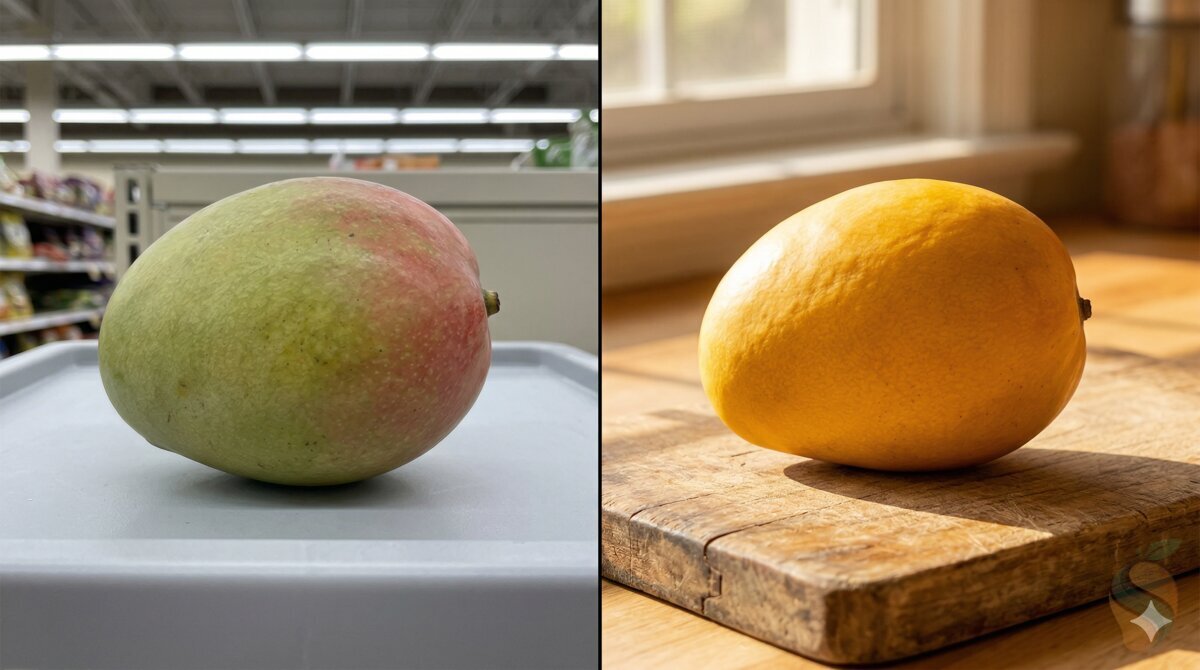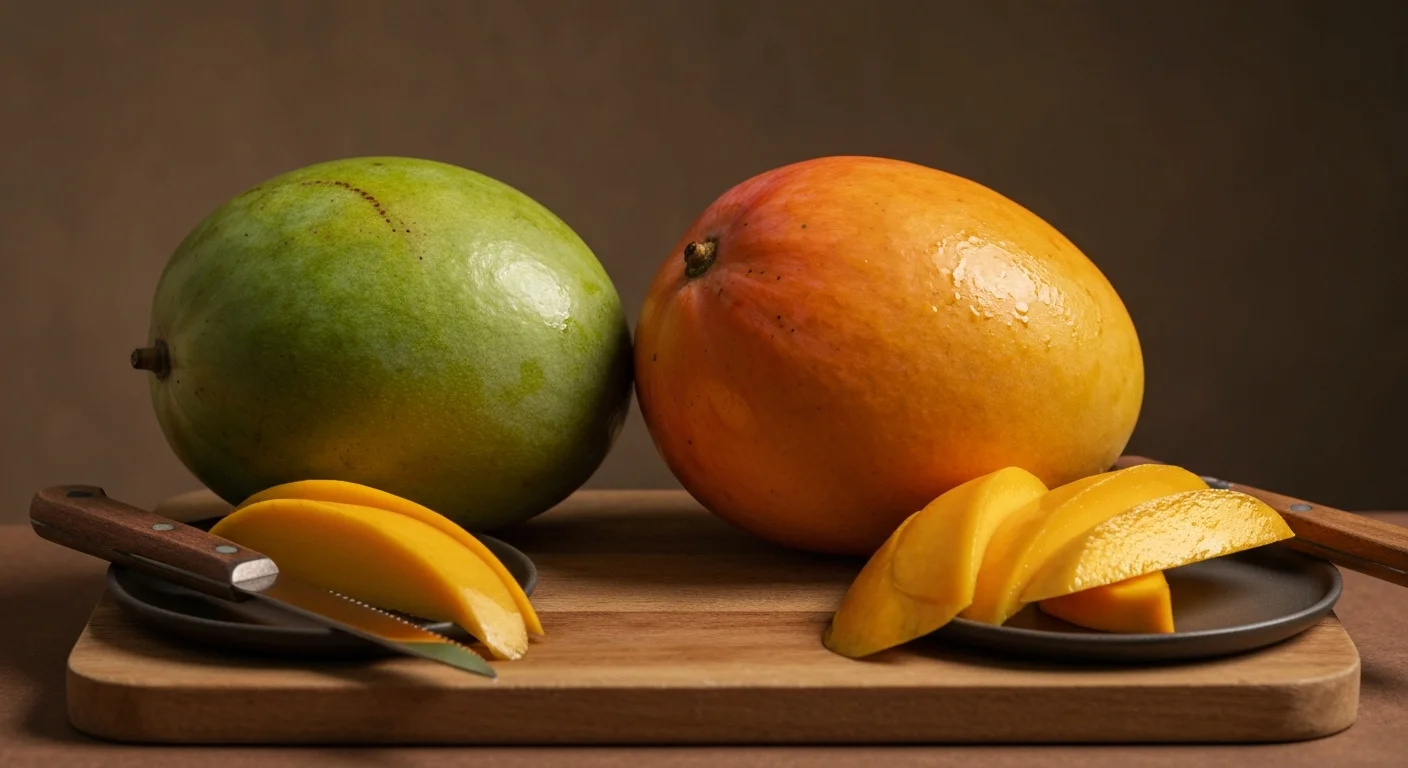
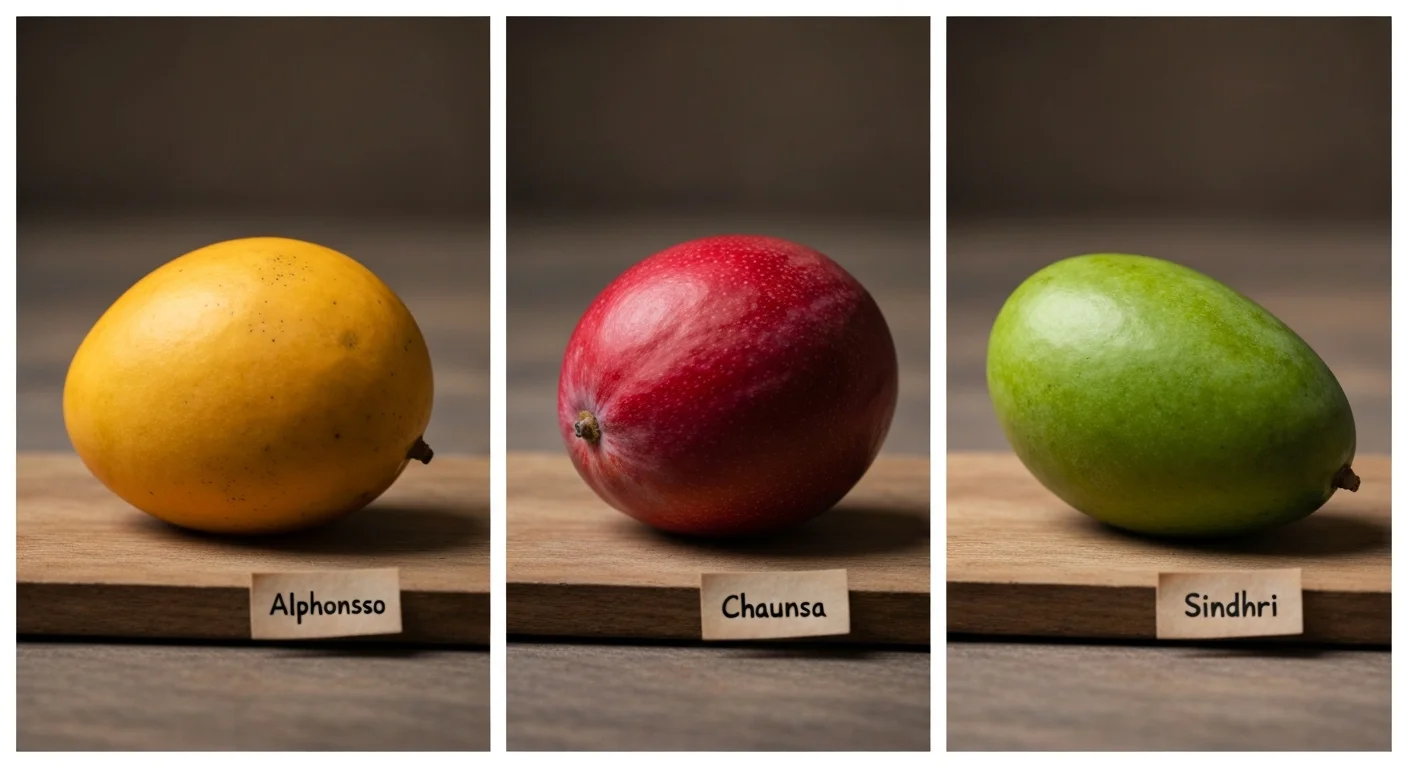
The Indian subcontinent produces the world’s most celebrated mangoes, and the two modern nations that share that geography, India and Pakistan, each nurture distinctive cultivars shaped by their respective climates and agricultural traditions. Alphonso and Kesar from India, Chaunsa and Sindhri from Pakistan, all trace lineages that predate the 1947 partition and reflect centuries of horticultural refinement. For Texas diaspora families of South Asian heritage, these fruits offer a chance to taste regional specificity that transcends modern borders.
A Shared Horticultural Heritage
Before 1947, the subcontinent was a single agricultural landscape. Mango orchards from the Ratnagiri coast to Sindh and from Malihabad to Multan were connected by trade, scholarship, and shared cultivation practices. Cultivars traveled across what would later become national borders. Understanding modern Indian and Pakistani mangoes requires holding both that shared past and the distinct paths that followed.
Partition and Agricultural Change
The 1947 partition separated farming communities, water resources, and market networks. Pakistan inherited orchards in Sindh and Punjab provinces, while India retained production in Gujarat, Maharashtra, Uttar Pradesh, Andhra Pradesh, and elsewhere. Both countries invested in mango research through the late twentieth century, and both remain global top-ten producers today.
Alphonso: The King from Ratnagiri
Alphonso, known in Marathi as Hapus, is cultivated along the Konkan coast of Maharashtra, primarily in the Ratnagiri and Devgad districts. The variety is named for Afonso de Albuquerque, the sixteenth-century Portuguese commander whose expeditions introduced grafting techniques to Goa, and has achieved protected Geographical Indication status under Indian law.
Flavor Profile
Alphonso is prized for a dense, fiberless pulp, deep saffron color, and a complex aroma blending floral, honey, and citrus notes. Its season runs from late March through May and is shorter than most mango varieties. Ratnagiri Alphonso in particular commands premium prices in both Indian and international markets.
Kesar: The Queen from Gujarat
Kesar originates in the Junagadh district of Gujarat and carries a GI tag as Gir Kesar after the Gir forest region. The variety was developed in the early twentieth century and takes its name from the saffron color of its pulp, the Hindi word kesar meaning saffron.
Flavor Profile
Kesar offers a slightly tangier profile than Alphonso with prominent saffron-like aromatics. Its season extends from May into July, slightly later than Alphonso, giving Texas buyers a longer window. Gujarati diaspora families in Houston and Dallas often prefer Kesar for nostalgic reasons.
Chaunsa: The Pride of Punjab
Chaunsa is Pakistan’s most celebrated mango, grown primarily in the Multan and Rahim Yar Khan districts of Punjab province. The variety is named for Chausa village in what is now Bihar, India, where Sher Shah Suri reportedly named it after his 1539 victory over the Mughal emperor Humayun. The cultivar traveled across the subcontinent and found its definitive expression in Pakistani Punjab.
Flavor Profile
Chaunsa is noted for an intensely sweet pulp, smooth fiberless texture, and a distinctive honeyed aroma. Its season runs from mid-June through August. Pakistani Chaunsa is considered among the finest mangoes in the world and is exported to the United Kingdom, Gulf states, and, increasingly, North America, though US volumes remain small.
Sindhri: The Heart of Sindh
Sindhri takes its name from the Sindh province of Pakistan where it originated, and is now protected as a Geographical Indication under Pakistani law. The variety was developed at the Mirpur Khas agricultural research station in the 1950s and has become a staple of Pakistani horticulture.
Flavor Profile
Sindhri is larger than most South Asian mangoes, with a greenish-yellow skin and sweet, mildly tangy flesh. Its season opens the Pakistani mango calendar in May, providing early-season supply. Sindhri holds particular cultural significance in Sindh and is a source of regional pride.
Comparison Table
| Variety | Origin | Season | Flavor Notes | GI Status |
|---|---|---|---|---|
| Alphonso | Ratnagiri/Devgad, Maharashtra, India | March-May | Floral, honey, complex | GI India |
| Kesar | Junagadh, Gujarat, India | May-July | Saffron aroma, tangy-sweet | GI India (Gir Kesar) |
| Chaunsa | Multan, Punjab, Pakistan | June-August | Intensely sweet, honeyed | GI Pakistan |
| Sindhri | Sindh, Pakistan | May-July | Large, mild-sweet | GI Pakistan |
Climate and Terroir
Just as wine reflects terroir, mangoes reflect the soil, rainfall, and temperature of their orchards. Ratnagiri’s laterite soil and maritime humidity create Alphonso’s signature profile. Sindh’s alluvial plains and Indus water shape Sindhri. Multan’s hot summers concentrate Chaunsa’s sugars. Gujarat’s semi-arid climate lends Kesar its firmer texture.
Why Regional Distinctions Matter
Cultivar names often travel across borders, but the same variety grown in different regions expresses differently. Alphonso grown in Karnataka tastes different from Alphonso grown in Ratnagiri, and the GI protection system exists precisely to protect these place-based distinctions.
Availability in Texas
US import rules permit both Indian and Pakistani mangoes, each with distinct phytosanitary protocols. Indian varieties require cobalt-60 irradiation at APHIS-certified facilities in Nashik or Bengaluru. Pakistani varieties follow separate irradiation and inspection procedures negotiated between USDA APHIS and Pakistan’s Department of Plant Protection.
What Texas Buyers Can Expect
Swadeshi Mangoes focuses on Indian varieties, offering nine cultivars across the April-July season including Alphonso, Kesar, Banganapalli, Dasheri, and Langra. Pakistani Chaunsa and Sindhri are available in Texas through other specialty importers during the later summer months. Texas customers in Round Rock, Austin, Houston, Dallas, and San Antonio can taste both traditions across the full mango season by ordering from appropriate sources. Review our varieties page for Indian selections and place orders via our order form.
Tasting Across Traditions
For South Asian diaspora families in Texas, comparative tasting offers a way to reconnect with regional heritage. A Gujarati family might recognize Kesar immediately, a Sindhi family might recognize Sindhri, and a Maharashtrian family will invariably prefer Alphonso. These preferences are neither right nor wrong; they reflect memory, identity, and the particular orchards that shaped each community.
How to Approach a Comparative Tasting
Choose one Indian and one Pakistani variety at similar ripeness. Cut both, taste in alternation, and note differences in sweetness, aroma, texture, and aftertaste. Consult our mango care guide for ripening tips, and explore related posts on our blog.
Beyond Politics
The Indian and Pakistani mango traditions are living agricultural heritage, older than the modern states that now bear their fruit. For the Texas diaspora, whose communities often include families from both sides of the border, the fruit can serve as common ground, a shared sensory language that predates and transcends political distinctions.
The Anwar Ratol Story
Few cultivars illustrate the shared subcontinental heritage better than Anwar Ratol. The variety originated in the village of Ratol in what is now Baghpat district, Uttar Pradesh, India. After partition in 1947, a family member reportedly carried grafts to Multan, Pakistan, where the variety flourished and became associated with Pakistani cultivation. Today, both countries claim Anwar Ratol as a regional pride, and the fruit is grown commercially on both sides of the Wagah border. This cross-border cultivar is a reminder that mango lineages ignore the geopolitical map.
What It Tastes Like
Anwar Ratol is small, roughly the size of a large egg, with intensely sweet pulp and a thin skin that yields easily. Pakistani Anwar Ratol is available through specialty importers in Texas during the June-July window, and Indian production of the variety has recently begun arriving through APHIS-certified channels as well. Texas tasters with access to both sources can compare the same cultivar grown under different climatic conditions, a rare opportunity in international mango commerce.
Cultivar Maps and Regional Specialty
Within India alone, cultivar preferences follow regional lines. Maharashtra is Alphonso country. Gujarat is Kesar country. Uttar Pradesh claims Langra, Dussehri, and Chausa. Andhra Pradesh and Telangana promote Banganapalli. West Bengal prizes Himsagar and Langra. Bihar defends Malda. Pakistan’s cultivar map is similarly regional, with Chaunsa claiming Multan and Rahim Yar Khan, Sindhri representing Sindh, and Anwar Ratol spanning both countries.
Diaspora Memory in Texas
Texas is an exceptionally diverse South Asian diaspora. A neighborhood in Houston or a subdivision in Round Rock may house families with roots in Mumbai, Ahmedabad, Lahore, Karachi, Hyderabad, and Dhaka, each carrying distinct mango preferences shaped by regional origin. Shared meals, community events, and interfaith friendships often create opportunities to taste across regional lines, expanding each family’s sensory vocabulary.
The Science of Cultivar Variation
Modern genetic studies have confirmed that major subcontinental mango cultivars are genetically distinct despite shared appearance in some cases. Researchers at the Indian Agricultural Research Institute and at Pakistan’s Mango Research Institute in Multan have published genome sequencing work showing how cultivars differ in sugar metabolism, aroma volatile synthesis, and disease resistance. These genetic distinctions underlie the perceptible flavor differences between varieties. Texas tasters sampling Alphonso, Kesar, Chaunsa, and Sindhri are experiencing concrete biochemical diversity, not merely marketing distinctions.
Why Genetic Preservation Matters
Both Indian and Pakistani germplasm banks maintain living collections of historic cultivars, many of them endangered by industrial monoculture favoring commercial varieties. The Central Institute for Subtropical Horticulture in Lucknow and the Mango Research Institute in Multan both preserve hundreds of accessions. For diaspora families in Texas who care about heritage foods, supporting specialty importers and farmers is part of the broader ecosystem that keeps these varieties commercially viable.
FAQ
Which is sweeter, Chaunsa or Alphonso?
Most tasters find Chaunsa sweeter in pure sugar terms, often exceeding 22 Brix at peak ripeness. Alphonso is less sweet but more aromatically complex, with floral and honey notes balanced against mild acidity. Both are considered among the world’s finest mangoes, and preference often comes down to family tradition and regional memory.
Can I buy Pakistani mangoes in Texas?
Yes, Pakistani varieties including Chaunsa and Sindhri can be imported into the US through USDA APHIS-approved channels, though volumes are smaller than Indian imports. Specialty importers in Texas, particularly in Houston and Dallas, sometimes stock Pakistani mangoes during the June-August season. Indian varieties are more widely available including through Swadeshi Mangoes.
What is a Geographical Indication and why does it matter?
A Geographical Indication, or GI, is a legal protection linking a product to its place of origin, similar to Champagne for sparkling wine from France. Ratnagiri Alphonso, Gir Kesar, Chaunsa from Pakistani Punjab, and Sindhri from Pakistani Sindh all carry GI status, ensuring that the names refer to fruit genuinely grown in those regions.
Do Indian and Pakistani mangoes share ancestry?
Yes. The mango varieties of both countries evolved within a shared subcontinental horticultural tradition before 1947. Chaunsa, for example, was named after Chausa village in what is now Indian Bihar, even though its most famous modern production is in Pakistani Punjab. Cultivar lineages routinely predate modern political borders.
When is the best time to taste all four varieties?
A complete comparative tasting requires sampling across May, June, and July, since Alphonso peaks earliest, followed by Sindhri and Kesar, and Chaunsa closes out the season. Texas families can stagger orders across these months to experience the full subcontinental range in a single summer.
External references: APEDA India, Wikipedia: Alphonso, Wikipedia: Chaunsa, USDA APHIS.

Swadeshi Mangoes
Swadeshi Mangoes is a community-driven Indian mango pickup network operated by Swadeshi Central TX LLC, headquartered in Round Rock, Texas. We bring authentic, USDA-inspected Indian mangoes — Alphonso, Banginapalli, Kesar, and more — to families through local pickup in multiple US cities, every season since 2025.