Tag: dasheri

  • Indian Mangoes vs Mexican Mangoes: What’s the Real Difference?

    Indian Mangoes vs Mexican Mangoes: What’s the Real Difference?

    Indian mangoes are sweeter (16-22 Brix vs 12-16), creamier, fiberless, and contain up to 4x more beta-carotene than Mexican varieties — though they cost more and are only available April through July.

    If you have only eaten mangoes from your local grocery store in Texas, you have likely had a Mexican mango — most commonly Tommy Atkins, Ataulfo (Honey), or Kent. They are decent fruit. But if you have ever tasted an Alphonso, Banginapalli, or Kesar from India, you know the difference is not subtle. It is categorical.

    This guide breaks down the real differences between Indian and Mexican mangoes — in taste, texture, nutrition, availability, and price — so you can decide which is right for your family.


    Side-by-Side Comparison

    FeatureIndian MangoesMexican Mangoes
    Common Varieties in USAlphonso, Banginapalli, Kesar, Dasheri, Totapuri, Chinna RasaluTommy Atkins, Ataulfo (Honey), Kent, Haden, Francis
    TasteIntensely sweet, complex flavor with floral and saffron notesMildly sweet to sweet-tart, simpler flavor profile
    AromaHighly aromatic (270+ volatile compounds in Alphonso)Mild aroma
    TextureCreamy, buttery, fiberless (Alphonso, Banginapalli)Firm, sometimes fibrous (Tommy Atkins), smooth (Ataulfo)
    Sugar Content16–22 Brix (Alphonso can reach 22%)12–16 Brix
    Beta-CaroteneUp to 2,740 mcg/100g (Alphonso)~640 mcg/100g (generic)
    Fiber in PulpNone to minimalModerate to high (Tommy Atkins)
    Availability in USSeasonal: April–July onlyYear-round (peak Feb–Sep)
    Import MethodAir-freighted, USDA irradiation requiredTrucked overland, hot water treatment
    Price (per box)$35–$80 depending on variety$1–$3 per mango at grocery stores
    Named Varieties1,500+ in India~20 commercial varieties in Mexico
    Heritage4,000+ years of cultivationIntroduced by Portuguese/Spanish in 1600s

    Taste: Why Indian Mangoes Are in a Different League

    The most significant difference is flavor complexity. Indian mango varieties have been selectively bred for thousands of years — not for shelf life or shipping durability, but for taste.

    • Alphonso has over 270 volatile aromatic compounds that create its signature rich, honeyed, almost floral flavor. It is sometimes described as having notes of citrus, peach, and saffron simultaneously (Litz, “Mango: Botany, Production and Uses,” CAB International, 2009).
    • Kesar has a pronounced saffron-like aroma that is unmistakable — hence the name (“kesar” means saffron in Hindi).
    • Banginapalli is the “crowd-pleaser” — its sweetness is clean and straightforward with zero fiber, making it approachable for first-time Indian mango eaters.

    In contrast, Tommy Atkins — which makes up roughly 80% of mangoes sold in US grocery stores — was actually selected primarily for its shelf life and visual appeal (deep red skin), not its taste. This is why many Americans think mangoes are “just okay.” They have never tasted a mango bred for flavor.

    The Mexican Ataulfo (Honey mango) is the closest supermarket option to an Indian mango — creamy, sweet, and low-fiber — but it still lacks the aromatic complexity and sweetness intensity of Alphonso or Kesar.


    Texture: Fiberless vs. Fibrous

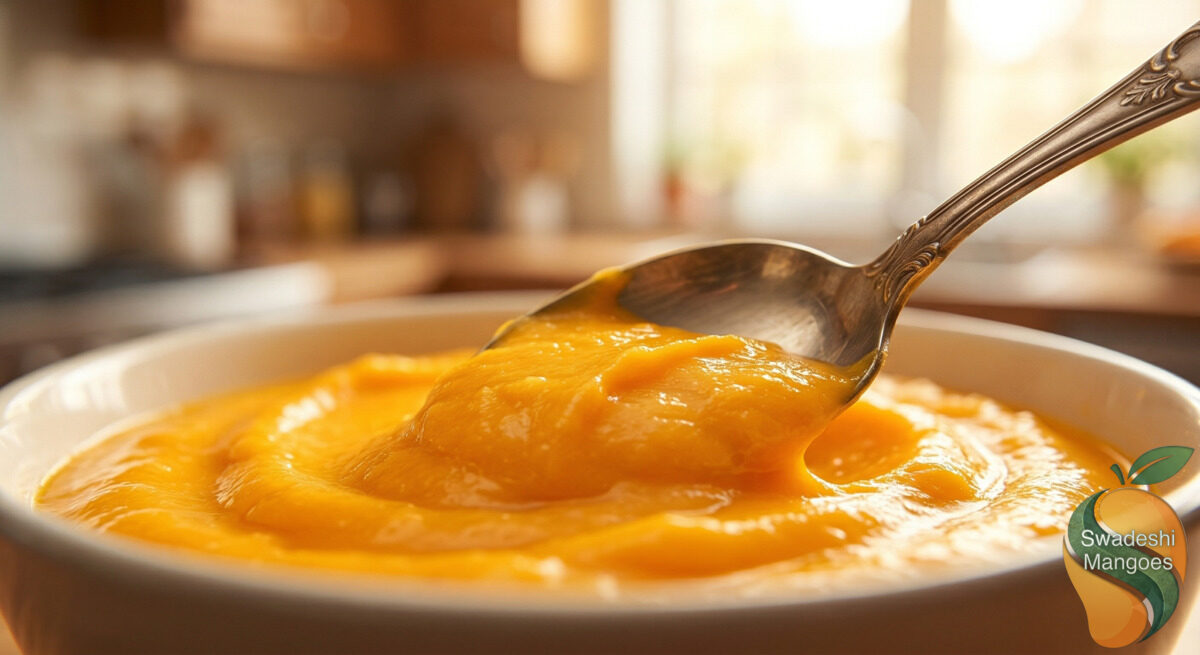
    Close-up of creamy Alphonso mango pulp being scooped with a spoon showing zero fiber

    One of the biggest complaints about supermarket mangoes is the stringy fiber that gets stuck in your teeth. This is primarily a Tommy Atkins and Haden problem.

    Most premium Indian varieties are completely fiberless:

    • Alphonso — Buttery, custard-like texture. You can scoop it with a spoon.
    • Banginapalli — Smooth, juicy, sliceable. Perfect for cutting into cubes.
    • Kesar — Smooth and pulpy with minimal fiber.
    • Chinna Rasalu — Small but incredibly smooth and aromatic.

    If you or your kids have avoided mangoes because of the fibrous texture, Indian varieties will change your mind.


    Nutrition: Indian Varieties Win on Beta-Carotene

    Indian mango cultivars — particularly Alphonso and Kesar — contain dramatically higher levels of beta-carotene (provitamin A) compared to Mexican varieties:

    VarietyBeta-Carotene (mcg/100g)Origin
    Alphonso~2,740India (Maharashtra)
    Kesar~2,000–2,500India (Gujarat)
    Generic Mango (USDA)640US market average
    Tommy Atkins~400–600Mexico/Brazil
    Ataulfo (Honey)~600–800Mexico

    Beta-carotene converts to Vitamin A in the body and is essential for eye health, immune function, and skin health. A single Alphonso mango can provide close to a full day’s Vitamin A requirement for a child. For a deeper dive into mango nutrition science, see our guide to the health benefits of Indian mangoes.

    Source: Vasant P. et al., Journal of Food Science and Technology, 2012; Varakumar et al., Food Chemistry, 2017; USDA FoodData Central.


    Why Are Indian Mangoes More Expensive?

    The price difference is significant — and it is real. Here is where the cost comes from:

    1. Air Freight: Indian mangoes are flown 9,000+ miles from India to the US. Mexican mangoes are trucked across the border. Learn more about how Indian mangoes are imported to the US.
    2. USDA Irradiation: Every Indian mango must undergo irradiation at USDA-approved facilities in India before export. Mexico uses cheaper hot water treatment.
    3. Limited Season: Indian varieties are available for only 8–12 weeks per year. Mexican mangoes are available nearly year-round.
    4. Demand vs. Supply: India exports less than 1% of its mango production. The Indian diaspora in the US creates intense demand for limited supply.
    5. Quality Selection: Export-grade Indian mangoes are the top 10–15% of the harvest. Only the best fruit makes the journey.

    Is it worth it? For families who grew up eating Alphonso or Banginapalli, the answer is obvious. For newcomers, one box will tell you why Indian mangoes are called the “King of Fruits.”


    Which Indian Mango Should You Try First?

    If you are used to supermarket mangoes and want to experience the Indian difference:

    • Start with Banginapalli if you want approachable sweetness, large fruit, and a fiberless texture your whole family will love.
    • Try Alphonso if you want the ultimate, once-in-a-lifetime mango experience — the world’s most celebrated variety.
    • Go with Kesar if you love aromatic fruits and want to make mango lassi, aam ras, or smoothies that taste like nothing you have had before.
    • Explore Totapuri if you enjoy cooking — it is ideal for pickles, chutneys, and mango dal.

    See our complete varieties page for detailed profiles of every variety we carry.


    Frequently Asked Questions

    Are Indian mangoes available year-round in the US?

    No. Indian mangoes are seasonal, available from approximately mid-April through mid-July. This limited window is part of what makes them special — and it is why demand spikes every spring. Pre-ordering is recommended since popular varieties sell out quickly. Check our 2026 Indian mango season guide for Texas for exact arrival dates and variety schedules.

    Why don’t grocery stores carry Indian mangoes?

    Some specialty Indian grocery stores do carry them seasonally. However, the irradiation requirement, short shelf life, air freight costs, and limited supply make mass retail distribution challenging. Community-based delivery services like Swadeshi Mangoes can offer better freshness and pricing through group orders.

    Are Indian mangoes safe to eat? What about irradiation?

    Absolutely. USDA-mandated irradiation is endorsed by the World Health Organization (WHO), FDA, and USDA as safe. It eliminates quarantine pests without leaving any residue or altering nutritional content. Over 60 countries approve irradiation for food safety.

    Is the Ataulfo (Honey) mango similar to Indian mangoes?

    Ataulfo is the closest supermarket variety to an Indian mango — it is smooth, sweet, and relatively low-fiber. However, it lacks the aromatic intensity and higher beta-carotene content of Indian varieties like Alphonso and Kesar. Think of Ataulfo as a “good everyday mango” and Alphonso as a “special occasion mango.”

    Can I buy Indian mangoes in Austin, Dallas, Houston, or San Antonio?

    Yes. Swadeshi Mangoes delivers fresh, USDA-approved Indian mangoes across all major Texas metros including Austin, Dallas, Houston, and San Antonio. Visit our order page to browse available varieties.


    References


    Ready to taste the difference?

    Order Indian Mangoes in Texas →

    Season: April–July • Refer a friend and earn $5Explore all varieties

  • Indian Mango Season 2026: Complete Guide for Texas Families

    Indian Mango Season 2026: Complete Guide for Texas Families

    Indian mango season 2026 in Texas runs from late April through mid-July, with Banginapalli arriving first and Alphonso peaking in May-June.

    Indian Mango Season 2026: What Texas Families Need to Know

    Every spring, a wave of anticipation sweeps through South Asian communities across Texas. Indian mango season 2026 is almost here, and if you’ve been craving the authentic taste of Alphonso, Banginapalli, or Kesar mangoes, this is your complete guide to ordering, timing, and enjoying the best mangoes in the Lone Star State.

    At Swadeshi Mangoes, we bring premium, orchard-fresh Indian mangoes directly to families in the Dallas-Fort Worth, Houston, Austin, and San Antonio areas. Here’s everything you need to know about this season.

    When Do Indian Mangoes Arrive in Texas?

    Indian mango season typically runs from late April through July, depending on the variety. Each variety has its own harvest window, and shipments arrive in waves throughout the season. Here’s the approximate timeline for 2026:

    Early Season (Late April – May)

    • Banginapalli – One of the first to arrive. Large, golden-yellow mangoes with a mild, sweet flavor and virtually no fiber. A family favorite.
    • Totapuri – Arrives early with its distinctive elongated shape. Tangy-sweet flavor, perfect for smoothies, chutneys, and dal.
    • Suvarna Rekha – A hidden gem with rich sweetness and beautiful golden skin. Limited availability makes it a must-try.

    Mid Season (May – June)

    • Alphonso – The legendary “King of Mangoes.” Creamy, intensely aromatic, and unmistakable in flavor. This is the one most people dream about all year.
    • Kesar – Often called the “Queen of Mangoes.” Saffron-colored pulp with a fragrant, honeyed sweetness that’s hard to forget.
    • Himayath – A large, juicy mango prized in Hyderabadi households. Sweet with a subtle tang and smooth, fiber-free pulp.

    Late Season (June – July)

    • Chinna Rasalu – Small but mighty. This Andhra favorite is incredibly sweet and aromatic, with a devoted following among mango connoisseurs.
    • Mallika – A hybrid variety that combines the best traits of Neelum and Dasheri. Fiberless, extremely sweet, and wonderfully fragrant, Mallika arrives in the later waves and is gaining a strong following among Texas families.
    • Dasheri – A North Indian classic from Lucknow with a thin skin and intensely sweet, aromatic pulp. Dasheri is one of the most beloved varieties in Uttar Pradesh and a treat for anyone who grew up with it.

    Availability depends on harvest conditions in India and USDA APHIS import schedules. We recommend placing your orders early since popular varieties like Alphonso and Kesar sell out fast.

    Seasonal Availability at a Glance

    This table gives you a quick reference for all nine varieties available through Swadeshi Mangoes in 2026. Use it to plan your orders and decide which varieties to try first. For detailed profiles, visit our varieties page.

    VarietyArrival WindowSweetnessBest ForPrice Range
    AlphonsoMid May – JuneVery HighEating fresh, desserts, milkshakes$$$
    KesarMay – JuneHighEating fresh, aamras, lassi$$-$$$
    BanginapalliLate April – MayMedium-HighEating fresh, slicing for kids, sharing$$
    Chinna RasaluJune – JulyVery HighEating fresh, traditional enjoyment$$-$$$
    HimayathMay – JuneHighEating fresh, juicing, family servings$$
    Suvarna RekhaLate April – MayHighEating fresh, gifting$$
    MallikaJune – JulyVery HighEating fresh, pulp, smoothies$$
    DasheriJune – JulyHighEating fresh, sucking the pulp$$
    TotapuriLate April – MayMedium (tangy-sweet)Chutneys, pickles, dal, smoothies$

    Prices vary by season and shipment. Check the order form for current pricing when each variety becomes available.

    How Indian Mangoes Are Imported to Texas

    Indian mangoes sold in the United States go through a regulated import process overseen by USDA APHIS (Animal and Plant Health Inspection Service). Every box is irradiated at approved facilities in India before being air-shipped. This treatment eliminates potential pests without affecting the mango’s flavor, texture, or nutritional value.

    The National Mango Board works alongside importers and growers to ensure quality standards. If you’re curious about the full journey from orchard to your doorstep, read our detailed breakdown: How Indian Mangoes Are Imported to the US.

    This regulated process is why Indian mangoes in Texas taste noticeably different from the generic mangoes you find at grocery stores. You’re getting orchard-selected fruit, not commercial commodity grade.

    How to Order Indian Mangoes in Texas

    Ordering from Swadeshi Mangoes is simple. Visit our online order form to browse available varieties and select your preferred pickup location. Here’s how it works:

    1. Browse varieties – Check our varieties page to learn about each mango’s flavor profile, size, and best uses. Our Alphonso vs Banginapalli vs Kesar comparison is a great starting point if you’re deciding between the most popular options.
    2. Place your order – Select your varieties and quantities through our order form. You can mix and match boxes.
    3. Choose a pickup location – We operate convenient pickup points across major Texas metro areas.
    4. Get notified – When your mangoes arrive, we’ll notify you with pickup details via WhatsApp and email.
    5. Pick up and enjoy – Collect your mangoes at the scheduled time. It’s that easy.

    What to Expect at Pickup

    If this is your first time picking up Indian mangoes through a community group order, here’s what the experience looks like. Our pickup locations are staffed by local community agents who know the product and can answer your questions on the spot.

    When you arrive, you’ll check in with your name or order number. Your boxes will be pre-labeled and ready. Each box is packed in India and sealed for the journey, so you’ll receive them in their original packaging. The agent will confirm your order, hand over your boxes, and you’re done — the whole process usually takes under five minutes.

    A few things to keep in mind at pickup:

    • Bring a bag or crate if you ordered multiple boxes. Mango boxes are sturdy but easier to carry in a larger bag.
    • Check your box count before leaving. Confirm you have the right number of boxes and the correct varieties.
    • Ask about ripeness. Your pickup agent can tell you how ripe the batch is and whether you should expect to wait a day or two before eating.
    • Don’t worry about bruising. Minor surface marks from transit are normal for air-shipped mangoes and do not affect the fruit inside.

    For more answers about the pickup process, see our FAQ page.

    How to Ripen Your Mangoes After Pickup

    Indian mangoes are shipped slightly firm to survive the long air journey from India. This is actually a good thing — it means you have control over the ripening process at home.

    Here’s a simple approach that works for all varieties:

    1. Leave them at room temperature. Spread the mangoes out on a countertop or table. Do not stack them on top of each other. Most varieties will ripen in 2-4 days depending on how firm they were at pickup.
    2. Check daily. Gently press the mango near the stem. When it gives slightly and the aroma becomes fragrant, it’s ready. Alphonso and Kesar will develop a deeper golden color as they ripen.
    3. Speed it up. Want them faster? Place mangoes in a paper bag with a banana or apple. The ethylene gas from the other fruit accelerates ripening. Check every 12 hours.
    4. Slow it down. If some mangoes are ripening faster than you can eat them, move the ripe ones to the refrigerator. They’ll hold for another 2-3 days once chilled.

    Never refrigerate unripe mangoes. Cold temperatures halt the ripening process and can result in a chalky, flavorless fruit that never reaches its potential.

    For the full guide with variety-specific tips, read How to Store and Ripen Indian Mangoes and visit our mango care page.

    Pricing and Box Sizes for 2026

    Indian mango pricing depends on the variety, the harvest yield in India that year, and international shipping costs. Here’s a general guide to help you plan your budget:

    • Standard box: Most varieties come in boxes of approximately 6 to 12 mangoes, depending on fruit size. Banginapalli boxes tend to have fewer pieces because each fruit is larger, while Chinna Rasalu boxes contain more pieces due to their smaller size.
    • Alphonso is typically the most expensive variety due to high global demand and limited export quantities. Expect to pay a premium compared to Banginapalli or Totapuri.
    • Totapuri is the most affordable option and a great entry point if you want to try Indian mangoes without a big commitment.
    • Multi-box discounts may be available depending on the season. Check the order form for the latest pricing as each shipment arrives.

    We keep pricing transparent and community-friendly. There are no hidden fees, and what you see on the order form is what you pay. For families that order multiple varieties across the season, the per-box cost works out to be significantly less than buying Indian mangoes from specialty grocery stores — and the quality is incomparably better.

    Health Benefits of Indian Mangoes

    Beyond their incredible taste, Indian mangoes are packed with nutrition. They’re rich in Vitamin A, Vitamin C, and dietary fiber. The deep orange pulp of varieties like Alphonso and Kesar contains high levels of beta-carotene, a powerful antioxidant.

    Mangoes also provide potassium, folate, and Vitamin B6. For families with kids, they’re a natural way to get children excited about eating fruit — no convincing needed when the fruit tastes this good.

    Read our detailed article on the health benefits of Indian mangoes for a full nutritional breakdown by variety.

    What to Expect When Your Mangoes Arrive

    Indian mangoes are shipped by air from India after undergoing USDA-required irradiation treatment, which ensures they’re safe for import without affecting taste or quality. When you pick up your box, the mangoes may still be slightly firm. This is normal and actually ideal.

    Don’t refrigerate them right away. Most Indian mango varieties need 2-4 days at room temperature to ripen to perfection. For detailed ripening and storage instructions, visit our mango care guide. Proper handling makes a huge difference in flavor.

    Why Choose Swadeshi Mangoes?

    We’re not a faceless import operation. Swadeshi Mangoes is a community-driven service built by and for Indian families in Texas. Here’s what sets us apart:

    • Direct sourcing – We work with trusted orchards in India to bring you the freshest, highest-grade mangoes.
    • Transparent process – You know exactly what varieties are available, when they’re arriving, and where to pick them up.
    • Community pricing – Group ordering keeps costs reasonable for everyone.
    • Local pickup network – Convenient locations across DFW, Houston, Austin, and San Antonio staffed by community agents.

    Want to help your community get access to great mangoes? Learn about our agent program and bring Swadeshi Mangoes to your neighborhood.

    Tips for First-Time Buyers

    If this is your first time ordering Indian mangoes in the US, here are a few things to keep in mind:

    • Start with Banginapalli or Kesar if you want crowd-pleasing sweetness with minimal fiber.
    • Order early in the season – supply is limited and the best varieties go fast.
    • Buy a mix – trying 2-3 varieties lets you discover your family’s favorites. Our comparison guide can help you choose.
    • Read our FAQ page for answers to common questions about ordering, shipping, and quality.
    • Tell your friends – many families discover Indian mangoes through word of mouth. If you know someone who’d love these, point them to our blog for more information.

    Frequently Asked Questions

    When does Indian mango season start in Texas 2026?

    Indian mango season 2026 in Texas begins in late April when the first Banginapalli and Totapuri shipments arrive. The exact date depends on harvest timing in India and USDA import clearance. Early-season varieties typically land in the last week of April, with mid-season favorites like Alphonso following in May.

    How long does Indian mango season last?

    The full Indian mango season in Texas spans roughly 10 to 12 weeks, from late April through mid-July. However, individual varieties are only available for shorter windows within that range. Alphonso typically ships for about four to five weeks, while late varieties like Chinna Rasalu extend the season into July.

    Can I get Alphonso mangoes in Texas?

    Yes, Alphonso mangoes are available in Texas through community group orders like Swadeshi Mangoes. Alphonso typically arrives in mid-May and is available through June, though supply is limited and boxes sell out quickly. Visit our Alphonso page for variety details and place your order early through the order form.

    How much do Indian mangoes cost in Texas?

    Indian mango prices in Texas vary by variety and season. Alphonso is the most premium, while Totapuri is the most budget-friendly. Community group ordering through Swadeshi Mangoes keeps costs lower than specialty grocery stores. Exact pricing is posted on our order form as each shipment becomes available.

    Where to pick up Indian mangoes in Austin, Dallas, Houston, and San Antonio?

    Swadeshi Mangoes operates pickup locations across all four major Texas metro areas: Austin, Dallas-Fort Worth, Houston, and San Antonio. Pickup points are staffed by local community agents at convenient locations. When you place an order, you select your preferred pickup spot, and we notify you with the exact address and time window when your mangoes arrive.

    How do I store Indian mangoes when I get them?

    When you first receive your mangoes, keep them at room temperature to ripen for two to four days. Do not refrigerate unripe mangoes. Once they feel slightly soft when pressed and smell fragrant, they are ready to eat. Move any fully ripe mangoes you cannot eat immediately into the refrigerator, where they will keep for another two to three days. For variety-specific instructions, visit our storage and ripening guide.

    Plan Your 2026 Mango Season

    Indian mango season in Texas is a short, special window. Whether you grew up eating Alphonso in Mumbai, Banginapalli in Hyderabad, or Dasheri in Lucknow, there’s something deeply satisfying about sharing that same taste with your family here in Texas. The season waits for no one — varieties arrive and sell out within weeks, not months.

    Browse our full variety guide, explore the blog for more mango knowledge, and visit the order form when you’re ready to secure your boxes for 2026.

Chat on WhatsApp