If you have diabetes or are pre-diabetic, you have probably been told to avoid mangoes. “Too much sugar,” they say. But the research tells a more nuanced story — and it might surprise you.
This is a conversation we have at nearly every pickup. A customer picks up their box, mentions they are diabetic, and then says something like, “I really shouldn’t be eating these, but I miss them too much.” The guilt is almost always based on oversimplified dietary advice. The truth is that the relationship between mangoes and blood sugar is more favorable than most people have been led to believe.
Let us be clear: this is not medical advice. What we are doing is presenting published research so you can have an informed conversation with your doctor instead of making decisions based on blanket fruit avoidance rules.
The Glycemic Index Misconception
Mangoes have a glycemic index (GI) of 51-56, which puts them in the low to medium GI category. For comparison:
- White rice: GI 73
- White bread: GI 75
- Watermelon: GI 76
- Mango: GI 51-56
- Apple: GI 36
Mangoes have a lower glycemic index than white rice — a staple that most diabetics eat daily without the same level of concern. The sugar in mangoes comes packaged with fiber, water, and micronutrients that slow absorption.
But there is an even more important measure: glycemic load (GL). Glycemic load accounts for both the GI and the actual carbohydrates in a typical serving. A half-cup serving of mango has a glycemic load of about 8, classified as low. A cup of cooked white rice has a glycemic load of about 33. The glycemic load of a mango serving is comparable to a small apple or a cup of strawberries — fruits rarely questioned in a diabetic diet.
What the Studies Say
A 2014 study published in Nutrition and Metabolic Insights by researchers at Oklahoma State University found that daily mango consumption for 12 weeks was associated with lower blood glucose levels in obese adults. The researchers attributed this to bioactive compounds — mangiferin, gallotannins, and gallic acid — that appear to have anti-diabetic properties.
A 2021 review in Food and Function found that mango polyphenols may improve insulin sensitivity and reduce inflammation markers associated with Type 2 diabetes.
This does not mean mangoes cure diabetes. It means they are not the villain they have been made out to be. In fact, mangoes offer a range of nutritional benefits beyond blood sugar — our overview of the health benefits of Indian mangoes covers the full picture.
The Oklahoma State study specifically found that mango consumption was associated with measurable improvements in blood glucose despite not affecting body weight. The mechanism involves mangiferin, a compound in mango flesh that has been shown in laboratory studies to enhance insulin signaling and glucose uptake in cells.
A 2019 study in Molecular Nutrition and Food Research found that mango polyphenols promoted beneficial gut bacteria associated with improved metabolic health — significant because gut microbiome composition is increasingly linked to insulin sensitivity. The fiber in mangoes acts as a prebiotic, feeding these beneficial bacteria. For more on this connection, see our article on mangoes and gut health.
The Portion Question
The key is portion size, not avoidance. The American Diabetes Association includes mangoes in their list of recommended fruits for diabetics — in appropriate portions.
Recommended portion: 1/2 cup of sliced mango (about half a small Alphonso) contains approximately 12-15g of carbohydrates, which fits within a standard carb exchange.
Practical approach:
- Eat mango as part of a meal, not on an empty stomach
- Pair with protein or fat (yogurt, nuts) to slow sugar absorption
- Choose ripe but not overripe mangoes (overripe = higher sugar concentration)
- Monitor your blood sugar response — everyone is different
The “how” of eating mango matters as much as the “how much.” On an empty stomach, sugars enter your bloodstream with nothing to slow them down. Eaten after a meal with protein and fat, the absorption rate is dramatically slower. This is why mango with yogurt is such a smart combination — the protein and fat buffer the sugar absorption, and the probiotics have their own metabolic benefits. A small bowl of thick Greek yogurt topped with half a sliced Alphonso is a nutritionally sound dessert even for a diabetic.
Timing matters too. Many diabetics tolerate fruit better earlier in the day when insulin sensitivity is typically higher. Track your own responses with a glucose monitor to find your personal pattern.
Variety Matters
Not all mango varieties have the same sugar content:
- Totapuri: Less sweet, more tart. Lowest sugar among common varieties. Good choice for diabetics.
- Banganapalli: Moderate sweetness. The large size makes portion control easier — half a mango is a satisfying serving.
- Alphonso: Higher sugar density due to concentrated pulp. Eat smaller portions.
- Kesar: Similar to Alphonso in sweetness. Enjoy in moderation.
Totapuri has roughly 20-25 percent less sugar per gram than Alphonso, which makes a meaningful difference when monitoring carbohydrate intake. Chinna Rasalu is another variety worth knowing — it is smaller than most varieties, which naturally controls portion size. Check our variety guide for the full comparison.
The Fiber Factor
One reason mangoes perform better than their sugar content might suggest is their fiber content. A typical serving provides about 2-3 grams of dietary fiber, which slows sugar absorption by forming a gel-like matrix in the digestive tract that traps sugar molecules and releases them gradually.
Indian mango varieties vary in fiber content. Totapuri and Banganapalli tend to have slightly more fiber than Alphonso, which is known for its almost fiberless pulp. From a blood sugar management perspective, the slightly fibrous varieties may actually be the better choice. The fiber also contributes to satiety, meaning you are less likely to overeat or reach for additional snacks afterward.
What About Mango Juice, Pulp, and Dried Mango?
The research supporting moderate mango consumption for diabetics applies specifically to whole, fresh fruit — not juice, canned pulp, or dried mango.
Mango juice removes the fiber and concentrates the sugar. Even “100% mango juice” has a glycemic index significantly higher than whole mango. A glass can contain the sugar equivalent of three or four whole mangoes without the fiber buffer. Canned mango pulp often has added sugar and preservatives. Dried mango is concentrated sugar — easy to consume the equivalent of several mangoes in a small handful.
The healthiest way for diabetics to enjoy mango is the simplest: fresh, whole, sliced, and eaten as part of a balanced meal. Our collection of savory and sweet mango recipes includes options that pair mango with protein and healthy fats.
Having the Conversation with Your Doctor
If your doctor has told you to avoid mangoes, consider bringing up this research at your next appointment. Many dietary recommendations are based on a broad “avoid sugar” framework that does not distinguish between different sugar sources. A half-cup of mango is metabolically very different from a half-cup of candy or a glass of fruit juice.
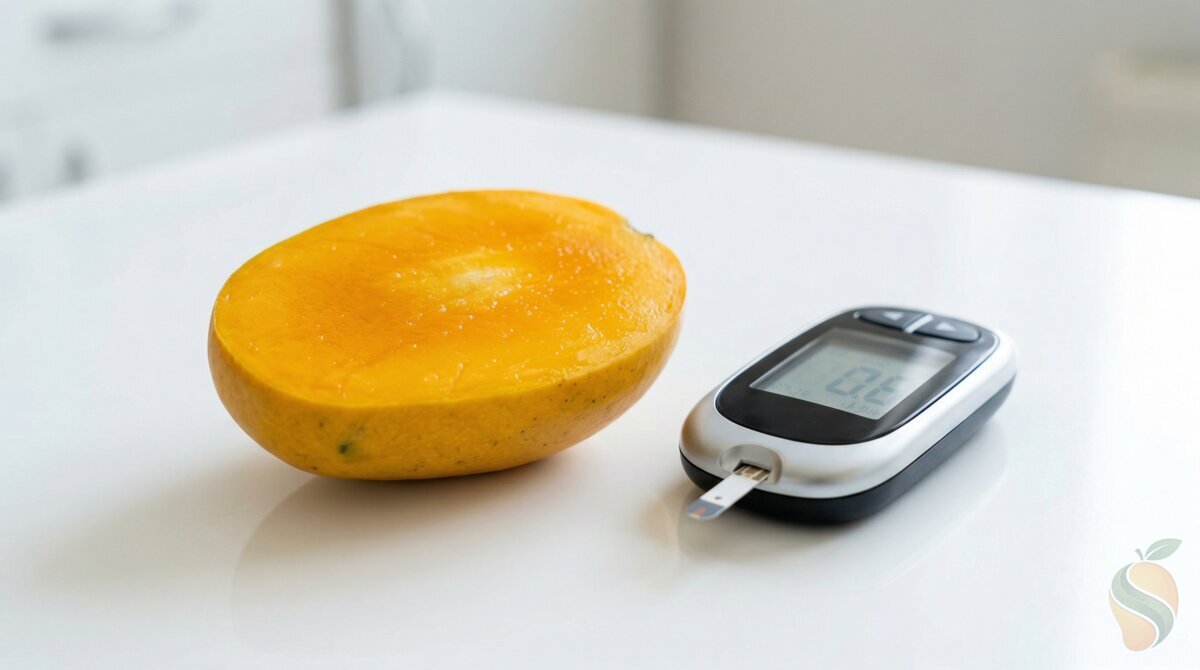
If you have access to a continuous glucose monitor (CGM), try eating a controlled portion and track the response over two hours. Your individual results are more relevant than general guidelines, because glucose response varies based on insulin sensitivity and overall metabolic health.
The Bottom Line
Giving up mangoes entirely because of diabetes is not what the science supports. A half-mango portion, eaten as part of a balanced meal, is a better nutritional choice than many “diabetic-friendly” processed snacks.
Consider what you might replace mango with. If avoiding mango leads you to a sugar-free cookie instead, you are almost certainly worse off nutritionally. A half-cup of fresh mango provides vitamin C, vitamin A, folate, potassium, and bioactive compounds with potential anti-diabetic properties.
As always, work with your doctor or dietitian to find what works for your specific situation. But do not let blanket advice rob you of one of nature’s most nutritious fruits.
Explore our variety guide to find the best mango for your dietary needs, and read more about the health benefits of Indian mangoes.
Healthy Indian Mangoes in Texas
Swadeshi Mangoes delivers naturally ripened, chemical-free Indian mangoes across Austin, Dallas, Houston, and San Antonio. Our mangoes arrive within days of harvest with no cold storage interruption. Learn more about mango health benefits and gut health research. Order here.
Frequently Asked Questions
Can diabetics eat Indian mangoes?
Yes, in moderation. Mangoes have a glycemic index of 51-56 (low-medium), lower than white rice. A half-cup serving fits within standard carb exchanges. Pair with protein and eat as part of a meal. Check our FAQ page for more health questions.
Which mango variety has the least sugar?
Totapuri is the least sweet common variety. Banganapalli has moderate sweetness. Alphonso and Kesar are the sweetest — enjoy smaller portions if monitoring sugar. See our variety guide for the complete comparison.
Is mango juice OK for diabetics?
Mango juice is not the same as whole mango. Juicing removes fiber that slows sugar absorption, concentrating the sugar and raising the glycemic index significantly. Prioritize whole, fresh mango over juice, pulp, or dried mango products.