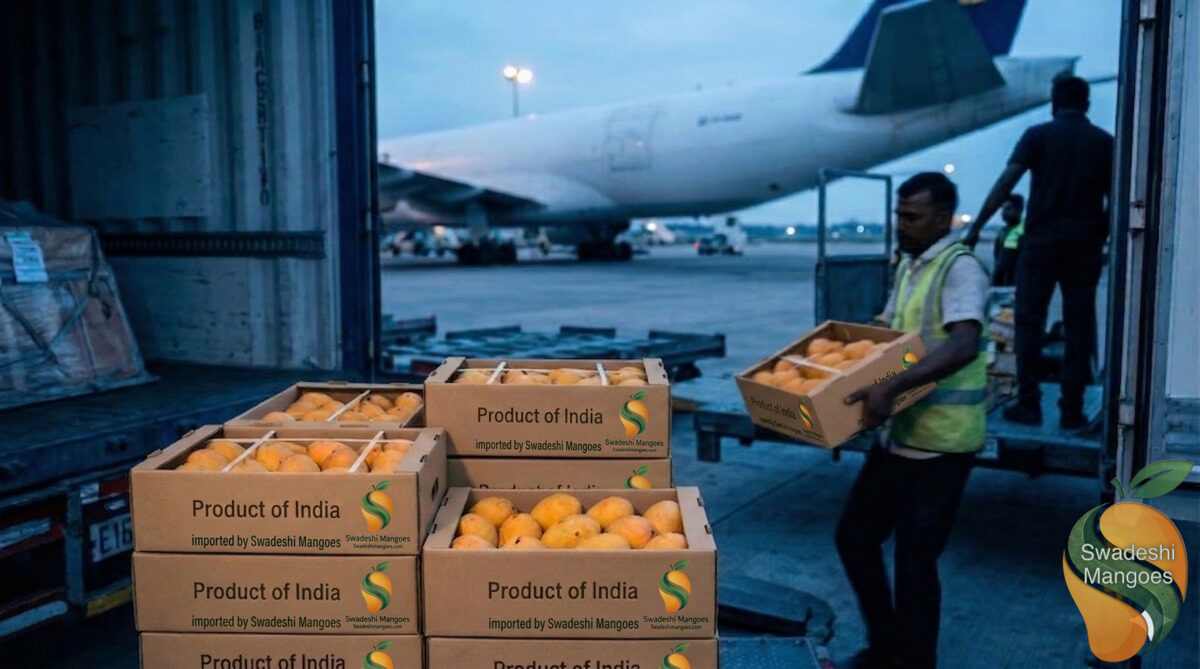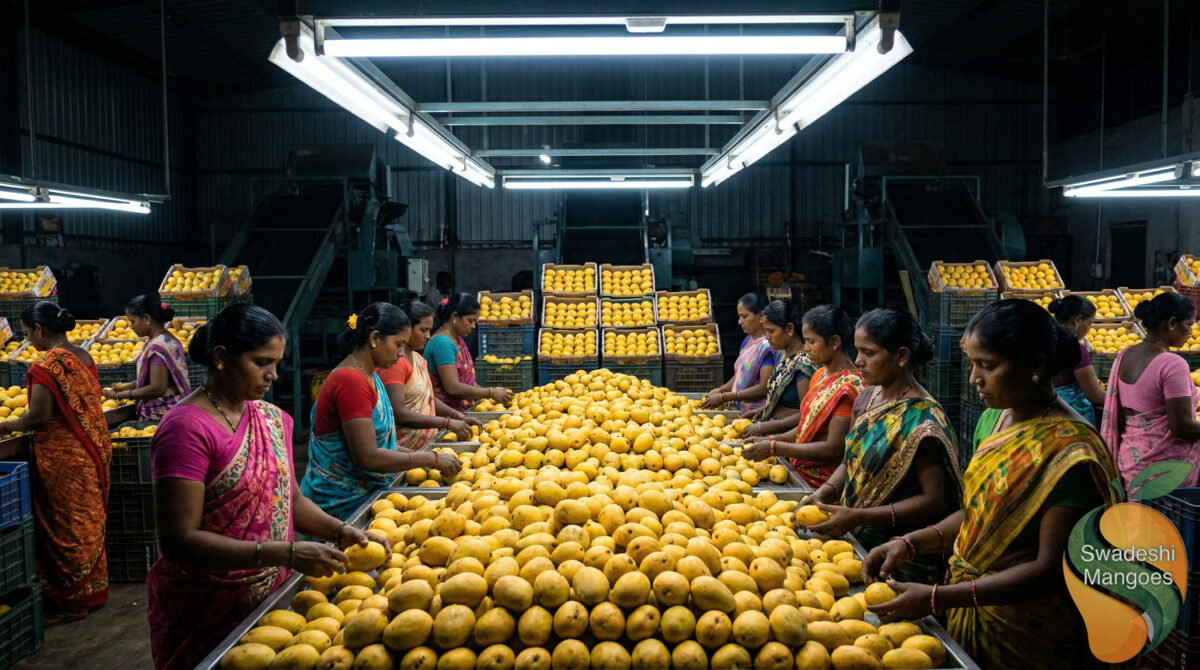
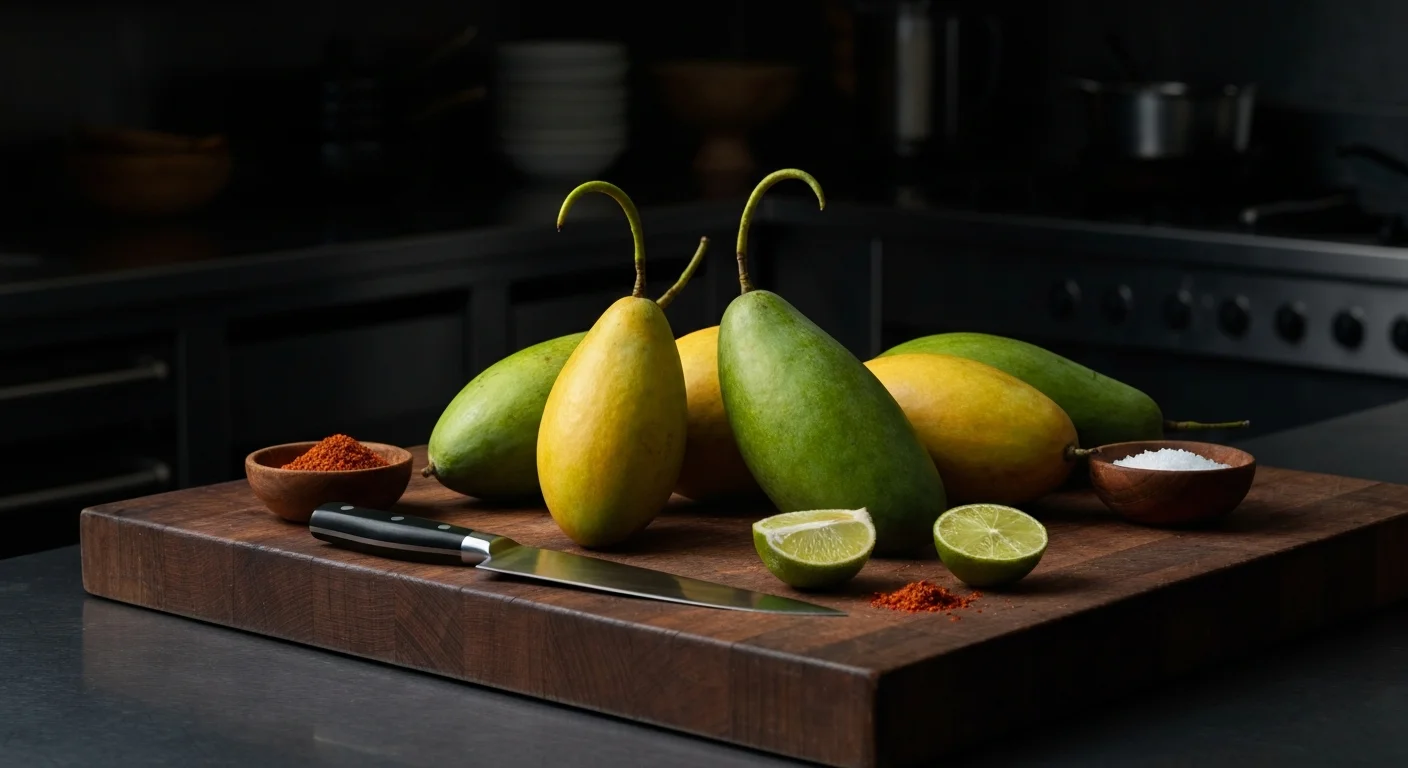
Totapuri is a large, elongated Indian mango from South India instantly recognizable by the pointed curved tip that resembles a parrot’s beak, which is exactly what its name means in Tamil and Telugu (tota = parrot, puri = nose/beak). Unlike the sweet dessert varieties like Alphonso or Chinna Rasalu, Totapuri is firm-fleshed, moderately tangy, and relatively low in sugar (12-16 Brix), which is why it is the variety most preferred by professional chefs for savory cooking, pickles, chutneys, salads, and raw preparations. At Swadeshi Mangoes we deliver Totapuri to Texas customers from May through August, the longest season of any variety in our catalog, and it has become the go-to pick for Texas restaurants and home cooks who want mango as a savory ingredient rather than a dessert fruit.
The Parrot-Beak Shape
Totapuri’s defining feature is its shape. Most mangoes are round or oval; Totapuri is distinctly elongated, typically 14-18 centimeters long and 7-9 centimeters wide, with a pronounced curved beak at the apex. The shape is genetically stable across growing regions, meaning you can identify a Totapuri from across a market by silhouette alone. In Kannada the variety is called Ginimoothi (parrot-faced), in Hindi sometimes Bangalora after the Bangalore region that grows much of the commercial crop, and in English markets it is occasionally listed as Bangalora or Collector.
Geographic Spread
Totapuri is grown across a wide belt of South India, primarily in Andhra Pradesh, Karnataka, and Tamil Nadu, with smaller acreages in Maharashtra. The commercial center is the Krishnagiri-Kolar-Chittoor triangle where the three states meet, an area with deep red soils and a long harvest window. Because Totapuri flowers and fruits over an extended period, the variety is available commercially from early May through late August, significantly longer than any single-flush variety like Alphonso or Himayath.
Why Chefs Prefer Totapuri Over Sweet Varieties
Sweet Indian mangoes like Alphonso and Chinna Rasalu are extraordinary eaten fresh, but they are poor ingredients in most savory applications. Their high sugar content caramelizes quickly under heat, their soft pulp breaks down into puree when cooked, and their strong aromatic profile dominates any dish they enter. Totapuri, with its firmer flesh, moderate sugar (12-16 Brix compared to 20-24 for dessert varieties), and balanced tartness, solves all three problems.
The flesh holds shape when cubed, so Totapuri works in salsas, salads, and cold grain bowls. The moderate sugar allows it to be cooked down into chutneys and pickles without turning cloying. And the lower aromatic intensity lets other flavors in a dish come through rather than competing with the mango. Texas chefs who have worked with Totapuri often compare it to unripe green papaya in function: a firm, slightly tart fruit that adds body and acid without overwhelming the plate.
A Chef’s Perspective
One of our Austin customers is the executive chef of a modern South Indian restaurant. She orders 40-50 pounds of Totapuri weekly during the Texas mango season for her kitchen’s pickle program, seasonal salad menu, and a raw mango chutney that accompanies every dosa on the menu. In her words: "Alphonso is for the dining room as a dessert. Totapuri is for the kitchen. You cannot run a serious South Indian menu without it."
Ripe vs. Unripe Totapuri: Two Different Ingredients
Totapuri is unusual among mangoes because it is commercially useful at two completely different ripeness stages, each producing a different ingredient.
Unripe Totapuri (green, firm, very tart) is the base for Indian mango pickle (avakaya in Telugu, manga oorugai in Tamil), mango dal (mamidikaya pappu), mango rice (mamidikaya annam), and raw mango chutney. At this stage the fruit is almost apple-crisp with a lemony acidity and a very small sugar content. It is the workhorse of South Indian summer cooking.
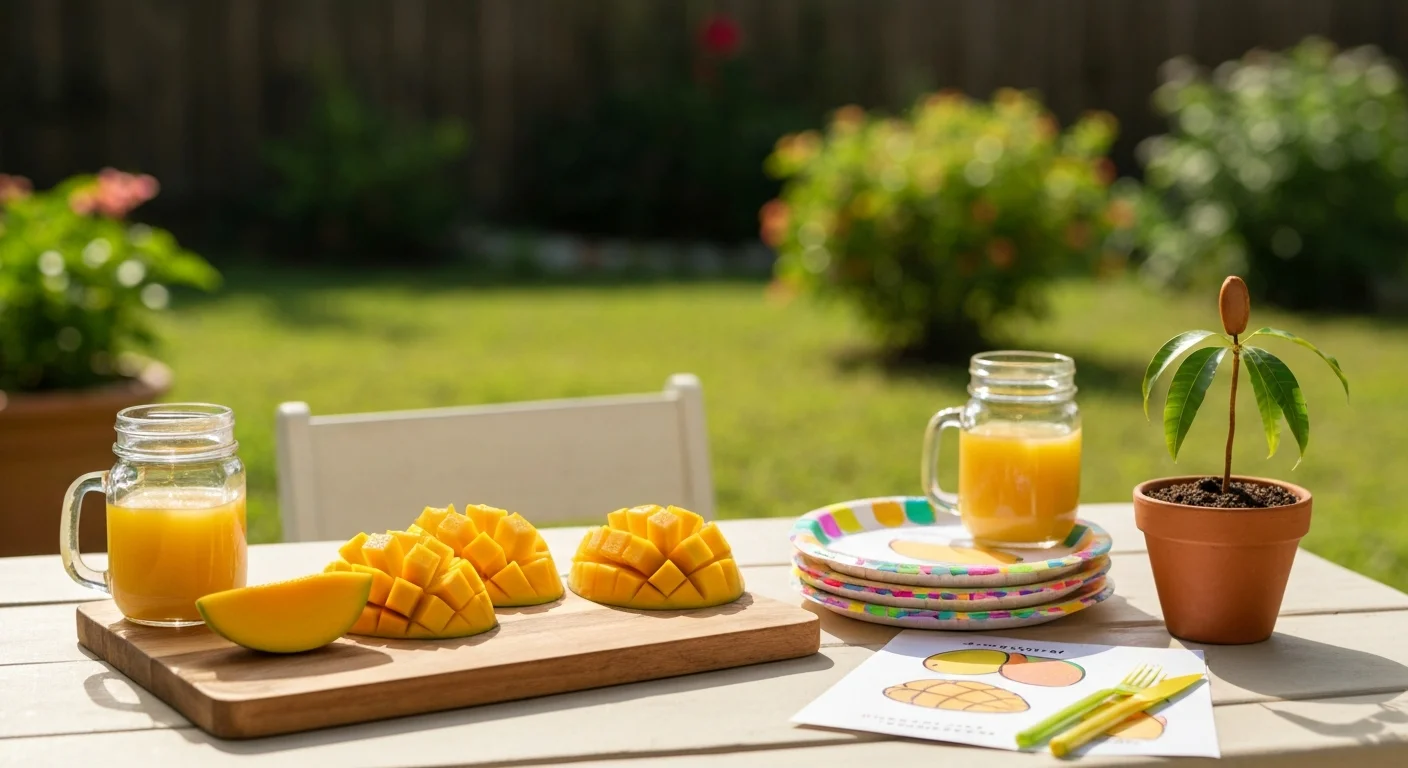
Ripe Totapuri (yellow-orange, slightly soft, balanced sweet-tart) is used for mango juice (Totapuri is the variety behind most commercial Indian mango juice brands including Maaza and Frooti), ice cream bases, salsas, and pairing with savory proteins like grilled fish or chicken. Brix at peak ripeness is 12-16 degrees, and the pulp is firm enough to hold shape when diced.
Nutritional Profile
Totapuri has a lower sugar content than dessert varieties but a comparable vitamin and polyphenol profile. A 300-gram ripe Totapuri (the fruit is large), based on USDA FoodData Central and ICAR nutritional data:
| Nutrient | Per 300g fruit (ripe) | % Daily Value |
|---|---|---|
| Calories | 144 kcal | 7.2% |
| Total sugars | 24 g | — |
| Vitamin C | 108 mg | 120% |
| Vitamin A (RAE) | 126 mcg | 14% |
| Fiber | 4.8 g | 17% |
| Potassium | 480 mg | 10% |
| Citric acid | Moderate-high | — |
Green Totapuri has a different nutritional profile. According to a 2022 study in the Indian Journal of Nutrition and Dietetics, unripe Totapuri contains significantly higher vitamin C (up to 165 mg per 100 g), more soluble fiber, and elevated levels of starch that gradually convert to sugar during ripening. The National Mango Board notes that Totapuri’s combination of moderate sweetness and high acidity makes it one of the best Indian mangoes for juice processing because the balanced flavor holds up through pasteurization.
How Texas Customers Use Totapuri
Our Texas customer base uses Totapuri for four primary applications.
Traditional Avakaya Pickle
Avakaya is the fiery Andhra mango pickle made from cut pieces of unripe Totapuri, mustard powder, chili powder, fenugreek, mustard oil, and salt. A single batch traditionally made in a clay pot (bharani) lasts up to 12 months. Our Andhra and Telangana Texas customers order cases of green Totapuri in May and June specifically for home pickle-making. One San Antonio family orders 40 pounds every year to make enough avakaya to last until the following season.
Restaurant and Home Cooking
Ripe Totapuri goes into salsa (diced with red onion, serrano, cilantro, and lime), green salads, chaat, and traditional drinks like aam panna. It also pairs exceptionally well with Texas seafood, particularly grilled red snapper and Gulf shrimp, where its acidity brightens the rich fish. A Houston customer who runs a catering business tells us Totapuri salsa is the most-requested accompaniment at her Indian-Tex-Mex fusion events.
Home Juice and Ice Cream
Ripe Totapuri is the industry standard for Indian mango juice because of its balanced sweet-tart profile and deep color. Home juicers find the same balance works well. A simple blend of Totapuri, a little lime, a pinch of salt, and cold water produces a drink very close to the commercial Indian mango juice flavors that many customers grew up with.
How to Ripen and Store Totapuri
Because Totapuri has two useful ripeness stages, handling instructions depend on intended use. For pickle-making or savory cooking, refrigerate the fruit immediately on arrival to arrest ripening. Unripe Totapuri holds in the fridge for 2-3 weeks without softening significantly.
For ripe eating and juicing, leave on the counter at 78-82 F. Totapuri ripens slowly, typically 7-10 days from mature-green to ripe in a Texas kitchen, the longest ripening window of any variety we carry. Ripe fruit holds an additional 5-7 days at room temperature or 10-14 days refrigerated. The long shelf life at both stages is one of the reasons Totapuri is so practical for working cooks. See our mango care guide for more detail.
Totapuri vs. Other Savory-Use Mangoes
| Variety | Best Stage | Brix Ripe | Flesh Firmness | Best Savory Use |
|---|---|---|---|---|
| Totapuri | Unripe or ripe | 12-16 | Firm | Pickle, salsa, juice, chutney |
| Alphonso | Ripe only | 20-22 | Soft | Not recommended savory |
| Kesar | Ripe only | 20-22 | Medium-soft | Chutney (ripe) |
| Banginapalli | Ripe | 18-20 | Medium-firm | Salad, slicing |
| Raw Papaya (comparison) | Unripe | 5-8 | Very firm | Som tam, slaw |
Frequently Asked Questions
Is Totapuri sweet or sour?
Totapuri is both, depending on ripeness stage. Unripe green Totapuri is very tart with minimal sweetness, suitable for pickles and savory cooking. Ripe Totapuri is moderately sweet (12-16 Brix) with a noticeable citric acidity that keeps the flavor balanced rather than cloying. Neither stage is as sweet as dessert varieties like Alphonso or Suvarna Rekha.
Can I use Totapuri for mango lassi?
Totapuri can work for lassi but requires more added sugar than Alphonso or Kesar because of its lower Brix. Many South Indian families prefer a Totapuri-based lassi specifically for its brighter, more refreshing profile, and some Texas customers blend Totapuri and Kesar together to balance sweetness with acidity. For pure sweet lassi we recommend Kesar.
When is Totapuri available in Texas?
Totapuri has the longest season of any variety we carry, from early May through late August, covering approximately 16 weeks. Swadeshi Mangoes receives multiple shipments per month during this window and delivers across Austin, Dallas, Houston, and San Antonio. The long season means Totapuri is still available when other varieties have sold out.
Is Totapuri the same as Bangalora?
Yes. Totapuri and Bangalora refer to the same variety. Bangalora is the older English-language trade name, derived from the Bangalore region where much of the commercial crop is grown. Totapuri is the widely used Indian name today. Some export markets also list the variety as Collector. The fruit, tree, and harvest season are identical regardless of name.
How do I order green Totapuri for pickle-making?
On the Swadeshi Mangoes order form, select Totapuri and use the notes field to specify "unripe/green for pickle." We harvest and ship Totapuri at the ripeness stage the customer requests, and our Texas pickup agents can hold green fruit refrigerated until pickup. Many Texas customers place annual bulk orders of 20-40 pounds of green Totapuri in May and June for home pickle-making.
The Chef’s Mango for Texas Kitchens
Totapuri is the mango that earns its place in a serious kitchen, Indian or otherwise. If you are making avakaya, salsas, chutneys, or any dish where the mango needs to be an ingredient rather than the star, it is the variety we recommend first. It is also the most budget-friendly mango in our catalog per pound, because of its long season and abundant supply. Head to our order form to place your order, browse the full mango variety list, or read more variety guides on the Swadeshi Mangoes blog. For ripening and storage tips see our mango care guide.
Additional resources: APEDA Totapuri export data, National Mango Board processing variety notes, and USDA FoodData Central raw mango entries.

Swadeshi Mangoes
Swadeshi Mangoes is a community-driven Indian mango pickup network operated by Swadeshi Central TX LLC, headquartered in Round Rock, Texas. We bring authentic, USDA-inspected Indian mangoes — Alphonso, Banginapalli, Kesar, and more — to families through local pickup in multiple US cities, every season since 2025.