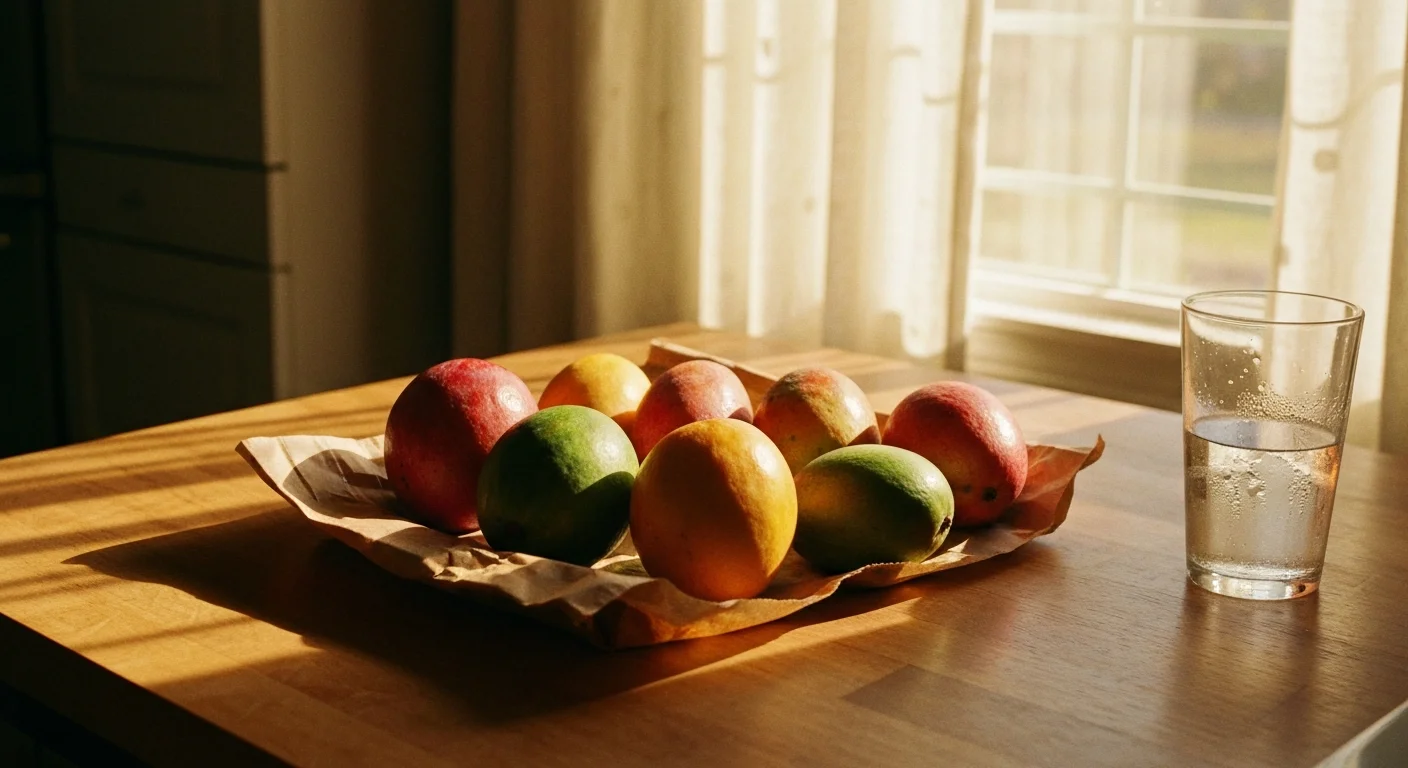
Texas climate ripens Indian mangoes in roughly three days during peak summer, compared to five or more days in cooler climates. The combination of 85 to 100F ambient temperatures, low indoor humidity from AC, and warm kitchen microclimates accelerates enzymatic ripening, which means Texas customers should check mangoes daily starting on day two rather than day four.
I am Vamsi, and I have shipped Indian mangoes to Texas customers for six seasons. The single most common question from new customers in Austin, Round Rock, Cedar Park, Pflugerville, Dallas, Frisco, Plano, Houston, Sugar Land, Katy, and San Antonio is how long the mangoes take to ripen. The honest answer is that the Texas climate cuts ripening time almost in half compared to national averages, and understanding why will save your fruit.
What Happens Inside a Ripening Mango
Mangoes are climacteric fruit, which means they continue to ripen after they are picked. Ripening is driven by ethylene gas, which the fruit produces in increasing amounts after harvest. Warm temperatures speed up ethylene production. Cool temperatures slow it down. This is why a banana ripens faster on a kitchen counter than in the fridge.
The Enzyme Cascade
During ripening, starch converts to sugar, cell walls soften as pectin breaks down, and volatile aroma compounds develop. These reactions are all temperature sensitive. Every 10F increase in ambient temperature roughly doubles the rate of enzymatic activity, which is why a mango in a 95F Texas kitchen ripens twice as fast as one in a 75F Seattle kitchen.
Ethylene Feedback Loop
Ripening mangoes release ethylene, which further accelerates their own ripening and the ripening of nearby fruit. Group three mangoes in a paper bag, and the ethylene concentration rises faster than with a single mango. This is why the paper bag trick works.
Texas Summer Conditions
Peak mango season in Texas runs May through July. Average high temperatures during this window:
| City | May Avg High | June Avg High | July Avg High | Humidity Range |
|---|---|---|---|---|
| Austin | 85F | 92F | 97F | 45 to 70 percent |
| Round Rock | 84F | 91F | 96F | 45 to 70 percent |
| Dallas | 84F | 92F | 96F | 50 to 70 percent |
| Frisco | 83F | 91F | 95F | 50 to 70 percent |
| Houston | 87F | 91F | 94F | 65 to 85 percent |
| Sugar Land | 87F | 91F | 94F | 65 to 85 percent |
| San Antonio | 86F | 93F | 96F | 50 to 75 percent |
Indoor Texas homes with AC sit around 72 to 78F, which is still warm enough to ripen mangoes faster than the national average.
Why 3 Days Beats 5 in Texas
Most mango ripening guides written for national audiences assume ambient indoor temperatures of 70F. Texas indoor temperatures during summer routinely run warmer because AC units struggle against outdoor heat and homeowners often set thermostats to 76 or 78F to save on electricity. The result is faster ripening, shorter shelf life, and more missed windows.
The Day-Two Check
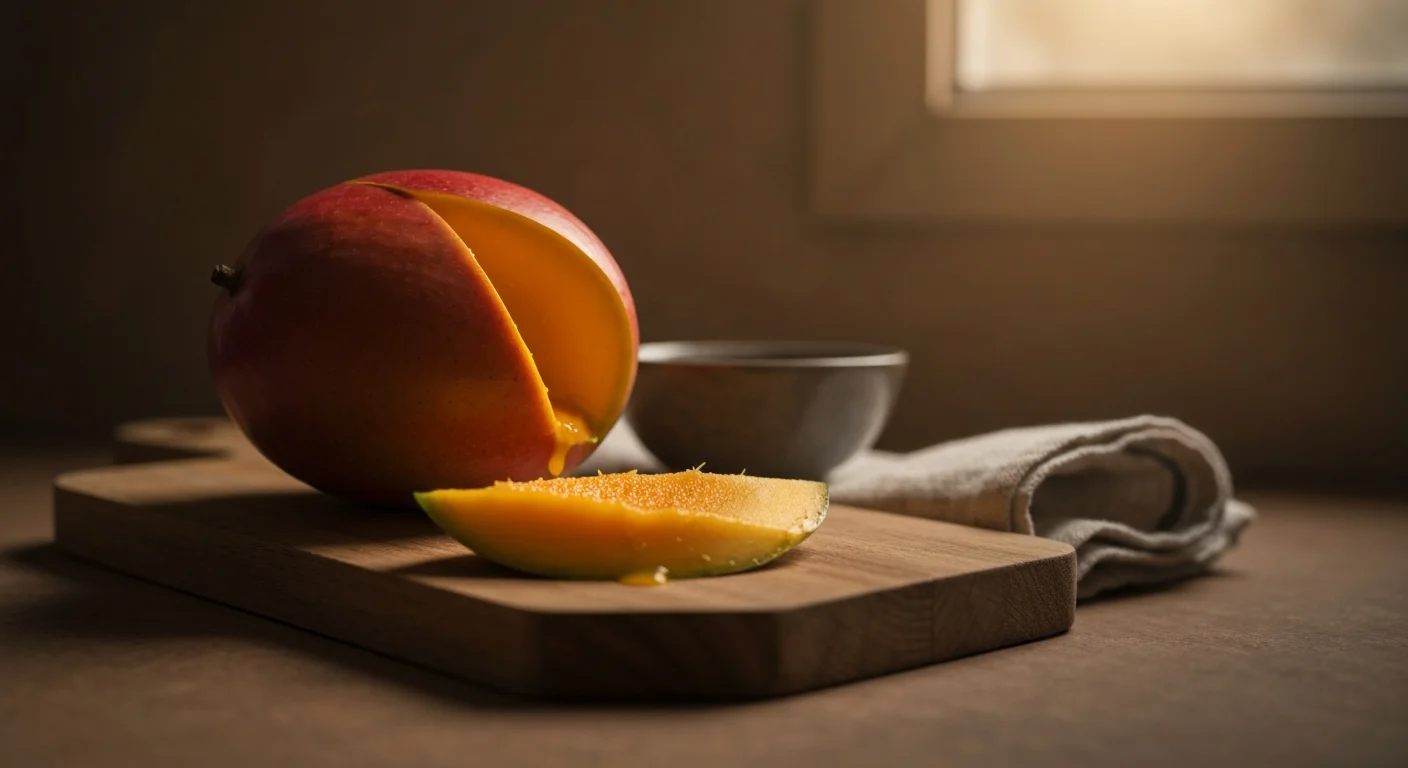
Starting on day two after pickup, press gently near the stem end. A ripe mango yields slightly, like a ripe avocado. If there is no yield by day two, check again on day three. If it yields, eat it within 48 hours or move it to the fridge.
The Missed Window Problem
Our Dallas customer Radha told me in 2024 that she lost a whole box of Alphonso because she followed a YouTube guide that said to wait five days. By day five in her Frisco kitchen, the fruit was overripe. We adjusted her approach to a day-two check, and she has not lost a mango since.
Variety-Specific Ripening Times in Texas
Not all varieties ripen at the same pace. Here is what I tell customers:
- Alphonso: 2 to 3 days in Texas summer
- Kesar: 3 to 4 days
- Banginapalli: 3 to 5 days
- Chinna Rasalu: 2 to 3 days
- Himayath: 3 to 4 days
- Suvarna Rekha: 3 to 4 days
- Mallika: 4 to 5 days
- Dasheri: 3 to 4 days
- Totapuri: 5 to 7 days
Humidity in Houston and Sugar Land slows ripening slightly compared to drier Austin and San Antonio, but the difference is only half a day.
The Paper Bag Method in Texas
Place two or three mangoes in a brown paper bag, fold the top loosely, and leave on the counter away from direct sunlight. Check daily. The bag traps ethylene and creates a mild warm microclimate. In Texas, this usually cuts ripening time to 2 to 3 days even for slow varieties.
Do Not Use Plastic Bags
Plastic traps moisture and creates condensation, which speeds mold growth in humid Texas summer conditions. Always use paper.
Do Not Ripen in Direct Sunlight
A Texas windowsill can hit 110F in July. That is not ripening, that is cooking. Keep bags on the counter away from windows.
When to Refrigerate
Once a mango yields to gentle pressure and has a full aroma, it is ripe. At this point, you have two options. Eat within 48 hours, or refrigerate for up to 5 days. Do not refrigerate an unripe mango. Cold arrests ripening permanently and the fruit will never develop full flavor.
Chill TemperatureStandard home fridge settings between 38 and 40F are ideal for ripe Indian mangoes. Lower temperatures risk chill injury, visible as pitted skin and off flavors.Signs of Overripe Fruit
An overripe Texas mango will show soft wrinkled spots, leaking juice, a fermented alcohol aroma, and dark patches on the flesh. At this stage, blend into a smoothie or lassi immediately, or discard. Do not eat if mold is visible.
Practical Storage Setup
In my Round Rock kitchen, I keep a counter ripening station: a wooden bowl holding unripe mangoes, away from the stove and window. Once a mango is ripe, it moves to the middle fridge shelf. I check the bowl every morning at 7am before work. This routine has eliminated loss.
Climate Considerations by Texas Region
Central Texas (Austin, Round Rock, Cedar Park, Pflugerville, Georgetown)
Moderate humidity, high heat. Ripening window 2 to 3 days for most varieties. Check daily starting day two.
North Texas (Dallas, Frisco, Plano)
Similar to Central Texas, slightly less humid. Same 2 to 3 day window.
Houston Metro (Houston, Sugar Land, Katy)
Higher humidity, slightly slower ripening, more mold risk. Use fresh paper bags daily and check for condensation.
San Antonio
Drier than Houston, warmer than Dallas in some summers. Ripening aligns with Central Texas.
Sourcing and Delivery
Our mangoes arrive slightly underripe to maximize your ripening window at home. Order through the order form and pick up from one of our agents across Texas. For variety-specific guidance, see the varieties page. For detailed storage tips, visit the mango care guide. For more reading, browse the blog.
FAQ
Why do Indian mangoes ripen faster in Texas than in other states?
Texas summer temperatures, both outdoor and indoor, run warmer than national averages. Enzymatic ripening roughly doubles with every 10F increase, and Texas kitchens often sit at 76 to 78F during peak summer. This accelerates sugar development and cell wall softening, compressing the ripening window from 5 days to 3.
Can I slow mango ripening in a hot Texas kitchen?
Yes. Keep mangoes in the coolest part of the kitchen, away from the stove and windows. Do not bag them if you want to slow ripening. Once a mango yields slightly to pressure, move it to the fridge, which halts ripening. Refrigerating unripe mangoes, however, permanently damages flavor.
What if my Texas mangoes are still hard on day three?
Wrap in a paper bag with a ripe banana or apple, both of which release ethylene. Leave on the counter for 24 more hours. Texas heat plus the ethylene boost will finish ripening most varieties. Slow varieties like Mallika and Totapuri may need 5 to 7 days regardless of climate.
How do I know if a Texas-ripened mango has gone bad?
Look for wrinkled skin, dark leaking patches, a fermented or alcoholic smell, and mold. A mango that has sat on a 95F Texas counter for a week past pickup is almost certainly past its prime. Cut it open, and if the flesh is dark brown or has a sour smell, discard it immediately.
Should I store Indian mangoes in the fridge during a Texas heatwave?
Only if they are fully ripe. A ripe mango stores in the fridge for up to 5 days without losing quality. Unripe mangoes must stay at room temperature. During a Texas heatwave when the kitchen is hitting 80F indoors, move ripe mangoes to the fridge immediately to prevent overripening.
Real Customer Stories from Texas Kitchens
One of my favorite stories comes from a Pflugerville customer named Divya. She ordered Alphonso for the first time in 2023 and called me worried on day two because the mangoes were still firm. I walked her through the paper bag method over the phone. By day three, she reported the first mango was perfectly ripe. By day four, the rest had ripened, and she had to eat her way through them quickly because Texas July was pushing her kitchen to 80F even with AC. The story ended happily, but it highlighted the need for a better day-two check routine. Another customer in Houston, Ramesh, built what he calls his mango station: a wire basket in the coolest corner of his pantry, a digital thermometer clipped to the basket, and a whiteboard noting the order number and pickup date. Excessive? Perhaps. But he never loses fruit.
Counter Positioning in a Texas Home
Not every countertop is equal. The north-facing wall of a Texas kitchen usually stays coolest. Avoid placing ripening mangoes near the oven, microwave, dishwasher, or windows facing south or west. In older Austin homes without good insulation, the kitchen can run 5F warmer than the rest of the house. In newer Frisco and Katy builds, kitchens are often open to living rooms and share AC airflow more evenly. Use your hand as a thermometer. If the counter feels warm, it is too warm.
Humidity Hacks
Houston and Sugar Land customers deal with 75 to 85 percent indoor humidity during summer even with AC running. High humidity slows ripening slightly but raises mold risk. Change your paper bags every 48 hours, which prevents moisture buildup. In Austin and San Antonio, humidity is lower and paper bags can stay in place for the full ripening cycle without replacement.
Closing
Texas weather is not an obstacle to great mangoes. It is just a variable to plan for. Check daily starting day two. Use paper bags. Move ripe fruit to the fridge. Your three-day window is a feature, not a bug. For external references, the National Mango Board and the USDA publish useful storage guidance.

Swadeshi Mangoes
Swadeshi Mangoes is a community-driven Indian mango pickup network operated by Swadeshi Central TX LLC, headquartered in Round Rock, Texas. We bring authentic, USDA-inspected Indian mangoes — Alphonso, Banginapalli, Kesar, and more — to families through local pickup in multiple US cities, every season since 2025.