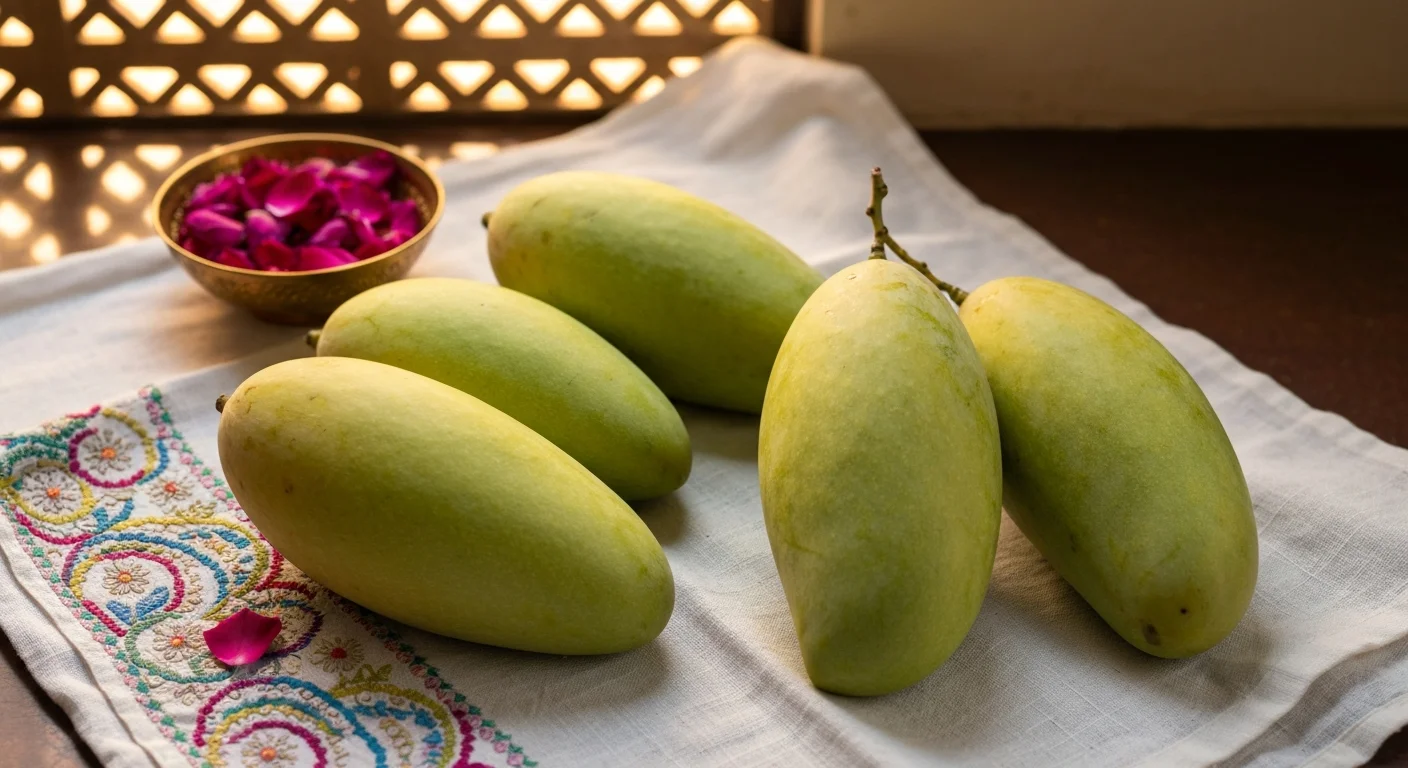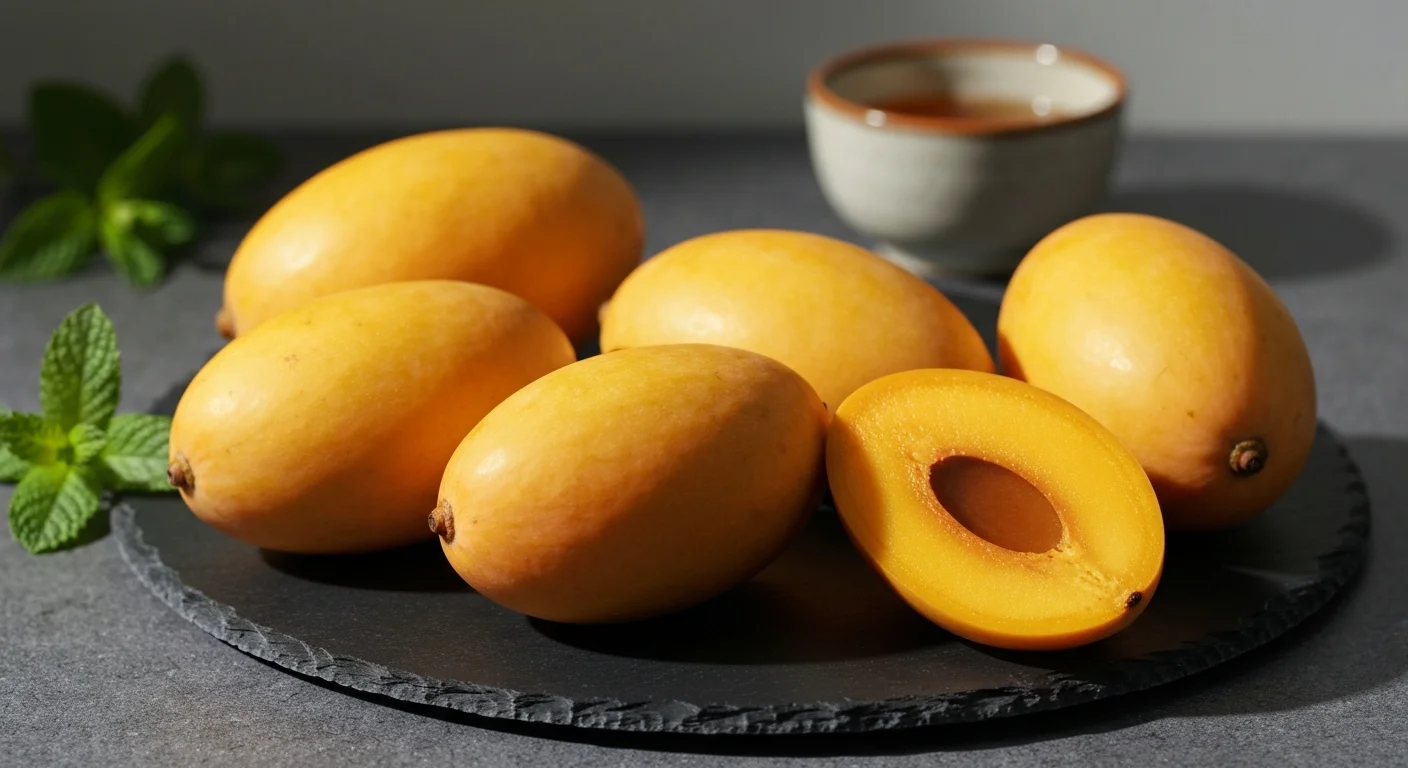
A GI tag (Geographical Indication) is a government-issued certification that guarantees a mango came from a specific region with unique, traceable qualities. In India, 12 mango varieties hold a GI tag — including Alphonso (Maharashtra), Banginapalli (Andhra Pradesh), and Gir Kesar (Gujarat). When you buy these three varieties from Swadeshi Mangoes in Texas, you are buying authenticated, GI-protected fruit.
The Short Answer: Why a GI Tag Matters
A GI tag is to a mango what “Champagne” is to sparkling wine. Only wines from the Champagne region of France can legally be called Champagne. Likewise, only mangoes grown in the Gir and Talala regions of Gujarat can be legally called Gir Kesar. Only mangoes from the Banganapalle region of Kurnool district, Andhra Pradesh can carry the Banginapalli GI seal. This protection is issued under Indian law and recognised internationally.
The tag means three things for you as a buyer:
- Geographic truth: the fruit actually came from the region on the label.
- Quality consistency: growers follow documented cultivation and handling practices defined by the GI authority.
- Legal protection: anyone outside the region cannot sell their fruit under the GI name.
The 12 GI-Tagged Mangoes of India
According to the Agricultural and Processed Food Products Export Development Authority (APEDA), 12 Indian mango varieties currently hold GI status:
| Variety | GI Region | Known For |
|---|---|---|
| Alphonso | Maharashtra (Konkan) | King of Mangoes — creamy, saffron-scented, fiberless |
| Banaganapalle | Andhra Pradesh | Oblique-oval, golden yellow, sweet and fiberless |
| Malihabadi Dusseheri | Uttar Pradesh (Gomti river banks) | Fibreless, pleasant sweetness, North India favorite |
| Gir Kesar | Gujarat (Junagadh) | Saffron-coloured pulp, aromatic, ideal for aamras |
| Marathwada Kesar | Maharashtra | Highest total soluble solids (TSS) in India |
| Kuttiattoor | Kerala (Kannur) | Orange-yellow flesh, medium juiciness |
| Fazli | West Bengal (Malda) | Large, medium-thick skin, juicy, pleasant flavour |
| Bhagalpuri Zardalu | Bihar | Creamy yellow, oblique shape, moderate juice |
| Malda Khirsapati (Himsagar) | West Bengal (Malda) | Oval, yellowish-green, very sweet |
| Appemidi | Karnataka (Shimoga) | Fragile, sour, used for traditional pickles |
| Laxman Bhog | West Bengal (Malda) | Thick-skinned, yellow-green, orange-yellow flesh |
| Rataul | Uttar Pradesh | Medium-sized, distinct aroma, very sweet |
Which GI Mangoes Does Swadeshi Carry?
Of the 12 GI-tagged varieties, Swadeshi Mangoes brings three to Texas every season:
- Alphonso (Hapus) — GI of Maharashtra. Sourced from the Ratnagiri and Devgad belts of the Konkan region. The variety most people mean when they say “the best Indian mango.”
- Banginapalli (Banaganapalle) — GI of Andhra Pradesh. Grown in Kurnool district. Sweet, fibreless, long shelf life; arrives earliest in the season.
- Gir Kesar — GI of Gujarat. Grown in the Junagadh / Gir / Talala belt. Saffron-coloured pulp, ideal for aamras and desserts.
Our other varieties — Himayath (Imam Pasand), Chinna Rasalu, Totapuri, Suvarna Rekha — are not currently GI-tagged but come from their traditional regions and meet the same USDA-APHIS export quality requirements.
Why “Grown in India” Isn’t the Same as “GI Tagged”
India produces more mangoes than any country in the world, but a mango grown in Punjab and labelled “Alphonso” is not the same as an Alphonso grown in Ratnagiri. The soil, rainfall, elevation, and centuries of cultivation practice in the Konkan produce a specific taste and aroma that the GI tag protects. Without that tag, the word “Alphonso” has no legal meaning — and unfortunately, many imported mangoes at generic Indian grocery stores are labelled with variety names that reflect the shape of the fruit, not its verified origin.
This is the same reason Darjeeling tea, Basmati rice, and Champagne wine all have geographic protections. Place matters.
India’s Mango Export Footprint
India is the world’s largest producer of mangoes and the 2nd largest producer of fruits and vegetables overall. According to APEDA:
- India exported 21,033 metric tons of fresh mangoes in 2020-21, worth $36.22 million USD.
- 2021-22 (April–January) exports climbed to 26,359 MT, worth $39.17 million.
- Major export destinations include the UAE, UK, Qatar, Oman, Kuwait, Singapore, Bahrain, Germany, Saudi Arabia, USA, Canada, Italy, and 8+ more.
- Availability window: March through August, depending on variety and growing region.
How the GI System Works in India
Geographical Indications in India are governed by the Geographical Indications of Goods (Registration & Protection) Act, 1999. Once a variety is registered:
- Only authorised growers within the defined geographic boundary can sell under the GI name.
- APEDA and state export boards audit growers for compliance.
- Misuse is a civil and criminal offence under Indian law.
- The GI is internationally recognised under WTO TRIPS agreement.
You can verify any Indian GI status on the Intellectual Property India — Geographical Indications Registry.
What This Means for You in Texas
When you order Alphonso, Banginapalli, or Kesar from Swadeshi Mangoes, you are ordering GI-authenticated fruit from the registered growing regions, cleared through USDA-APHIS preclearance at BARC’s KRUSHAK irradiation facility, and flown directly to Texas within days of harvest. That is the entire chain — from GI-protected orchard to your pickup location — verified at every step.
Frequently Asked Questions
Is every Indian mango GI tagged?
No. Only 12 of the hundreds of Indian mango cultivars hold GI tags. Many great mangoes — Dasheri, Langra, Mulgoa, Neelum, Chinna Rasalu — do not currently have their own GI tags but are still excellent varieties.
Can a variety be grown elsewhere and still be called Alphonso?
The plant can be cultivated elsewhere, but legally only Alphonso from the designated Maharashtra region can carry the GI seal. Alphonso grown in Karnataka or Andhra Pradesh is still the Alphonso cultivar but cannot claim the GI mark.
How do I verify a GI claim?
For exports, check the APEDA packing-house certificate and the phytosanitary certificate attached to the shipment. Reputable importers (including Swadeshi Mangoes) source only from APEDA-registered, USDA-APHIS-approved facilities where GI compliance is audited.
Does the USA recognise Indian GI tags?
The USA recognises geographical indications through the WTO TRIPS framework but does not maintain a separate registration system like India. Enforcement in the US is via trademark law — many Indian GIs, including Darjeeling, are registered as certification marks in the US. For Indian mangoes, the GI claim is backed by the exporter’s APEDA documentation, which accompanies every shipment.
Sources
- APEDA & Embassy of India, Bahrain: Indian GI Mangoes — Unique & Bright (April 2022)
- Agricultural and Processed Food Products Export Development Authority (APEDA)
- Intellectual Property India — Geographical Indications Registry
- Geographical Indications of Goods (Registration & Protection) Act, 1999
Ready to taste a GI-tagged Indian mango? Order an Alphonso, Banginapalli, or Kesar box for this season’s pickup.

Swadeshi Mangoes
Swadeshi Mangoes is a community-driven Indian mango pickup network operated by Swadeshi Central TX LLC, headquartered in Round Rock, Texas. We bring authentic, USDA-inspected Indian mangoes — Alphonso, Banginapalli, Kesar, and more — to families through local pickup in multiple US cities, every season since 2025.