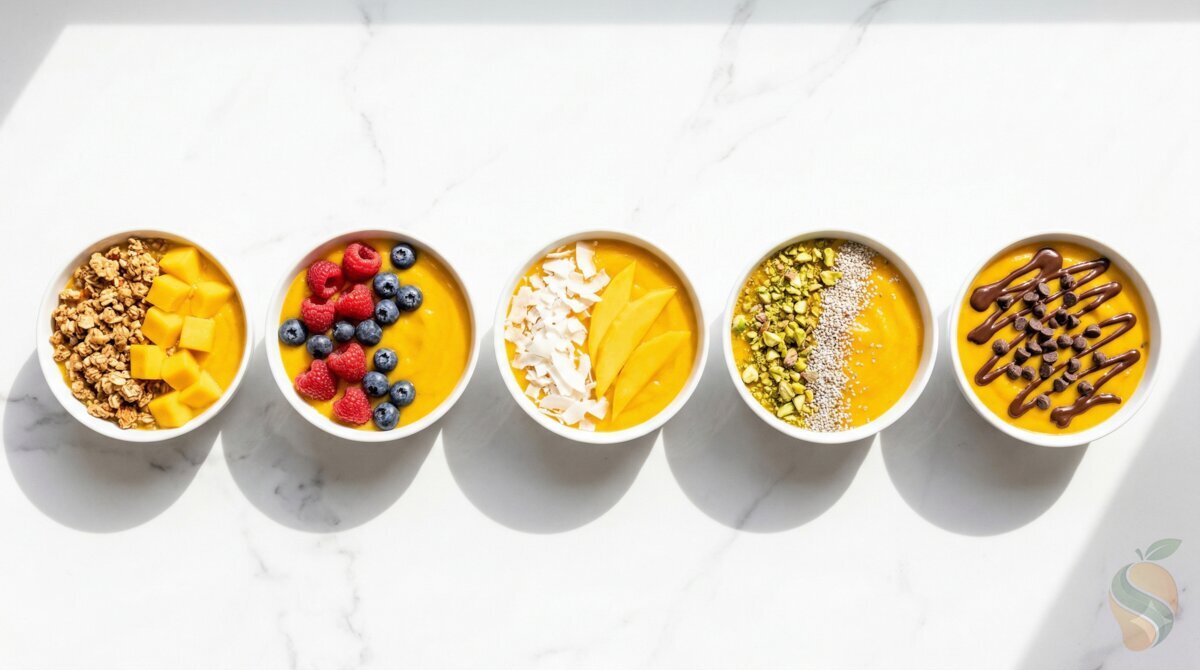
A smoothie bowl is a smoothie that decided to have ambitions. It is thicker, more beautiful, and makes you feel like a person who has their life together even if you are eating it at 11 AM in your pajamas.
Indian mangoes make the best smoothie bowls because their pulp is naturally thick and creamy — you need less filler and the color is spectacular.
Living in Texas, where summer mornings already feel like an oven by 8 AM, a cold smoothie bowl is not just a nice-to-have — it is survival food. And when that bowl is made with real Alphonso or Kesar mango instead of the pale, flavorless chunks from a frozen bag at the grocery store, you are starting your day with something genuinely special. The deep saffron color alone will make you feel like you are doing something right.
The Base Formula
Every mango smoothie bowl starts with the same base:
- 1 cup frozen mango chunks (any Indian variety)
- 1/4 cup liquid (milk, coconut milk, yogurt, or juice)
- 1/2 frozen banana (for thickness)
Blend until thick — thicker than a smoothie. You should be able to turn the blender jar upside down and it stays put. If it is too runny, add more frozen fruit. Never add ice.
The key to a perfect smoothie bowl is restraint with the liquid. Add it one tablespoon at a time. You can always add more, but you cannot un-add it. If your blender is struggling, use a tamper or stop and stir manually rather than pouring in more liquid. The goal is soft-serve consistency — thick enough to hold your toppings on the surface rather than letting them sink.
One more tip: freeze your mango chunks for at least 4 hours, ideally overnight. Semi-frozen mango will give you a runny bowl no matter what you do. If you are starting with fresh mangoes from your Swadeshi delivery, peel and cube them, spread them on a parchment-lined baking sheet, and freeze in a single layer before transferring to bags. This flash-freeze method prevents the chunks from clumping into one solid block.
Choosing the Right Mango Variety for Your Bowl
Not all mangoes create the same smoothie bowl experience, and part of the fun is experimenting with different varieties throughout the season.
Alphonso is the gold standard for smoothie bowls. Its pulp is naturally thick, almost custard-like, which means you need less banana and less liquid to achieve that perfect consistency. The color is a deep, vivid saffron-orange that looks stunning in a bowl. If you are making a smoothie bowl for the first time with Indian mangoes, start here.
Kesar brings a more floral, aromatic quality. Bowls made with Kesar smell incredible — the fragrance hits you before the spoon does. Kesar pairs especially well with tropical toppings like passion fruit and coconut.
Banganapalli is juicier and slightly less thick, so you may want to reduce the liquid or add an extra quarter banana. The trade-off is a brighter, more refreshing bowl that works well on the hottest Texas mornings when you want something lighter.
For a real adventure, try Chinna Rasalu — its intense, honey-like sweetness creates a bowl so naturally sweet that you will not want any toppings at all.
1. The Classic Alphonso Bowl
Base: Frozen Alphonso chunks + coconut milk + frozen banana
Toppings: Granola, sliced almonds, coconut flakes, chia seeds, fresh mango slices, drizzle of honey
Why it works: The deep orange Alphonso base makes this the most photogenic bowl. The coconut adds richness without overpowering the mango.
This is the bowl I make more than any other. The Alphonso does most of the heavy lifting — you barely need anything else. I use full-fat coconut milk from a can (not the carton variety, which is too watery) and just enough frozen banana to get the texture right. The granola adds crunch, the coconut flakes echo the coconut milk, and a handful of fresh Alphonso slices on top reminds you with every bite that this is the real thing. If you drizzle honey, use a light one so it does not compete with the mango.
2. The Tropical Kesar Bowl
Base: Frozen Kesar chunks + pineapple juice + frozen banana
Toppings: Diced pineapple, passion fruit seeds, macadamia nuts, hemp hearts, lime zest
Why it works: Kesar’s aromatic sweetness pairs beautifully with tropical fruit. The lime zest cuts through the sweetness perfectly.
The pineapple juice in this recipe is doing double duty — it thins the base just enough while adding a bright acidity that makes the Kesar flavors pop. Use real pineapple juice, not from concentrate. The passion fruit seeds are the star topping here: their tart crunch against the smooth, sweet Kesar base creates a contrast that is addictive. If you cannot find fresh passion fruit, a squeeze of lime juice over the top achieves a similar effect. Macadamia nuts add a buttery richness that ties the whole tropical theme together.
3. The Protein Power Bowl
Base: Frozen mango chunks + Greek yogurt + splash of milk + 1 scoop vanilla protein powder
Toppings: Peanut butter drizzle, sliced banana, pumpkin seeds, dark chocolate chips
Why it works: This is breakfast and workout recovery in one bowl. The protein powder thickens the base even more and the peanut butter with mango is an underrated combination.
For anyone who thinks smoothie bowls are not “real food,” this one has 30-plus grams of protein and will keep you full until lunch. The trick is using thick Greek yogurt — not the runny kind. Fage or Chobani whole milk works well. The protein powder should be vanilla or unflavored. Do not use chocolate protein powder with mango. I tried it. It tastes like a mistake. Peanut butter is the secret weapon here: natural peanut butter (just peanuts and salt) melts slightly when it hits the cold base, creating ribbons of nutty richness through every spoonful. Dark chocolate chips add small bursts of bitterness that make the mango taste even sweeter by contrast.
4. The Desi Lassi Bowl
Base: Frozen Alphonso chunks + thick dahi (yogurt) + pinch of cardamom + pinch of saffron
Toppings: Crushed pistachios, dried rose petals, saffron strands, silver leaf (varak) if you are feeling fancy
Why it works: This is a mango lassi you eat with a spoon. The cardamom and saffron make it taste like a dessert from a five-star Indian restaurant.
This is the bowl that makes Indian aunties nod in approval. The cardamom needs to be freshly ground — pre-ground cardamom from a jar tastes like dust. Crack open 2-3 green cardamom pods and use the seeds. For the saffron, soak 4-5 strands in a teaspoon of warm milk for 5 minutes before adding to the blend. This releases the color and flavor properly. Use thick homemade dahi if you have it, or full-fat Greek yogurt as a substitute. The toppings are where this bowl becomes art: the green pistachios against the orange base, the pink rose petals, the golden saffron strands. It is beautiful enough to serve at a dinner party and comforting enough for a quiet morning at home.
5. The Green Mango Bowl
Base: Frozen mango chunks + handful of spinach + coconut water + frozen banana
Toppings: Kiwi slices, blueberries, hemp seeds, granola, mint leaf
Why it works: The spinach is invisible (you cannot taste it) but adds iron and vitamins. The mango makes it sweet enough that even kids will eat their greens.
Parents, this is your secret weapon. My kids refuse spinach in every form — salad, curry, sandwich. But they devour this bowl and ask for seconds. Two large handfuls of fresh spinach disappear completely into the mango base. The color shifts from orange to a lighter golden-green, but the taste is 100% mango. Coconut water keeps it light and adds natural electrolytes, which matters when you are heading out into a 100-degree Texas afternoon. The blueberries on top add antioxidants and a beautiful purple contrast against the golden-green base. If your kids are suspicious of green anything, add a few extra mango chunks on top to distract them.
Smoothie Bowl Meal Prep for Busy Mornings
The biggest obstacle to making smoothie bowls on a weekday is time. Nobody wants to wash a blender at 7 AM. Here is how to make it effortless.
On Sunday, prep 5 smoothie bowl bags. In each zip-lock bag, place 1 cup of frozen mango chunks, half a frozen banana (pre-peeled and sliced), and any add-ins for that day’s recipe (a handful of spinach, a scoop of protein powder, a pinch of cardamom). Seal, label, and stack them in the freezer.
Each morning, dump one bag into the blender, add your liquid, blend for 60 seconds, pour into a bowl, add toppings, done. Total time: under 5 minutes. You can prep the toppings in advance too — a mason jar of granola, a container of pre-sliced almonds, a small bag of chia seeds. Line them up on the counter the night before.
If you order mangoes from Swadeshi during the season, dedicate one box specifically to smoothie bowl prep. Peel all the mangoes in one session, cube them, flash freeze on trays, and bag them in 1-cup portions. One box of Alphonso yields roughly 6-8 smoothie bowl portions depending on the size of the mangoes. That is over a week of breakfasts from a single box.
Toppings Guide: What Goes with What
The toppings are not just decoration — they add texture, nutrition, and flavor contrast. Here is a quick reference:
- For crunch: Granola, sliced almonds, crushed pistachios, pumpkin seeds, hemp hearts, toasted coconut flakes
- For freshness: Fresh mango slices, kiwi, blueberries, strawberries, passion fruit, pomegranate seeds
- For richness: Peanut butter, almond butter, coconut cream, dark chocolate chips, cacao nibs
- For nutrition boosts: Chia seeds, flax seeds, bee pollen, spirulina, collagen powder
- For the Desi touch: Crushed cardamom, saffron strands, dried rose petals, chopped dates, gulkand
A good smoothie bowl has at least one item from each of the first three categories: something crunchy, something fresh, something rich. That combination of textures is what elevates it from “blended fruit in a bowl” to something genuinely satisfying.
Prep Tip: Freeze in Season
During Swadeshi mango season, peel and cube extra mangoes and freeze them in zip-lock bags. Each bag is one smoothie bowl. You can enjoy Texas mango smoothie bowls all the way through September from April and May mangoes.
For a detailed walkthrough on the best freezing techniques — including flash freezing, vacuum sealing, and pulp cubes — check out our complete guide on how to freeze mangoes for year-round enjoyment. Properly frozen Indian mangoes retain their flavor and vibrant color for up to 8 months, which means your smoothie bowl season can stretch well past summer.
Order your mangoes and start your smoothie bowl season.
Fresh Mangoes for Your Smoothie Bowls
Swadeshi delivers weekly during season to Austin, Dallas, Houston, and San Antonio. Freeze extra mango chunks for smoothie bowls all summer. Check our recipe collection for more ideas.
Frequently Asked Questions
Which Indian mango makes the best smoothie bowl?
Alphonso makes the thickest, most vibrant orange base. Kesar adds more aroma. For a protein bowl, any variety works well blended with Greek yogurt. See our variety guide for flavor profiles of each option.
Can I use frozen mangoes for smoothie bowls?
Yes — frozen mango chunks make the best smoothie bowls because they create a thick, ice-cream-like texture without adding ice. Flash freeze fresh mango cubes during season for the best results.
How thick should a smoothie bowl be?
Thick enough to hold a spoon upright. If your toppings sink, it is too thin. Add more frozen mango or banana, and reduce the liquid. Never add ice — it waters down the flavor and melts into a puddle.
Can I make smoothie bowls ahead of time?
You can prep the ingredients in bags (frozen mango, banana, add-ins) up to 2 months in advance. Blend fresh each morning — a pre-blended bowl stored overnight loses its thick texture and becomes watery. The 60-second morning blend is worth it.

Swadeshi Mangoes
Swadeshi Mangoes is a community-driven Indian mango pickup network operated by Swadeshi Central TX LLC, headquartered in Round Rock, Texas. We bring authentic, USDA-inspected Indian mangoes — Alphonso, Banginapalli, Kesar, and more — to families through local pickup in multiple US cities, every season since 2025.