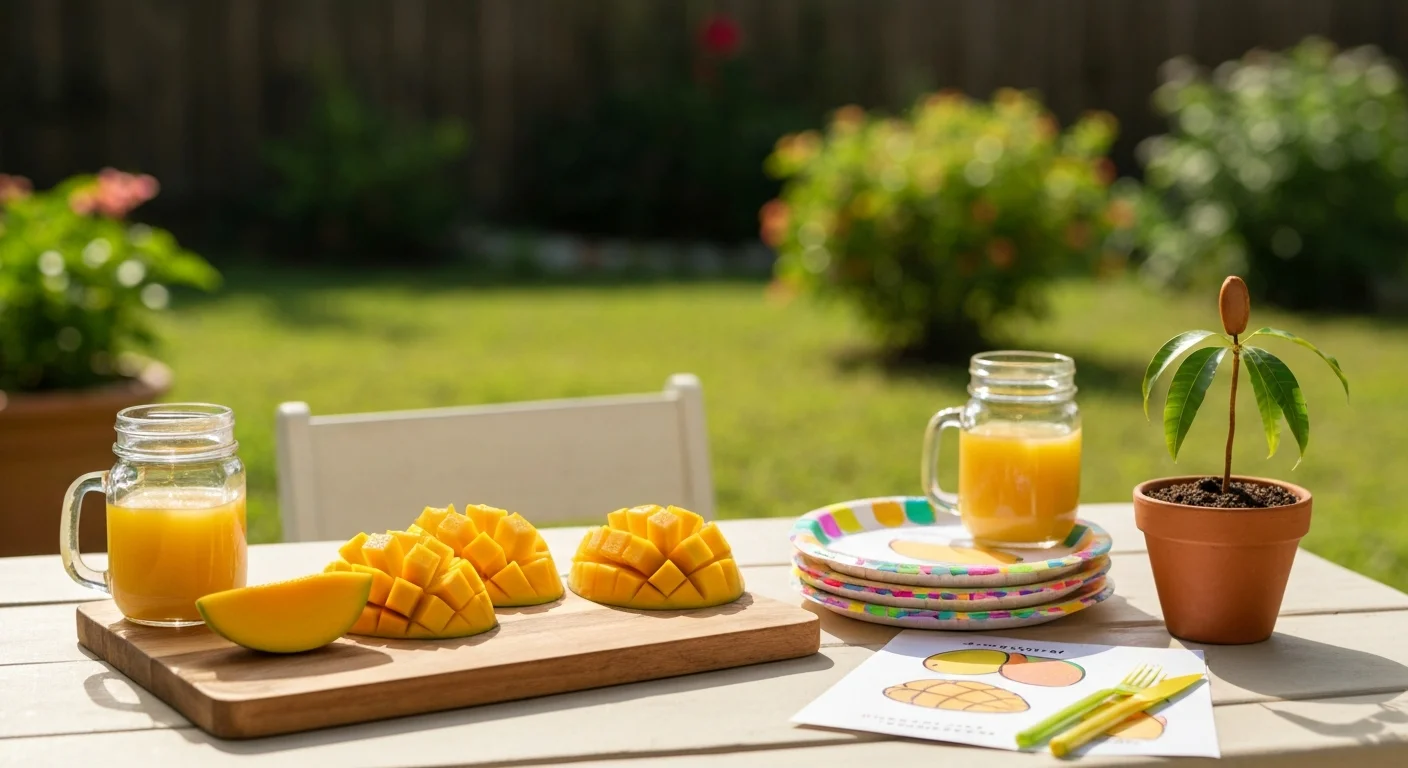
Direct answer: In Texas heat, store unripe Indian mangoes on a room-temperature counter between 68-75°F for 3-7 days until they yield to gentle pressure, then move ripe mangoes to the refrigerator at 50-55°F for up to 5 more days. Never refrigerate a hard, unripe mango, and never leave a ripe one on a 90°F Texas summer counter for more than 24 hours. The wrong storage choice can turn a $90 box of Alphonso into a soggy mess in 48 hours, and the right choice can stretch your mango window by an entire week.
Texas creates storage problems that customers in cooler states simply do not face. Between May and September, your kitchen counter can swing from 72°F at dawn to 88°F by afternoon even with the AC running. That 16-degree swing accelerates ripening unevenly, which is why so many first-time mango buyers in Austin, Dallas, Houston, and San Antonio call us asking why half their box ripened in two days while the other half stayed rock hard for a week.
Why Texas Heat Changes the Rules
Mangoes are climacteric fruit, meaning they continue ripening after harvest by producing ethylene gas. The warmer the room, the faster ethylene production and the faster ripening. In a typical Texas home, three factors collide: ambient heat from outside, AC cycling that creates temperature swings, and humidity levels that shift between bone-dry winters and 70% summer humidity.
We had a customer in Sugar Land last July who left a full 3kg box of Kesar on her granite countertop near a west-facing window. By day two, the mangoes closest to the window were overripe and fermenting while the mangoes underneath were still green. That uneven ripening is pure Texas physics, and the fix is simpler than most people think.
The Three Texas Storage Zones Explained
Think of your home as having three distinct storage environments, each suited to a different ripeness stage.
- Room temperature counter (68-78°F): For hard, unripe mangoes arriving fresh from the agent pickup.
- AC-cooled room (72-74°F, steady): For mangoes that are starting to soften but not ready to eat.
- Refrigerator crisper drawer (50-55°F): For fully ripe mangoes you want to hold for 3-5 more days.
Step-by-Step: The First 24 Hours After Pickup
When you pick up your box from one of our 30+ Texas pickup agents, the mangoes have traveled roughly 8,500 miles over 4-5 days of air freight plus 1-2 days of ground transit. They arrive firm and cool. Here is exactly what to do.
- Open the box within two hours of pickup. Do not leave it in a hot Texas car trunk.
- Unwrap each mango from its paper sleeve and inspect for soft spots, sap burn, or cracks.
- Arrange mangoes in a single layer on a clean cotton cloth or paper towel. Never stack them.
- Place the layer in a spot that stays between 70-78°F, away from direct sunlight and away from AC vents.
- Rotate the mangoes every 24 hours so all sides ripen evenly.
When to Move Mangoes to the Fridge
The single most common Texas mistake is refrigerating mangoes too early. Cold storage below 50°F causes chilling injury, which shows up as gray pitting on the skin and a mealy texture inside. A mango must be fully ripe before it goes into your refrigerator.
A mango is ready for the fridge when it meets all three of these tests:
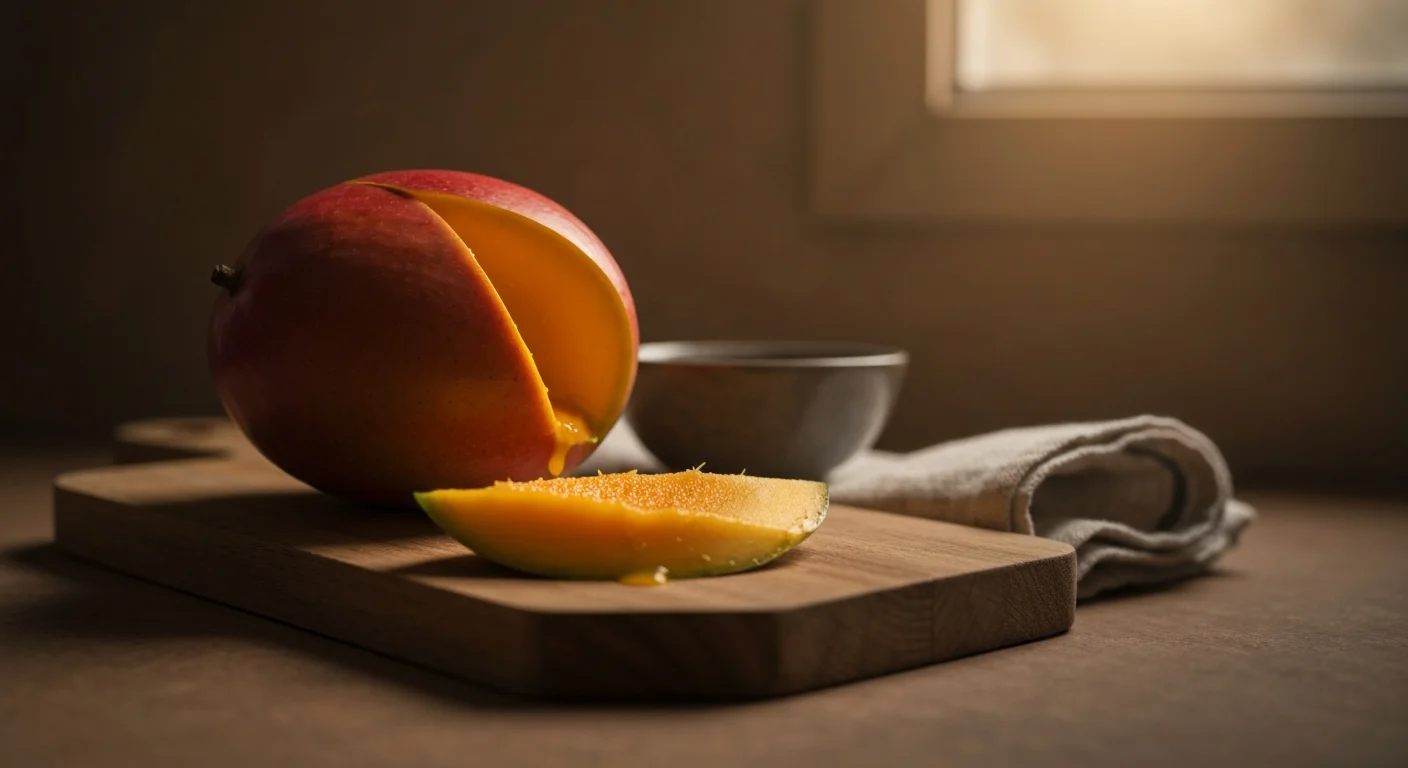
- It yields to gentle thumb pressure near the stem, like a ripe peach.
- It smells sweet and floral at the stem end.
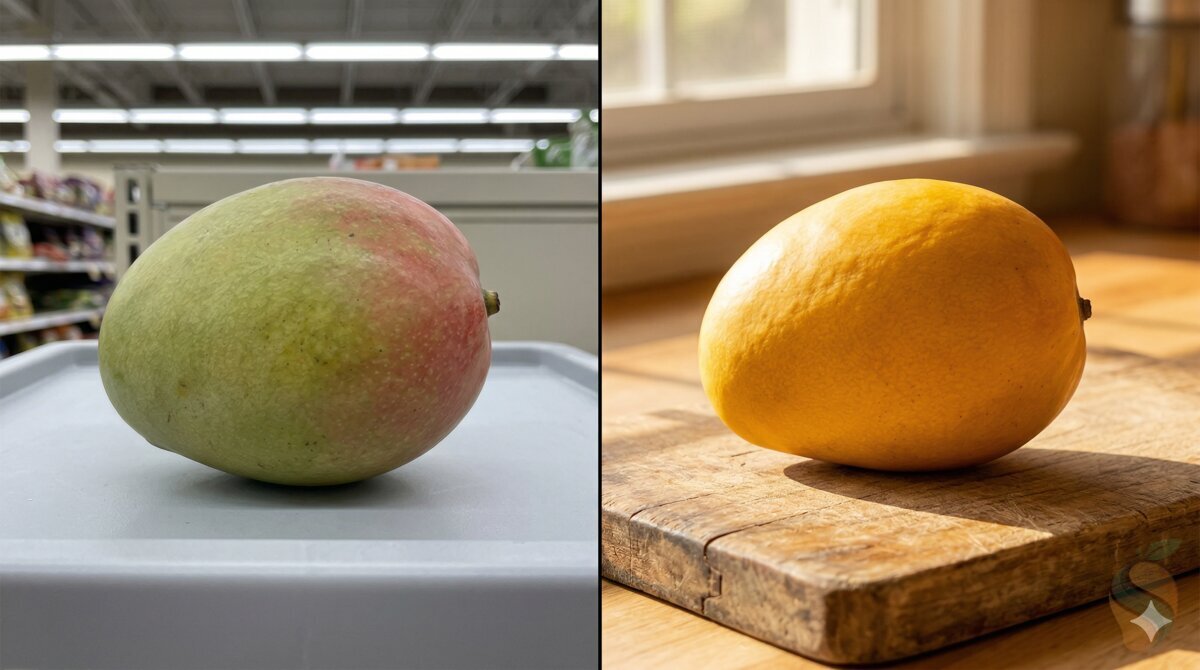
- The skin color has shifted according to its variety (see our visual ripeness guide).
Variety-by-Variety Storage Timing in Texas
Not every Indian mango ripens at the same pace. Here is what we have observed across thousands of Texas deliveries.
| Variety | Counter days (72-78°F) | Fridge days after ripe | Texas notes |
|---|---|---|---|
| Alphonso | 4-6 | 4-5 | Ripens fast in Houston humidity |
| Kesar | 5-7 | 5 | Most forgiving variety for beginners |
| Banginapalli | 3-5 | 4 | Large fruit, check bottom for softness |
| Chinna Rasalu | 5-7 | 3-4 | Juice variety, eat soon after ripe |
| Himayath | 6-8 | 5 | Slow ripener, be patient |
| Suvarna Rekha | 4-6 | 4 | Color shift is subtle |
| Mallika | 5-7 | 5-6 | Longest fridge life |
| Dasheri | 4-6 | 4 | Stays yellow-green even when ripe |
| Totapuri | 3-5 | 5 | Tangy, good for pickling before full ripe |
Speeding Up Ripening Safely
If you have guests coming on Saturday and your mangoes are still rock hard on Wednesday, you can accelerate ripening without ruining the fruit.
- Place unripe mangoes in a brown paper bag with one ripe banana or apple.
- Fold the top of the bag loosely. Do not seal tight or condensation will form.
- Store the bag at 75-78°F in a cabinet, not the fridge.
- Check every 12 hours. Most varieties will be ready 1-2 days sooner.
Avoid the microwave ripening tricks you see on social media. They soften the flesh but do not develop the sugars, so you end up with mushy flavorless fruit.
Common Storage Mistakes to Avoid
Every season we take calls from customers who made one of these five mistakes. Learn from them.
- Leaving the box in a hot car: A closed Texas car in summer hits 130°F in 15 minutes. Mangoes cook from the inside.
- Refrigerating hard green mangoes: Chilling injury is permanent.
- Storing near onions or garlic: Mangoes absorb strong odors.
- Plastic bag storage: Traps ethylene and moisture, causing mold.
- Direct sunlight on the counter: West-facing Texas windows can sunburn fruit.
Humidity and the AC Question
Many Texas homes run the AC at 72-74°F in summer. That is actually an ideal ripening temperature, but the low humidity (around 35-45% in conditioned air) can dehydrate the mango skin and cause wrinkling before the flesh ripens. To counter this, drape a slightly damp cotton cloth over the mangoes for the first 48 hours. This restores humidity to roughly 60%, which mimics Indian storage conditions without causing mold.
According to the National Mango Board, optimal ripening humidity is 85-90% but most Texas homes cannot safely hit that number without risking mold. Sixty percent is the practical sweet spot.
Freezing Mangoes for Year-Round Use
If your box ripens faster than you can eat it, freeze the flesh. Peel and dice ripe mango, spread pieces on a parchment-lined tray, freeze for 2 hours, then transfer to freezer bags with the air pressed out. Frozen mango keeps for 10-12 months and works beautifully in lassi, smoothies, and chutney. For more preservation ideas, see our companion post on 12 preservation methods.
Storage Containers That Work Best in Texas
The container you choose affects both ripening speed and final quality. After thousands of deliveries across Austin, Dallas, Houston, and San Antonio, we have refined our container recommendations for Texas specifically.
- Woven bamboo basket: The best counter option. Breathes well, no moisture trap, gentle on skin.
- Shallow ceramic bowl lined with cloth: Good for display and ripening 4-6 mangoes.
- Perforated plastic crisper bin: For fridge storage after ripening.
- Paper bag with folded top: Only for accelerated ripening, max 48 hours.
- Avoid: Sealed plastic bins, mesh bags pressed against each other, stacked metal bowls.
Texas Climate Zones and Storage Nuances
Not every Texas city behaves the same. Houston humidity runs 70-80% in summer, which speeds mold growth. Austin and Dallas sit around 50-60% humidity, which can dehydrate mango skin. San Antonio splits the difference. Houston customers should add more airflow (spacing mangoes at least 2 inches apart). Dallas and Austin customers benefit from a lightly damp cotton cover for the first 48 hours. These small adjustments pay off noticeably by day five.
Reading Ripening Progress Daily
Train your hand and nose to read ripening. Every morning during Texas mango season, walk through your counter setup and do a quick three-second check per fruit. Within a week of owning your first box you will recognize the sweet inflection point where a mango transitions from just-ready-tomorrow to eat-now. Most customers find this daily ritual calming, and it almost eliminates waste. Jot a quick note on a Post-it for which mango ripened first so you learn your specific Texas kitchen rhythm.
Frequently Asked Questions
Can I store Indian mangoes on the counter all week in Texas summer?
No. Once a mango is fully ripe, it will overripen and ferment within 24-48 hours on a 78°F Texas counter. Move ripe fruit to the refrigerator crisper immediately. Only store hard, unripe mangoes at room temperature, and only until they soften to gentle pressure.
Why did my Alphonso develop black spots after three days?
Black spots are usually anthracnose, a fungal issue that surfaces after the mango has been exposed to humidity above 70% or chilled too early. Cut around the spot and eat the fruit promptly. The rest is safe. Next time, keep airflow around each mango and delay refrigeration until fully ripe.
Is it safe to eat a mango that has been in the fridge for two weeks?
Probably not at peak quality. Ripe mangoes hold for 4-6 days in a Texas fridge. After 10-14 days you will see skin pitting, mushy texture, and flavor loss. When in doubt, cut into the mango and inspect the flesh color and smell before eating.
Should I wash mangoes before storing them?
No. Washing adds surface moisture that speeds mold growth. Store mangoes dry and wash each one just before you eat it. A quick rinse under cool water and a paper towel dry is all you need at serving time.
Can I store different mango varieties together in Texas?
Yes, but know that faster-ripening varieties like Banginapalli and Totapuri will push slower ones like Himayath and Mallika to ripen quicker due to shared ethylene. If you want staggered ripening, separate varieties into different bowls in different rooms of your Texas home.
Ready to order your next box? Visit our order form or browse our mango blog for more storage and recipe guides. For detailed care instructions included with every shipment, see mango care.

Swadeshi Mangoes
Swadeshi Mangoes is a community-driven Indian mango pickup network operated by Swadeshi Central TX LLC, headquartered in Round Rock, Texas. We bring authentic, USDA-inspected Indian mangoes — Alphonso, Banginapalli, Kesar, and more — to families through local pickup in multiple US cities, every season since 2025.