You have driven across town, found the pickup spot, and now you are standing in front of a table of mango boxes. They all look the same. How do you know which ones are perfectly ripe and which ones need a few more days?
This guide will make you the most confident person at the pickup location. After eight seasons of handling thousands of mango boxes across Texas, we have seen every stage of ripeness and every mistake people make when selecting fruit.
Selecting Indian mangoes is a different skill from picking supermarket fruit. These are not the Tommy Atkins or Kent mangoes you find at HEB or Kroger. Indian varieties like Alphonso, Kesar, and Banganapalli have different textures, different ripening patterns, and different visual cues. Once you learn what to look for, you will never second-guess yourself at pickup again.
The Squeeze Test (Most Reliable)
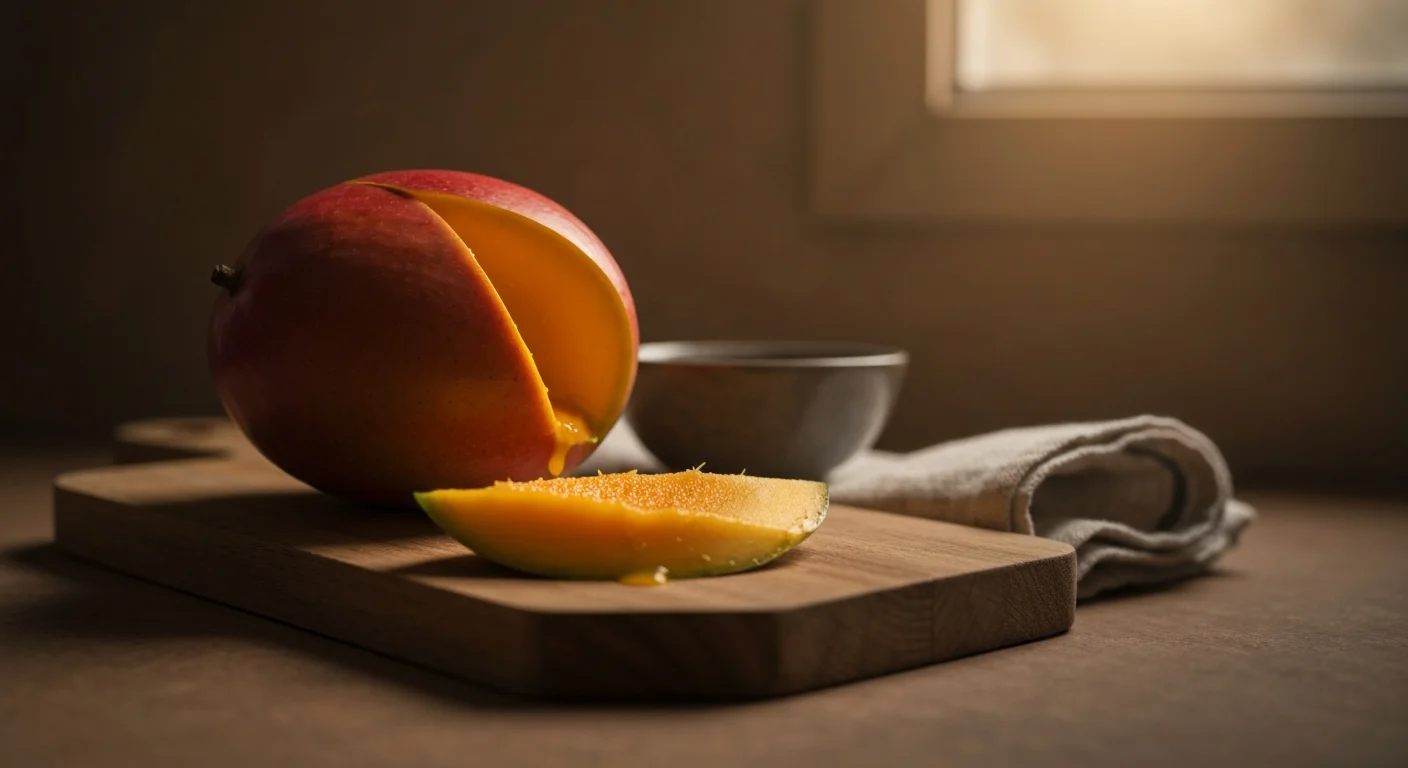
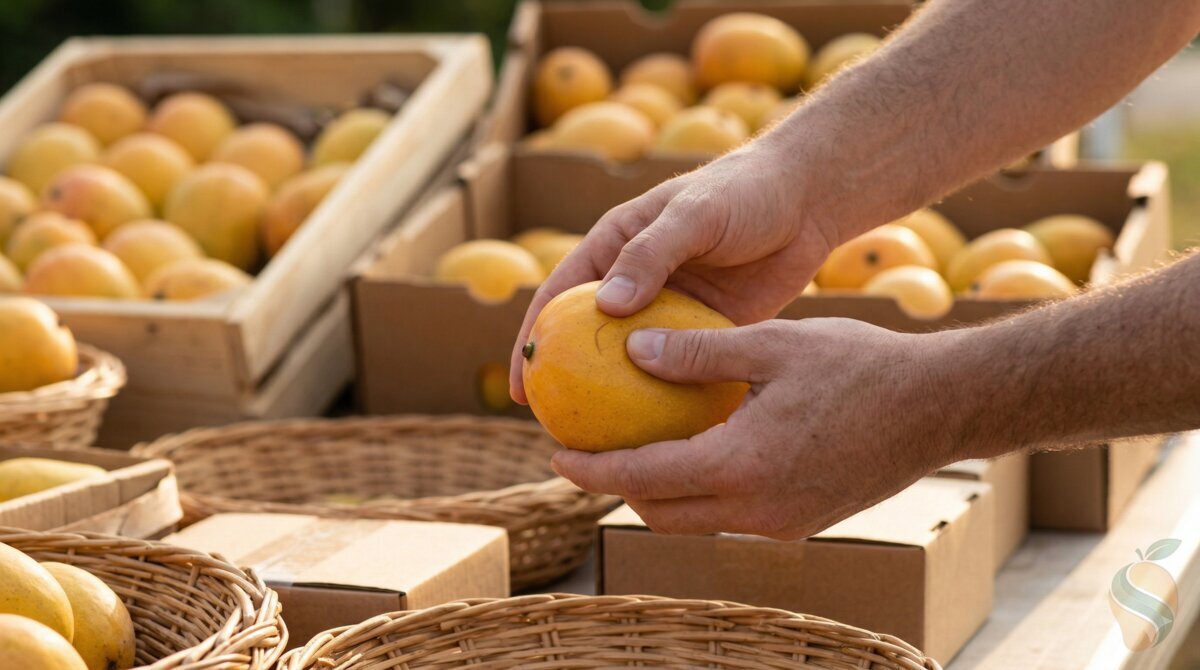
Hold the mango gently in your palm and press lightly with your thumb. You are looking for three stages:
- Firm with no give: Needs 2-3 more days at room temperature. Good if you want to eat later in the week.
- Slight give, like a ripe avocado: Perfect. Eat within 24-48 hours.
- Very soft, fingers sink in easily: Overripe for slicing but perfect for smoothies, lassi, or aam ras.
Do not squeeze hard. Mangoes bruise easily and the bruised spot will turn brown. Press near the center of the mango rather than the narrow ends — the stem end and the tip ripen at different rates, so the middle gives you the most accurate reading.
The squeeze test varies by variety. An Alphonso at peak ripeness will feel softer than a ripe Totapuri, which maintains a firmer texture even when fully ready. A ripe Chinna Rasalu will be noticeably soft and almost pudding-like inside.
The Smell Test (Most Enjoyable)
Hold the mango near the stem end and inhale. A ripe Alphonso smells like a tropical perfume — floral, sweet, with hints of citrus and honey. A ripe Kesar has a sharper, more aromatic sweetness.
No smell at all? Not ripe yet. Give it 2-3 days on the counter.
Smells fermented or alcoholic? Too far gone. Skip that one.
The smell test is the most reliable indicator for people new to Indian mangoes. You do not need any experience to recognize the difference between “no aroma” and “incredible tropical fragrance.” When an Alphonso is truly ripe, you can smell it from a foot away.
Each variety has its own scent signature. Banganapalli has a clean, honeyed sweetness without the floral notes. Himayath offers a rich, musky aroma that is deeper and more complex. Suvarna Rekha has a bright, almost citrusy fragrance. Over time, you will learn to identify varieties by smell alone.
The Color Guide by Variety
Color is tricky because each variety ripens to a different shade:
- Alphonso: Turns deep golden-orange when ripe. Green patches mean it needs more time.
- Banganapalli: Stays mostly yellow even when ripe. Look for uniform color without dark spots.
- Kesar: Develops a warm orange-yellow with a slight blush. The greener it is, the more time it needs.
- Totapuri: Stays green-yellow even when fully ripe. Rely on squeeze and smell, not color.
- Neelam: Turns from green to bright yellow. Small size but the aroma gives it away.
Color is unreliable on its own because ripening and color change are two separate biological processes. A mango can develop full color before sugars have fully converted, or taste perfectly sweet while still showing green patches. Always combine color with the squeeze and smell tests. Our ripening guide has photos of each variety at different stages.
The Weight Test
Pick up two mangoes of the same size. The heavier one has more juice and pulp. A mango that feels light for its size may have dried out or been stored too long.
This test is particularly useful for Banganapalli, which is a large mango with a generous flesh-to-seed ratio. A ripe Alphonso should feel noticeably heavy for its compact size, almost like a small water balloon. If a mango feels hollow compared to its neighbors, choose a different one.
What to Avoid
- Wrinkled skin: The mango has dehydrated. It may still taste fine but the texture will be mealy.
- Large dark spots: These are bruises that have gone bad. Small freckles are normal.
- Oozing near the stem: Fermentation has started. Leave it.
- Sap burns: Dark, rough patches from sap exposure during harvest. Cosmetic only — does not affect taste.
Sap burns are extremely common on Indian mangoes and have zero impact on flavor or safety. Many first-time buyers mistake them for rot, but they are purely cosmetic — cut the mango open and you will find perfect, bright orange flesh underneath. Small freckles are also natural. Indian mangoes are not waxed or treated with fungicides like commercial supermarket mangoes, so they show more variation. Think of it like buying heirloom tomatoes — the imperfect-looking ones often taste the best.
Planning Your Week Around the Ripening Curve
When you pick up a box, not every mango will be at the same stage — and that is a good thing. Day one and two, eat the mangoes that already give slightly to the squeeze test. By day three and four, the mid-stage mangoes will have caught up — ideal for sharing with guests or making mango desserts. By day five through seven, the firmest mangoes will finally be at peak ripeness.
This staggered approach means fresh, perfectly ripe mangoes every day instead of a feast-or-famine situation. If everything is ripening faster than you can eat it, move the firmest ones to the refrigerator — just make sure they have already started ripening first. Never refrigerate a fully unripe mango, as cold permanently stalls sugar development. Our mango care page has the full protocol.
Pro Tip: Pick a Mix
Grab some firm ones and some slightly soft ones. The firm mangoes will ripen over the next 3-4 days, giving you fresh mangoes all week instead of having to eat everything on day one.
Place unripe mangoes in a paper bag with a banana to speed up ripening. Never refrigerate unripe mangoes — cold stops the ripening process permanently. For the full details on storage and ripening at home, read our guide on how to store and ripen Indian mangoes.
If you are ordering multiple varieties, eat your Alphonso and Kesar first — they are best at peak ripeness. Save Totapuri for last since it holds firmness longer. Banganapalli is excellent for freezing — cut into chunks, freeze on a tray, then bag for smoothies and ice cream all summer.
First-Timer Tips: What to Expect at Pickup
If this is your first time, you will receive a notification with the pickup time and location. When you arrive, our agent will have your order ready. The mangoes come in branded boxes, typically containing six to twelve mangoes depending on variety and size.
Do not be surprised if the mangoes feel firmer than you expected. Indian mangoes are harvested mature but slightly unripe so they survive the journey from India to Texas — you ripen them at home over 2-3 days. Ask your agent to open a box so you can see and smell the mangoes before you leave. If this is your first time trying Indian mangoes, our first-timer’s guide covers which variety to start with, how to eat them, and common mistakes to avoid. Also check our variety guide to learn what makes each variety unique, and our FAQ page for first-timer questions.
At the Swadeshi Pickup
Our pickup agents can help you select the right box. If you are new to Indian mangoes, ask your agent to show you the squeeze and smell test in person. They have been handling hundreds of boxes and know exactly what ripe looks like for each variety.
Many of our agents grew up eating these varieties in India and can tell you the best way to enjoy each one.
Ready to put your selection skills to the test? Order your box for the next pickup.
Pickup Locations Across Texas
Swadeshi Mangoes has 30+ pickup locations across Austin, Dallas, Houston, and San Antonio. Use our order form to find the nearest pickup spot — our map shows the closest location to you automatically.
Frequently Asked Questions
How do I know if an Indian mango is ripe?
Gently squeeze the mango — a ripe mango gives slightly like a ripe avocado. Smell the stem end — a ripe Alphonso has a strong floral, sweet aroma. If there is no smell, it needs 2-3 more days at room temperature. Visit our mango care page for a detailed ripening guide.
Can I return mangoes if they are not ripe?
Mangoes are shipped slightly firm so they ripen at home. Leave them on the counter for 2-3 days. If a mango is damaged or does not ripen properly, contact your pickup agent for a replacement.
How should I store mangoes after pickup?
Keep unripe mangoes at room temperature, away from direct sunlight. Once they reach your desired ripeness, move them to the refrigerator to slow further ripening. Ripe mangoes last 3-5 days in the fridge. Never refrigerate fully unripe mangoes — the cold halts sugar development permanently.

Swadeshi Mangoes
Swadeshi Mangoes is a community-driven Indian mango pickup network operated by Swadeshi Central TX LLC, headquartered in Round Rock, Texas. We bring authentic, USDA-inspected Indian mangoes — Alphonso, Banginapalli, Kesar, and more — to families through local pickup in multiple US cities, every season since 2025.